

Mohahlaula Airlines
Wednesday, July 22, 2026
Home Blog Page 9

Witness tells treason trial how officers fled to South Africa after 2014 attacks on police installations

A state witness in the High Court treason trial of former Deputy Prime Minister Mothetjoa Metsing and other prominent accused has testified that police officers fled to South Africa in fear after armed attacks targeted police installations in Maseru on the night of 29 August 2014.

BY THOLOANA LESENYA

Sergeant Mokete Litulo told the court that fear and uncertainty gripped members of the Lesotho Mounted Police Service (LMPS) after armed attacks targeted key police facilities, including Police Headquarters in Maseru.

Giving evidence before Justice ‘Maliepollo Makhetha, Litulo recounted how some officers abandoned the country shortly after the attacks, fearing for their lives amid escalating tensions between security institutions.

According to the witness, one of the officers stationed at Police Headquarters during the attacks, Sergeant Shaabe Thamae, contacted him after fleeing to South Africa. Litulo testified that Thamae informed him he had crossed the border to seek safety following the events that unfolded on the night of 29 August and the early hours of 30 August 2014. Hearing that fellow officers were fleeing heightened his own fears.

He told the court that while asleep at his home one night, he was startled by what sounded like footsteps outside his house. The incident left him frightened and convinced that he too could be in danger.

“I heard footsteps outside my house during the night while I was sleeping.”

Although he did not specify who he believed was outside, he said the experience was enough to prompt him to leave Lesotho.

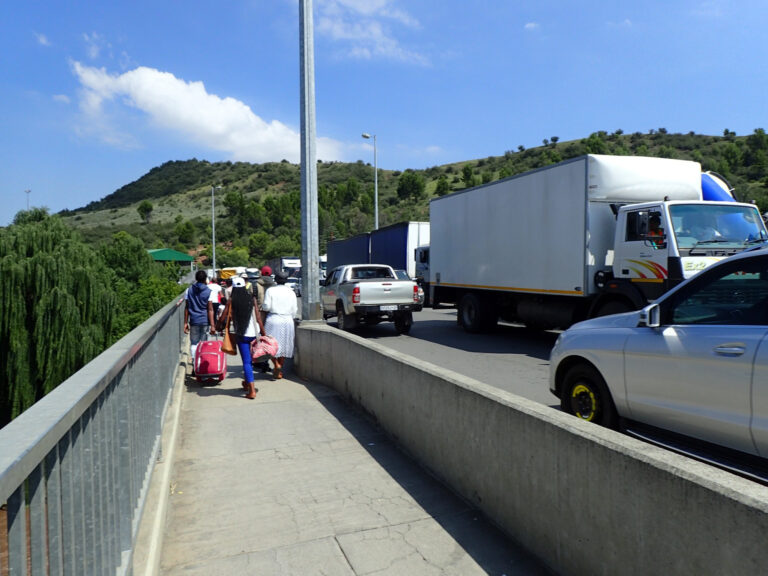
Shortly afterwards, he crossed into South Africa and travelled to Ladybrand, where he found several other Lesotho police officers who had also fled the country. The witness described the atmosphere among the officers as one marked by fear and uncertainty, with many unsure about what would happen next and whether it was safe to return home.

Litulo testified that shortly after arriving in South Africa, a meeting was convened involving the officers who had sought refuge there. During that gathering, they were informed that arrangements were being made for their return to Lesotho.

The witness said they eventually returned home and reported to Police Headquarters in Maseru. Upon arrival, a police parade was held where officers were addressed by their superiors. Following the parade, they were instructed to return to their homes and await further directions. Officers remained at home for a period before eventually receiving instructions to resume their official duties.

His testimony forms part of the prosecution’s efforts to establish the circumstances surrounding the events of August 2014, which remain among the most controversial and politically significant episodes in Lesotho’s recent history.

The case before the High Court centres on allegations arising from attacks on police stations and police personnel during a period of severe political and security instability. Among the accused are Lesotho Congress for Democracy (LCD) leader and former Deputy Prime Minister Mothetjoa Metsing, Movement for Economic Change (MEC) leader and current Minister of Agriculture, Food Security and Nutrition Selibe Mochoboroane, former Lesotho Defence Force Commander Lieutenant General Tlali Kamoli, Litekanyo Nyakane, Motloheloa Ntsane and Leutsoa Motsieloa.

The accused face multiple charges and alternative counts, including treason, murder, attempted murder, aggravated assault and conduct creating a risk of injury or death. All have pleaded not guilty.

Court records indicate that one of the central charges involves the murder of Sub-Inspector Mokheseng Ramahloko. The accused are also charged with the attempted murder of Letsekang Mothibeli, together with alternative counts relating to risk of injury or death and aggravated assault.

Additional charges concern alleged assaults against several police officers, including Sergeant Mahanetse, Lance Sergeant Thabisa Kopa, Lance Sergeant Shaabe Thamae, Police Constable Mokete Litulo and Police Constable Mone. Some charges are directed at all accused persons, while others apply only to specific individuals.

The charges of treason, the attempted murder of Police Constable Moeketsi and related alternative counts, together with the alleged assault of Sub-Inspector Joel, are directed specifically at Kamoli, Nyakane, Metsing and Mochoboroane. The prosecution alleges that the accused acted in furtherance of a shared and common purpose. The charge sheet further refers to the late Tefo Hashatsi and Bulane Sechele, as well as Tumo Lekhooa and other individuals whose identities remain unknown to prosecutors.

The lengthy proceedings have attracted significant public interest due to the stature of the accused and the historical importance of the events under examination. The case continues to revisit one of the most turbulent periods in Lesotho’s political and security landscape, when tensions between elements of the police and military generated widespread concern both locally and internationally.

Litulo’s evidence offered a glimpse into the fear experienced by police officers following the attacks, with some believing that leaving the country was the safest option available at the time.

The defence team comprises Advocates Motiea Teele KC, Letuka Molati, Lepeli Molapo, Kabelo Letuka and Napo Mafaesa. The prosecution is represented by Advocates Motene Rafoneke and Rethabile Setlojoane.

The trial continues before Justice ‘Maliepollo Makhetha, with more witnesses expected to testify as the court seeks to establish the facts surrounding the events that continue to shape Lesotho’s legal and political discourse more than a decade later.

Snow on the mountain, poverty in the valley

Every June, the world turns to marvel at Lesotho’s rare alpine winter. Every June, Lesotho watches the money walk back across the border.

THE EDITOR  ·  LESOTHO TRIBUNE

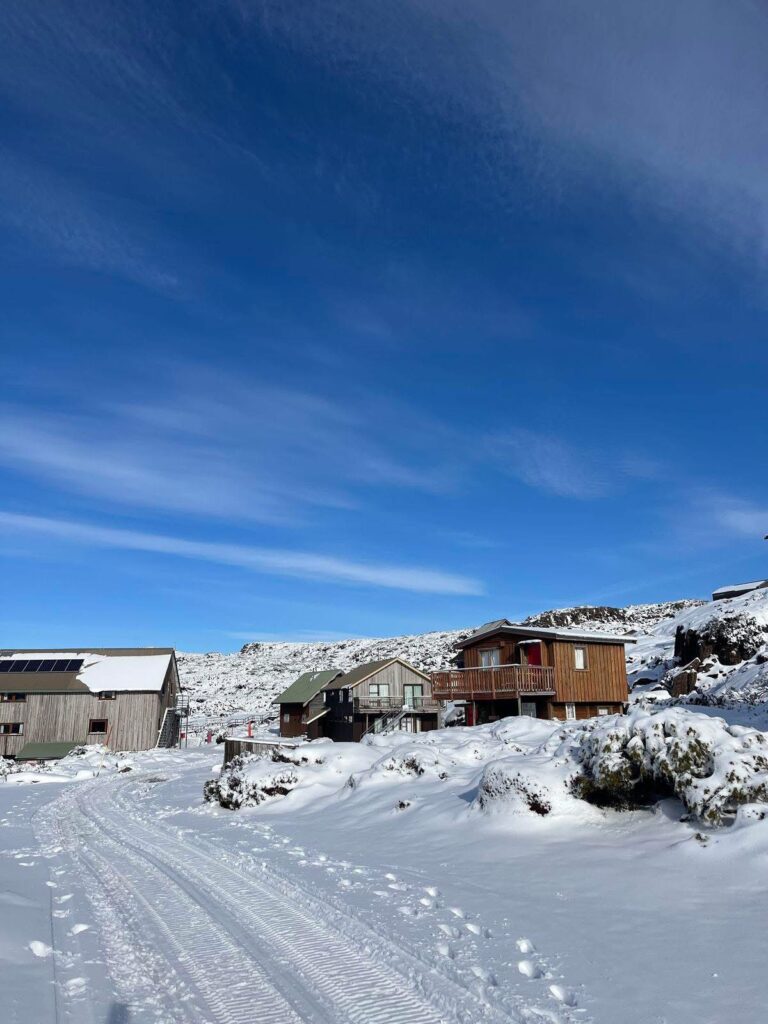
Every winter, a quiet spectacle plays out across the Maloti highlands. South Africans press their faces to car windows as they cross into Lesotho, stunned by what greets them: a white, snow-draped landscape that has no business existing this far south on the African continent. They photograph it. They post it. They tell their friends. And then, overwhelmingly, they go home. The money goes with them.

This is the central failure of Lesotho’s relationship with its most extraordinary natural endowment. The Kingdom of the Sky sits on one of the most improbable gifts that geography has bestowed upon any African nation. It is the only country on earth whose entire territory lies above 1,000 metres. Its highlands receive reliable snowfall each winter. It hosts the only ski resort in sub-Saharan Africa south of the Sahara’s eastern fringe. None of this has translated into the economic transformation it should.

The numbers do not flatter us. Tourism’s total contribution to Lesotho’s GDP has long hovered around 5.5 percent, with projections that it might reach 6.1 percent by 2024 only if recovery from the pandemic held course. Lesotho’s international tourism receipts as a percentage of GDP sit at approximately 2.5 percent, according to World Bank-tracked figures. In a country whose nominal GDP sat at roughly $2.1 billion in 2023, that represents a sector punching far below its weight in an economy that can ill afford underperforming pillars.

Now compare this to nations that faced similar constraints and chose differently.

Country Context Tourism % GDP
Rwanda Landlocked, mountainous, comparable size 9.8%
Bhutan Small mountain kingdom, high-value model 5–10%
Lesotho Sole alpine ski destination in sub-Saharan Africa ~5.5%
Sources: WTTC Economic Impact Research 2024; Rwanda Development Board; Bhutan National Statistical Bureau 2024

Rwanda, a landlocked, mountainous, post-conflict country with none of Lesotho’s alpine uniqueness, earned 9.8 percent of its GDP from tourism in 2024, according to the World Travel and Tourism Council. That figure is not an accident. It is the fruit of deliberate, relentless national strategy: an international airline anchored in Kigali, purpose-built convention infrastructure, premium gorilla trekking permits priced to maximise revenue per visitor, and an aggressive global brand built around the promise of safety and sophistication. Rwanda welcomed 1.48 million international visitors in 2024 and generated over $579 million in revenue. It treats tourism as a strategic industry. Lesotho treats it as a weather phenomenon.

Bhutan, the Himalayan kingdom to which Lesotho is often compared, contributes between five and ten percent of its GDP through tourism and does so on a deliberately controlled, high-value model that charges a daily Sustainable Development Fee precisely to ensure that every visitor leaves significant revenue behind. Bhutan’s hotels and restaurants sector grew by over 50 percent in 2023 alone, the single largest driver of its economic expansion that year. It is not lucky. It made choices.

“Lesotho is the only country in sub-Saharan Africa where a visitor can ski. That sentence, deployed correctly, is worth hundreds of millions of maloti. It remains largely undeployed.”

One ski resort. One slope. One season. One failure of imagination. Afriski Mountain Resort, perched at 3,222 metres on Mahlasela Pass in Butha-Buthe district, is Lesotho’s flagship winter attraction. At full capacity it accommodates approximately 320 people. Its skiable terrain covers 1.8 kilometres across six trails. The resort has built a recognisable lifestyle brand, hosting music events, themed weekends and slope-side festivals, and its 85 percent booking rate during the season attests to the appetite. But appetite is not the same as strategic capture.

The structural failure is one Lesotho’s planners acknowledge but have not solved: the overwhelming majority of international arrivals in pre-pandemic years were South Africans, and of those, the dominant purpose was visiting friends and family, not leisure tourism. The pattern is of day-trippers and weekend visitors who drive to Afriski, spend Saturday on the slopes, sleep at most one night in Lesotho accommodation, and return. Every rand spent on accommodation, food and activities in South Africa en route is a rand that does not contribute to Lesotho’s GDP. We host the snow. South Africa’s Clarens, Drakensberg lodges and Free State guesthouses host the spending.

A 2026 international report on snow and mountain tourism identifies Lesotho as an emerging ski destination alongside Morocco, India and Turkey. The global industry is noticing what we have. Our policymakers have been slower on the uptake.

The infrastructure indictment. Canada’s government travel advisories note plainly that tourist facilities are limited in Lesotho and that there are few gas stations outside of cities and large towns. This is the paragraph that should shame every successive Ministry of Tourism. When the Government of Canada’s advisory to its own citizens serves as a more accurate audit of our tourism infrastructure than our own development plans, something has gone profoundly wrong.

The Lesotho Tourism Development Corporation collects statistics monthly from accommodation providers, attraction operators and tour companies. The Visit Lesotho portal publishes annual arrivals and accommodation reports. These are the administrative bones of a functioning tourism system. What they do not show is a parallel infrastructure of mid-range lodges along the highland tourist circuit, a reliable road network capable of sustaining winter tourist volumes, a domestically-owned tour operator industry of scale, or a national airline strategy that makes Lesotho a destination rather than a transit corridor. Moshoeshoe I International Airport processes visitors for South Africa, not for Lesotho.

The levy of R100 per person introduced at entry points from April 2024 is, in isolation, a sensible mechanism to channel visitor spend into national tourism marketing. But a levy is a tax on the visitor. The deeper work is building the product that justifies far greater expenditure long before and long after the border post.

What deliberate nations have done. Rwanda’s lesson is not that it had better geography. It is that it built an institution, Rwanda Development Board, with a mandate, a budget and accountability for growing tourism revenue. In 2023 Rwanda earned $620 million from tourism, a 36 percent increase on 2022. Tourism employment in Rwanda reached nearly 386,000 jobs by 2024.

Bhutan went in a different direction but with equal intentionality. Facing the ecological fragility of a small Himalayan state, it chose quality over volume, capping arrivals and charging a premium per visitor that subsidises conservation and community benefit. Hotels and restaurants now contribute the single largest growth segment to its economy. The lesson is not the fee; it is the philosophy that a small mountain country can shape the terms on which the world visits it rather than being grateful for whatever arrives.

Lesotho has neither pursued Rwanda’s volume-and-value growth nor Bhutan’s value-over-volume premium model. It has largely waited.

The snow itself will not save us. There is a complacency that attaches itself to remarkable natural endowment. The assumption, half-conscious and never stated, that the snow will do the marketing, that the mountains will sell themselves. The Swiss Alps are extraordinary. So is Swiss hospitality infrastructure, Swiss rail connectivity to every ski village, Swiss pricing discipline and Swiss insistence that the visitor experience is complete from arrival to departure. The alps did not build Switzerland. Switzerland built an industry around the alps.

Lesotho’s Maloti mountains are genuinely, spectacularly unusual in the African context. The snow arrives every year. The pony trekking routes through highland villages offer a cultural experience that money cannot replicate elsewhere on this continent. Sehlabathebe National Park, one of the most remote and pristine ecosystems in southern Africa, now has new road access as of 2025 that should transform visitation. Sani Pass draws adventure travellers who arrive primed for an authentic experience. None of these assets are connected to each other by a tourism product. They are dots without a line.

“Our visitors come from the most tourism-infrastructure-rich country in sub-Saharan Africa. They know what good looks like. We have been offering them scenery and hoping it is enough.”

A programme for seriousness. This editorial does not pretend that a single article will compel a government to act where decades of audits and development plans have not. But it insists on naming the failure so that citizens, private investors and regional partners understand what is being squandered each winter.

The minimum viable seriousness looks like this: a targeted lodge development incentive along the highland circuit linking Afriski to Sani Pass to Sehlabathebe, financed through a combination of government-backed guarantees and private investment, that doubles overnight capacity for winter tourists within five years. A renegotiated air access strategy at Moshoeshoe I that treats the airport as a tourism gateway, not merely a domestic connector. A Lesotho highland tourism brand, owned and marketed by the state with private sector funding, deployed in Johannesburg, Cape Town, London and Nairobi. A minimum length-of-stay expectation built into tour operator packages, rewarded with reduced levies. And an honest accounting, published annually by the Bureau of Statistics and debated in parliament, of how much the sector earned versus how much it left on the table.

This winter, as it does each year, Lesotho’s snow will fill South Africans with wonder and our social media feeds with beautiful images. The wonder is free. The images are free. The opportunity to convert that wonder into sustained national prosperity is not unlimited. Geography has given us an asset that neighbouring nations can only envy. History will judge whether we chose to build an industry or merely enjoy the view.

This editorial represents the position of the Lesotho Tribune. GDP and tourism contribution figures draw on World Travel and Tourism Council Economic Impact Research, World Bank data, Rwanda Development Board annual reports, Bhutan’s National Statistical Bureau 2024 National Accounts, and published comparative analysis. The Tribune urges the Bureau of Statistics and the Ministry of Tourism to publish a current, standalone tourism satellite account to enable more precise domestic accountability.

Finance and Insurance is Lesotho’s fastest-growing industry, analysis finds

A new analysis of Bureau of Statistics data has ranked Finance and Insurance as Lesotho’s fastest-growing industry, with real GDP in the sector rising 9.7% year over year to Q3 2025, as the broader economy expanded by 3.6% in the same quarter.

By Staff Reporter  |  Lesotho Tribune

Finance and Insurance recorded the largest year-over-year increase of any industry in Lesotho’s economy between Q3 2024 and Q3 2025, according to an analysis of quarterly national accounts data published by the Bureau of Statistics Lesotho.

The analysis, conducted by business services firm DPHK Consulting, ranked industries by their year-over-year percentage change in real GDP, measured in million Maloti at constant 2012 prices. Finance and Insurance posted a 9.7% increase, rising from an estimated M1.02 billion (approx. USD 60.7 million) in Q3 2024 to M1.12 billion (approx. USD 66.7 million) in Q3 2025.

Manufacturing ranked second with growth of 7.4%, from M589 million to M633 million, while Education and Health placed third, up 7.2%, from M165 million to M177 million. Public Administration and Information and Communication rounded out the top five, growing 6.8% and 5.8% respectively.

“The industry breakdown shows where that growth is really coming from. Finance and insurance, manufacturing, and education and health were the strongest contributors in the latest figures.”

Lesotho’s overall real GDP expanded by 3.6% in Q3 2025, with ten of the fifteen industries covered recording positive growth. A DPHK Consulting spokesperson said the headline figure masked significant variation across sectors. Electricity and Water, Hotels and Restaurants, and Other Services were among the weaker performers in the period.

Fastest-growing industries in Lesotho — Q3 2024 to Q3 2025

Rank Industry Q3 2024 (est.) Q3 2025 Change
#1 Finance and Insurance M1.02bn M1.12bn 9.7%
#2 Manufacturing M589m M633m 7.4%
#3 Education and Health M165m M177m 7.2%
#4 Public Administration M837m M894m 6.8%
#5 Information and Communication M295m M312m 5.8%
#6 Construction M201m M210m 4.6%
#7 Transport and Storage M104m M108m 4.1%
#8 Wholesale and Retail Trade M382m M391m 2.4%
#9 Real Estate M308m M311m 1.2%
#10 Agriculture, Forestry, Fishing M349m M351m 0.5%

Source: Bureau of Statistics Lesotho, Quarterly National Accounts Q3 2025. Real GDP in million Maloti at constant 2012 prices. Q3 2024 figures estimated from published percentage changes. Analysis by DPHK Consulting.

The DPHK analysis excluded aggregate totals and adjustment lines from its rankings, including the “All industries at basic prices” and “GDP seasonally adjusted” lines. The underlying data is drawn from the Bureau of Statistics Lesotho’s Quarterly National Accounts Third Quarter 2025 report.

African airlines earn $1.30 a passenger as industry meets in Johannesburg to confront the continent’s profitability crisis

African airlines are forecast to earn just $1.30 per passenger in 2026, against a global average of $7.90, as industry leaders meeting in Johannesburg call for deeper regional cooperation, liberalised airspace, and coordinated policy to rescue a continent whose aviation demand is rising faster than its airlines can profit from it.

STAFF REPORTER  ·  LESOTHO TRIBUNE

Africa’s aviation leaders gathered in Johannesburg last month for the 14th Aviation Stakeholders Convention, jointly hosted by the African Airlines Association (AFRAA) and South African Airways (SAA), under the theme “Resilient African Aviation: Partnerships, Empowerment, Profitability.” The three-day event drew more than 500 delegates from airlines, regulators, airport authorities, financiers and technology firms across nearly 50 countries.

The convention was opened by South Africa’s Minister of Transport, Barbara Creecy, who underscored her government’s commitment to positioning South Africa and the continent as a leading force in global aviation. Her remarks carried particular weight in a region where the aviation sector faces structural pressures that risk undermining the passenger growth gains of recent years.

The central tension framing the Johannesburg gathering was one familiar to any observer of African aviation: a continent whose air travel demand is growing faster than almost anywhere else in the world, yet whose airlines remain among the least profitable on the planet. Africa’s carriers are collectively forecast to generate a net profit of just $200 million in 2026, representing a margin of $1.30 per passenger. The global average stands at $7.90 per passenger, according to figures cited at the convention by IATA Regional Vice President for Africa and the Middle East, Kamil Al-Awadhi.

“Africa’s aviation sector stands at a pivotal moment. Rising demand is real. The structural barriers constraining profitability are equally real. Bridging that gap requires coordinated action across governments, regulators and industry.”

Industry executives at the convention identified a cluster of interrelated causes for the profitability gap: multiple and inconsistent regulatory frameworks across African states, high jet fuel costs relative to global benchmarks, thin route economics on intra-African corridors, and slow progress in implementing the Single African Air Transport Market (SAATM), the continent-wide air liberalisation framework that was adopted in principle at the African Union level but has been unevenly ratified and applied by member states.

For Southern Africa specifically, the debate has direct implications for smaller economies that depend on a handful of regional carriers for connectivity. Lesotho, served primarily by Airlink out of Maseru’s Moshoeshoe I International Airport, sits at the narrow end of the profitability distribution: a thin-route market where the economics of scheduled service are perpetually marginal and where any deterioration in the broader regional aviation environment translates quickly into reduced frequency or outright route suspension.

The SAA-Kenya Airways partnership, in operation since 2021, was cited at the convention as a model for the kind of bilateral commercial cooperation that can improve viability on shared routes. The arrangement has allowed both carriers to share traffic between their Johannesburg and Nairobi hubs, and South Africa’s reciprocal removal of visa requirements for Kenyan travellers was credited with generating the additional demand needed to make the partnership commercially meaningful. Delegates argued that this model, combining commercial partnership with enabling policy, needed to be replicated across more corridors.

Airlink, Southern Africa’s most active regional carrier, announced separately in May that it would launch the first non-stop service between Cape Town and Zanzibar in October 2026, operating the route with its new Embraer E195-E2 aircraft. The Cape Town-Zanzibar launch is the latest in a series of network expansions by Airlink, which took delivery of its first E195-E2 aircraft in January 2026. The E195-E2, configured for 136 passengers in a two-by-two cabin layout, offers meaningfully lower seat-mile costs than the older Embraer 135s that form the backbone of the airline’s regional fleet, and analysts have suggested that the new aircraft type could improve the economics of thinner routes across the SADC region.

The profitability challenge raised at the Johannesburg convention is compounded by the external environment facing Southern African aviation in mid-2026. Oil price volatility, trade disruption from ongoing tariff disputes, and, most recently, a wave of flight cancellations linked to civil unrest in South Africa have each added to the operational uncertainty facing carriers operating in the sub-region.

For Lesotho, whose inbound tourism and business travel depends almost entirely on the reliability of connections through OR Tambo International Airport in Johannesburg, disruption at the South African end of any route is not an abstraction. When South African aviation catches a cold, as the convention’s economists noted, smaller connected markets develop pneumonia.

The AFRAA convention’s three-day programme addressed the profitability gap through high-level plenaries, panel discussions, masterclasses and bilateral business sessions. The back-to-back staging of the 3rd African Aviation Safety and Operations Summit from 19 to 20 May added a regulatory and safety dimension to the proceedings, reflecting the growing consensus that financial sustainability and operational safety are not competing priorities but mutually reinforcing ones.

The next major gathering for the southern African aviation industry will be AERO South Africa, scheduled at Lanseria International Airport from 10 to 12 June 2026. The sixth edition of the general aviation trade show will bring together exhibitors from South Africa and internationally, covering maintenance, aircraft sales, technology, and airspace management, and is expected to draw stakeholders from across the SADC region.

Whether the industry’s coordinated ambitions translate into measurable gains in intra-African connectivity, and whether smaller markets such as Lesotho see tangible benefits in the form of improved frequencies and sustainable route economics, will depend on the speed with which governments convert the Johannesburg convention’s declared commitments into ratified policy.

Lesotho produces 10% of its potatoes and imports $64m in grain from South Africa as minister warns food import bill is outpacing production

Lesotho produces just ten percent of its own potato needs and imports more than 236,000 tonnes of grain from South Africa each year, as the Minister of Agriculture calls for urgent commercialisation of the sector and warns that the country’s food import bill is growing faster than its capacity to produce.

STAFF REPORTER  ·  LESOTHO TRIBUNE

Lesotho’s Minister of Agriculture, Food Security and Nutrition, Selibe Mochoboroane, has used the commemoration of International Potato Day to lay bare the scale of the country’s agricultural underperformance, revealing that national potato production meets only ten percent of domestic demand and that the country continues to import the overwhelming majority of its basic food requirements from South Africa.

Speaking at the event held in Maseru, Mochoboroane said Lesotho’s annual potato demand stood at 132,000 metric tonnes, while local production averaged only 13,200 metric tonnes per year. The shortfall, he said, was being met through imports, costing the country M69 million annually on potatoes alone, with a government target to reach 25,000 metric tonnes of domestic production by the 2026/2027 season.

“Agriculture remains central to addressing these challenges,” the minister said. “In Lesotho, the potato has emerged as one of the most promising agricultural commodities with strong potential to drive value chain development and agro-industrial growth.”

Commodity SA exports to Lesotho Year
Maize (corn) $34.15m 2024
Wheat and meslin $22.12m 2024
Rice $8.08m 2024
Total cereals (SA to Lesotho) $64.71m 2024
Source: UN COMTRADE / Trading Economics, April 2026

The potato deficit is symptomatic of a broader structural dependence. Lesotho imported an estimated 236,000 tonnes of grain in 2024, with maize and wheat imports from South Africa remaining the largest categories. South Africa’s total exports to Lesotho reached $1.47 billion in 2024, and trade analysts tracking the corridor have noted that maize flour and yellow maize are among the fastest-growing import categories, with growth rates exceeding 40 percent, reflecting Lesotho’s deepening reliance on its neighbour for food security rather than just energy and manufactured goods.

South Africa’s own maize production outlook offers Lesotho some reassurance of supply continuity. The Supply and Demand Estimates Committee in Pretoria projects overall maize supply for the 2025/26 marketing season at approximately 15.6 million tonnes, a 3.88 percent increase on the previous season, with domestic demand stable at around 11.8 million tonnes. The surplus ensures South Africa remains a reliable exporter to the region, with Lesotho consistently among the top six white maize destinations. Between April 2025 and January 2026, South Africa exported 69,236 tonnes of white maize to Lesotho, representing 9.82 percent of total white maize exports for that period.

“Lesotho continues to export wool and mohair largely in raw form, exposing the sector to risks such as the recent Foot and Mouth Disease outbreak. Domestic processing and value addition would help create jobs, retain more value within the country, and strengthen economic resilience.”

But guaranteed supply from the south is not the same as food sovereignty, and Mochoboroane acknowledged as much. Agricultural products contribute six percent to Lesotho’s GDP, with wool and mohair accounting for five percentage points of that contribution. Yet the minister warned that even these traditional export strengths were under pressure, noting that a recent Foot and Mouth Disease outbreak had disrupted wool and mohair exports and exposed the vulnerability of selling unprocessed commodities into the international market.

The minister’s remarks, made during a separate engagement on trade with China, underlined a strategic tension at the heart of Lesotho’s agricultural economy: the country sits on productive highland soils, receives adequate rainfall across much of its territory, and holds significant irrigation potential from the Katse and Mohale dams constructed under the Lesotho Highlands Water Project, yet the gap between potential and realised production remains wide across virtually every crop category.

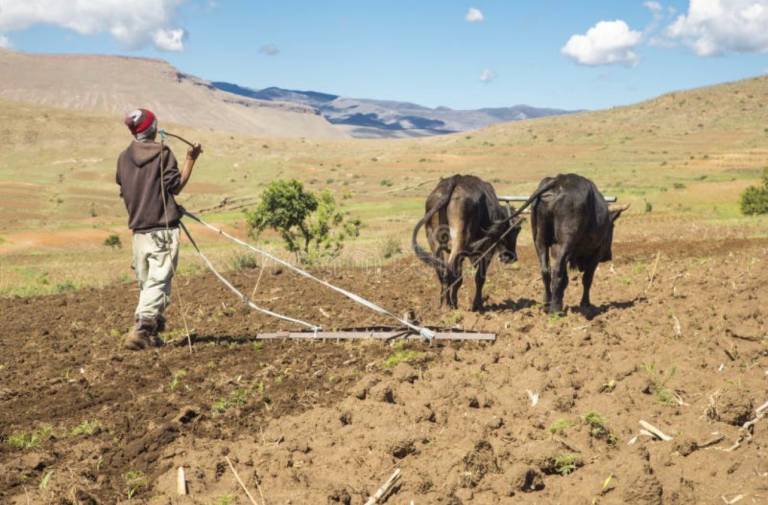
Approximately 75 percent of Lesotho’s total land area is considered suitable for agricultural production, and the country’s irrigation potential is estimated at 112,500 hectares, yet just over 20 percent of farmers are equipped for irrigation. The average farm size is 1.3 hectares, with only 11 percent of farming households owning more than three hectares. These structural constraints, rather than a lack of suitable land, drive the production deficit.

Mochoboroane said the shortage of quality seed potato was one of the major challenges affecting the sector and that significant progress was being made towards establishing a sustainable local seed production system with support from international partners. The government’s plan to increase potato production by ten percent annually over five years would require resource mobilisation that the minister acknowledged had not yet been fully secured.

South African companies have shown interest in the gap. Alpha Farms and Denmar Estates have previously partnered with Lesotho farmers to produce vegetables and fruit for the Lesotho, South African and European markets, taking advantage of the country’s elevation, good soil quality and the fact that Lesotho’s fruit ripens earlier than in other southern hemisphere countries, offering a seasonal arbitrage opportunity for regional supply chains. The two Lesotho Highlands Water Project reservoirs, Katse Dam and Mohale Dam, support commercial trout operations that export primarily to food service outlets across Southern Africa.

South Africa’s own agricultural performance provides a reference point for what Lesotho’s highlands could produce under investment. South Africa’s Department of Agriculture reported in March 2026 that the sector had recorded 17.4 percent growth and its strongest export performance since before the pandemic, driven by market diversification into the Philippines, China and European markets. Minister John Steenhuisen attributed the gains to the Agriculture and Agro-processing Master Plan and coordinated phytosanitary diplomacy that opened new bilateral corridors. Lesotho lacks an equivalent plan at scale.

For now, the trajectory of Lesotho’s agricultural trade with South Africa points in one direction: more imports, rising food costs, and a widening gap between what the highlands can grow and what the market demands. Whether the International Potato Day commitments translate into the investment, infrastructure and institutional reform needed to close that gap is a question the sector will be watching closely through the planting season ahead.

The silence they leave behind

Nearly half of all Basotho say they have considered leaving. Among the educated, the young, and those with the most to give, the figure is higher still. This is not a statistic. It is a quiet verdict on what home has become.

MALEFO THINYANE  ·  LESOTHO TRIBUNE

There is a particular kind of silence that settles over a household the morning after someone has gone. Not the silence of sleep, or of early rising, or of a house simply at rest. It is a silence with a shape to it. The shape of a person who was here and is no longer here, and who may not come back for a very long time. If they come back at all.

Lesotho knows this silence intimately. It has known it for generations. Long before any researcher put a number to it, before any Afrobarometer survey asked the question in a structured way and recorded the answer on a spreadsheet, the country had already been living the reality that the spreadsheet now confirms: nearly half of all Basotho have considered leaving. Among young people, the figure is 56 percent. Among those with post-secondary education, the people a nation builds itself with, the figure rises to 62 percent. And of those who want to leave, 72 percent name South Africa as their destination.

These are not people who hate Lesotho. That is important to say plainly, because the conversation about emigration in this country too often collapses into accusation: those who leave are disloyal, ungrateful, weak in their love of home. That framing is not only unfair. It is a way of avoiding the harder question, which is not why are they leaving but what are we failing to build that makes leaving feel like the only rational answer?

“They are not leaving because they do not love this country. They are leaving because they love their children more than they love the idea of staying.”

I want to tell you about a young woman I will call Palesa, because that is not her name and she did not ask to be written about, but her story is the kind of story that sits behind the statistics and gives them weight. Palesa finished her degree at the National University of Lesotho two years ago. She graduated with honours. She spent eight months applying for work in Maseru, in every sector she could find a door into. She went to interviews. She followed up. She dressed well, she prepared, she was, by every measure anyone could apply, ready to contribute. She received polite rejections, or silence, or the particular cruelty of the promise that we will be in touch that is never kept.

She is in Johannesburg now. She found work within three weeks of arriving. She sends money home every month. She is building something, carefully and with discipline, and when I ask her whether she thinks about coming back she is quiet for a moment before she says: one day. Not now. Maybe one day.

One day is not a plan. One day is what people say when they are not ready to say never but cannot honestly say soon.

What strikes me about Palesa’s story, and about the hundreds of stories like hers that play out quietly across this country every year, is that the decision to leave is almost never made in a single dramatic moment. It is made in accumulation. It is made in the thirty-second unanswered job application, and the electricity that goes out for the third time this week, and the road that has been waiting for repair since before anyone can clearly remember, and the conversation at a family gathering where the uncles speak of their time on the mines in South Africa with a mixture of pride and something else, something that is not quite shame but lives in the same neighbourhood.

The mines. That is the original text from which every subsequent chapter of Basotho migration is written. For well over a century, young men from these mountains have crossed the border to dig what South Africa needed dug, and returned with wages and with something harder to name: a calibration of what the world outside looks like, what it pays, what it demands, and what it offers in return. That knowledge has been passed down. It has not made Basotho love South Africa. It has made them pragmatic about it.

“One day is not a plan. One day is what people say when they are not ready to say never but cannot honestly say soon.”

Pragmatism is not disloyalty. A person who chooses to feed their family by crossing a border is not making a political statement. They are making a human one. And governments that respond to this human statement by building walls, whether literal or bureaucratic, or by moralising about national duty to people who cannot find work, are not solving the problem. They are insulting the people who have the problem.

The Lesotho government, to its credit, has begun to acknowledge migration as something to be managed rather than shamed. Bilateral labour agreements have been pursued. Programmes to prepare young Basotho for employment beyond the country have been established. The United Nations country team has framed managed migration as a legitimate development pathway, drawing the parallel to Moshoeshoe I himself, who understood that survival sometimes required strategic movement and the formation of new alliances. These are reasonable, adult responses to a structural reality.

But managed migration and retained talent are not the same ambition. One accepts the outflow and attempts to channel it. The other asks whether the conditions that generate the outflow can be changed. Both matter. The second is harder, and it is the one this country has struggled to pursue with the consistency and urgency the numbers demand.

Youth unemployment in Lesotho was 24.7 percent in 2025. That is the official figure, the measured, documented, internationally comparable figure. The lived experience suggests the real number is considerably higher once discouraged workers, those who have stopped looking because looking has produced nothing, are accounted for. These are not abstract percentages. They are mornings. They are people getting up and having nowhere to go that will value what they have to offer.

I am not writing this column to condemn anyone who has left, or who is thinking of leaving. I am writing it because the silence that follows their departure is a message, and messages that are not read do not stop arriving. They accumulate until they become something louder than silence: the gradual hollowing of a country’s most capable generation, the slow drain of the people who might, under different circumstances, have been the ones to build the thing that would have made others want to stay.

Palesa knows this. She does not speak of it with bitterness. She speaks of it with the careful, considered resignation of someone who has made peace with a choice she did not want to have to make. She would have preferred to stay. She chose, instead, to build. That those two things were incompatible is not her failure.

It is ours.

Govt pledges burial support, housing and counselling to Ha Maine family after deaths of two young children

The Government of Lesotho has pledged funeral support, housing assistance, and psychological counselling to a Mafeteng family after two young siblings aged two and four died under circumstances that continue to be investigated by police.

BY THOLOANA LESENYA

Deputy Prime Minister Justice Nthomeng Majara visited the home of Tšepo Maine in Ha Maine, Mafeteng, on Thursday to convey government’s condolences and assure the family that they would not face their devastating loss alone.

The two children, aged just two and four years, died under circumstances that continue to be investigated by police. Their deaths have sparked widespread sorrow across Lesotho, with many Basotho struggling to comprehend the tragedy.

Speaking during the visit, Justice Majara announced that government would take responsibility for the burial arrangements of the children, describing the incident as one of the most heartbreaking cases Lesotho has witnessed in recent years.

She expressed deep sympathy to the grieving family, acknowledging that the loss of two children at the same time was a burden no parent should ever have to bear. “The pain this family is experiencing is unimaginable,” she said. “This tragedy will leave emotional and psychological scars that may take years to heal.”

Justice Majara noted that beyond material assistance, the family would require extensive emotional and psychological support to help them navigate the difficult period ahead. Addressing family members and community residents gathered at the home, she said she was speaking not only on behalf of government but also as a mother who understands the profound anguish associated with losing a child.

“The pain this family is experiencing is unimaginable. This tragedy will leave emotional and psychological scars that may take years to heal.”

Recognising the emotional toll of the incident, she stressed the importance of counselling and mental health support for all those affected, particularly the children’s parents and close relatives.

The Deputy Prime Minister further raised concerns regarding the mental state of the suspect linked to the case. She suggested that a psychiatric assessment should be conducted to determine whether the suspect was mentally fit at the time of the alleged offence.

According to Justice Majara, understanding the suspect’s mental condition could assist the courts in establishing all relevant facts before judgment is ultimately delivered. “Such an incident naturally raises questions about the state of mind of the person involved,” she said, adding that a professional evaluation would help ensure justice is served appropriately.

In addition to assisting with funeral arrangements, Justice Majara revealed that government intends to help the family construct a house. She indicated that the project could be facilitated through the Disaster Management Authority as part of broader efforts to support the bereaved household.

The announcement was welcomed by community members who have been closely following developments surrounding the tragedy.

Also present during the visit was the Minister of Gender, Youth and Social Development, Pitso Lesaoana, who described the deaths as a national tragedy that would not easily fade from public memory. He said the circumstances surrounding the deaths had deeply affected many Basotho and highlighted the urgent need for emotional support services.

Lesaoana pledged that his ministry would provide counselling to the family to help them cope with the trauma and grief resulting from the loss of the two children. “This is not something that can simply be forgotten,” he said. “The nature of what happened has touched the hearts of many people across the country.”

He added that professional counselling would be essential in helping the family process their emotions and begin the long journey towards healing.

Member of Parliament for Thaba-Phechela Constituency, Mohau Hlalele, said residents of Ha Maine remained deeply shaken by the incident. According to him, the tragedy had cast a shadow over the entire community, with many villagers still struggling to accept what happened. He commended government officials for personally visiting the family and offering practical support during such a difficult time.

“The community is grateful that government has come here to stand with the family,” he said. “People are deeply hurt by this tragedy, and such support means a great deal.”

In an emotional account, the children’s father, Tšepo Maine, recounted the events leading up to the disappearance of his children. He explained that on 13 May 2026, he and his wife travelled to town, leaving the children in the care of a man who had been staying with them.

According to Maine, the arrangement was not unusual, as the suspect had looked after the children on previous occasions. He said the suspect had been living at his home because he was mentoring him in traditional healing practices.

However, when he and his wife returned home later that day, they immediately noticed something was wrong. Concerned about the whereabouts of the children, the couple questioned the suspect. Maine said they were unable to obtain clear answers, triggering fears that something terrible had happened.

The disappearance of the children prompted concern within the community and eventually led to a police investigation. Police have confirmed that investigations are ongoing and that efforts to establish the full circumstances surrounding the case are continuing.

As messages of sympathy continue to pour in from across Lesotho, the deaths of the two young children have reignited conversations about child protection, mental health awareness, and community responsibility.

While the legal process unfolds, a community mourns, a family struggles to come to terms with an unimaginable loss, and a nation waits for answers.

Maseru DA tells communities that development is the duty of every Mosotho, not government alone

0

The Maseru District Administrator has called on communities to take an active role in development, warning that government alone cannot deliver sustainable progress and that real change begins when residents participate, cooperate and hold themselves accountable.

BY LEMOHANG BOTSANE

Maseru District Administrator Ts’epo Lethobane has told community members that sustainable development cannot be achieved by government alone, and has called on residents across the district to take direct responsibility for progress in their villages and towns.

Speaking during a recent community engagement, Lethobane said practical solutions to challenges such as poor roads, water shortages and youth unemployment were within reach when communities participated in planning and decision-making alongside local leaders.

“Development is not only the job of government or leaders,” he said. “It is the duty of every Mosotho. When we care for each other and join hands, we can solve many of the challenges we face in our villages and towns.”

“Let us stop waiting for everything to be done for us. If we clean our surroundings, protect public property, and support small local projects, we will see real change in our district.”

Lethobane also highlighted the importance of unity and mutual support, saying strong communities were built on trust, cooperation and respect. He urged families to teach children good values and to look out for vulnerable members of their communities, including the elderly, orphans and people living with disabilities.

He encouraged residents to attend community meetings, share their ideas and engage with local leaders, and pledged that his office would continue to work closely with chiefs, councillors and community groups to ensure that government services reached the people. “The district administration is committed to listening to the concerns of the public and turning those concerns into action,” he said.

Community members who attended the gathering welcomed the message, with many saying they agreed that development must begin at home and that every resident has a part to play.

The address comes as the government encourages all districts to promote community-led development as part of national efforts to improve living conditions and reduce poverty. Residents were urged to remain united, support government programmes and take pride in building a better Maseru for future generations.

Lesotho marks Assistive Technology Day with call to build local manufacturing as government admits access gaps persist

Lesotho has marked International Assistive Technology Day with a call to invest in local skills and manufacturing, as government admits that people with albinism, wheelchair users and those with hearing impairments are still unable to access the devices they need.

BY LEMOHANG BOTSANE

The Ministry of Gender, Youth and Social Development marked International Assistive Technology Day on Thursday under the theme “Strengthening Local Innovation and Technical Capacity for Sustainable Access to Assistive Technology,” bringing together government officials, disability organisations, development partners and students in Maseru.

Minister Pitso Lesaoana said assistive technology, which includes wheelchairs, hearing aids, low-vision devices and sunscreen for people with albinism, was central to protecting human dignity, independence, equality and inclusion. He acknowledged, however, that access remained severely constrained for many Basotho.

People with albinism frequently cannot obtain sunscreen or low-vision devices, leaving them exposed to serious health risks and excluded from education and employment. Wheelchair and hearing aid users face prolonged delays, and when devices break down, the absence of local repair services interrupts daily life and participation in communities.

“If we invest wisely and work with partners, our local institutions can become centres of excellence. They can train skilled professionals, support local manufacturing, and create products that are made for Lesotho’s needs.”

Lesaoana said the most sustainable solution was to train Basotho to design, build, assemble, adapt, repair and maintain assistive devices locally. He added that local production would also serve as a buffer during emergencies when international supply chains were disrupted. “If we invest wisely and work with partners, our local institutions can become centres of excellence,” he said. “They can train skilled professionals, support local manufacturing, and create products that are made for Lesotho’s needs.”

Principal Secretary Mahlapane Makakole said access to assistive technology was now recognised as a fundamental component of inclusion, particularly in education and community development. She stressed that progress required collaboration across government, civil society, schools, development partners, the private sector and device users themselves. “For people with disabilities to live full lives, they need the right tools,” she said. “But this cannot happen if government works alone.”

Representing the Lesotho National Federation of Organisations of the Disabled (LNFOD), Kopano Ts’ilonyane welcomed the growing recognition of assistive technology as a human rights issue. “This event shows that Lesotho is serious about treating assistive technology as a basic right, not a privilege for a few people with disabilities,” he said.

Ts’ilonyane praised the Ministry of Education and Training for providing assistive devices to deaf learners at Motsekuoa Primary School, and called on government to develop and implement a national assistive technology policy grounded in a human rights approach that prioritises accessibility, participation and reasonable accommodation for persons with disabilities.

United Nations Resident Coordinator in Lesotho Taija Kontinen-Sharp said decisions made by leaders had a direct bearing on whether people could move independently, communicate, attend school, secure employment and live with dignity. “Assistive technology is not only about disability,” she said. “It is about human rights.”

Kontinen-Sharp also highlighted the economic dimension of the issue, noting that local production and innovation could generate employment, strengthen communities and contribute to national development. She urged all stakeholders to translate commitments into action. “We cannot have inclusive development without the full participation of persons with disabilities and strong partnerships in every sector,” she said.

The event closed with calls for increased training, investment and local innovation to ensure that no Mosotho is excluded from full participation in society because of a lack of access to assistive technology.

Monokoane Marks Birthday Milestone with Elders of his Constituency

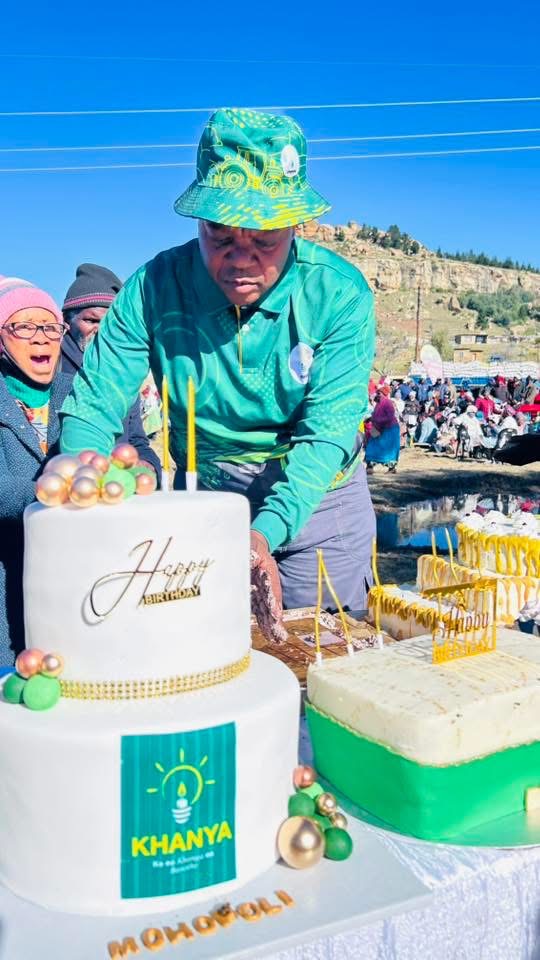
Khanya leader Hon. Monokoane marked his birthday not with ceremony but in the company of the elders and community members of his constituency, drawing thousands of residents beneath open skies in a gathering that spoke to the bond he has built with ordinary Basotho.

In a display of deep humility and genuine connection to the people he serves, Khanya leader Hon. Monokoane chose to mark his birthday not with pomp and pageantry, but in the company of the elders and community members of his constituency. The gathering, held under open skies, drew hundreds of residents who turned out in remarkable numbers to celebrate alongside their representative — a testament to the profound bond he has cultivated with ordinary Basotho.

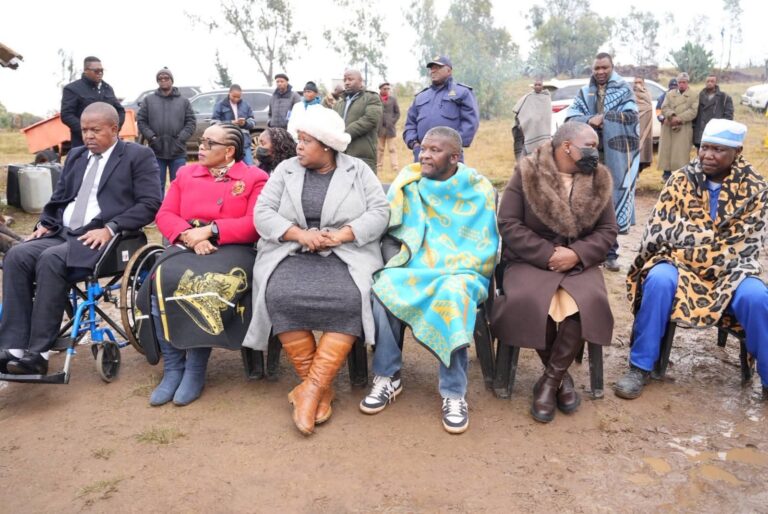
The scene was one of warmth and communal spirit. Draped in blankets against the winter chill, elders sat in their hundreds beneath large marquee tents, filling the open ground with colour, laughter and the quiet dignity of a people honoured to be seen. For many of the senior citizens present, the occasion carried special meaning — a leader choosing to spend his personal milestone with the most enduring pillars of his community rather than retreating into the corridors of power.

Their leader belongs to them, and they to him.

Those who know Hon. Monokoane will recognise in this gathering a reflection of his broader character: a man who draws his strength from the grassroots, who understands that leadership is first and foremost a relationship of trust with the people. As he begins another year of life, the message from his constituency is clear, their leader belongs to them, and they to him.

Independent business & current affairs journalism · Lesotho Subscribe — M85/month
| Independent business & current affairs journalism · Lesotho