

Mohahlaula Airlines
Wednesday, July 22, 2026
Home Blog Page 8

Matekane breaks ground on M1.4 billion road that will end decades of isolation for Lebakeng

0

Prime Minister Matekane has broken ground on a M1.4 billion road and bridge project that will end decades of seasonal isolation for communities in Lebakeng, Qacha’s Nek, opening the district’s most remote villages to year-round access to schools, clinics and markets for the first time.

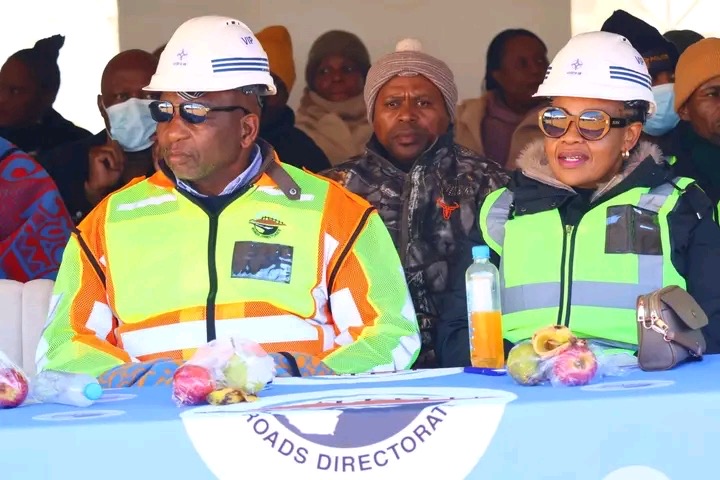
Prime Minister Ntsokoane Matekane officially launched the Mateleng-Lebakeng Road Upgrading Project at Melikane Combined School in Maheng on Thursday, turning the first sod on what the government has described as the largest project ever funded entirely from the national fiscus. The M1.4 billion contract has been awarded to China International Water and Electric Corporation, with construction scheduled for completion by February 2030.

The project entails the upgrading of 45 kilometres of road between Mateleng and Lebakeng to an all-weather tarred standard, the construction of 1.4 kilometres of gravel road to Melikane Combined School, and the construction of permanent bridges over four river crossings: the Tseleng, Lijabatho, Melikane and Senqu rivers. It is those crossings, washed out every rainy season, that have repeatedly severed communities from the outside world for days or weeks at a time.

“Today your government has heard your longest cry.”
Prime Minister Ntsokoane Matekane, Maheng, Qacha’s Nek

What the project will deliver

The Prime Minister told those gathered at Maheng that the consequences of the current road conditions are felt across every dimension of community life. Children miss school during the rainy season. Teachers decline postings in Lebakeng because the roads make the district effectively unreachable for extended periods. Patients fail to reach health centres. Addressing the crowd directly, Matekane framed the project in terms that went beyond infrastructure. “When this road and the bridges are done, many problems will be history,” he said. “No more children missing school for days. No more teachers refusing posts here because the roads are bad. No more patients failing to reach health centres.”

He instructed the Minister of Public Works to ensure the work meets the highest construction standards and directed that the bridges be built to withstand any weather event. The project is aligned with the National Strategic Development Plan II, which identifies road infrastructure as a prerequisite for trade, market access and service delivery in underserved districts.

Project component Detail
Total project value M1.4 billion (~$85.5 million)
Funding source Government of Lesotho (fully funded)
Main road upgrade 45 km, Mateleng to Lebakeng (tarred, all-weather)
School access road 1.4 km gravel to Melikane Combined School
Bridges Tseleng, Lijabatho, Melikane, Senqu rivers
Contractor China International Water and Electric Corporation
Unskilled jobs for local communities ~450
Target completion February 2030

USD equivalent at approx. M16.38/$1 (June 2026). Source: Office of the Prime Minister / Ministry of Public Works and Transport.

Local jobs, procurement and compensation

The Prime Minister said approximately 450 unskilled positions will be created for residents of villages along the road corridor. He directed the contractor to source materials locally where available, instructing it to purchase sand, stone and other inputs from the surrounding communities before looking elsewhere. He further directed local leaders to ensure Basotho entrepreneurs are given preference in supplying project materials.

On the matter of compensation for affected landowners, Matekane was unambiguous. “Whoever is responsible must pay people whose fields are affected, and they must pay on time,” he said, cautioning that he did not want to return to the district to resolve compensation disputes that should be settled before they arise.

Tourism and connectivity

Matekane called on the Ministry of Tourism to develop and promote the area’s considerable natural and cultural assets once the road is complete. He specifically identified San and Khoi rock art caves located between Thabana-li-Mele and Ha-Khanya, as well as the historic Melikane site, as attractions capable of sustaining an ecotourism economy. The Ministry of Forestry and Environment was directed to ensure that development proceeds within a framework of environmental protection. On digital infrastructure, the Prime Minister said he had already engaged the Minister of Communications on extending internet connectivity to Melikane Combined School.

What those present said

Minister of Public Works and Transport Motee Motiane told the ceremony that Qacha’s Nek and Thaba-Tseka remain among the least accessible districts in Lesotho and that poor road infrastructure directly compounds poverty and limits access to basic services. Addressing the contractor directly, he said: “We have trusted you with Lesotho’s biggest government-funded project. Treat it well and make sure the nation benefits.”

China International Water and Electric Corporation’s Southern Africa manager, Zhao Xudong, cited the company’s 70 years of experience across more than 80 countries and pledged timely, high-quality delivery with full environmental protection. He invoked a Chinese proverb that has become something of a development axiom: “If you want to get rich, build a road first. Where there is a road, there is wealth.”

Lebakeng MP Letlatsa Mokati said the project fulfils a commitment residents extracted from him at the time of his election in 2022. He urged the contractor to avoid the delayed payments and safety failures that have marred other infrastructure projects in the region. Principal Chief Mokhesi Tseko Makoa welcomed the development, observing that progress in Lesotho, though sometimes slow, was accumulating. Ntsiwoeng Community Council chairperson Teboho Lehoko said the project would mean most if it translated into measurable reductions in local unemployment. Melikane chief Leetso Khanya, in remarks that captured the sentiment of the occasion, said the community had not expected the intervention. “This government keeps its promises instead of just talking,” she said.

By Lemohang Botsane  |  Lesotho Tribune · Qacha’s Nek
IEC reinstates four parties under court order and confirms Macheli as accounting officer

0

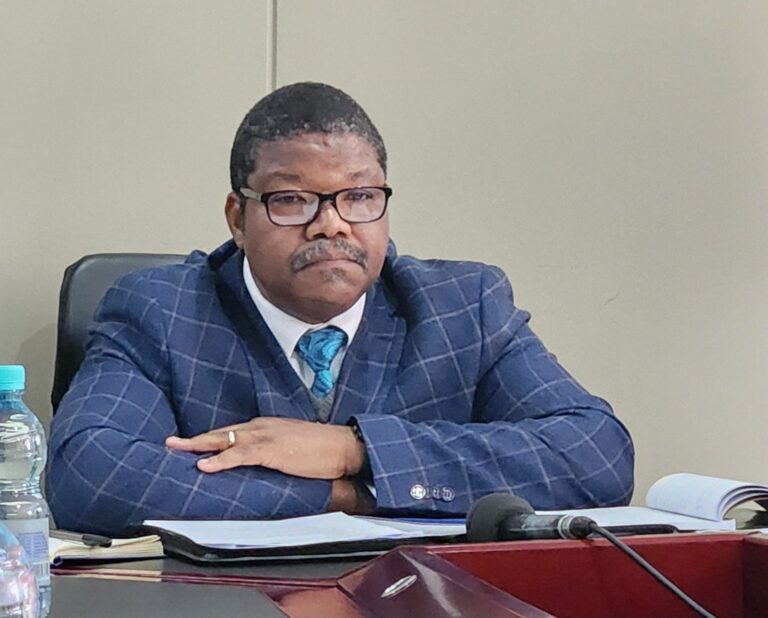
The Independent Electoral Commission has reinstated four deregistered political parties under High Court order and confirmed a new Chief Accounting Officer, as the electoral body moves to shore up both its legal compliance and its financial governance ahead of the 2026/27 financial year.

The Independent Electoral Commission has complied with a High Court order requiring it to return four previously deregistered political parties to the official register, IEC Chairman Reverend Dr John Maphephe confirmed this week. The court issued the order on 1 June 2026, and the Commission received it on 4 June.

The parties reinstated are the Basutoland Democratic Congress, the Bahlabani Ba Tokoloho Movement, the Basotho Democratic National Party, and the Lesotho Economic Freedom Fighters.

“The Commission remains bound by decisions of the courts and is committed to upholding the rule of law.”
IEC Chairman Rev. Dr John Maphephe

While maintaining that the original deregistration had been carried out in accordance with its interpretation of the applicable legal framework and constitutional mandate, the Commission said it remains bound by the decisions of the courts. It added that it is studying the judgments and consulting legal advisers to determine whether any additional legal or administrative measures may be required.

The IEC said it would continue carrying out its constitutional responsibilities impartially, professionally and without favour, and reassured political parties and stakeholders accordingly.

New accounting officer appointed

In a separate development, the Commission welcomed the designation of Lydia Macheli, Acting Director of Elections, as Chief Accounting Officer for the 2026/27 financial year. The appointment was made by the Minister of Finance and Development Planning under Section 4(g) of the Public Financial Management and Accountability Act of 2011.

As Chief Accounting Officer, Macheli will be responsible for overseeing the management of public resources allocated to the Commission and ensuring compliance with financial, procurement and accountability requirements. The IEC described the appointment as an important step towards strengthening governance, financial accountability and operational stability within the institution.

The Commission said the appointment is guided by the Constitution of Lesotho, the Public Financial Management and Accountability Act, the Public Service Act and the Public Procurement Act, all of which provide the legal framework for responsible management of public funds.

The IEC also reaffirmed its commitment to transparency and prudent financial management, saying it is strengthening internal budget planning and monitoring through the establishment of a Budget Committee. The committee is intended to align resources with strategic priorities, improve performance monitoring and ensure value for money in the delivery of electoral services.

The Commission thanked the Government of Lesotho and stakeholders for their continued support, and said it remains stable, fully operational and focused on fulfilling its constitutional mandate of managing democratic electoral processes in the country.

By Tholoana Lesenya  |  Lesotho Tribune

Foot and mouth disease: what the outbreak means for Lesotho’s farmers and consumers

Foot and mouth disease has swept through Lesotho and South Africa in the worst outbreak either country has recorded in a generation. From the cattle posts of Butha-Buthe to the feedlots of KwaZulu-Natal, the disease is reshaping what farmers earn, what consumers pay, and what arrives on the family table.

On 18 February 2026, veterinary officials at a cattle post in Mahlasela, Motebong, in Butha-Buthe district, tested 17 head of cattle showing signs of illness. Six tested positive for foot and mouth disease (FMD). Within days, samples had been dispatched to the World Organisation for Animal Health (WOAH) reference laboratory in Botswana for virus typing. Within a week, the WOAH formally suspended Lesotho’s status as an FMD-free country where vaccination is not practised, a designation that underpins the kingdom’s ability to trade livestock and animal products internationally.

The outbreak was not isolated. It emerged against the backdrop of South Africa’s most severe FMD crisis in recent memory, a crisis that President Cyril Ramaphosa had already declared a national disaster earlier that month. Lesotho, surrounded entirely by South Africa, shares hundreds of kilometres of porous livestock border. Animal health officials in Lesotho confirmed what had long been feared: the disease had crossed.

“In businesses, people buy goods using money earned from livestock sales. If farmers fail to sell, families will struggle to survive.”
District Animal Production Officer Mohapi Lits’oane, Qacha’s Nek

What the disease does

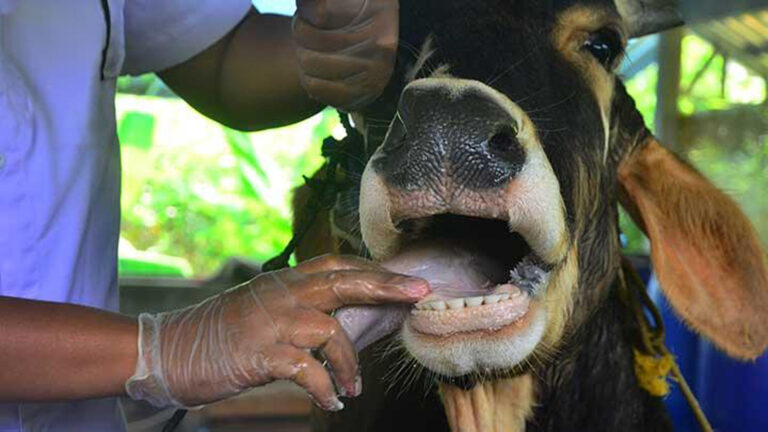
FMD is a highly contagious viral disease of cloven-hoofed animals, affecting cattle, sheep, goats and pigs. It spreads rapidly through direct contact between animals, contaminated feed and water, and airborne transmission. Infected animals develop fever and blister-like sores on the tongue, lips, mouth, teats and between the hooves, making movement painful and causing severe production losses. While most animals eventually recover, the economic damage is acute: milk yield collapses, animals lose condition, and the movement controls required to contain the disease can strand livestock far from markets and abattoirs for months.

One point deserves clarity for consumers: FMD does not infect humans. Meat and milk from infected animals are not a public health risk. As South African food safety officials have confirmed, animals are tested before slaughter and health standards are adhered to throughout the supply chain. FMD should not be confused with hand, foot and mouth disease, an unrelated illness that affects children.

The scale in South Africa

South Africa’s red meat industry is valued at approximately R80 billion (about $4.9 billion). What it has absorbed since 2025 is extraordinary by any historical measure. The Bureau for Food and Agricultural Policy (BFAP) reported that 24,400 FMD cases were confirmed in domestic livestock across the country in 2025, obliterating the previous 20-year high of 7,700 cases recorded in 2022. By the time the outbreak had spread to seven of South Africa’s nine provinces, the disease had penetrated not only communal farms and dip tanks but commercial beef and dairy operations, and five game reserves where buffalo serve as long-term carriers, making full eradication exceptionally difficult.

The financial consequences have been severe. BFAP calculated that more than R821 million (approximately $50 million) in export revenue was lost across three major waves of FMD between 2019 and 2025, and warned that cumulative export losses could rise to as much as R2.6 billion (roughly $158 million) by the end of 2026. South Africa’s beef exports fell 26% in 2025. Shipments to China, which had been the country’s third largest market after the UAE and Jordan, plunged 69% to 1,687 metric tons following a ban imposed by Beijing in May 2025.

The dairy sector has been particularly hard hit. BFAP found that losses in affected Eastern Cape dairy operations reached close to R5,000 (about $305) per cow, driven by reduced milk production, elevated veterinary costs and increased husbandry expenses. With more than 90 dairy farms affected and over 210,000 dairy animals involved by mid-January 2026, BFAP estimated that economic losses in the dairy sector had already exceeded R1 billion (approximately $61 million). The organisation warned that sustained pressure could force some farms to close, triggering significant rural job losses.

Indicator Figure Source
FMD cases in SA livestock, 2025 24,400 BFAP / SA Govt
Previous 20-year high (2022) 7,700 BFAP
SA beef export decline, 2025 ‑26% RMIS / Reuters
Cattle slaughter decline (year-on-year) ‑15.6% RMIS
Cumulative export losses (projected to end-2026) R2.6 billion (~$158 million) BFAP
Dairy losses (SA, to mid-Jan 2026) Exceeds R1 billion (~$61 million) BFAP
Dairy loss per cow (Eastern Cape case studies) ~R5,000 (~$305) BFAP

USD equivalents at the prevailing spot rate of approximately M16.38 per dollar (June 2026). BFAP: Bureau for Food and Agricultural Policy. RMIS: Red Meat Industry Services.

Lesotho: district by district

The outbreak confirmed in Butha-Buthe in February 2026 was not contained to a single district. By May, confirmed FMD cases had been recorded in Butha-Buthe, Leribe, Thaba-Tseka, Qacha’s Nek, Berea and Mohale’s Hoek, according to LENA reporting. In Mokhotlong, 22 confirmed cases prompted cross-border awareness meetings with the adjacent Dr Nkosazana Dlamini-Zuma Municipality in KwaZulu-Natal. The Ministry of Agriculture and Food Security declared FMD a state of national disaster.

The immediate human impact has fallen heavily on smallholder farmers, for whom livestock is the primary or only source of cash income. In Berea, dairy farmer Makhetha Leokaoke told a ministry awareness campaign in May that his cows, which had been producing between 15 and 20 litres of milk daily, could no longer be marketed to the district dairy under restrictions imposed by the state of emergency. Farmers wishing to sell any livestock are now required to obtain clearance certificates from the District Veterinary Office, but delays in that process have added another layer of hardship.

In Qacha’s Nek, District Animal Production Officer Mohapi Lits’oane drew a direct line from livestock immobility to household poverty, noting that the uncertainty surrounding wool and mohair sales could severely affect incomes across the district, even for households with no animals of their own. His warning reflected a structural reality: in much of rural Lesotho, livestock earnings drive local commerce. When farmers cannot sell, the ripple effect reaches shopkeepers, transport operators and labourers far removed from the cattle post.

Wool and mohair: a second blow

Lesotho is the second largest producer of mohair in the world, after South Africa, and wool is the kingdom’s leading agricultural commodity export. The FMD outbreak has disrupted both industries. Transport restrictions have severed the traditional route through which wool and mohair reached South African brokers and from there international auction markets in Port Elizabeth and Durban.

In May 2026, the Agriculture Minister Thabo Mofosi convened a meeting in Maseru with WOAH representatives, livestock farmers’ associations and veterinary officials specifically to address the wool and mohair impasse. The government’s goal was to identify protocols that would allow safe trade to resume without compromising disease containment. One local buyer, Baokunyaoda, stepped into the gap by purchasing wool and mohair locally at prices above those offered by South African brokers, stockpiling the fibre in anticipation of the ban being lifted. The company’s intervention offered immediate financial relief and prevented losses from rain and rodent damage to fibre left sitting in shearing sheds.

What consumers are paying

The dynamics of FMD’s effect on consumer prices are counterintuitive and worth understanding. During a containment outbreak, farmers are typically unable to move animals to abattoirs, which reduces supply and drives prices up. But simultaneously, animals that cannot be sold and cannot hold condition are sometimes rushed to slaughter in bulk, which can briefly soften prices. The net effect depends on timing, the severity of movement restrictions, and the success of vaccination.

In South Africa, the price trajectory through 2025 was unambiguously upward. Statistics South Africa data showed beef prices surging 28.8% year-on-year by mid-2025. The average price of beef mince climbed from around R102.95/kg (about M102.95/kg) in July 2024 to R126.79/kg (about M126.79/kg) by July 2025. Stewing beef rose from R94.80/kg to R123.87/kg over the same period. By early 2026, the annual rate for meat had accelerated to 13.5%, with beef steak up 31.2% and beef stew up 30.3%, the highest rates recorded for those categories since December 2017. Because Lesotho imports a large proportion of its processed and packaged meat from South Africa, South African consumer price movements feed through directly into Maseru’s supermarkets and butcheries.

The longer-term outlook, however, offers cautious relief. South African agricultural economists, including Agbiz chief economist Wandile Sihlobo, noted in February 2026 that a sustained surge in consumer meat prices was not inevitable. Ongoing slaughter levels, base effects from the prior year’s elevated prices, and consumer resistance were identified as factors that could moderate prices through the remainder of 2026. All of this hinges on the speed and effectiveness of vaccination.

The vaccination race

South Africa shifted its FMD management approach in late 2025, moving from a strategy based primarily on stamping out infected herds toward a policy of FMD-free with vaccination. The Botswana Vaccine Institute was contracted to supply one million doses per month from mid-January 2026. South Africa’s Livestock Identification and Traceability System, developed by the CSIR, is being deployed to track vaccinated animals using geo-location data.

In Lesotho, a national FMD response plan was approved following the disaster declaration, and awareness campaigns have been extended across districts. At the Butha-Buthe press briefing in March 2026, Minister Mofosi called on South Africa and Botswana to assist with veterinary expertise, and confirmed that samples had been sent to the WOAH reference laboratory for virus typing to ensure vaccine matching. Dr Keneuoe Lehloenya of the Animal Health and Inspection division noted that most animal diseases were first identified in South Africa and spread into Lesotho rapidly, given the countries’ shared borders and shared grazing land.

The call for a regional approach has grown louder. A commentary published by The Gremlin in late February 2026 noted that, apart from Namibia, no country bordering South Africa had escaped confirmed outbreaks outside controlled areas. “Movement of livestock across borders and domestically from affected districts into the rest of the region is poorly controlled,” the publication observed. For Lesotho, a country entirely enclosed within South Africa, that regional dimension is not merely relevant, it is decisive.

District Agricultural Officer Mamoholi Mphutlane, speaking at an awareness event in Berea in May, said the country faces many hazards, with climate change being one of the major contributing factors to the spread of disease and economic decline. Her warning points beyond this outbreak to a structural vulnerability: a livestock-dependent economy, porous borders, a lean veterinary service, and a changing climate are a combination that will demand sustained investment if the next outbreak is to be met with greater readiness than this one.

By Staff Reporter  |  Lesotho Tribune · Farmer’s Corner

Boeing aircraft reportedly carrying $3 billion seen over Tehran – report

0
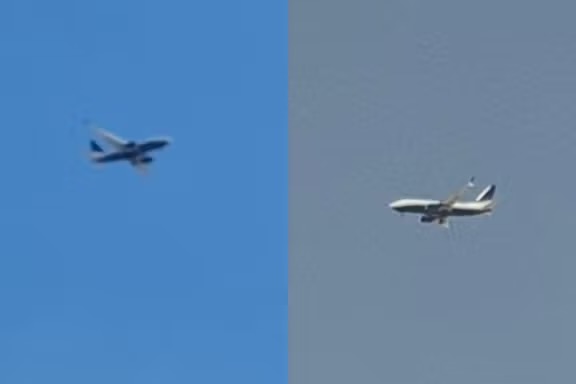
Iranian news outlet Tabnak released images it said showed a Boeing 737-7JZ BBJ, registered A6-RJF, flying over Tehran and allegedly carrying $3 billion in funds to Iran, after Reuters reported that the UAE had delivered that amount to Tehran. The Tabnak report did not specify when the photos were taken or whether they showed the same Boeing 737-7JZ BBJ that was spotted Monday flying from Abu Dhabi to Tehran. At the time, unconfirmed media reports said the plane was carrying the $3 billion to Iran. The United Arab Emirates has already delivered about $3 billion to Iran and agreed to release billions more under an arrangement aimed at halting Iranian attacks on the Persian Gulf state, Reuters reported citing four sources. Two regional sources said the UAE agreed to release a total of $10 billion, with more than $3 billion already delivered. Two other sources put the total funds involved at $20 billion, saying the move was agreed in return for Iran stopping missile and drone attacks on the UAE. Reuters said it could not determine whether the funds came from UAE money or long-blocked Iranian accounts in the UAE banking system or elsewhere. A UAE official said Abu Dhabi was seeking to reduce tensions and support regional stability. Iran last directly attacked the UAE on May 4, when it struck Fujairah port.

Leaked memo: Naledi appoints interim MD as boardroom war rages

Naledi Funeral Planners has appointed Mr Tsolo Blessed Seutloali as interim managing director and folded the functions of its suspended Chief Legal and Compliance Officer into the new role, according to a leaked internal memorandum seen by the Lesotho Tribune.

The memorandum, dated 8 June 2026 and addressed to all employees, is issued by order of the board and signed by the chairman, Mr Thabiso Gilden Madiba. It states that Mr Seutloali’s appointment took effect on the same date and that he will lead management and exercise powers delegated by the board.

The memo further advises that, following the suspension of the Chief Legal and Compliance Officer, who also serves as company secretary, the duties of that office will now sit inside the interim managing director’s role.

“The responsibilities and functions of that office will, on an interim basis, be consolidated into the role of the Interim Managing Director.”

Employees and departments that previously reported to the Chief Legal and Compliance Officer are instructed to report directly to the interim managing director until further notice. Matters normally referred to the chief executive officer or the company secretary are likewise to be directed to Mr Seutloali. The memo states that all other reporting structures remain unchanged unless otherwise communicated.

The appointment comes amid a protracted power struggle at the Leribe-based funeral services company. Its annual general meeting in January descended into chaos and landed rival factions before the High Court’s Commercial Division, with ousted chairperson Malefetsane Tlelima and other removed board members seeking to block their removal, opposed by majority shareholder Thabiso Madiba, according to reporting by the Sunday Express.

The company secretary referenced in the memo, Advocate Peter Matekane, has featured prominently in that dispute. The Lesotho Times has reported that Adv Matekane is a suspended senior official of the Directorate on Corruption and Economic Offences who faced accusations of working at Naledi in breach of public service rules, and that he declined to convene board meetings on the grounds that Mr Madiba’s chairmanship remained under legal challenge. The same paper reported in May that company managers had barred Mr Madiba from entering several Naledi premises, including the Temong head office and branches in Teyateyaneng, Maputsoe, Botha-Bothe, Hlotse and Mapoteng.

Naledi Funeral Planners was incorporated in 2012 and operates branches across the northern, central and southern regions of Lesotho, providing funeral policies and related services to Basotho households. In 2023, the company’s chief financial officer and its finance manager were shot dead in Maseru, and a then managing director resigned while facing charges in connection with the killings, alongside allegations that the company had been defrauded of more than M10 million (about US$560,000), according to reporting by The Post.

In the memorandum, the board thanks employees for their cooperation and continued commitment during the interim period.

Malema wants Ngizwe jailed for 6 months

EFF president Julius Malema has launched urgent contempt proceedings in the Gauteng High Court against radio presenter Ngizwe Mchunu, seeking a six-month prison sentence after Mchunu allegedly defied a court interdict barring him from making defamatory statements.

By Staff Reporter

EFF president Julius Malema has filed an urgent contempt of court application in the Gauteng High Court, Pretoria, against Ngizwe Mchunu, according to papers lodged with the court.

The application seeks an order declaring Mchunu guilty of contempt and sentencing him to six months’ imprisonment without the option of a fine.

Malema’s legal team contends that Mchunu intentionally and unlawfully continued making defamatory statements about the EFF leader in defiance of a court order granted on 5 June 2026, and that he intentionally and unlawfully refused to comply with and respect that order.

“Intentionally and unlawfully continued making defamatory statements about the CIC in defiance of a court order granted on 5 June 2026.”

The matter is scheduled to be heard on 17 June 2026.

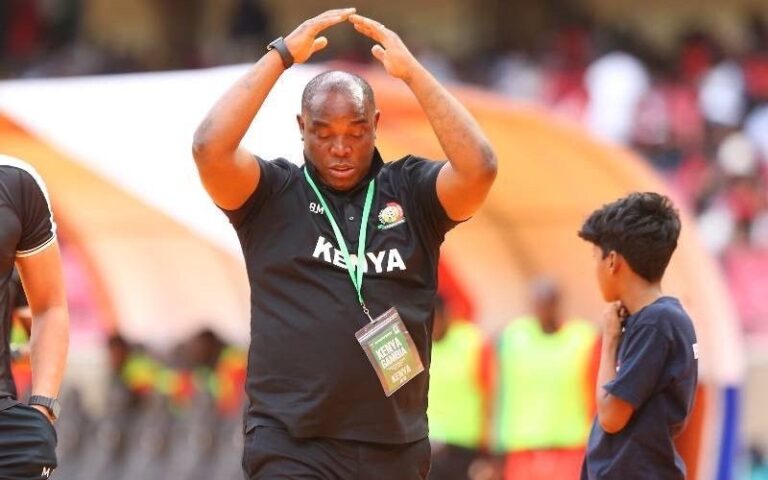
Lesotho is McCarthy’s second biggest win

Benny McCarthy’s Harambee Stars inflicted a 4-0 defeat on Likuena in Pretoria on Sunday, handing Lesotho head coach Atang Mafoso his first loss since taking charge in February.

After 19 matches at the helm of the Kenyan national football team, Harambee Stars, coach Benedict Saul McCarthy’s 4-0 triumph over Lesotho’s Likuena ranks as his second-biggest victory as head coach.

McCarthy’s side stunned Likuena on Sunday afternoon at Lucas Moripe Stadium in Pretoria, securing Kenya’s third consecutive game without defeat. The result extends a promising run under the former Cape Town City and AmaZulu mentor.

McCarthy’s highest-scoring result as Harambee Stars coach remains a 5-0 victory over Seychelles, recorded in Kenya during the Group F 2026 FIFA World Cup qualifiers in September 2025.

For Likuena head coach Atang Bob Mafoso, Sunday’s defeat was his first since taking charge of the national side in February this year. Mafoso, who returned from Namibia where he had coached a league-winning club, has nonetheless maintained a 75% unbeaten record across his four matches in charge.

He has recorded one win and two draws, including a draw against Kenya earlier last week, before Sunday’s 4-0 loss. The sequence points to a side still finding its feet at the top level, but one that has shown resilience.

The most persistent problem for Mafoso’s Likuena has been in front of goal. In four matches under his stewardship, Lesotho have scored three goals and conceded six.

“My team needs to improve physically. Our red card against Sekhoane Moerane was a huge blow. We were one man down against one of Africa’s formidable sides.”

Speaking after the final whistle, Mafoso described the result as a wake-up call as Lesotho turn their attention to the 2027 Africa Cup of Nations qualification campaign. Likuena are due to face Morocco in the group stage in September this year.

Sunday’s meeting was not the first time the two sides have clashed in recent memory. When Kenya and Lesotho last met, in September 2024, Lesotho fell to a narrow 1-0 defeat.

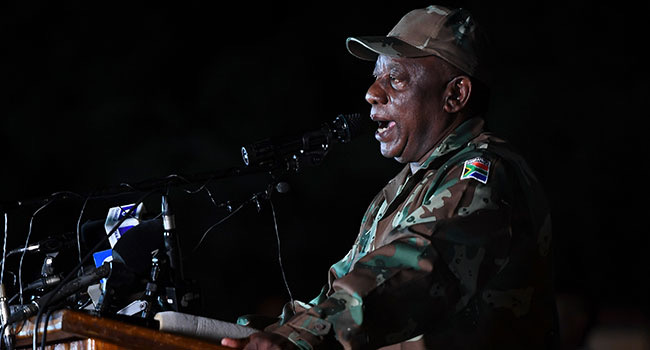
Ramaphosa tells South Africans: stop checking people’s papers…that is not your job

South African President Cyril Ramaphosa on Sunday delivered a nationally televised address from the Union Buildings in Pretoria, pledging decisive government action on illegal immigration while ordering citizens to stand down from vigilante enforcement as anti-foreigner protests continued to spread across Gauteng, KwaZulu-Natal and the Western Cape.

Ramaphosa convened the address, billed by the Presidency as a “family meeting,” under mounting pressure from anti-immigration movements including March and March, which has set 30 June 2026 as a deadline for undocumented foreign nationals to leave the country. The movement has warned of a national march if the government fails to respond to its demands before that date.

The address came days after Ramaphosa tabled the Presidency Budget Vote in Parliament, where he outlined a package of enforcement measures including increased workplace inspections, prosecution of employers who hire undocumented workers, stronger border security and action against corruption within immigration structures.

On Sunday evening, the president drew a firm constitutional line on the question of citizen enforcement. He stated that only authorised government officials are permitted to act against violations of immigration law, and that no private individual has the right to stop someone in the street to demand proof of identity.

“Only the authorised government officials may act against violations of the law, including violations of our immigration laws. No other person is allowed to confront someone in the street to demand proof of identity.”
Tribune Poll Closed

Is the South African government doing enough to protect foreign nationals while addressing illegal immigration?

This poll has closed. Subscribe to view the results.

Ramaphosa acknowledged public frustration, conceding that the state had been slow to act and that gaps in enforcement had fuelled community anger. He insisted, however, that the rule of law could not be circumvented, and that recent violent incidents involving foreign nationals did not reflect government policy or the values of South Africans.

The president repeated his warning against xenophobia and vigilantism, framing illegal immigration as a challenge that required an African-led continental response rather than street-level enforcement. Speaking earlier in the week during a state visit by Kenyan President William Ruto, Ramaphosa argued that migration pressures were rooted in uneven economic development across the continent and called for deeper regional integration as a long-term solution.

Cabinet has approved a revised White Paper on Citizenship, Immigration and Refugee Protection, described by government as the most significant reform of the country’s immigration framework in a generation. The Department of Employment and Labour has also finalised a National Labour Migration Policy introducing maximum quotas for documented foreign workers, alongside an Employment Services Amendment Bill that would empower the Minister of Labour to set sector-specific employment caps for foreign nationals.

Several countries with significant national communities in South Africa, including Lesotho, Zimbabwe, Kenya and Malawi, have advised their citizens in the country to exercise caution amid the protests. Nigeria announced the repatriation of 130 nationals in response to earlier incidents, and both Nigeria and Ghana formally raised concerns with Pretoria.

The address is closely watched in Maseru. Tens of thousands of Basotho nationals live and work in South Africa, and the escalating protest environment has raised alarm among Lesotho’s diaspora community and the government alike.

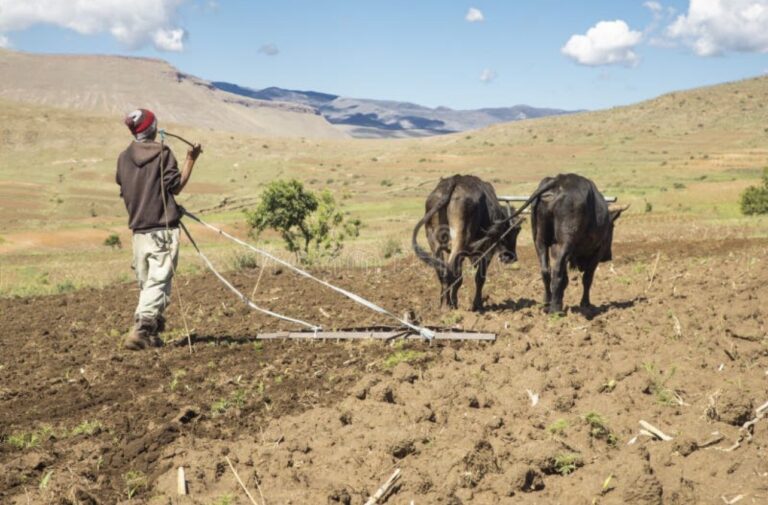
Lesotho produces 10% of its potatoes and imports $64m in grain from South Africa as minister warns food import bill is outpacing production

Lesotho produces just ten percent of its own potato needs and imports more than 236,000 tonnes of grain from South Africa each year, as the Minister of Agriculture calls for urgent commercialisation of the sector and warns that the country’s food import bill is growing faster than its capacity to produce.

STAFF REPORTER  ·  LESOTHO TRIBUNE

Lesotho’s Minister of Agriculture, Food Security and Nutrition, Selibe Mochoboroane, has used the commemoration of International Potato Day to lay bare the scale of the country’s agricultural underperformance, revealing that national potato production meets only ten percent of domestic demand and that the country continues to import the overwhelming majority of its basic food requirements from South Africa.

Speaking at the event held in Maseru, Mochoboroane said Lesotho’s annual potato demand stood at 132,000 metric tonnes, while local production averaged only 13,200 metric tonnes per year. The shortfall, he said, was being met through imports, costing the country M69 million annually on potatoes alone, with a government target to reach 25,000 metric tonnes of domestic production by the 2026/2027 season.

“Agriculture remains central to addressing these challenges,” the minister said. “In Lesotho, the potato has emerged as one of the most promising agricultural commodities with strong potential to drive value chain development and agro-industrial growth.”

Commodity SA exports to Lesotho Year
Maize (corn) $34.15m 2024
Wheat and meslin $22.12m 2024
Rice $8.08m 2024
Total cereals (SA to Lesotho) $64.71m 2024
Source: UN COMTRADE / Trading Economics, April 2026

The potato deficit is symptomatic of a broader structural dependence. Lesotho imported an estimated 236,000 tonnes of grain in 2024, with maize and wheat imports from South Africa remaining the largest categories. South Africa’s total exports to Lesotho reached $1.47 billion in 2024, and trade analysts tracking the corridor have noted that maize flour and yellow maize are among the fastest-growing import categories, with growth rates exceeding 40 percent, reflecting Lesotho’s deepening reliance on its neighbour for food security rather than just energy and manufactured goods.

South Africa’s own maize production outlook offers Lesotho some reassurance of supply continuity. The Supply and Demand Estimates Committee in Pretoria projects overall maize supply for the 2025/26 marketing season at approximately 15.6 million tonnes, a 3.88 percent increase on the previous season, with domestic demand stable at around 11.8 million tonnes. The surplus ensures South Africa remains a reliable exporter to the region, with Lesotho consistently among the top six white maize destinations. Between April 2025 and January 2026, South Africa exported 69,236 tonnes of white maize to Lesotho, representing 9.82 percent of total white maize exports for that period.

“Lesotho continues to export wool and mohair largely in raw form, exposing the sector to risks such as the recent Foot and Mouth Disease outbreak. Domestic processing and value addition would help create jobs, retain more value within the country, and strengthen economic resilience.”

But guaranteed supply from the south is not the same as food sovereignty, and Mochoboroane acknowledged as much. Agricultural products contribute six percent to Lesotho’s GDP, with wool and mohair accounting for five percentage points of that contribution. Yet the minister warned that even these traditional export strengths were under pressure, noting that a recent Foot and Mouth Disease outbreak had disrupted wool and mohair exports and exposed the vulnerability of selling unprocessed commodities into the international market.

The minister’s remarks, made during a separate engagement on trade with China, underlined a strategic tension at the heart of Lesotho’s agricultural economy: the country sits on productive highland soils, receives adequate rainfall across much of its territory, and holds significant irrigation potential from the Katse and Mohale dams constructed under the Lesotho Highlands Water Project, yet the gap between potential and realised production remains wide across virtually every crop category.

Approximately 75 percent of Lesotho’s total land area is considered suitable for agricultural production, and the country’s irrigation potential is estimated at 112,500 hectares, yet just over 20 percent of farmers are equipped for irrigation. The average farm size is 1.3 hectares, with only 11 percent of farming households owning more than three hectares. These structural constraints, rather than a lack of suitable land, drive the production deficit.

Mochoboroane said the shortage of quality seed potato was one of the major challenges affecting the sector and that significant progress was being made towards establishing a sustainable local seed production system with support from international partners. The government’s plan to increase potato production by ten percent annually over five years would require resource mobilisation that the minister acknowledged had not yet been fully secured.

South African companies have shown interest in the gap. Alpha Farms and Denmar Estates have previously partnered with Lesotho farmers to produce vegetables and fruit for the Lesotho, South African and European markets, taking advantage of the country’s elevation, good soil quality and the fact that Lesotho’s fruit ripens earlier than in other southern hemisphere countries, offering a seasonal arbitrage opportunity for regional supply chains. The two Lesotho Highlands Water Project reservoirs, Katse Dam and Mohale Dam, support commercial trout operations that export primarily to food service outlets across Southern Africa.

South Africa’s own agricultural performance provides a reference point for what Lesotho’s highlands could produce under investment. South Africa’s Department of Agriculture reported in March 2026 that the sector had recorded 17.4 percent growth and its strongest export performance since before the pandemic, driven by market diversification into the Philippines, China and European markets. Minister John Steenhuisen attributed the gains to the Agriculture and Agro-processing Master Plan and coordinated phytosanitary diplomacy that opened new bilateral corridors. Lesotho lacks an equivalent plan at scale.

For now, the trajectory of Lesotho’s agricultural trade with South Africa points in one direction: more imports, rising food costs, and a widening gap between what the highlands can grow and what the market demands. Whether the International Potato Day commitments translate into the investment, infrastructure and institutional reform needed to close that gap is a question the sector will be watching closely through the planting season ahead.

Letshego Lesotho becomes first microfinance institution to offer savings and investment products

Letshego Financial Services Lesotho has launched three savings and investment products, becoming the first microfinance institution in the country to offer customers the opportunity to save and invest alongside accessing credit.

By Staff Reporter  |  Lesotho Tribune

Letshego Financial Services Lesotho launched its Savings and Investment product range in Maseru on 3 June 2026, marking what the company described as a strategic shift from its origins as a credit-only provider to a broader financial services partner for individuals and micro-entrepreneurs.

The new offering comprises three products: LetsGo SaveSmart, LetsGo Flex, and LetsGo Fixed. All three are available to individuals and businesses, carry a minimum deposit of M50.00 (approx. USD 2.98) and require a minimum term of three months. The company said the products were designed to offer competitive returns while remaining accessible to underserved segments of the population.

Letshego Lesotho, which began operations in September 2012 and has grown to more than 7,500 customers, said the launch aligned with national priorities to promote a savings culture and strengthen economic participation. Products will be available through branches in Maseru, Leribe, Butha-Buthe, Mafeteng, and Mohale’s Hoek, as well as through digital channels including a Digital Mall, WhatsApp, and USSD.

Tribune Poll Closed

Do you currently have a savings or investment account with a financial institution in Lesotho?

This poll has closed. Subscribe to view the results.

“True financial inclusion is achieved when people have the tools to both access and grow their money.” — Selloane Tsike, Chief Executive, Letshego Financial Services Lesotho

Selloane Tsike, Chief Executive of Letshego Financial Services Lesotho, said the launch represented a turning point for the organisation. She said many Basotho had historically been limited to borrowing when engaging with formal financial services, and that the new products would give customers the means to build assets, plan for future goals such as education, home ownership, and retirement, and strengthen their financial resilience.

New savings and investment products

Product Description Min. deposit
LetsGo SaveSmart Flexible savings for individuals and businesses M50.00
LetsGo Flex Accessible savings with flexible terms M50.00
LetsGo Fixed Fixed-term investment; minimum 3-month term M50.00

Source: Letshego Financial Services Lesotho. Minimum deposit equivalent to approx. USD 2.98 at current rates.

Letshego Financial Services Lesotho said customers could visit any branch or its digital platforms to find out more. Further information is available at letshego.com/lesotho.

Almost one in three children in Lesotho is in child labour as journalists are trained to treat the crisis with the urgency of any other crime

More than 9,000 children in Lesotho are in child labour instead of school, as journalists attending a World Vision and MISA Lesotho training workshop are urged to treat child labour and human trafficking with the same investigative urgency as any other crime.

BY LEMOHANG BOTSANE

Journalists in Lesotho have been called on to do more to expose child labour, forced labour, and human trafficking through careful and responsible reporting, as new figures reveal that 9,259 children in the country are currently engaged in child labour, representing a child labour rate of 31.9 percent.

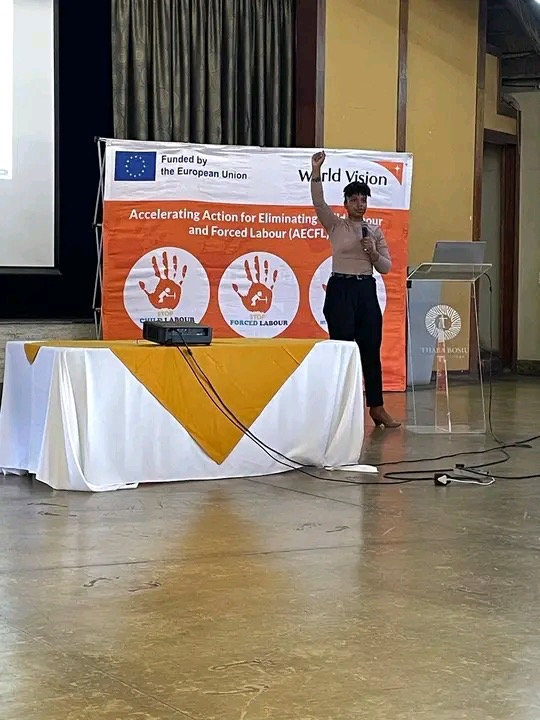
The call was made during a two-day media training workshop held in Maseru this week, organised by World Vision International Lesotho together with the Media Institute of Southern Africa (MISA) Lesotho. The training formed part of the Accelerating Action for the Elimination of Child Labour and Forced Labour (AECFL) Project, funded by the European Union.

The workshop aimed to equip journalists with skills and knowledge to investigate and report on cases of trafficking, child labour and forced labour, while protecting the dignity and safety of children and other victims in the course of their reporting.

Category Number Rate
Children in child labour (girls) 4,685  
Children in child labour (boys) 4,574  
Total children in child labour 9,259 31.9%
Children in economic activity   21.1%
Source: Ministry of Labour and Employment, presented at World Vision / MISA Lesotho workshop, Maseru

Speaking at the training, MISA Lesotho Acting National Director and investigative journalist Nicole Tau said ethical journalism was critical when reporting on vulnerable people such as children.

“Journalists must always follow ethical rules,” Tau said. “If we do not, we can lose the trust of the public. Victims may be afraid to speak, and people with information may refuse to help. Our job is to be accurate, fair, and sensitive at all times.”

“Child labour is a crime. It deserves the same serious attention and justice as any other crime. Many of these cases happen every day, but people do not know about them.”

Mathabang Kose, coordinator of World Vision’s AECFL Project, told journalists that the media had a significant role to play in ending child labour. “Child labour is a crime,” she said. “It deserves the same serious attention and justice as any other crime. Many of these cases happen every day, but people do not know about them. We are asking journalists to help expose what is happening so we can bring change.”

Inspector Nthabiseng Letsie of the Ministry of Labour and Employment presented the figures to the workshop, noting that the 31.9 percent child labour rate meant that almost one in every three children in Lesotho was working instead of focusing on school. A further 21.1 percent of children were involved in some form of economic activity to assist their families.

For workshop participant Lerato Lebakae, the training reshaped her understanding of how to approach these stories. “I now know how to report on these issues in a responsible way,” she said. “I can also help raise awareness about what vulnerable children are going through. This will help the public understand the problem better.”

Stakeholders at the workshop agreed that protecting children was a shared responsibility and urged the public, government, schools and communities to work alongside the media to ensure that every child in Lesotho has the opportunity to attend school, remain safe and build a better future.

Independent business & current affairs journalism · Lesotho Subscribe — M85/month
| Independent business & current affairs journalism · Lesotho