Mohahlaula Airlines
Tuesday, July 21, 2026
Home Blog Page 7

Lesotho signs M900 million World Bank deal covering electricity, skills and nutrition

Finance · National

Lesotho has signed World Bank financing agreements totalling M900 million (approximately US$51.3 million), with the bulk earmarked for rural electrification and the remainder split between skills training and nutrition.

Lemohang Botsane

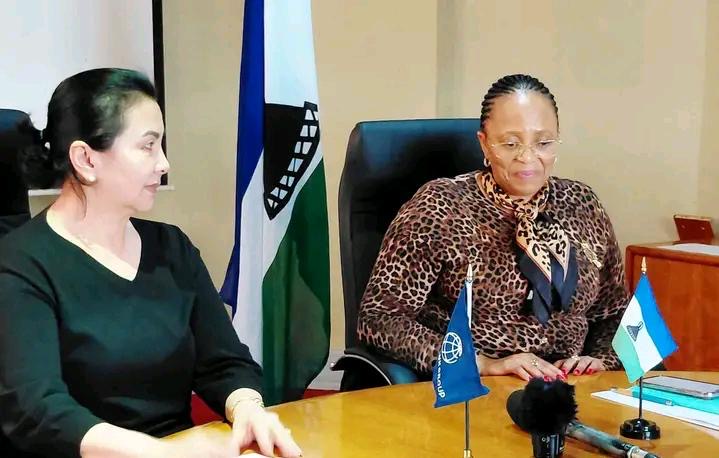
Minister of Finance and Development Planning Dr. Retšelisitsoe Matlanyane signed financing agreements worth M900 million (approximately US$51.3 million) with World Bank Country Representative Dinara Djoldosheva, committing the funds across three projects covering energy access, skills development and nutrition.

Project Maloti USD
Accelerating Sustainable Energy Access Transformation M820 million US$50 million
Skills training M16.4 million US$1 million
Nutrition M4.9 million US$300,000
Total M900 million US$51.3 million

The largest share — M820 million (US$50 million) — goes to the Accelerating Sustainable Energy Access Transformation project, which is intended to connect more homes and businesses to electricity, with a focus on rural and highland communities that currently have limited or no supply.

M16.4 million (US$1 million) is allocated to skills training, aimed at equipping Basotho, particularly young people, with skills that match available employment. A further M4.9 million (US$300,000) will fund nutrition programmes targeting children and mothers.

The largest share — M820 million (US$50 million) — goes to electrification, with rural and highland communities identified as the primary beneficiaries.

Speaking after the signing, Dr. Matlanyane said the agreements reflect the government’s intention to invest in electricity, skills and nutrition as drivers of economic growth. Djoldosheva said the World Bank will continue to support Lesotho’s development plans and described the projects as steps toward a more inclusive economy.

World Vision Lesotho sets 650,000-child target in new five-year strategy

0

Development · Berea

World Vision Lesotho has launched a five-year strategy targeting 650,000 vulnerable children, with child protection, health, water and family income as the four focus areas for the 2026 to 2030 period.

Lemohang Botsane

World Vision Lesotho launched its 2026-2030 community strategy in Bela-Bela on Friday, setting a target of reaching approximately 650,000 vulnerable children over the next five years through programmes focused on child protection, health and nutrition, water and sanitation, and family livelihoods.

Director General James Chifwelu said the strategy puts communities at the centre of implementation, with an integrated approach designed so that programmes in different areas reinforce each other rather than operate in isolation.

“Our goal is to work with communities in the most coordinated and impactful way possible,” Chifwelu said. He added that community members are not just recipients of services but partners in planning and decision-making.

“It takes all of us — government ministries, development partners, schools, churches, communities, and families — working together.” — Thato Masupha, District Child Protection Team

Thato Masupha from the District Child Protection Team said her team’s role is to bring different groups together to prevent and respond to child protection concerns. She said protecting children is not a government responsibility alone. “It takes all of us — government ministries, development partners, schools, churches, communities, and families — working together,” Masupha said.

The strategy was launched under the theme: “Transforming Lives, Empowering Communities with Agile, Low-Cost, High Impact Programs.”

Botswana pledges 100,000 FMD vaccine doses to Lesotho after first outbreak confirmed

Agriculture · National

Botswana has pledged 100,000 doses of Foot-and-Mouth Disease vaccine to Lesotho as the country works to contain its first recorded FMD outbreak, which was confirmed in Butha-Buthe District in February 2026.

Lemohang Botsane

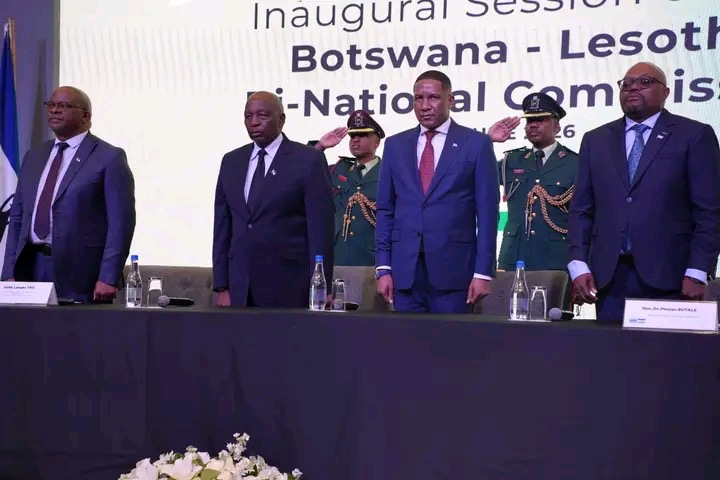
Botswana President Duma Gideon Boko announced that Botswana will donate 100,000 doses of Foot-and-Mouth Disease vaccine to Lesotho during the first meeting of the Lesotho-Botswana Bi-National Commission, held in Gaborone. The announcement was made public by the Office of the Government Spokesperson.

Lesotho confirmed its first FMD outbreak in Butha-Buthe District in February 2026. Veterinary and government teams have been working to prevent the disease from spreading to other parts of the country since.

The Government of Lesotho says the vaccine donation will help protect livestock and support farmers whose livelihoods depend on animals. Officials are urging livestock owners to cooperate with vaccination teams, follow advice from veterinary officers, and report signs of illness early.

Botswana’s President Boko announced the 100,000-dose donation at the first sitting of the Lesotho-Botswana Bi-National Commission in Gaborone.

FMD is a highly contagious viral disease affecting cloven-hoofed livestock including cattle, sheep and goats. Lesotho’s outbreak is the first the country has recorded.

M13 million vanishes through the Central Bank, and nobody can explain it

Five payments worth more than M13.1 million processed through the Central Bank of Lesotho cannot be explained. No invoices. No vouchers. No receipts. And, crucially, no trace of the money in the government’s own cash book.

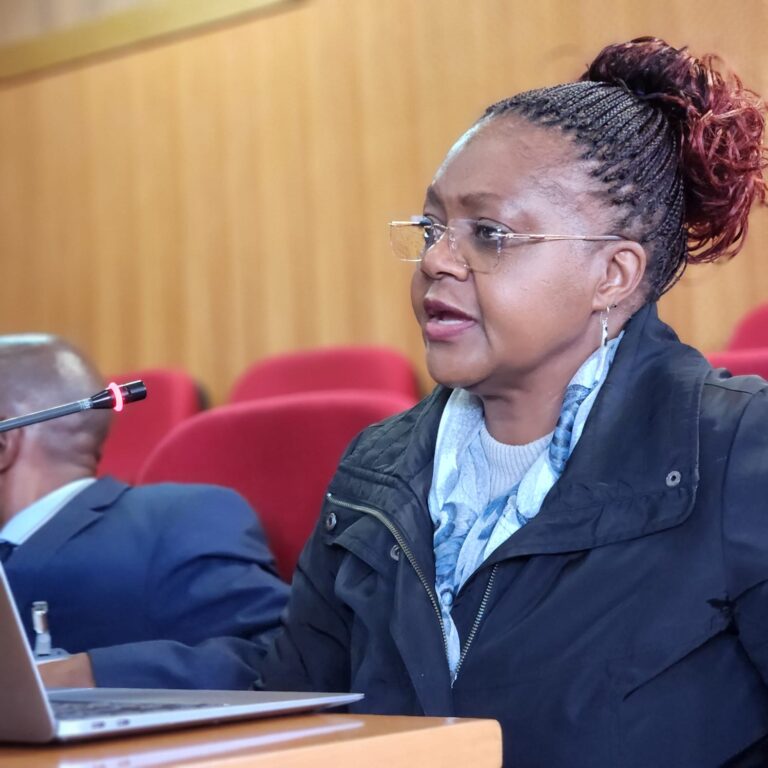
Auditor General ‘Mathabo Makenete delivered one of the most damaging audit findings in recent memory to the Public Accounts Committee on Tuesday, revealing that five payment transactions totalling more than M13.1 million (approximately $800,000) were processed by the Central Bank of Lesotho between 27 May 2022 and 8 February 2023, yet no documentation exists to explain what the money was for, who authorised it, or where it went.

The transactions do not appear in the government’s cash book maintained by the Accountant General. Auditors could find no supporting invoices, payment vouchers or receipts. The result was an adverse audit opinion on the Government of Lesotho’s Consolidated Financial Statements for the 2023/24 financial year, the most serious finding an auditor can issue, signalling that the financial statements contain material misstatements and cannot be relied upon to accurately reflect the government’s financial position.

“The public deserves answers whenever large sums of money cannot be properly accounted for.”
PAC Chairperson ‘Machabana Lemphane-Letsie

PAC Chairperson ‘Machabana Lemphane-Letsie demanded to know how such a significant amount of money could move through government financial systems without adequate documentation or explanation. She stopped short of drawing conclusions about what the transactions represent, but was explicit that the absence of records raises legitimate concerns about accountability and the possibility of financial misconduct.

What an adverse opinion means

An adverse audit opinion sits at the most serious end of the spectrum of audit findings. It means that, in the Auditor General’s professional judgment, the financial statements are not merely incomplete or qualified on a narrow point. They contain material misstatements that cause the statements as a whole to be unreliable. Makenete told the committee that the unexplained entries contributed to an understatement of government financial figures and exposed persistent weaknesses in financial reporting and reconciliation processes across key institutions.

Not the M6.1 billion, but a fresh mystery

The revelation immediately triggered comparisons with the controversial M6.1 billion reported missing from government accounts in 2021, a matter that generated widespread public debate and political controversy. Several PAC members suggested the two cases could be connected. Lemphane-Letsie dismissed the speculation directly, pointing out that the newly discovered transactions occurred between 2022 and 2023, well after the M6.1 billion issue first surfaced. The timing, she said, suggests this is an entirely separate matter requiring its own investigation.

That distinction matters. It means Lesotho’s public finances may harbour not one unresolved mystery but at least two, with the earlier saga still unresolved and a new one now added to the register.

Calls for a forensic audit

Lemphane-Letsie recommended that a comprehensive forensic audit be conducted at the Central Bank of Lesotho. A forensic audit goes beyond a standard financial review: it traces the movement of funds, examines supporting evidence, identifies possible irregularities, and determines whether laws or regulations may have been violated. She argued it is the only mechanism that could provide clear answers about the unexplained payments and restore public confidence in the integrity of the country’s financial systems.

She also raised a structural concern: because the Central Bank is wholly owned by the government, relying solely on internal reviews may not satisfy public demands for transparency. “The circumstances require an independent and thorough examination of the facts,” she said. She further questioned whether existing oversight mechanisms are adequate to detect and prevent irregular transactions in the first place, given that payments of this size could pass through the Central Bank without appearing in the Accountant General’s records.

A pattern the auditors keep finding

The M13.1 million does not emerge in isolation. For years, successive audit reports have flagged recurring weaknesses across government institutions: poor record-keeping, unsupported expenditures, delayed reconciliations, and inadequate internal controls. Financial experts have consistently warned that such weaknesses create the conditions for errors, wasteful spending and potential abuse of public resources.

Tuesday’s PAC sitting is expected to be followed by further scrutiny of the Auditor General’s full report, with attention shifting toward the Central Bank of Lesotho and the Ministry of Finance for answers about the origins and authorisation of the five transactions. As things stand, the M13.1 million remains unexplained, with no documents, no corresponding entries in government records and no public account of who approved the payments or what they were meant to achieve.

By Tholoana Lesenya  |  Lesotho Tribune

The weight men carry: Lesotho’s mental health crisis in numbers

As Lesotho marks Men’s Mental Health Awareness Month this June, data show the kingdom carries the world’s highest suicide burden, yet fewer men seek help than in any comparable country. The silence is killing them.

Lesotho has, for several years, carried one of the heaviest suicide burdens of any country on earth. The most widely cited World Health Organisation figure places the national suicide rate at 87.5 per 100,000 people, a statistic that has attracted global scrutiny and considerable caution from health researchers who note the underlying data quality limitations. A more conservative 2021 estimate from the Global Burden of Disease Study, using revised WHO methodology, puts the age-standardised rate at 36.7 per 100,000 — still the highest in the world for that year.

The headline figure, however contested at the margins, conceals a starker truth about gender. Across the two decades of WHO data covering Lesotho from 2000 to 2019, male suicide rates have consistently run at roughly four times the female rate. In 2019, the male rate stood at 146.9 per 100,000, against 34.6 for women. At the peak year of 2014, when the overall rate reached 116.2 per 100,000, the male figure was 195.2 per 100,000. June is Men’s Mental Health Awareness Month globally, and those numbers give it particular weight in Maseru.

“In Lesotho, the suicide rate is 72 per 100,000 persons, but breaking it down between men and women it is 116 and 30, respectively.”
Southern Africa Litigation Centre, 2023

The silence of masculinity

Researchers and clinicians have long argued that the data do not simply reflect that more Basotho men die by suicide. They reflect that fewer Basotho men speak about distress before it becomes acute. A 2025 systematic review published in the American Journal of Men’s Health by University of Limpopo researchers Leshata Mokhwelepa and Gsakani Sumbane, drawing on 47 studies conducted between 2000 and 2024, found that conformity to traditional masculine norms was the single most consistent predictor of whether a man would seek mental health support. The fear of being perceived as weak, as less masculine, or as failing in the role of provider and protector repeatedly emerged as the dominant barrier across different cultural and national settings in southern Africa.

The Psychological Society of South Africa (PsySSA), in its June 2025 Men’s Mental Health Month commentary, noted that men remain significantly underrepresented in mental health service use across the region, constrained by dominant ideals of masculinity that equate vulnerability with weakness. “Men are generally raised with a heavy dose of masculine hype,” TNX Africa observed in an analysis published this year. “Society does not accommodate any semblance of vulnerability.”

In Lesotho, those norms carry particular force. The Southern Africa Litigation Centre has documented how the fear of vulnerability contributes to the kingdom’s elevated male suicide rate, with men often bottling up feelings and avoiding help when struggling. For those who are gender non-conforming, the pressures are compounded further: a study by researcher Alex Muller found that one in three transgender women (33%), one in six transgender men (16%), and three in five gender non-conforming people (60%) had attempted suicide in Lesotho.

A system under pressure

Those men who do seek help face a service system that is acutely under-resourced. Lesotho’s sole psychiatric hospital, Mohlomi Hospital, is the only dedicated inpatient facility for the entire country. According to the hospital’s public relations officer, Maholi Ramahlele, the building has severely deteriorated and urgently needs replacement, with ceilings on the verge of collapse. In April 2025, reporting by the Lesotho Times confirmed that the hospital is operating under dire conditions.

The staffing picture is equally stark. Each of Lesotho’s ten districts has only one psychiatric nurse, and the country currently relies on a single foreign psychiatrist. The Ministry of Health’s Mental Health Policy and Strategic Plan (2023-2027), launched toward the end of 2024, disclosed that nearly 431,000 citizens out of a population of about 2.2 million are affected by mental illnesses. The WHO reports that the global median of government health expenditure devoted to mental health is just 2.1%, and Lesotho has historically fallen below that threshold.

The pressure on Mohlomi has been intensified by an influx of young drug users admitted because they posed a danger to themselves or others, according to Ministry of Health Principal Secretary Maneo Ntene. She confirmed that plans were underway to construct both a new hospital and a rehabilitation centre, but that implementation of the strategic plan had been gradual. A 2025 situation assessment commissioned by the Ministry of Health identified the absence of a dedicated rehabilitation centre for substance misuse as one of the most urgent infrastructure gaps.

Structural drivers

Mental health advocates consistently point to a cluster of structural factors that make Lesotho’s male burden particularly acute. Unemployment, concentrated poverty, the ongoing HIV/AIDS crisis, and the social dislocation produced by decades of labour migration to South Africa’s mines have, researchers argue, produced a context in which many men experience a profound loss of purpose and social identity without any culturally sanctioned outlet for that distress.

The Global Burden of Disease Study recorded 746,000 deaths by suicide worldwide in 2021, with the WHO finding that 73% occurred in low- and middle-income countries. Suicide was identified as the third leading cause of death among people aged 15 to 29 globally. In southern Africa, the region’s pattern largely reflects global trends: six of the ten countries with the highest suicide rates globally are on the African continent, with Lesotho leading the list.

Year Male rate (per 100,000) Female rate (per 100,000) Total rate (per 100,000)
2000 73.9 16.0 42.6
2005 82.7 17.2 46.7
2010 152.7 30.7 86.9
2014 (peak) 195.2 46.3 116.2
2019 146.9 34.6 87.5
2021 (GBD revised) n/a n/a 36.7

Source: World Health Organisation / Global Burden of Disease Study. GBD 2021 figure uses revised methodology; not directly comparable to earlier WHO estimates.

Breaking the silence

Health researchers and advocates argue that destigmatising help-seeking among men requires more than awareness campaigns. The 2025 University of Limpopo systematic review found that men’s willingness to seek help increased as their sense of connection and belonging within a social group strengthened. Community-based, peer-led models, radio programmes, and SMS-based counselling services have shown early promise in reaching isolated men in sub-Saharan Africa, particularly in Malawi, Uganda, and South Africa. Lesotho’s Partners in Health programme integrates mental health care into HIV/AIDS and tuberculosis treatment pathways, specifically to reach men who would not present to a psychiatric facility.

Help Lesotho, a non-profit organisation operating intensive community programmes, reported that in 2023 its long-term programmes had more than 2,000 participants, and that one-on-one psychosocial support conversations were held with more than 960 people. Participants reported increased confidence, a sense of belonging, and an expressed desire to encourage others. Those outcomes, modest in scale against the national burden, point toward what a properly resourced system might achieve.

For the country to move the dial, researchers are broadly agreed on what is needed: additional psychiatric professionals trained domestically, a dedicated rehabilitation centre, community-level mental health integration into primary care clinics, and sustained public messaging that reaches men before crisis point. The Ministry of Health’s 2023-2027 strategic plan lays out those priorities. The question of June 2026 is whether the resources will follow.

By Staff Reporter  |  Lesotho Tribune

‘I fired to save Hashatsi’: soldier’s self-defence claim tested in Mahao murder trial

A soldier on trial for the killing of former army commander Lieutenant General Maaparankoe Mahao has told the High Court he opened fire only to save a colleague’s life, as prosecutors push back with questions about whether the entire operation was ever lawfully authorised.

Captain Haleeo Makara took the witness stand in the High Court this week to offer his account of what happened on 25 June 2015 at Ha Lekete in Mokema, the day Lieutenant General Mahao was shot and killed. Makara, one of several members of the Lesotho Defence Force facing charges linked to Mahao’s death, told the court his decision to fire his weapon was driven entirely by a need to protect the late Captain Tefo Hashatsi, who was leading the operation to arrest Mahao.

According to Makara, the situation escalated rapidly when Mahao allegedly pointed a firearm at Hashatsi. “I had to protect Hashatsi,” he told the court, insisting that his intention was not to kill Mahao but to disable him and neutralise what he perceived as an immediate threat to his colleague’s life.

“We never rehearsed shooting anyone because we did not expect what eventually happened.”
Captain Haleeo Makara, testifying before the High Court

Makara rejected suggestions from the prosecution that he could have taken cover, repositioned or issued a warning before firing. He argued that a warning shot had already been discharged by Hashatsi, making a further warning unnecessary under the circumstances. He also challenged testimony previously given by current Army Commander Lieutenant General Mojalefa Letsoela, who had suggested the arresting team could have taken up advantageous positions and waited for Mahao to react. Makara dismissed the idea as unrealistic. “We could not arrive at the scene and then start taking positions and waiting for reactions,” he said.

No rehearsal for what happened

Throughout his testimony, Makara sought to portray the shooting as a measure of last resort rather than a planned use of deadly force. He told the court that military personnel involved in the mission had rehearsed the arrest beforehand, but that those preparations had not included any scenario in which Mahao would be shot. He added that the equipment used on the day was standard issue and had been deployed in routine military operations and previous arrests of soldiers suspected of involvement in the alleged mutiny investigation.

Prosecution: shooting was the first option, not the last

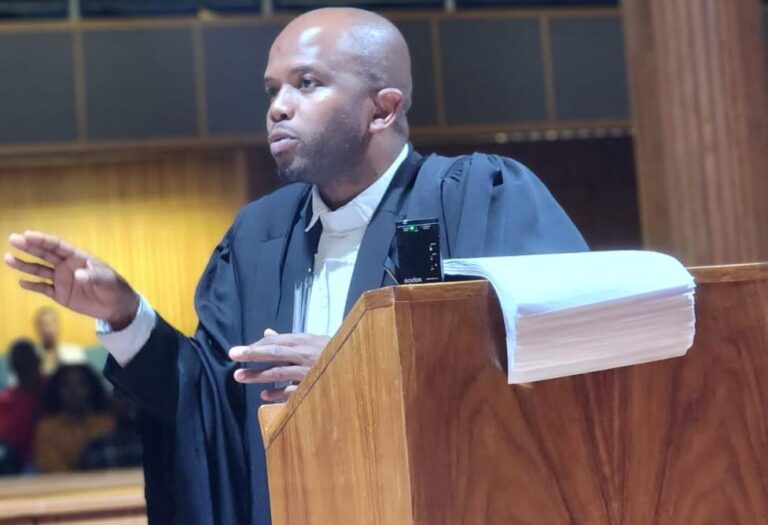
Advocate Lehlohonolo Phooko, leading the cross-examination, put it directly to Makara that the shooting was not a last resort but the first option chosen by the arresting team. Phooko also questioned the legality of the entire operation, arguing that the mission to arrest Mahao had not been sanctioned by either the Prime Minister or the Minister of Defence. The question of whether the operation was lawfully authorised has become a central thread of the prosecution’s case.

The court also heard argument about the role allegedly played by former army commander Lieutenant General Tlali Kamoli, who is among the accused. The prosecution argued that Kamoli effectively endorsed the operation by failing to halt it after returning to work, by which time the arrest of soldiers suspected of mutiny had already begun. Phooko contended that an operation targeting senior military officers of Mahao’s rank could not have proceeded without Kamoli’s knowledge and approval, suggesting the accused soldiers were acting within a broader coordinated plan at the highest levels of military leadership.

What the first accused previously told the court

Captain Litekanyo Nyakane, the first accused, had earlier told the court that he participated in the operation to arrest Mahao and acknowledged that the mission resulted in Mahao being shot and sustaining injuries that led to his death. Nyakane’s admission that the shooting occurred within the course of the operation has formed part of the factual foundation on which both sides have been building their competing arguments.

In addition to murder, the accused face counts of attempted murder, theft and unlawful damage to property. Proceedings continue before Justice Charles Hungwe. Makara’s testimony has added another layer to the contest between two starkly different versions of the same event: one portraying the operation as an unlawful mission that ended in murder, the other insisting that the soldiers were forced to react to a life-threatening situation that spiralled beyond their control.

By Tholoana Lesenya  |  Lesotho Tribune

Boring through the Maluti: the state of Lesotho’s biggest infrastructure project

Two giant machines are now boring toward each other from opposite ends of the Maluti Mountains, a longest-ever bridge has been inaugurated by two heads of state, and cumulative water royalties paid to Maseru have exceeded M19 billion. Phase Two of the Lesotho Highlands Water Project is running ten percent behind schedule and R11 billion over its last budget estimate, but it is unmistakably moving.

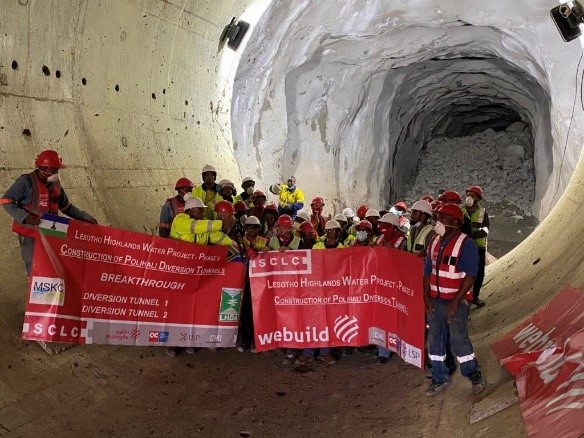
On 20 April 2026, South Africa’s Minister of Water and Sanitation Pemmy Majodina, Deputy Minister David Mahlobo, and Lesotho’s Minister of Natural Resources Mohlomi Moleko gathered at the Polihali construction site in Mokhotlong to officially launch the second tunnel boring machine (TBM) on Phase Two of the Lesotho Highlands Water Project (LHWP). Two days later, on 22 April, King Letsie III and South African President Cyril Ramaphosa inaugurated the Senqu Bridge, an 825-metre extradosed structure that is the longest bridge in Lesotho and the first of its kind in the country.

The back-to-back ceremonies marked a visible acceleration in one of Africa’s most consequential cross-border infrastructure projects, a programme that has taken four decades to reach this point and which carries profound implications for water security across the region, for Lesotho’s energy future, and for the fiscal revenues on which the government depends.

“We started slowly, but I think we will finish stronger. The planned progress is about 57 percent, while the actual progress is 48 percent. This says we are about 10 percent behind schedule.”
LHDA Chief Executive Tente Tente, October 2025

Two machines boring through the mountain

The centrepiece of Phase Two is a 38.5-kilometre gravity-fed transfer tunnel connecting the new Polihali Reservoir to the existing Katse Reservoir. Because the tunnel uses gravity rather than pumping, it requires no energy to operate once complete, making it one of the most efficient large-scale water transfer systems in the world. The tunnel is being excavated by the SUN joint venture, a partnership between Vinci Construction Grands Projets, Bouygues Travaux Publics, and South Africa’s Raubex.

Each TBM measures approximately 423 metres in length and operates with a 5.38-metre diameter cutterhead, engineered to bore continuously through some of the hardest rock in southern Africa beneath mountain ranges exceeding 3,000 metres in elevation. The first machine was launched from the Katse side in January 2025 and by early 2026 had excavated more than 600 metres. The second, launched from the Polihali end in January 2026, had progressed 235.8 metres by the time of the official April ceremony. Both machines are advancing toward a meeting point deep inside the Maluti range. The LHDA confirmed that the twin-TBM approach is complemented by drill-and-blast methods in more complex geological sections.

The Polihali Dam and what it will deliver

The Polihali Dam, a concrete-faced rockfill structure 165 metres high with a crest length of 921 metres, is being built on the Senqu and Khubelu rivers in Mokhotlong District. Main works contracts were awarded in November 2022 and construction began in early 2023. Rockfill placement reached the milestone elevation of 1,977 metres by the end of November 2025. The LHDA expects the dam to reach a level suitable for water impoundment by the end of 2026 or early 2027. When full, the Polihali Reservoir will have a storage capacity of 2,325 million cubic metres and a surface area of 5,053 hectares.

Once the tunnel and dam are complete, annual water transfer capacity from Lesotho to South Africa’s Vaal River system will increase from 780 million cubic metres to 1,270 million cubic metres per year, a 63% increase, providing water security for Gauteng, the Free State, North West, Mpumalanga and the Northern Cape, home to approximately 26 million people and 60% of South Africa’s economy. Water delivery is targeted for the 2028/29 financial year.

Key parameter Detail
Total projected cost (2025 estimate) R53.3 billion (~$2.9 billion)
Cost increase in one year (from R42.1bn) +R11.2 billion (~+$609 million)
Transfer tunnel length 38.5 km (gravity-fed)
Polihali Dam height 165 metres
Reservoir storage capacity 2,325 million cubic metres
Water transfer capacity (on completion) 1,270 Mm³/year (up from 780 Mm³)
Muela Hydropower output increase ~30%
Oxbow Hydropower Scheme capacity 80.3 MW / 180 GWh/year (commissioning 2030/31)
Water delivery target Financial year 2028/29
Construction progress (October 2025) 48% actual vs 57% planned

Sources: LHDA / DWS / PMG / DA Parliamentary Question / African Development Bank. USD at approx. R18.50/$1 (South African rand, June 2026).

The Senqu Bridge and the road to Polihali

The Senqu Bridge, inaugurated by King Letsie III and President Ramaphosa on 22 April 2026, is the largest of three major crossings built as part of Phase Two’s access infrastructure, alongside the Mabunyane and Khubelu bridges. Constructed at a cost of approximately R2.4 billion (about M2.4 billion), the 825-metre extradosed structure rises roughly 90 metres above the Senqu River valley and provides a critical transport link that will remain accessible across the future Polihali Reservoir once water levels rise. Without it, communities and construction traffic in the affected sections of Mokhotlong would be cut off once the dam fills. The bridge connects to the A1 national road linking Mokhotlong to Maseru.

What Lesotho earns, and what communities say

Lesotho’s financial return from the LHWP is substantial and direct. LHDA Chief Executive Tente Tente, speaking at a media briefing in October 2025, revealed that cumulative water royalties paid by South Africa to Lesotho have exceeded M19 billion, with monthly inflows averaging between M300 million and M400 million. These royalties are deposited directly into the Consolidated Fund, from which the government finances education, healthcare and infrastructure. A recent recalculation linked to Phase Two delays more than doubled the monthly royalty payment to M298 million.

The energy dividend is also significant. The increased flow from Polihali through the existing system is expected to raise output at the Muela Hydropower Station, which currently supplies 51% of Lesotho’s electricity demand, by approximately 30%. The separately planned Oxbow Hydropower Scheme, a peaking generation facility with an installed capacity of 80.3MW on the Malibamatso River, will add further generation capacity and is currently in detailed engineering design, with commissioning slated for 2030/31.

The benefits, however, are contested at the community level. About 1,600 people from 18 communities in Mokhotlong, primarily rural, pastoralist and farming households, filed a complaint in 2025 alleging that the project’s environmental and social commitments are not being met, with the effects felt across at least 72 communities in northeastern Lesotho. The project proponents estimate that 85,000 Basotho will ultimately benefit from associated infrastructure and community development programmes.

Cost overruns and oversight concerns

The financial trajectory of Phase Two has drawn sharp parliamentary scrutiny in South Africa. A Democratic Alliance parliamentary question in April 2026 revealed that the project’s total projected cost had risen from R42.1 billion to R53.3 billion in just over a year, an increase of more than R11 billion. The original 2008 estimate had been R8 billion. South Africa’s Auditor-General cautioned Parliament against suspending funding, warning of legal consequences, but committee members raised concerns about limited local procurement, the dominance of foreign contractors, and the constraints of the 1986 treaty, which prevents South Africa’s auditing authority from directly auditing the LHDA, leaving it reliant on Lesotho’s own audit structures. A review of the governing treaty is being prepared, with both governments engaging at technical and political levels.

For Lesotho, the project’s significance extends beyond any single set of numbers. The LHWP has financed decades of national development. Phase Two will expand that foundation, and the 2029 water delivery date, affirmed as recently as April by Minister Moleko, remains the benchmark against which both governments will be measured.

By Staff Reporter  |  Lesotho Tribune

How Somalia’s Top Referee Missed Football’s Biggest Stage

A Somali referee made history when he was selected for the 2026 FIFA World Cup. He never got to step onto the pitch. His story, however, did not end at Miami International airport.

Litšitso Letsunyane

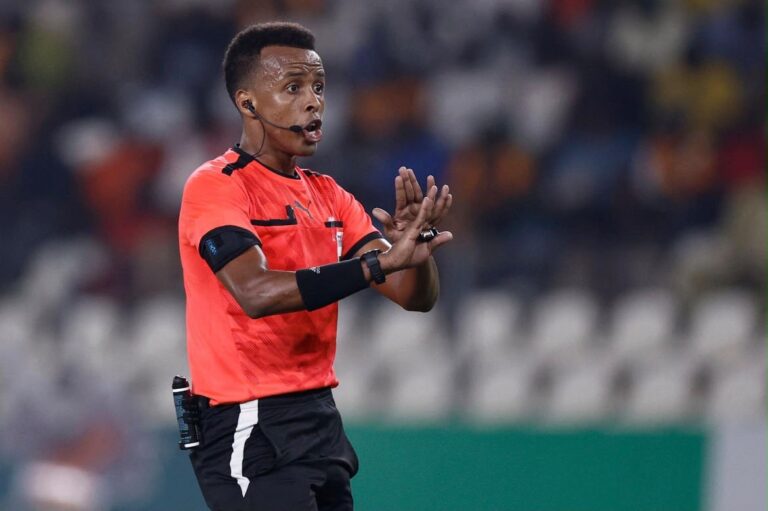
For Omar Abdulkadir Artan, the 2026 FIFA World Cup was supposed to be the culmination of years of perseverance and hard work. Instead, the dream ended before it even began.

The Somali referee, who had been selected by FIFA to officiate at the biggest football tournament on the planet, was denied entry into the United States upon arrival at Miami International Airport on 6 June, abruptly ending what would have been a historic appearance at the World Cup for him and his country.

Artan had been set to become the first Somali referee in history to officiate a FIFA World Cup match. It was a milestone not only for the 34-year-old official but also for Somali football and African refereeing as a whole.

Having first become a FIFA-listed referee in 2018, Artan steadily built a reputation as one of Africa’s most respected match officials. He took charge of high-profile fixtures in CAF competitions and earned appointments at the Africa Cup of Nations. His selection for the 2026 World Cup was viewed as both deserved recognition and a powerful symbol of progress for a country that has long battled instability and conflict.

“He was questioned for approximately 11 hours before being informed he would not be permitted entry into the country.”

Upon arriving in the United States, Artan underwent what US Customs and Border Protection described as an “additional inspection”. He was then questioned for approximately 11 hours before being informed that he would not be permitted entry into the country.

US authorities cited “vetting concerns” as the reason for the decision. Subsequent reports quoting American officials alleged that the referee had connections to suspected members of a terrorist organisation. According to The New York Times, Artan shares a very similar name with an individual listed in US sanctions databases as having ties to the militant group Al-Shabaab. No evidence supporting those allegations has been publicly released, and officials have not provided further details regarding the specific nature of the concerns.

Artan himself later told reporters that he was never given a clear explanation for why he had been refused entry. He said officials asked him about Somali politics and Al-Shabaab, despite him presenting his FIFA credentials and documentation related to his refereeing career.

What has fuelled the controversy is that Artan held a valid US visa and had already passed FIFA’s own accreditation and screening processes before travelling to the tournament. Under US law, however, possessing a visa does not automatically guarantee entry. Border officials retain the authority to deny admission if they determine that an individual is inadmissible. The lack of transparency surrounding the case has nonetheless left many questions unanswered.

On 8 June, FIFA confirmed that Artan would not participate in the World Cup. He returned to Mogadishu on 10 June. Many expected the controversy to damage his career. Instead, he arrived home a national hero. He received a hero’s welcome at the airport, met with the President, had a football match played in his honour, and was presented with cash gifts.

Just days after missing out on the World Cup, Artan was appointed to officiate Paris Saint-Germain against Aston Villa at the UEFA Super Cup, a significant vote of confidence from European football authorities and a reminder that his reputation within the game remains intact.

For now, Omar Artan’s World Cup dream remains one of football’s great “what if” stories.


Lesotho signs M98 billion deal for 1,200MW hydropower plant and AI data centre in Mokhotlong

Lesotho has signed a binding agreement with a United States energy company for a M98 billion project that would pair the country’s largest ever hydropower facility with an artificial intelligence data centre, in what the government describes as the single largest foreign investment commitment in the kingdom’s history.

The Ministry of Energy signed a binding Memorandum of Agreement with US-based Convalt Energy on 4 June 2026 for Project Kobong, a combined hydropower and AI data centre development valued at M98 billion (approximately $6.2 billion). The agreement, which follows an earlier non-binding MoU and diplomatic groundwork involving discussions between King Letsie III and former US House of Representatives Majority Leader and Convalt Energy board member Richard Gephardt, commits the parties to developing at least 1,200MW of renewable hydropower capacity in the Kobong region of Mokhotlong District alongside an integrated, green-powered artificial intelligence data centre.

The government described the agreement as the largest investment commitment in Lesotho’s recorded history. If the project is constructed as planned, it would generate more than sixteen times the country’s current installed generation capacity of approximately 72MW, primarily derived from the Muela Hydropower Station, which supplies more than half of domestic electricity needs.

“We are thrilled to be partnering with our Lesotho partners to bring clean energy, jobs and economic development to their nation.”
Convalt Energy

From importer to exporter

Lesotho currently imports a substantial portion of its electricity. In 2024, the country imported 438 gigawatt-hours out of total national consumption of 970 gigawatt-hours, drawing primarily from South Africa’s Eskom and Mozambique. The country’s domestic demand stands at approximately 209MW. At full 1,200MW operational capacity, Project Kobong would satisfy all domestic demand and leave an estimated surplus of approximately 991MW available for export into the region, most logically to South Africa, reversing an energy dependency that has persisted for decades.

The government said the project is designed to bolster energy independence, reduce dependence on imported electricity, generate employment, and support local business development. It also positions Lesotho to become what the government described as a regional centre for green energy and digital infrastructure.

Project element Detail
Total project value M98 billion (~$6.2 billion)
Hydropower capacity 1,200MW (pumped storage)
Solar capacity (wider partnership) ~4.6GW (ground-mounted and floating)
Battery energy storage Up to 4GWh
Location Kobong region, Mokhotlong District
Agreement signed 4 June 2026
Construction start (targeted) 2029 (subject to feasibility)

Sources: Convalt Energy / Ministry of Energy / International Water Power / Investment Monitor. USD equivalent at approx. M16.38/$1 (June 2026).

Broader than the headline figure

The $6.2 billion binding agreement covers the hydropower facility and AI data centre component, but the wider partnership announced alongside it extends further. International Water Power reported that the agreement also envisages the development of approximately 4.6GW of solar generation capacity, including ground-mounted and floating solar installations, and up to 4GWh of battery energy storage systems. The Lesotho project company is expected to sit within Convalt International, a proposed entity intended to hold the company’s international assets, subject to the completion of corporate and regulatory processes.

Convalt said it may also have the opportunity to supply solar modules for the project from its US manufacturing operations, with deliveries potentially commencing in the fourth quarter of 2028. Financing is expected to draw from a combination of equity investment, multilateral development finance institutions, strategic partners and project finance facilities.

About Convalt Energy

Convalt Energy is a US-based renewable energy company and a portfolio company of the ACO Investment Group. It specialises in utility-scale solar, wind, waste-to-power and hydropower projects. Project Kobong would represent the company’s first hydropower project and first data centre development. Lesotho currently has two operational data centres, focused on telecommunications and government services.

The project remains subject to mandatory feasibility studies, which Convalt is expected to fund and launch. Construction is targeted to begin in 2029 if those studies confirm viability. The agreement is nonetheless binding, and the government’s framing of it as the largest foreign direct investment in the kingdom’s history reflects the scale of what is at stake if the project proceeds to completion.

By Seipati Matobo  |  Lesotho Tribune

FIFA knew the risks. It chose comfort over accountability.

The Tribune’s view

The 2026 FIFA World Cup was sold to the world as the most inclusive tournament in history. What has been delivered, at least for fans and officials from Africa and the Global South, is something closer to its opposite. FIFA owes those it failed a more honest accounting than it has so far offered.

Omar Artan arrived at Miami International Airport on 7 June 2026 with a valid United States visa and a FIFA appointment to officiate at a World Cup for the first time. He had navigated years of football in a country torn by conflict, officiated a continental final between Pyramids FC and Mamelodi Sundowns in Cairo, been named the CAF Men’s Referee of the Year for 2025, and had operated in conditions that would have ended most careers before they began. He had earned his place on football’s largest stage by any measure available.

He was questioned for hours at the airport, detained, and put on a flight back to Istanbul. The US Department of Homeland Security later told Al Jazeera that he had been “determined to be inadmissible due to vetting concerns”, without further elaboration. A State Department official subsequently told AFP that he was “associated with suspected members of terrorist organisations.” No evidence was made public. No appeal mechanism was offered. The first Somali referee to reach a World Cup did not officiate a single match.

His treatment is the starkest single example of what has gone wrong with World Cup 2026, but it is far from the only one. This newspaper believes the pattern of access failures that preceded and accompanied the opening of this tournament demands a serious editorial response, not because it makes for comfortable writing, but because football journalism that ignores it would be failing its readers.

“We are going to play it in a country where some of us do not feel welcome.”
South African journalist to FIFA President Gianni Infantino, Nairobi press conference

The facts, plainly stated

Senegal and Ivory Coast were added to the list of countries with partial US travel restrictions in December 2025, effectively barring fans without pre-existing visas from attending matches. Morocco’s supporters, some of whom had paid thousands of dollars for flights, hotels and tickets, reported visa denials without explanation in the weeks before the tournament. Scottish fans holding approved ESTA travel authorisations had their clearances revoked. Ivory Coast fan groups publicly disclosed that multiple supporters had been rejected despite completed applications. Iranian football federation officials, including FIFA committee members, were denied visas for the December 2025 World Cup draw in Washington and Iran boycotted the ceremony. When visas for the Iranian playing squad finally came through, they arrived ten days before Iran’s first match, with several key administrative and managerial staff still excluded.

The International Sports Press Association wrote to FIFA days before the tournament’s opening to demand intervention in what its president described as “countless” and “unacceptable” cases of accredited journalists being denied entry. African and Iranian journalists holding valid FIFA media accreditations were among those affected. Some African reporters who had been granted single-entry visas faced losing access entirely if their team’s fixtures required travel to Canada or Mexico and back. South Africa’s assistant football coach was initially denied a visa. Iraq’s forward Aymen Hussein was held up at Chicago airport on arrival. The Democratic Republic of Congo’s squad, competing for the first time at a World Cup, was required to observe a 21-day isolation protocol before the tournament due to an Ebola outbreak, a measure that public health officials said was not calibrated to actual epidemiological risk at the individual level.

The strongest counterargument, honestly put

Those inclined to defend the US position will make two arguments that deserve engagement rather than dismissal.

The first is that sovereign nations retain the right to control who enters their territory regardless of any international sporting commitment, and that the US government made a specific carve-out for competing athletes, coaches and tournament officials, the people most directly involved in the football itself. This is legally accurate. The US did not prevent teams from competing. The Iran squad played. South Africa played its opener against Mexico in Mexico City. The football happened.

The second argument is that security vetting is not inherently discriminatory and that at least some of the individual denials, including the case of Omar Artan, involved specific intelligence assessments rather than blanket national origin profiling. This too deserves honest acknowledgment: we do not have access to whatever information the DHS held on Artan, and it is possible, in the abstract, that security concerns were genuine and specific rather than pretextual.

We accept both points. They do not, however, resolve the central problem.

What makes this different

The issue is not merely that the US exercised immigration authority. Every host nation does so. The issue is the pattern of who was affected and how FIFA responded to it.

The countries whose fans and officials bore the heaviest burden of denial are, with few exceptions, from Africa, the Middle East, and parts of South and Central America, the very nations whose qualification for a 48-team World Cup represented a significant expansion of the tournament’s geographic reach. The enlargement of the competition to include nine African nations, first-time qualifiers such as Cape Verde, and historic participants like Somalia in its refereeing delegation was the centrepiece of FIFA’s universality argument for this format. The visa regime operated in direct tension with that argument.

FIFA, for its part, has responded to each incident with variations on the same formulation: that host government decisions on admissibility are outside its control, and that it sought assurances from the US government that qualifying nations would be admitted. Both statements are true. Neither is adequate. When FIFA accepted the US bid for a tournament beginning in June 2026, it did so in the full knowledge that the Trump administration had already, in its first term, implemented travel ban policies affecting the same countries whose fans were ultimately turned away. FIFA had the information it needed to negotiate stronger, legally binding access guarantees or, at minimum, to refuse to place group-stage matches for affected nations exclusively in US cities.

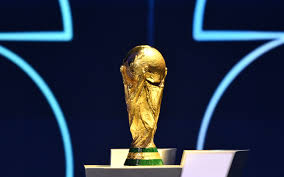
It did neither. Instead, FIFA’s president accepted a gold World Cup trophy from President Trump in the White House Oval Office, attended the presidential inauguration, and characterised the relationship between world football and the US administration as one of partnership. The International Sports Press Association, faced with colleagues being denied entry, used a different word: unacceptable.

What this means for Lesotho and Africa

Lesotho does not have a team at this World Cup. But Basotho footballers, coaches, officials, journalists and fans operate within the same regional ecosystem that has been directly affected, and the country is a member of both CAF and FIFA whose collective voice on governance matters. When a South African journalist feels compelled to ask the FIFA president in Nairobi whether fans from her continent will feel like second-class citizens at the tournament, that is not a fringe concern. It reflects a legitimate and widely held anxiety about whether African participation in global football is genuinely valued or merely tolerated when commercially convenient.

Omar Artan returned to Mogadishu to a stadium packed with Somalis who understood exactly what his exclusion meant. UEFA, to its credit, stepped in within days to appoint him to officiate the European Super Cup in August, between Paris Saint-Germain and Aston Villa. CAF president Patrice Motsepe praised him as having made “Somalia and the entire African continent extremely proud.” The football world, beyond the United States’ borders, knew what it had lost.

What should come next

This newspaper does not argue that the 2026 World Cup should be condemned in its entirety or that the matches now underway are somehow illegitimate. Football is being played and much of it will be memorable. We do not demand that FIFA sever its relationship with the United States, a relationship that funds development programmes across Africa and the rest of the world.

What we do argue is this: FIFA cannot simultaneously claim the mantle of universal inclusion and decline responsibility when its hosting arrangements produce systematic exclusion. The body that drew the 2030 World Cup bidding process and is now contemplating 2034 must enter future host agreements with enforceable access guarantees that cover not only players but fans, officials, journalists, and referees. It must be willing to place this requirement above the political comfort of proximity to powerful governments. And it must be honest with African football federations, not least through their representatives on FIFA’s own committees, about the limits of the assurances it is capable of providing when its commercial interests and its universality claims conflict.

Omar Artan did not deserve what happened to him. The fans from Senegal, Ivory Coast, Morocco, Iran, Haiti and the DRC who could not attend did not deserve it either. FIFA knew the risks. It chose comfort over accountability. The least it can do now is acknowledge that plainly, and commit to doing better before the next host city is announced.

By the Editor  |  Lesotho Tribune
Independent business & current affairs journalism · Lesotho Subscribe — M85/month
| Independent business & current affairs journalism · Lesotho