



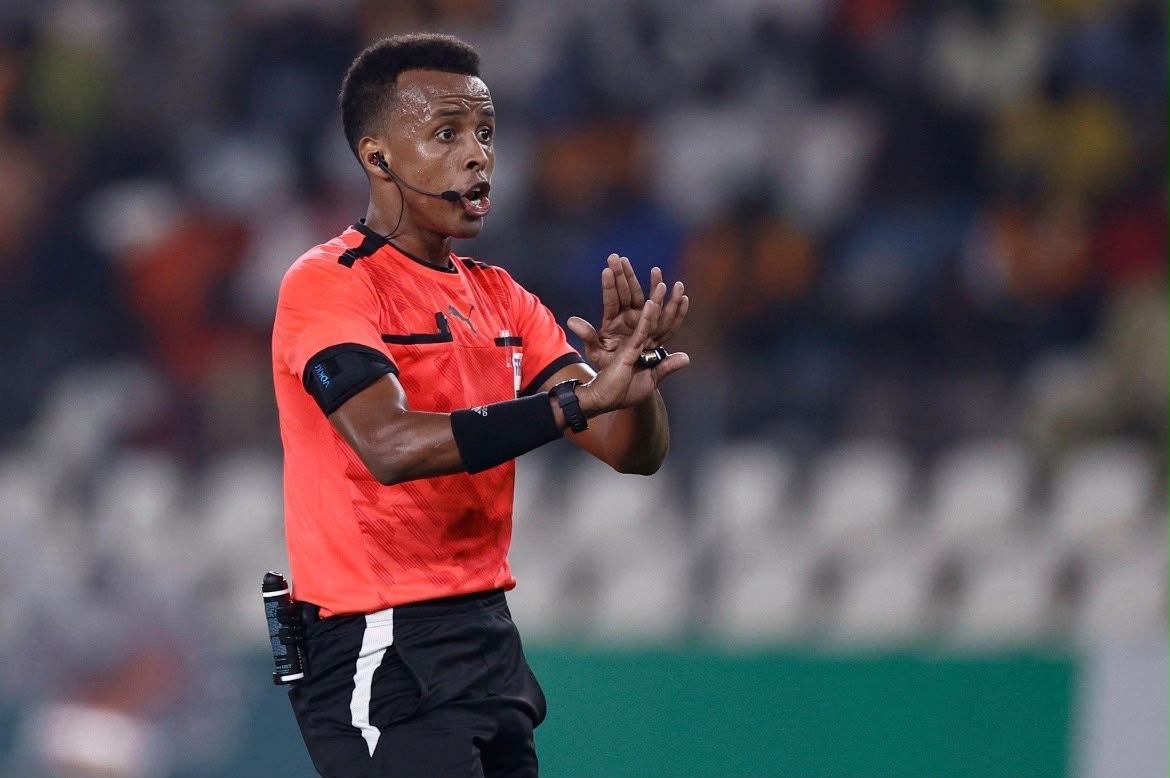
A Somali referee made history when he was selected for the 2026 FIFA World Cup. He never got to step onto the pitch. His story, however, did not end at Miami International airport.
Litšitso Letsunyane
For Omar Abdulkadir Artan, the 2026 FIFA World Cup was supposed to be the culmination of years of perseverance and hard work. Instead, the dream ended before it even began.
The Somali referee, who had been selected by FIFA to officiate at the biggest football tournament on the planet, was denied entry into the United States upon arrival at Miami International Airport on 6 June, abruptly ending what would have been a historic appearance at the World Cup for him and his country.
Artan had been set to become the first Somali referee in history to officiate a FIFA World Cup match. It was a milestone not only for the 34-year-old official but also for Somali football and African refereeing as a whole.
Having first become a FIFA-listed referee in 2018, Artan steadily built a reputation as one of Africa’s most respected match officials. He took charge of high-profile fixtures in CAF competitions and earned appointments at the Africa Cup of Nations. His selection for the 2026 World Cup was viewed as both deserved recognition and a powerful symbol of progress for a country that has long battled instability and conflict.
“He was questioned for approximately 11 hours before being informed he would not be permitted entry into the country.”
Upon arriving in the United States, Artan underwent what US Customs and Border Protection described as an “additional inspection”. He was then questioned for approximately 11 hours before being informed that he would not be permitted entry into the country.
US authorities cited “vetting concerns” as the reason for the decision. Subsequent reports quoting American officials alleged that the referee had connections to suspected members of a terrorist organisation. According to The New York Times, Artan shares a very similar name with an individual listed in US sanctions databases as having ties to the militant group Al-Shabaab. No evidence supporting those allegations has been publicly released, and officials have not provided further details regarding the specific nature of the concerns.
Artan himself later told reporters that he was never given a clear explanation for why he had been refused entry. He said officials asked him about Somali politics and Al-Shabaab, despite him presenting his FIFA credentials and documentation related to his refereeing career.
What has fuelled the controversy is that Artan held a valid US visa and had already passed FIFA’s own accreditation and screening processes before travelling to the tournament. Under US law, however, possessing a visa does not automatically guarantee entry. Border officials retain the authority to deny admission if they determine that an individual is inadmissible. The lack of transparency surrounding the case has nonetheless left many questions unanswered.
On 8 June, FIFA confirmed that Artan would not participate in the World Cup. He returned to Mogadishu on 10 June. Many expected the controversy to damage his career. Instead, he arrived home a national hero. He received a hero’s welcome at the airport, met with the President, had a football match played in his honour, and was presented with cash gifts.
Just days after missing out on the World Cup, Artan was appointed to officiate Paris Saint-Germain against Aston Villa at the UEFA Super Cup, a significant vote of confidence from European football authorities and a reminder that his reputation within the game remains intact.
For now, Omar Artan’s World Cup dream remains one of football’s great “what if” stories.