



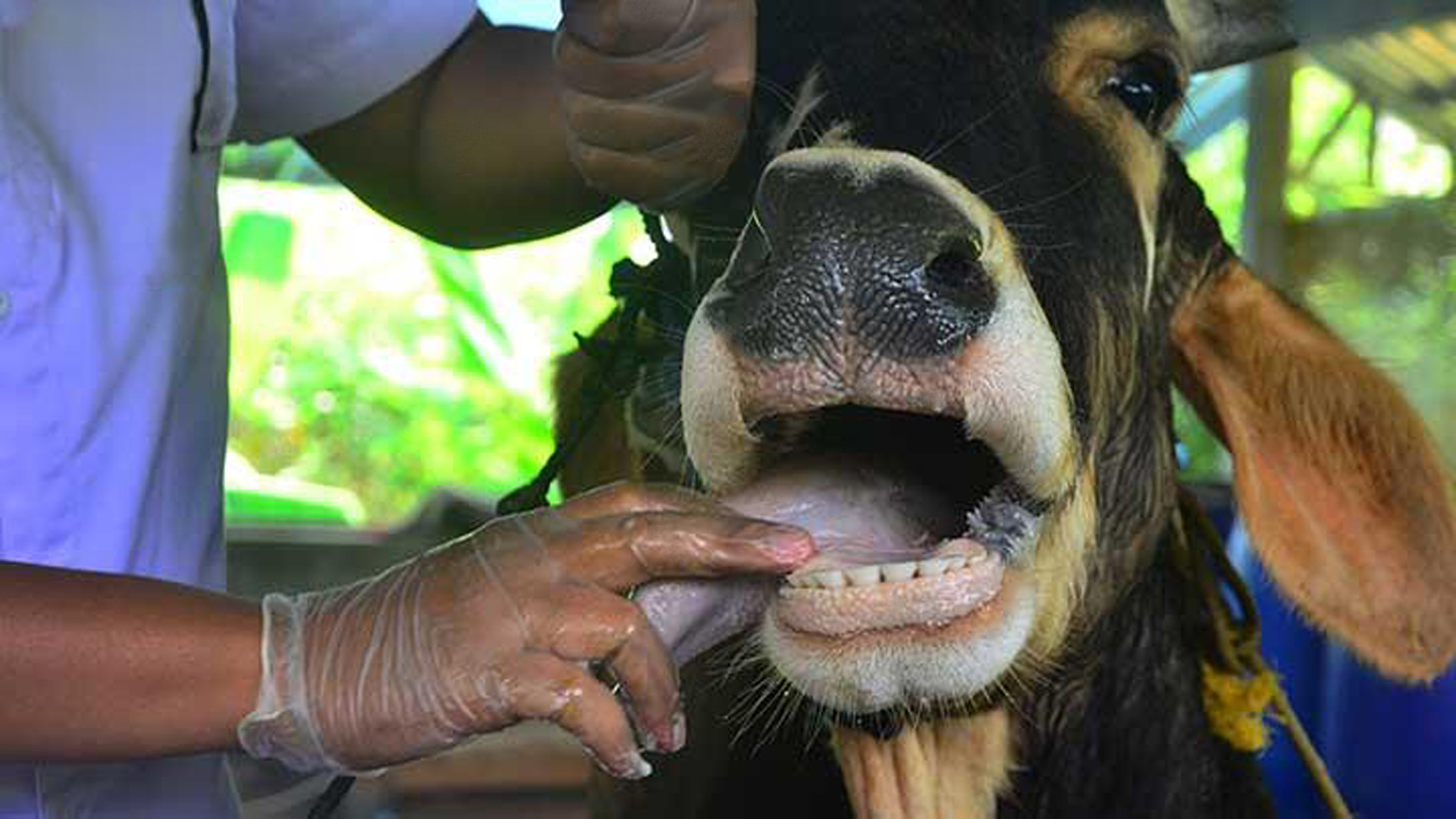
Foot and mouth disease has swept through Lesotho and South Africa in the worst outbreak either country has recorded in a generation. From the cattle posts of Butha-Buthe to the feedlots of KwaZulu-Natal, the disease is reshaping what farmers earn, what consumers pay, and what arrives on the family table.
On 18 February 2026, veterinary officials at a cattle post in Mahlasela, Motebong, in Butha-Buthe district, tested 17 head of cattle showing signs of illness. Six tested positive for foot and mouth disease (FMD). Within days, samples had been dispatched to the World Organisation for Animal Health (WOAH) reference laboratory in Botswana for virus typing. Within a week, the WOAH formally suspended Lesotho’s status as an FMD-free country where vaccination is not practised, a designation that underpins the kingdom’s ability to trade livestock and animal products internationally.
The outbreak was not isolated. It emerged against the backdrop of South Africa’s most severe FMD crisis in recent memory, a crisis that President Cyril Ramaphosa had already declared a national disaster earlier that month. Lesotho, surrounded entirely by South Africa, shares hundreds of kilometres of porous livestock border. Animal health officials in Lesotho confirmed what had long been feared: the disease had crossed.
“In businesses, people buy goods using money earned from livestock sales. If farmers fail to sell, families will struggle to survive.”
District Animal Production Officer Mohapi Lits’oane, Qacha’s Nek
What the disease does
FMD is a highly contagious viral disease of cloven-hoofed animals, affecting cattle, sheep, goats and pigs. It spreads rapidly through direct contact between animals, contaminated feed and water, and airborne transmission. Infected animals develop fever and blister-like sores on the tongue, lips, mouth, teats and between the hooves, making movement painful and causing severe production losses. While most animals eventually recover, the economic damage is acute: milk yield collapses, animals lose condition, and the movement controls required to contain the disease can strand livestock far from markets and abattoirs for months.
One point deserves clarity for consumers: FMD does not infect humans. Meat and milk from infected animals are not a public health risk. As South African food safety officials have confirmed, animals are tested before slaughter and health standards are adhered to throughout the supply chain. FMD should not be confused with hand, foot and mouth disease, an unrelated illness that affects children.
The scale in South Africa
South Africa’s red meat industry is valued at approximately R80 billion (about $4.9 billion). What it has absorbed since 2025 is extraordinary by any historical measure. The Bureau for Food and Agricultural Policy (BFAP) reported that 24,400 FMD cases were confirmed in domestic livestock across the country in 2025, obliterating the previous 20-year high of 7,700 cases recorded in 2022. By the time the outbreak had spread to seven of South Africa’s nine provinces, the disease had penetrated not only communal farms and dip tanks but commercial beef and dairy operations, and five game reserves where buffalo serve as long-term carriers, making full eradication exceptionally difficult.
The financial consequences have been severe. BFAP calculated that more than R821 million (approximately $50 million) in export revenue was lost across three major waves of FMD between 2019 and 2025, and warned that cumulative export losses could rise to as much as R2.6 billion (roughly $158 million) by the end of 2026. South Africa’s beef exports fell 26% in 2025. Shipments to China, which had been the country’s third largest market after the UAE and Jordan, plunged 69% to 1,687 metric tons following a ban imposed by Beijing in May 2025.
The dairy sector has been particularly hard hit. BFAP found that losses in affected Eastern Cape dairy operations reached close to R5,000 (about $305) per cow, driven by reduced milk production, elevated veterinary costs and increased husbandry expenses. With more than 90 dairy farms affected and over 210,000 dairy animals involved by mid-January 2026, BFAP estimated that economic losses in the dairy sector had already exceeded R1 billion (approximately $61 million). The organisation warned that sustained pressure could force some farms to close, triggering significant rural job losses.
| Indicator | Figure | Source |
|---|---|---|
| FMD cases in SA livestock, 2025 | 24,400 | BFAP / SA Govt |
| Previous 20-year high (2022) | 7,700 | BFAP |
| SA beef export decline, 2025 | ‑26% | RMIS / Reuters |
| Cattle slaughter decline (year-on-year) | ‑15.6% | RMIS |
| Cumulative export losses (projected to end-2026) | R2.6 billion (~$158 million) | BFAP |
| Dairy losses (SA, to mid-Jan 2026) | Exceeds R1 billion (~$61 million) | BFAP |
| Dairy loss per cow (Eastern Cape case studies) | ~R5,000 (~$305) | BFAP |
USD equivalents at the prevailing spot rate of approximately M16.38 per dollar (June 2026). BFAP: Bureau for Food and Agricultural Policy. RMIS: Red Meat Industry Services.
Lesotho: district by district
The outbreak confirmed in Butha-Buthe in February 2026 was not contained to a single district. By May, confirmed FMD cases had been recorded in Butha-Buthe, Leribe, Thaba-Tseka, Qacha’s Nek, Berea and Mohale’s Hoek, according to LENA reporting. In Mokhotlong, 22 confirmed cases prompted cross-border awareness meetings with the adjacent Dr Nkosazana Dlamini-Zuma Municipality in KwaZulu-Natal. The Ministry of Agriculture and Food Security declared FMD a state of national disaster.
The immediate human impact has fallen heavily on smallholder farmers, for whom livestock is the primary or only source of cash income. In Berea, dairy farmer Makhetha Leokaoke told a ministry awareness campaign in May that his cows, which had been producing between 15 and 20 litres of milk daily, could no longer be marketed to the district dairy under restrictions imposed by the state of emergency. Farmers wishing to sell any livestock are now required to obtain clearance certificates from the District Veterinary Office, but delays in that process have added another layer of hardship.
In Qacha’s Nek, District Animal Production Officer Mohapi Lits’oane drew a direct line from livestock immobility to household poverty, noting that the uncertainty surrounding wool and mohair sales could severely affect incomes across the district, even for households with no animals of their own. His warning reflected a structural reality: in much of rural Lesotho, livestock earnings drive local commerce. When farmers cannot sell, the ripple effect reaches shopkeepers, transport operators and labourers far removed from the cattle post.
Wool and mohair: a second blow
Lesotho is the second largest producer of mohair in the world, after South Africa, and wool is the kingdom’s leading agricultural commodity export. The FMD outbreak has disrupted both industries. Transport restrictions have severed the traditional route through which wool and mohair reached South African brokers and from there international auction markets in Port Elizabeth and Durban.
In May 2026, the Agriculture Minister Thabo Mofosi convened a meeting in Maseru with WOAH representatives, livestock farmers’ associations and veterinary officials specifically to address the wool and mohair impasse. The government’s goal was to identify protocols that would allow safe trade to resume without compromising disease containment. One local buyer, Baokunyaoda, stepped into the gap by purchasing wool and mohair locally at prices above those offered by South African brokers, stockpiling the fibre in anticipation of the ban being lifted. The company’s intervention offered immediate financial relief and prevented losses from rain and rodent damage to fibre left sitting in shearing sheds.
What consumers are paying
The dynamics of FMD’s effect on consumer prices are counterintuitive and worth understanding. During a containment outbreak, farmers are typically unable to move animals to abattoirs, which reduces supply and drives prices up. But simultaneously, animals that cannot be sold and cannot hold condition are sometimes rushed to slaughter in bulk, which can briefly soften prices. The net effect depends on timing, the severity of movement restrictions, and the success of vaccination.
In South Africa, the price trajectory through 2025 was unambiguously upward. Statistics South Africa data showed beef prices surging 28.8% year-on-year by mid-2025. The average price of beef mince climbed from around R102.95/kg (about M102.95/kg) in July 2024 to R126.79/kg (about M126.79/kg) by July 2025. Stewing beef rose from R94.80/kg to R123.87/kg over the same period. By early 2026, the annual rate for meat had accelerated to 13.5%, with beef steak up 31.2% and beef stew up 30.3%, the highest rates recorded for those categories since December 2017. Because Lesotho imports a large proportion of its processed and packaged meat from South Africa, South African consumer price movements feed through directly into Maseru’s supermarkets and butcheries.
The longer-term outlook, however, offers cautious relief. South African agricultural economists, including Agbiz chief economist Wandile Sihlobo, noted in February 2026 that a sustained surge in consumer meat prices was not inevitable. Ongoing slaughter levels, base effects from the prior year’s elevated prices, and consumer resistance were identified as factors that could moderate prices through the remainder of 2026. All of this hinges on the speed and effectiveness of vaccination.
The vaccination race
South Africa shifted its FMD management approach in late 2025, moving from a strategy based primarily on stamping out infected herds toward a policy of FMD-free with vaccination. The Botswana Vaccine Institute was contracted to supply one million doses per month from mid-January 2026. South Africa’s Livestock Identification and Traceability System, developed by the CSIR, is being deployed to track vaccinated animals using geo-location data.
In Lesotho, a national FMD response plan was approved following the disaster declaration, and awareness campaigns have been extended across districts. At the Butha-Buthe press briefing in March 2026, Minister Mofosi called on South Africa and Botswana to assist with veterinary expertise, and confirmed that samples had been sent to the WOAH reference laboratory for virus typing to ensure vaccine matching. Dr Keneuoe Lehloenya of the Animal Health and Inspection division noted that most animal diseases were first identified in South Africa and spread into Lesotho rapidly, given the countries’ shared borders and shared grazing land.
The call for a regional approach has grown louder. A commentary published by The Gremlin in late February 2026 noted that, apart from Namibia, no country bordering South Africa had escaped confirmed outbreaks outside controlled areas. “Movement of livestock across borders and domestically from affected districts into the rest of the region is poorly controlled,” the publication observed. For Lesotho, a country entirely enclosed within South Africa, that regional dimension is not merely relevant, it is decisive.
District Agricultural Officer Mamoholi Mphutlane, speaking at an awareness event in Berea in May, said the country faces many hazards, with climate change being one of the major contributing factors to the spread of disease and economic decline. Her warning points beyond this outbreak to a structural vulnerability: a livestock-dependent economy, porous borders, a lean veterinary service, and a changing climate are a combination that will demand sustained investment if the next outbreak is to be met with greater readiness than this one.
By Staff Reporter | Lesotho Tribune · Farmer’s Corner