



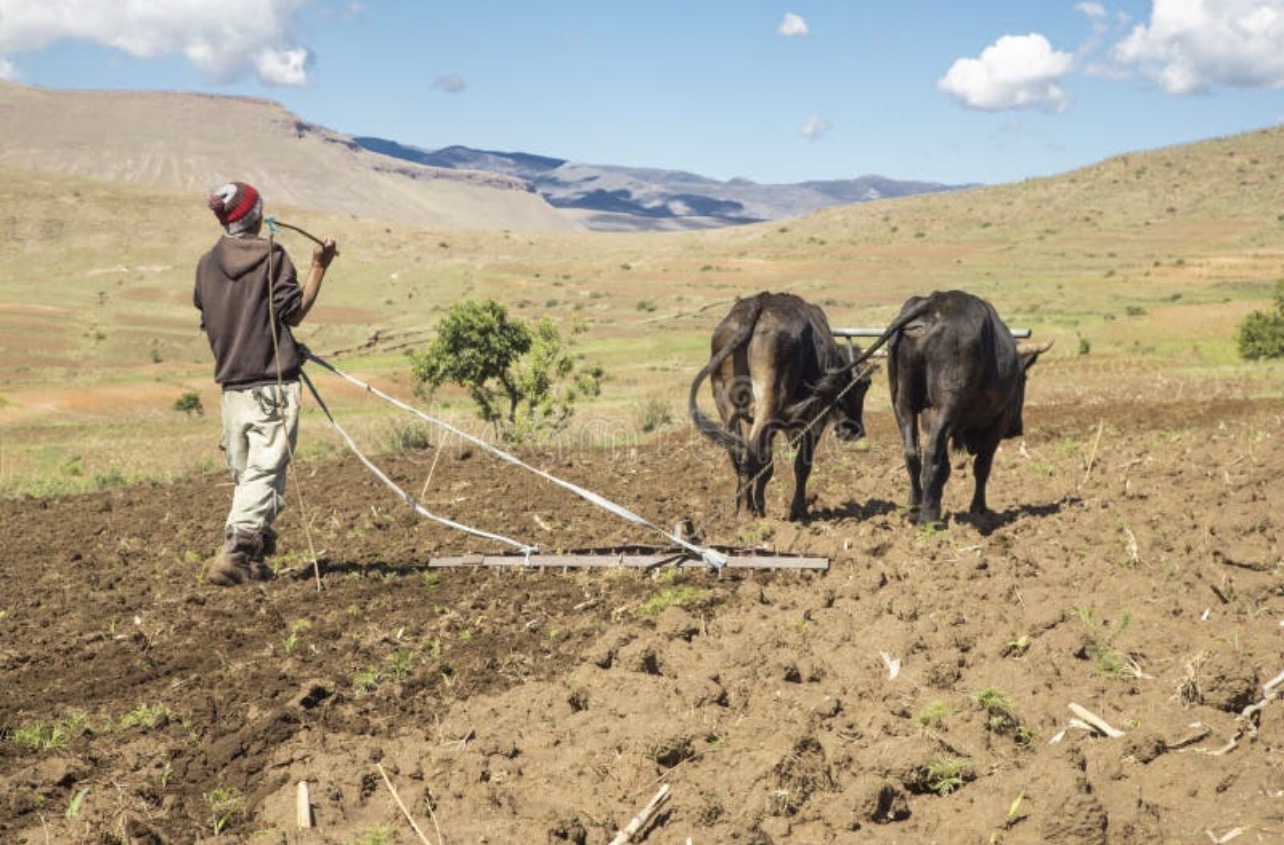
Lesotho produces just ten percent of its own potato needs and imports more than 236,000 tonnes of grain from South Africa each year, as the Minister of Agriculture calls for urgent commercialisation of the sector and warns that the country’s food import bill is growing faster than its capacity to produce.
STAFF REPORTER · LESOTHO TRIBUNE
Lesotho’s Minister of Agriculture, Food Security and Nutrition, Selibe Mochoboroane, has used the commemoration of International Potato Day to lay bare the scale of the country’s agricultural underperformance, revealing that national potato production meets only ten percent of domestic demand and that the country continues to import the overwhelming majority of its basic food requirements from South Africa.
Speaking at the event held in Maseru, Mochoboroane said Lesotho’s annual potato demand stood at 132,000 metric tonnes, while local production averaged only 13,200 metric tonnes per year. The shortfall, he said, was being met through imports, costing the country M69 million annually on potatoes alone, with a government target to reach 25,000 metric tonnes of domestic production by the 2026/2027 season.
“Agriculture remains central to addressing these challenges,” the minister said. “In Lesotho, the potato has emerged as one of the most promising agricultural commodities with strong potential to drive value chain development and agro-industrial growth.”
| Commodity | SA exports to Lesotho | Year |
|---|---|---|
| Maize (corn) | $34.15m | 2024 |
| Wheat and meslin | $22.12m | 2024 |
| Rice | $8.08m | 2024 |
| Total cereals (SA to Lesotho) | $64.71m | 2024 |
| Source: UN COMTRADE / Trading Economics, April 2026 | ||
The potato deficit is symptomatic of a broader structural dependence. Lesotho imported an estimated 236,000 tonnes of grain in 2024, with maize and wheat imports from South Africa remaining the largest categories. South Africa’s total exports to Lesotho reached $1.47 billion in 2024, and trade analysts tracking the corridor have noted that maize flour and yellow maize are among the fastest-growing import categories, with growth rates exceeding 40 percent, reflecting Lesotho’s deepening reliance on its neighbour for food security rather than just energy and manufactured goods.
South Africa’s own maize production outlook offers Lesotho some reassurance of supply continuity. The Supply and Demand Estimates Committee in Pretoria projects overall maize supply for the 2025/26 marketing season at approximately 15.6 million tonnes, a 3.88 percent increase on the previous season, with domestic demand stable at around 11.8 million tonnes. The surplus ensures South Africa remains a reliable exporter to the region, with Lesotho consistently among the top six white maize destinations. Between April 2025 and January 2026, South Africa exported 69,236 tonnes of white maize to Lesotho, representing 9.82 percent of total white maize exports for that period.
“Lesotho continues to export wool and mohair largely in raw form, exposing the sector to risks such as the recent Foot and Mouth Disease outbreak. Domestic processing and value addition would help create jobs, retain more value within the country, and strengthen economic resilience.”
But guaranteed supply from the south is not the same as food sovereignty, and Mochoboroane acknowledged as much. Agricultural products contribute six percent to Lesotho’s GDP, with wool and mohair accounting for five percentage points of that contribution. Yet the minister warned that even these traditional export strengths were under pressure, noting that a recent Foot and Mouth Disease outbreak had disrupted wool and mohair exports and exposed the vulnerability of selling unprocessed commodities into the international market.
The minister’s remarks, made during a separate engagement on trade with China, underlined a strategic tension at the heart of Lesotho’s agricultural economy: the country sits on productive highland soils, receives adequate rainfall across much of its territory, and holds significant irrigation potential from the Katse and Mohale dams constructed under the Lesotho Highlands Water Project, yet the gap between potential and realised production remains wide across virtually every crop category.
Approximately 75 percent of Lesotho’s total land area is considered suitable for agricultural production, and the country’s irrigation potential is estimated at 112,500 hectares, yet just over 20 percent of farmers are equipped for irrigation. The average farm size is 1.3 hectares, with only 11 percent of farming households owning more than three hectares. These structural constraints, rather than a lack of suitable land, drive the production deficit.
Mochoboroane said the shortage of quality seed potato was one of the major challenges affecting the sector and that significant progress was being made towards establishing a sustainable local seed production system with support from international partners. The government’s plan to increase potato production by ten percent annually over five years would require resource mobilisation that the minister acknowledged had not yet been fully secured.
South African companies have shown interest in the gap. Alpha Farms and Denmar Estates have previously partnered with Lesotho farmers to produce vegetables and fruit for the Lesotho, South African and European markets, taking advantage of the country’s elevation, good soil quality and the fact that Lesotho’s fruit ripens earlier than in other southern hemisphere countries, offering a seasonal arbitrage opportunity for regional supply chains. The two Lesotho Highlands Water Project reservoirs, Katse Dam and Mohale Dam, support commercial trout operations that export primarily to food service outlets across Southern Africa.
South Africa’s own agricultural performance provides a reference point for what Lesotho’s highlands could produce under investment. South Africa’s Department of Agriculture reported in March 2026 that the sector had recorded 17.4 percent growth and its strongest export performance since before the pandemic, driven by market diversification into the Philippines, China and European markets. Minister John Steenhuisen attributed the gains to the Agriculture and Agro-processing Master Plan and coordinated phytosanitary diplomacy that opened new bilateral corridors. Lesotho lacks an equivalent plan at scale.
For now, the trajectory of Lesotho’s agricultural trade with South Africa points in one direction: more imports, rising food costs, and a widening gap between what the highlands can grow and what the market demands. Whether the International Potato Day commitments translate into the investment, infrastructure and institutional reform needed to close that gap is a question the sector will be watching closely through the planting season ahead.