



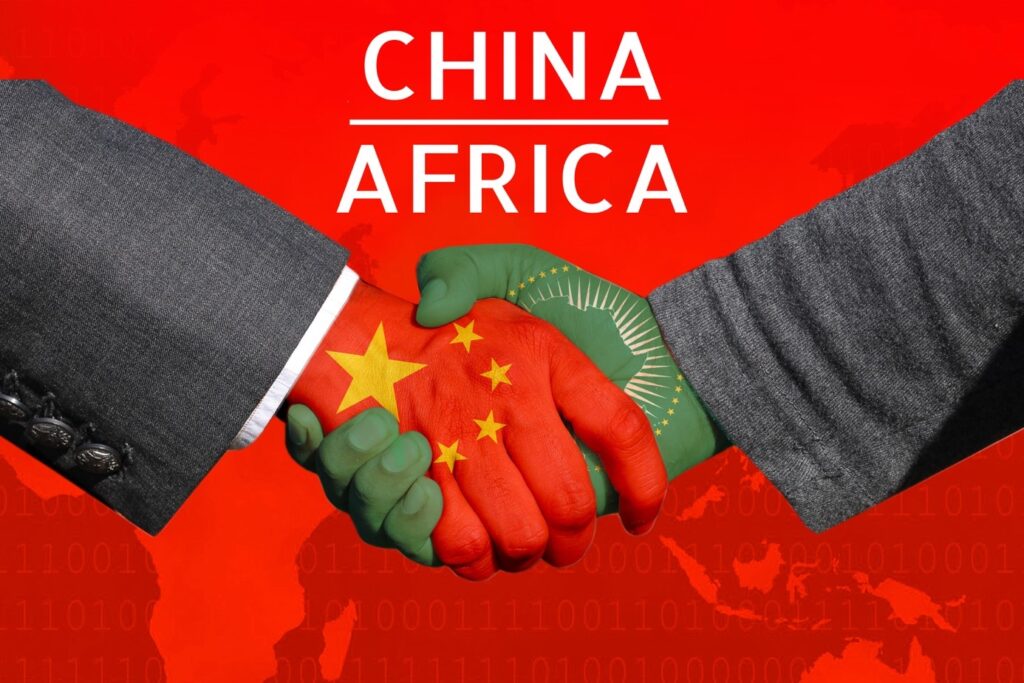
At the stroke of midnight on 1 May, a container truck rolled through Shenzhenwan Port carrying 24 tonnes of South African apples. In that unremarkable moment of commerce, something historic occurred: the first goods to enter China under a sweeping new trade arrangement that grants zero-tariff access to all 53 African nations with which Beijing maintains diplomatic relations.
The apples, cleared swiftly by customs officers in the early hours of Friday, are bound for supermarkets and wholesale markets across China. Their tariff rate fell from 10 per cent to zero overnight, a reduction that signals not only lower prices on Chinese shelves but a far-reaching shift in the architecture of China-Africa trade.
For Lesotho and its neighbours across southern Africa, the policy arrives with immediate and tangible force. South African citrus fruits and wine, Kenyan coffee and avocados, Ghanaian and Ivorian cocoa, and a range of processed goods that previously faced tariffs of between 8 and 30 per cent now enter the world’s second-largest economy duty-free.
China’s commerce ministry described the move as making China the first major economy to provide unilateral, full-coverage zero-tariff treatment to all African countries with which it has diplomatic ties, and to all least developed countries globally. The initiative builds on a December 2024 measure that had already extended zero tariffs across 100 per cent of tariff lines to 33 least developed African nations.
The new phase brings in the remaining 20 African non-LDC economies, among them Kenya, Egypt, Nigeria and South Africa. For these countries, zero tariffs apply as a preferential rate for a two-year period running to 30 April 2028, during which Beijing intends to conclude a formal China-Africa Economic Partnership for Shared Development agreement that would enshrine the arrangement as a permanent institutional fixture.
“This is a fantastic opportunity. From 1 May, we will take full advantage of it.” — Parks Tau, South Africa’s Minister of Trade, Industry and Competition
The wider context is one of growing divergence in global trade policy. As several major economies have tightened market access and imposed new trade barriers in recent months, Beijing has moved in the opposite direction, positioning the zero-tariff initiative as evidence of its commitment to an open, rules-based trading system and as a concrete expression of its Global South solidarity.
African Union Commission Chairperson Mahmoud Ali Youssouf, speaking after the inaugural China-Africa Entrepreneurs Summit in Addis Ababa last week, described the policy as “very timely” for a continent that has borne the brunt of successive global crises and now faces fresh headwinds from protectionist measures elsewhere. “I would like to express, on behalf of the African Union Commission, our sincere gratitude for this very brotherly gesture that all Africans appreciate,” he said.
Analysts expect the effects to ripple well beyond a simple reduction in import prices. Tang Xiaoyang, dean of the Department of International Relations at Tsinghua University, noted that the initiative, unlike similar preferential policies offered by some Western nations, requires no reciprocal market opening from African partners and carries no conditions related to domestic governance. He argued that the approach would attract multinational manufacturers to establish assembly and processing bases in Africa, targeting the Chinese market through the new tariff window, thereby advancing the continent’s broader industrialisation drive.
South Africa: Citrus fruits, wine, apples — tariffs reduced from up to 30%.
Kenya: Coffee, avocados, purple tea — tariffs reduced from 8–15%.
Cote d’Ivoire & Ghana: Cocoa and processed cocoa products.
Ethiopia: Coffee beans, already gaining ground in the Chinese market.
Lesotho & SADC region: Textile and agricultural exports eligible under expanded framework.
The view from the private sector is equally bullish. Hunan Rift Valley Purple, a Chinese company operating a tea processing plant in Kenya, announced plans to increase imports of Kenyan purple tea under the new arrangement, with its regional director Long Sulan noting that the policy would raise the income of Kenyan tea farmers while bringing distinctive African flavours to a broader Chinese consumer base.
Chinese importers who have already built supply chains around Ethiopian coffee and South African wine say they expect the tariff removal to draw new entrants and deepen competition, ultimately expanding the range of African products available to China’s 1.4 billion consumers.
For Lesotho specifically, the implications require careful reading. The kingdom is classified as a least developed country and was among the 33 nations that gained zero-tariff access in December 2024. The May expansion therefore consolidates and deepens a framework already in place. The immediate opportunity lies in the country’s nascent agricultural processing sector and in encouraging investment that could shift exports away from raw materials toward finished goods, which attract higher prices and generate more domestic employment.
Zhao Yongsheng, a researcher at the University of International Business and Economics, identified this structural dimension as central to the policy’s long-term significance. Africa’s position in global supply chains as a raw-material exporter has historically constrained industrialisation. Combined with investment flows and technology transfer, he argued, the zero-tariff framework offers a route out of that trap, provided African governments act to build the processing capacity that will allow them to capture value before goods cross the border.
The China-Africa Economic Partnership for Shared Development agreement, due to be negotiated over the next two years, is expected to lock in the zero-tariff framework permanently and provide a more comprehensive institutional foundation for the relationship. China’s 15th Five-Year Plan, covering 2026 to 2030, explicitly commits Beijing to actively expanding high-standard opening-up and fostering a transparent, stable and predictable trade environment.
China has remained Africa’s largest trading partner for 16 consecutive years. The events of 1 May 2026, marked by a truckload of apples and a midnight customs clearance in Shenzhen, suggest that relationship is entering a new chapter.
“`