



The Budget Explained: What It Really Means for Basotho
Analysis
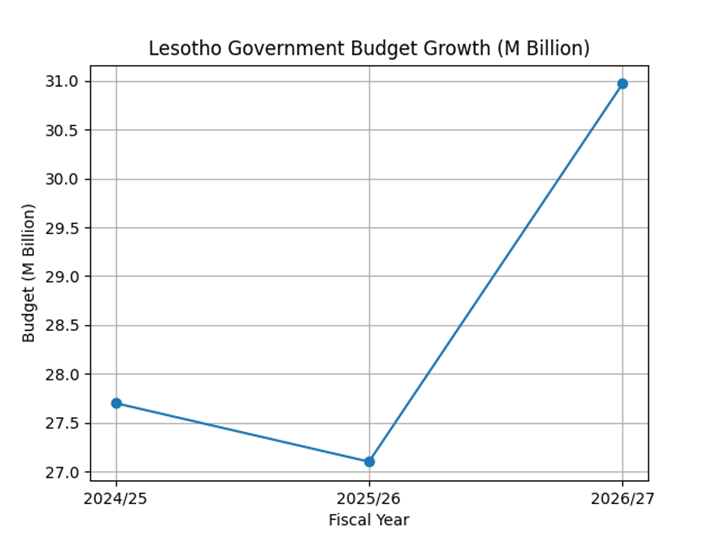
Lesotho’s 2026/27 national budget, valued at M30.97 billion, represents one of the most consequential fiscal policy statements in recent years. While government has framed it as a budget for economic transformation and resilience, a careful reading reveals a more complex reality: this is fundamentally a budget designed to stabilise a vulnerable economy while attempting to create conditions for private‑sector‑led growth.
Chart 1: Budget Growth
Source: budget speech 2026/27, graphics: Lesotho Tribune
Where the Money Comes From
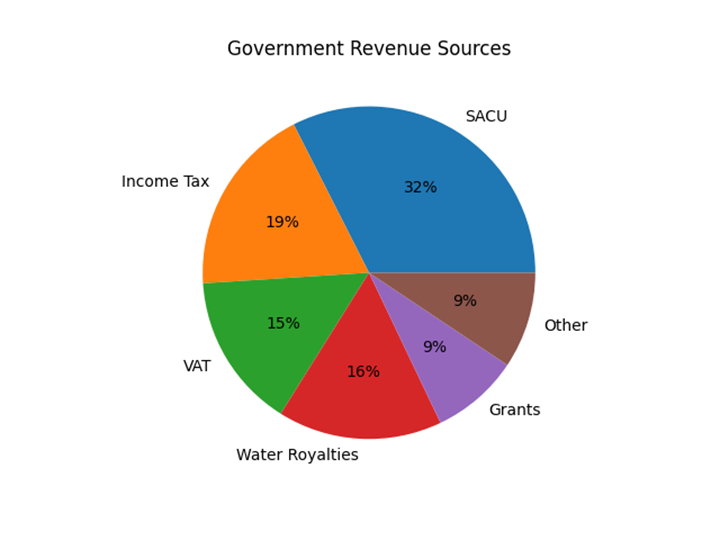
Chart 2: Revenue Sources
Source: budget speech 2026/27, graphics: Lesotho Tribune
Government revenue continues to rely heavily on SACU receipts, which remain one of the largest sources of income. This dependence exposes Lesotho to external risk, particularly economic conditions in South Africa.
Domestic taxes, including VAT and income tax, form the second major revenue pillar, but remain insufficient to fully fund government spending.
Where the Money Goes
The largest share of government expenditure goes to recurrent spending, including salaries, social programs and operational costs.
However, capital spending has increased significantly to M9.03 billion, reflecting government’s decision to invest heavily in infrastructure such as roads, water systems, and energy.
Government Jobs Era Ending
Perhaps the most important policy shift in this budget is government’s acknowledgement that it cannot employ everyone.
This signals a transition toward private‑sector‑led job creation, a major structural shift in Lesotho’s economic policy direction.
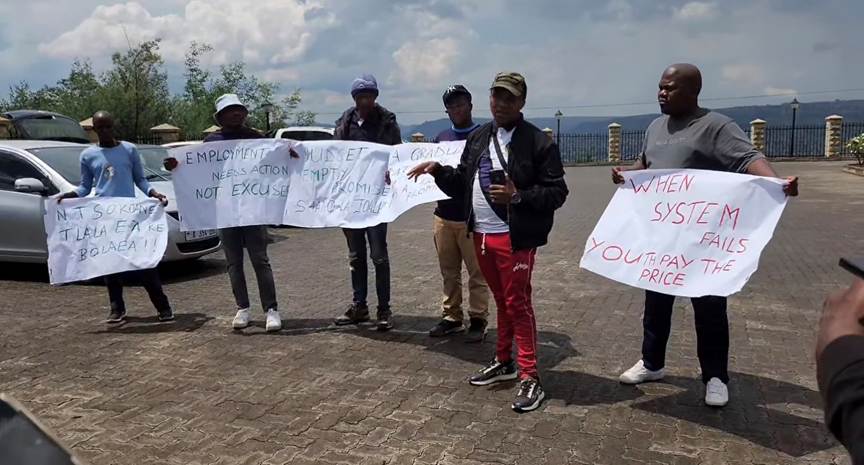
Image 1: Basotho Youth Protesting Demanding Jobs from Government During Budget Speech Day
Winners and Losers
The biggest winners are construction, energy and water sectors, which will benefit from infrastructure investment.
Those who did not benefit significantly include civil servants, who received only a modest salary increase, and pensioners, whose grants remain unchanged.
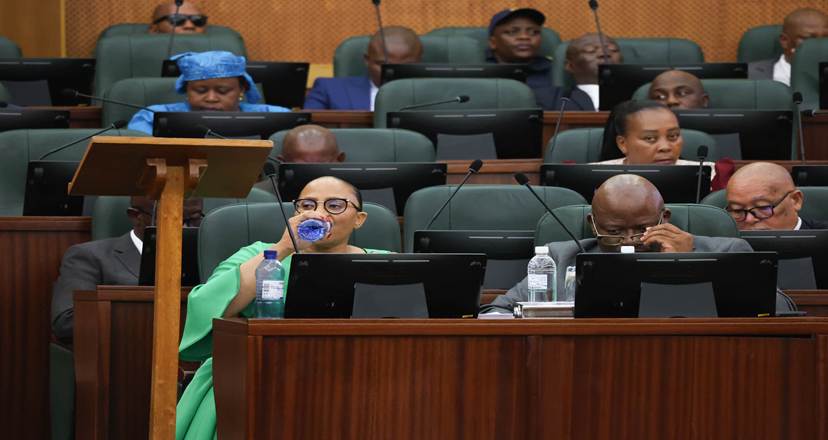
Image 2: Minister of Finance & Development Planning, Dr. Retselisitsoe Matlanyane getting ready to deliver her forth budget speech.
Debt Explained
Lesotho’s total public debt now stands at M22.7 billion. While still within sustainability thresholds, continued borrowing presents risks if economic growth does not improve.
Debt servicing also reduces government’s ability to spend on development.
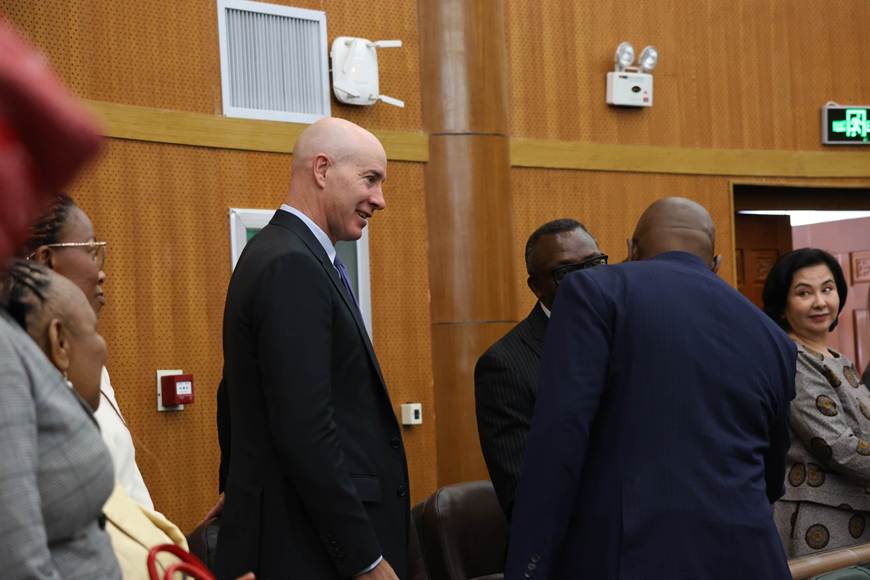
Image 3: Lesotho’s development partners attending budget speech
Economic Growth Reality
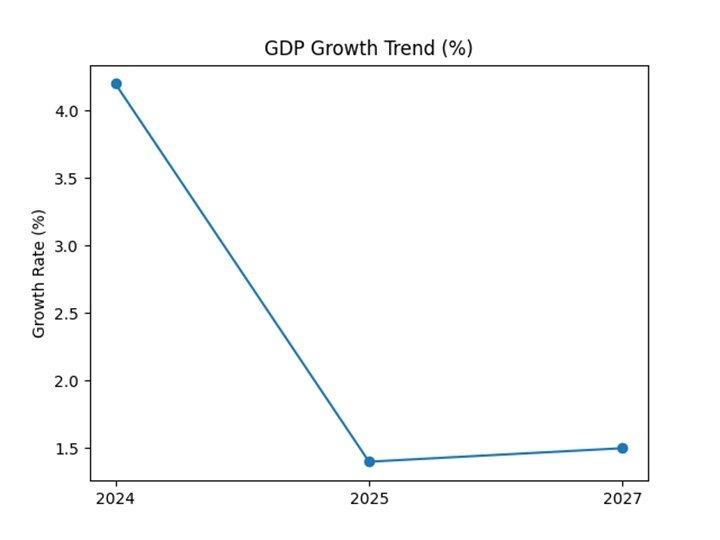
Chart 3: GDP Growth Trend
Source: budget speech 2026/27, graphics: Lesotho Tribune
Economic growth has slowed significantly due to challenges in textiles and mining.
This highlights the urgency of diversifying Lesotho’s economy.
Sector Allocations
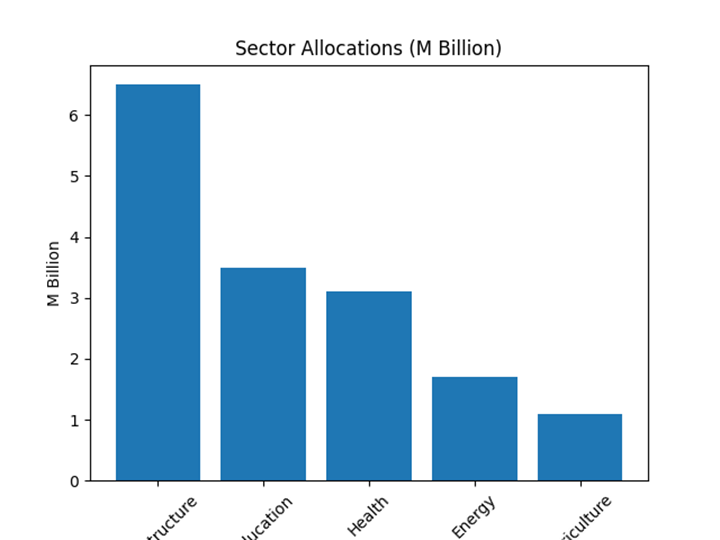
Chart 4: Sector Allocations
Source: budget speech 2026/27, graphics: Lesotho Tribune
Infrastructure received the largest share, followed by health and education.
This reflects government’s attempt to balance development with social services.
Fact Check: Budget Misinformation
Lesotho Tribune confirms that claims of pension increases and constituency allocations circulating on social media are false.
No such provisions exist in the official budget.
Impact on Ordinary Mosotho
For ordinary citizens, the budget means continued economic uncertainty but potential future benefits if infrastructure investment succeeds.
Job creation will depend heavily on private sector response.
Private Sector Expectations :
Private Sector Now Carries Job Creation Burden
Government has, in effect, formally shifted the burden of job creation to the private sector. This marks a significant policy signal. It acknowledges fiscal limits, but it also exposes a structural vulnerability. If the private sector is unable to expand meaningfully, unemployment will remain entrenched. The policy therefore creates both opportunity and risk.
Agriculture and Rural Economy
Increased funding toward agriculture creates a pathway to strengthen food security and revitalise rural livelihoods. For a country that continues to import a large share of its food, this shift is economically rational. However, Lesotho’s long-standing challenge has never been policy intent. It has been execution. Without efficient delivery, farmer support systems, and functioning markets, allocations alone will not translate into production.
Digital Economy
Investment in information and communications technology reflects growing recognition that the digital economy is no longer optional. It is foundational. This is particularly significant for Lesotho, whose digital economy remains under-monetised despite high mobile penetration. If implemented properly, ICT investment could unlock new sectors, expand entrepreneurship, and integrate Basotho into regional and global digital value chains.
Long-Term Outlook
Ultimately, Lesotho’s economic trajectory will be determined less by the Budget itself and more by execution, global economic conditions, and structural reforms. The Budget can create direction, but it cannot, on its own, deliver transformation. Without institutional capacity, private sector confidence, and sustained reform, the gap between policy ambition and economic reality will remain.