


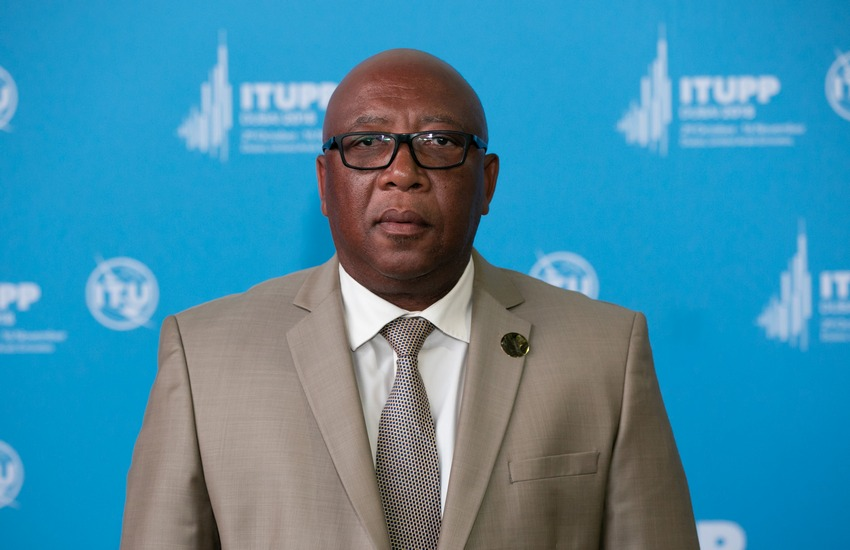
Sources with knowledge of discussions within government say Prime Minister Sam Matekane is considering appointing former Cabinet minister and former Ambassador to Italy, Thesele Maseribane, as his Nutrition Advisor, as the administration weighs options to elevate nutrition and food security as a national development priority.
Former Cabinet minister and former Ambassador to Italy Thesele Maseribane says he has not been formally approached by the Office of the Prime Minister regarding reports that he may be under consideration for a national nutrition advocacy role, adding that his awareness of the matter remains informal and media-driven.
Responding to questions from Lesotho Tribune, Maseribane said any such role would require formal engagement before he could respond substantively.
“I am not aware of such a role from the Office of the Prime Minister and I am not in a position to confirm such,” Maseribane said. “At this stage my awareness of the matter is largely informal, arising from media circles, and not even discussions through diplomatic or policy channels.”
The reports come amid wider debate within Matekane’s kitchen cabinet on whether the his administration intends to elevate nutrition as a national development priority, particularly in light of persistent stunting, food insecurity, and vulnerability in rural communities, and most importantly with his Majesty being UNICEF’s nutrition champion.
Rome posting and UN agency engagement
During his tour of duty in Rome, Maseribane was accredited to FAO, WFP, and IFAD, where Lesotho’s engagement focused on strengthening agricultural productivity, addressing hunger, and reducing vulnerability within the framework of the Sustainable Development Goals and the Country Development Programme.
He said this work included policy dialogue, technical cooperation, and programme support aimed at nutrition-sensitive agriculture, with particular emphasis on indigenous and organic production systems and resilience to climate and economic shocks.
Maseribane noted that Lesotho’s mission operated under severe human resource constraints, with only two diplomats and himself covering all three agencies, adding that formal reports submitted to government detail the outcomes achieved during that period.
Nutrition beyond health
Drawing on his international exposure, Maseribane argued that malnutrition and stunting should not be treated as health-sector issues alone, but as broader development challenges rooted in structural conditions.
“Malnutrition and stunting are not only health issues. They are structural development issues related to poverty, education, agriculture, social protection, governance, and the non-engagement of the private sector,” he said.
He warned that fragmented interventions and short-term programmes have limited impact, stressing the need for long-term, coordinated policy responses.
Executive experience and policy coordination
Maseribane said his previous experience as a Cabinet minister provided him with a practical understanding of government systems, policymaking, and the importance of alignment across ministries, Parliament, and the judiciary.
“The areas that matter most in any national advocacy role are those that depend on coordination across multiple sectors rather than operating in silos,” he said.
He added that policy alignment is more critical than stand-alone advocacy in improving nutrition outcomes.
What a national nutrition mandate would entail
While declining to confirm any appointment, Maseribane outlined what he believes the core mandate of such a role would be if established.
He said it should focus on elevating nutrition as a national development priority, mobilising political and technical support, and promoting policy coherence.
“The role would be to coordinate government, the private sector, development partners, and civil society to facilitate rapid rural development, leaving no one behind, and ensuring well-coordinated action,” he said.
He also stressed the need to contextualise global frameworks by grounding them in local realities, strengthening farmers’ access to markets and finance, and prioritising implementation, monitoring, and accountability over abstract commitments.
Supporting the King’s nutrition advocacy
Maseribane praised King Letsie III’s role as a nutrition champion, particularly during his engagement with FAO and across Africa.
“The key gaps are coordination across sectors, sustained political visibility for nutrition, and stronger links between policy design and implementation,” he said. “A dedicated role could help align efforts, strengthen accountability, and ensure nutrition remains central to development planning.”
He added that supporting His Majesty’s mandate on nutrition remains a priority and said he is currently working on indigenous nutrition and organic agriculture initiatives in the region.