


Opinion · Analysis
A theory from political science explains, with uncomfortable precision, why Lesotho’s government cannot simply promise its way to legitimacy, why Donald Trump cannot negotiate his way to credibility, and why Iran has every rational reason not to trust either of them.
By Malefo Thinyane · Maseru
There is a concept in political science that cuts through the noise of every election campaign and every diplomatic initiative with the quiet precision of a blade. It is called the credible commitment problem. Its logic is deceptively simple: a promise is only as good as the promisor’s demonstrated ability and willingness to keep it.
Where that track record is absent, or worse, actively contradicted by prior conduct, no amount of eloquence can rescue the pledge from its own hollowness. Voters who accept such promises without scrutiny are not naive. They are simply not yet equipped with the theory.
That theory applies with uncomfortable directness to two political landscapes that Basotho have reason to watch closely at this moment: their own, and the United States.
Basotho were not being asked to trust people. They were being asked to trust words suspended in air.
When the current administration came to power in Lesotho, it arrived on the customary wave of promises. Jobs. Development. Accountability. Good governance. The vocabulary was familiar because it always is.
But the credible commitment problem asks a harder question than “what did you promise?” It asks: what in your history gives us reason to believe you? Credibility is not asserted. It is demonstrated, over time, through a pattern of decisions that subordinate short-term political advantage to long-term public good.
The current administration had no such pattern to point to. Its principals were not unknown quantities exactly, but they were unknown as rulers. There was no prior term to examine, no record of difficult decisions taken under pressure, no institutional legacy to scrutinise. The promise was the entirety of the offering.
This is not a moral indictment. It is a structural one. Without a track record, the commitment cannot be credible, not because the government is necessarily dishonest, but because there is nothing to anchor the belief that it would hold firm when circumstances turned costly.
The early evidence has done little to resolve the uncertainty. The structural problems of governance in Lesotho, the patronage networks, the institutional fragility, the revolving door of coalitions, the gap between policy announcement and implementation, did not yield to the arrival of a new set of faces. They rarely do without the harder work of credibility-building that only time and consistent conduct can supply.
If Lesotho’s problem is the blank slate, Donald Trump’s is the overcrowded one.
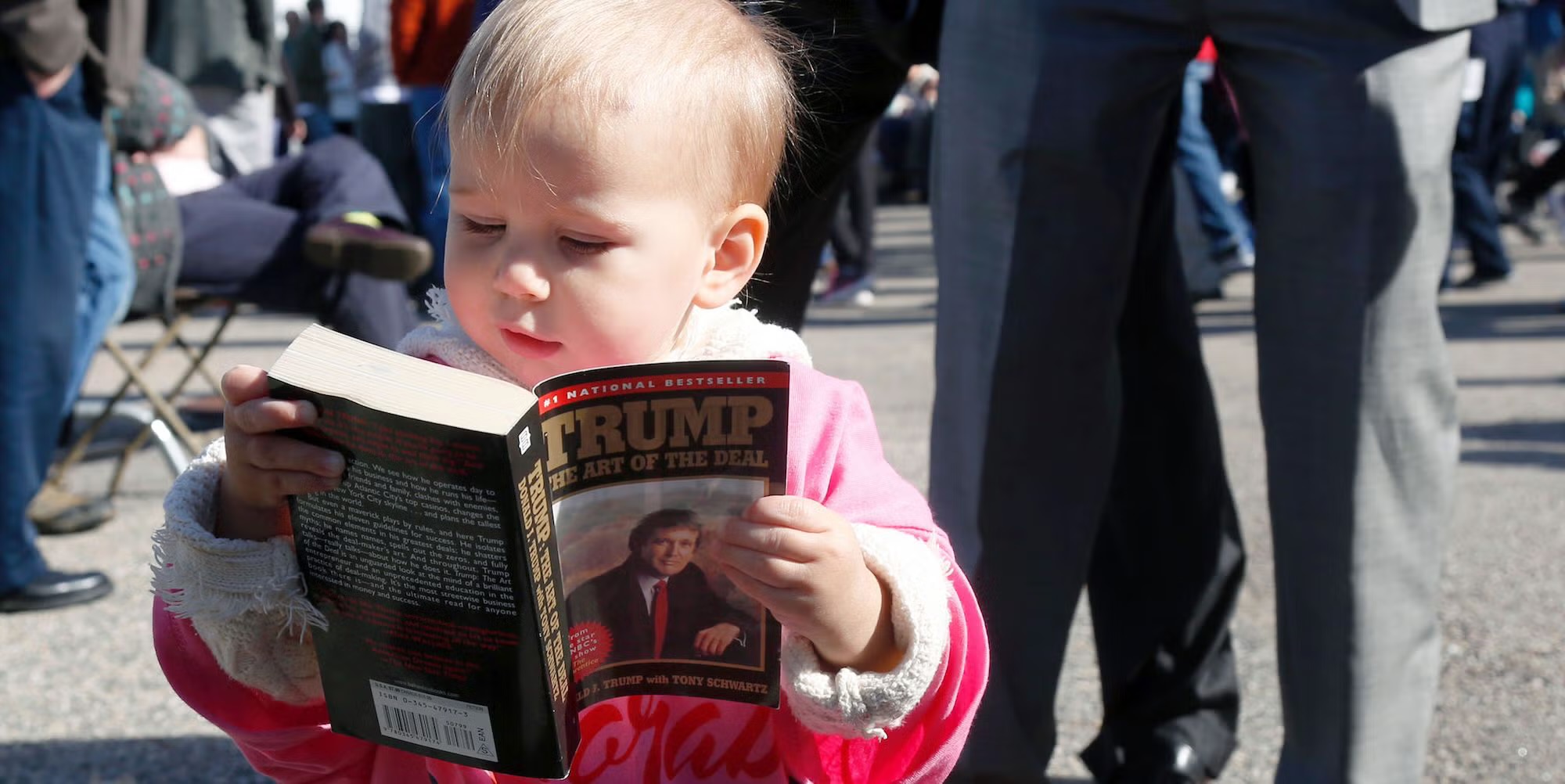
Trump has spent decades advertising himself as a dealmaker. It was the brand before the politics, the autobiography before the presidency. And in the logic of the credible commitment problem, a dealmaker is precisely the kind of actor whose commitments should be discounted most heavily, because a dealmaker’s defining characteristic is that no deal is ever truly final. Every agreement is a starting position. Every signature is conditional. Every promise carries the implicit codicil: until something better comes along.
Trump’s first term was a masterclass in strategic inconstancy. He campaigned on renegotiating the Iran nuclear agreement, calling it the worst deal ever. His administration initially certified Iranian compliance in April and July of 2017, then reversed course entirely. In May 2018, he terminated United States participation in the JCPOA and reimposed economic sanctions on Iran. The stated rationale shifted with the news cycle.
On the day he withdrew, he declared that when he makes promises, he keeps them. The irony appeared to escape him entirely.
If you make diplomacy impossible, you tend to make war inevitable.
This is where the theory becomes genuinely consequential, because the stakes are no longer electoral disappointment. They are war and the possibility of its absence.
In early February 2026, Iran and the United States held indirect nuclear negotiations in Oman. Just before the strikes of 28 February, Oman’s Foreign Minister reported that a breakthrough had been reached. Iran had agreed both to never stockpile enriched uranium and to full verification by the IAEA. He said peace was within reach. Talks were expected to resume on 2 March.
Then, on 28 February 2026, the United States and Israel launched airstrikes on Iran, targeting military and government sites. The surprise attacks were launched during those very negotiations. The Omani foreign minister, who had brokered the talks, said he was dismayed. The word is a diplomatic understatement of some magnitude.
This was not the first time. The Twelve-Day War of June 2025 began when Israel bombed military and nuclear facilities in Iran in a surprise attack. The United States had announced negotiations between the two countries in April of that year, and the White House had declared that Iran had two months to secure a deal. The strikes came the day after that deadline expired.
Consider what Iran is being asked to believe. It is being asked to enter negotiations with a country whose president tore up the last nuclear agreement his predecessor signed. It is being asked to trust a mediating process that was punctured twice by military strikes, once while talks were still live. It is being asked to take seriously the diplomatic overtures of an administration that has repeatedly demonstrated, in the most concrete terms available, that its commitments are provisional.
Senator Tim Kaine stated it plainly: the last negotiation that led to control of Iran’s nuclear programme ended with the United States making the decision to tear it up and walk away from the deal. Iran’s scepticism is not irrationality. It is the correct application of lessons learned at considerable cost.
The credible commitment problem does not require that Iran’s government be virtuous. It only requires that we ask the prior question: why would any rational state trust a counterpart whose behaviour has consistently demonstrated that its commitments are contingent?
The point of raising the credible commitment problem in this context is not fatalism. Institutions can be built to constrain inconsistent actors. Credibility can be rebuilt through sustained, costly signals, the kind that hurt in the short term precisely because they are not reversible. Lesotho’s government can still build a track record. American foreign policy can still find mechanisms to bind future decision-makers.
But none of that begins without honesty about the present condition. Promises made by actors who cannot demonstrate the capacity to honour them are not a foundation for governance. They are a deferral of accountability.
And the cost of that deferral, whether it is paid by Basotho waiting for jobs that do not arrive, or by a region watching a war that diplomacy failed to prevent, is always borne by those with the least leverage to demand better.
The theory does not make cynics of us. It makes us more precise about what trust requires, and more honest about when it has not yet been earned.
Malefo Thinyane writes on politics, governance and international affairs for the Lesotho Tribune.