


Opinion · Contributed
Eighty-one years after the defeat of Nazi Germany, Russia’s Ambassador to South Africa reflects on Victory Day, the legacy of the Nuremberg trials, and the enduring responsibility to preserve historical truth.
Victory Day, 9 May, carries deep meaning for millions of Russians. This year marks 81 years since the defeat of Nazi Germany in the Great Patriotic War of 1941–1945, a victory that came at an immense human cost and shaped the modern world.
For us, this is not distant history. Nearly 27 million Soviet citizens lost their lives, one in every seven. Almost every family was affected. Mine is no exception. My grandfather, though not a frontline soldier, was among the designers of the T-34 tank, one of the most effective combat vehicles of the war. Its mass production played a decisive role on the battlefield.
The battles and operations of the Great Patriotic War were central to the defeat of Nazi Germany: nearly 90% of Wehrmacht losses occurred in the western parts of my country, and it was the Red Army that captured Berlin. Yet Victory Day is about more than military success. It is about endurance, unity, and the sacrifice of ordinary people.
From victory to justice: Nuremberg at 80If Victory Day marked the military defeat of Nazism, the Nuremberg International Military Tribunal gave that victory its everlasting legal and moral dimension. In 2026, we mark 80 years since the conclusion of the Nuremberg trials. For the first time, Nazi leaders were held accountable before an international court for crimes against humanity. The Tribunal condemned not only individuals, but also the ideology of Nazism itself.
The principles established at Nuremberg laid the foundation for modern international humanitarian and criminal law and continue to shape the global legal order.
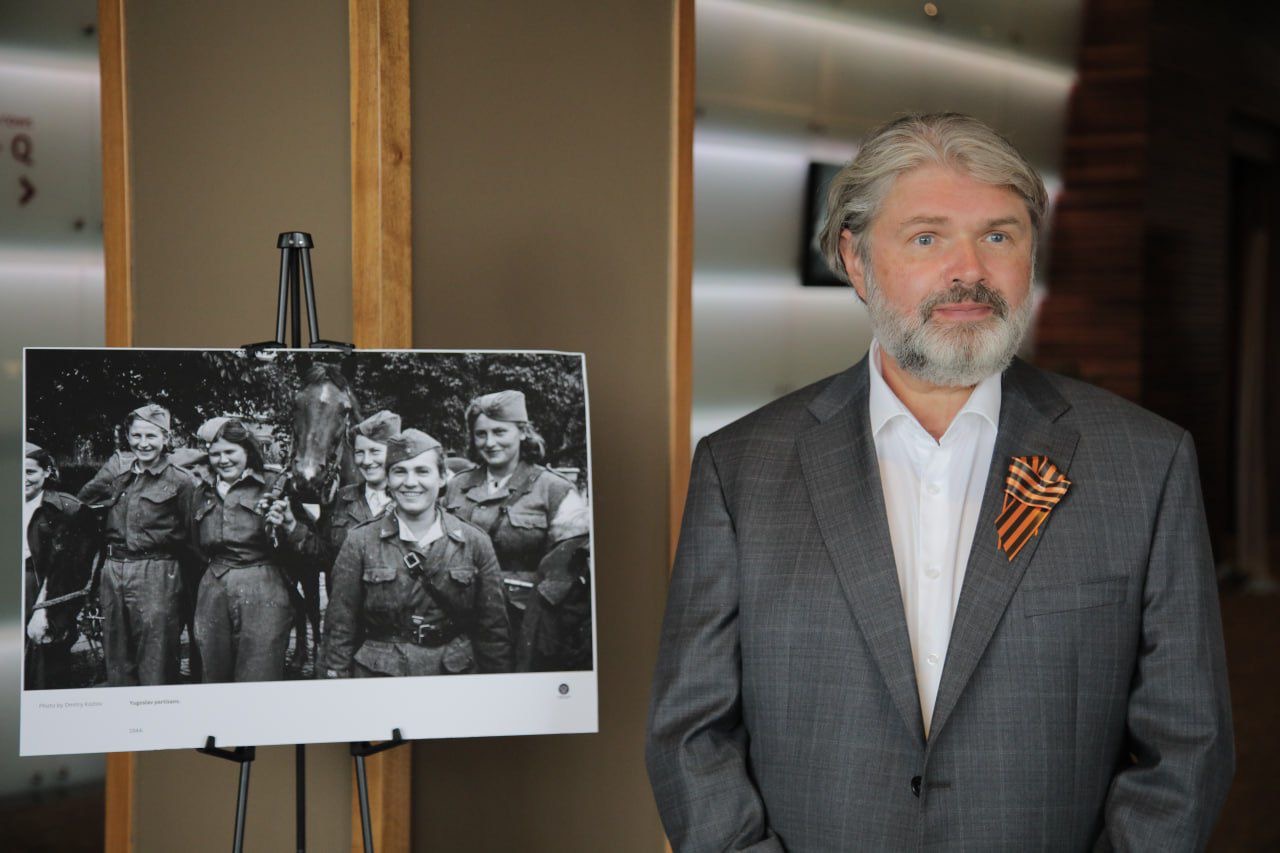
H.E. Roman Ambarov
Its legacy has endured and lives on. The principles established at Nuremberg laid the foundation for modern international humanitarian and criminal law and continue to shape the global legal order.
Remembering the victimsThis year also marked a new moment of remembrance in Russia. On 19 April 2026, my country for the first time observed the Day of Remembrance of the Victims of the Genocide of the Soviet People, established by federal law in December 2025. The date refers to a 1943 decree that initiated the prosecution of Nazi crimes.
The term “genocide of the Soviet people” reflects the documented intent behind Nazi policies in the East. The war against the Soviet Union was conceived not only as a military campaign, but as an elaborate project of destruction and colonisation. Large parts of the population were to be eliminated to make way for others.
These policies formed part of a broader vision known as Generalplan Ost, which envisaged the large-scale resettlement of conquered territories. In total, about 13.7 million civilians were killed, while millions more died from hunger and related causes. Today, these crimes are being examined in courts across Russia, and efforts continue to secure their recognition at the international level.
A shared responsibilityMore than eight decades later, the lessons of that period remain relevant. The legacy of Victory Day and Nuremberg is not only about the past, it is about the principles that shape our present.
Preserving historical truth is a shared responsibility. It requires care, honesty, and respect for those who suffered. Above all, it is a strong commitment and profound devotion to future generations, to ensure that the tragedies of the 20th century are neither forgotten nor repeated.
“`