



Washington’s decision to blockade the Strait of Hormuz does not neutralise Iran’s leverage over the world’s oil supply. It transfers responsibility for the consequences from Tehran to the United States, handing the Islamic Republic a strategic victory it could not have won on the battlefield.
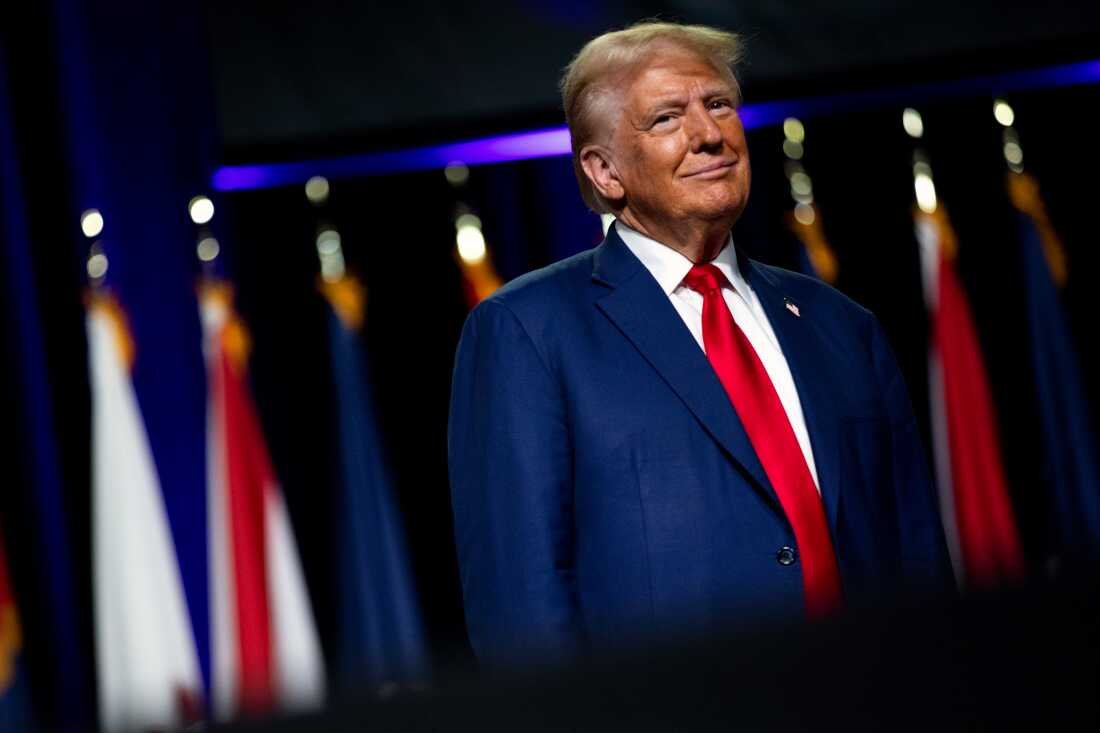
President Donald Trump posted on Truth Social on the morning of Sunday, 12 April 2026: “Effective immediately, the United States Navy, the Finest in the World, will begin the process of BLOCKADING any and all Ships trying to enter, or leave, the Strait of Hormuz.” The announcement came hours after 21-hour peace talks in Islamabad, Pakistan collapsed, with the United States and Iran failing to reach agreement principally over Iran’s refusal to abandon its nuclear programme. The blockade declaration is confirmed across multiple major news agencies including Reuters, AP, NBC News, CBS News and the BBC.
What is a naval blockade, and what does the law say?
“`In plain terms, a naval blockade is when one country uses its warships to seal off a stretch of water, a port, or a coastline so that no ships, from any nation, can pass through without permission. Think of it as putting a wall of warships across a road and turning away every truck, regardless of who owns it or where it is going. The blockading country decides who gets through, when, and on what terms.
In this case, President Trump has ordered the US Navy to position itself at the entrance and exit of the Strait of Hormuz, the narrow waterway through which roughly one-fifth of the world’s oil travels every day, and to stop all ships from entering or leaving. That includes tankers carrying oil to Japan, India, China, Europe and Africa, as well as cargo ships bringing goods into the Persian Gulf states.
What international law says
The legality of naval blockades is governed primarily by customary international law, codified in documents including the 1909 Declaration of London, the 1994 San Remo Manual on International Law Applicable to Armed Conflicts at Sea, and the United Nations Convention on the Law of the Sea (UNCLOS). For a blockade to be considered lawful under these frameworks, several conditions must be met:
Formal declaration. A blockade must be officially declared, specifying its geographic extent, start date, and the time allowed for neutral vessels to depart the zone. Trump’s Truth Social post, while emphatic, is unusual as a formal instrument of international maritime law, but a presidential declaration carries legal weight under US military authority.
Effectiveness. International law does not recognise a “paper blockade.” The blockading force must have the naval capability to actually enforce it. The US Navy, the world’s largest, satisfies this requirement.
Non-discrimination. A lawful blockade must apply equally to all nations. A blockading power cannot let some countries’ ships through while barring others. Trump has explicitly stated the blockade will be “all or nothing,” which aligns with this principle, though it puts Washington on a collision course with China, India and Pakistan, whose ships have been transiting under deals with Tehran.
Proportionality and humanitarian exceptions. The San Remo Manual requires that blockades not be used to starve civilian populations, and that humanitarian aid shipments be permitted through. A full blockade of Hormuz will almost certainly require the US to navigate these obligations as food and medicine shipments to Gulf states and beyond are affected.
The act of war question. Perhaps most critically, a naval blockade is, under classical international law, historically considered an act of war. Multiple analysts have warned that Iran may interpret the US counter-blockade as precisely that: a justification for renewed military strikes. This is not a technical legal argument. It is a live escalation risk.
The Strait itself: a note on sovereignty
The Strait of Hormuz is classified as an international strait under UNCLOS, which guarantees all nations the right of “transit passage,” meaning ships and aircraft have the right to pass through continuously and without obstruction. Both Iran and the United States are implicated here: Iran’s toll regime already violates this principle, and a counter-blockade by the US does the same. In effect, both parties are now in breach of the very legal framework the US claims to be defending.
“`Trump’s Hormuz Gambit: A Strategic Own Goal of Historic Proportions
This morning, President Donald Trump confirmed what many feared: that American frustration with Iran’s chokehold on global energy flows would eventually produce a response more dangerous than the problem it seeks to solve. Having announced a US Navy blockade of the Strait of Hormuz hours after peace talks in Islamabad collapsed, Washington has not neutralised Iran’s leverage. It has assumed ownership of all the suffering that flows from the strait’s closure.
The Lesotho Tribune understands the frustration. Iran has, since the beginning of the US-Israeli military campaign in late February, effectively held the global economy hostage through a combination of mine-laying, transit restrictions, and an extortionate toll regime that charges ships up to two million dollars for passage through what is unambiguously an international waterway. Trump is correct to call it extortion. What he has failed to calculate is that the antidote to extortion is not to make the situation worse for everyone.
A counter-blockade does not remove Iran’s leverage. It simply transfers responsibility for the suffering its closure causes from Tehran to Washington.
Playing directly into Tehran’s strategy
Iran’s strategic objective throughout this conflict has never been to win a conventional military exchange with the United States, an exchange it knows it cannot win. Its objective has been to maximise economic pain on Washington and its allies, exhaust American political will, and frame the US as the primary aggressor in the eyes of the global south. The Hormuz stranglehold has been its most effective instrument toward that goal.
A US counter-blockade doubles that instrument and hands it back to Tehran gift-wrapped. Every barrel of oil that fails to reach a refinery, every cargo ship turned away, every fuel price spike in a developing nation: these are now American-administered outcomes. Iran’s state media need not even construct a narrative. The facts will speak for themselves in the fuel queues of Nairobi, the cooking gas shortages of Dhaka, and the heating bills of Warsaw.
Iranian officials have already responded with barely concealed satisfaction. Ali Nikzad, deputy speaker of Iran’s parliament, stated that in the 40 days of war, the US had “learned that the victorious side is determined by the will of nations and superiority on the battlefield, not by rhetoric on social media.” That is precisely the posture of a party that believes its adversary has just made a catastrophic miscalculation.
The consequences for Africa and for Lesotho
For countries like Lesotho, which imports all of its petroleum, is landlocked, and sits at the end of a long and fragile regional supply chain, the consequences of prolonged Hormuz disruption are not abstract geopolitical events happening in a distant sea. Oil prices have already climbed past one hundred dollars per barrel since the war began. A full bilateral blockade, with the US Navy interdicting every vessel that previously transited under Iranian-issued clearances, will push prices substantially higher.
Fuel prices in Maseru will rise. Transport costs will rise. The cost of every imported good will rise. For households already spending a disproportionate share of income on food and transport, this is not an international story. It is a domestic one.
Across sub-Saharan Africa, the picture repeats in dozens of capitals. Food-import-dependent nations face escalating famine risk as freight costs absorb the shock. Humanitarian logistics, which depend on diesel, become slower and more expensive precisely when they are needed most. The African Union’s capacity to respond is strained at the moment of greatest demand. The continent will pay an enormous price for a confrontation it had no hand in creating.
Europe’s energy crisis deepens
European nations, many of which spent the better part of three years diversifying away from Russian energy after 2022, now face a second consecutive energy emergency, this time with no obvious alternative source to turn to. Gulf LNG and crude oil that Europe has come to depend on transits Hormuz. A prolonged blockade will force European governments into emergency rationing decisions, accelerate inflation, and revive the political instability that high energy costs have historically produced. The political beneficiaries of that instability are not, as a general rule, pro-American.
The domestic political miscalculation
There is a bitter irony in Trump’s calculations. He has throughout this conflict framed himself as the president who ends wars rather than starts them. The Islamabad talks were his attempt to validate that framing. They failed. But the response, an open-ended naval blockade with no clear exit condition beyond Iranian capitulation on nuclear weapons, is not a war-ending posture. It is an escalation ladder with no visible top rung.
American consumers are already absorbing the costs of elevated oil prices, tariff-driven inflation, and a market that has whipsawed throughout the campaign. A blockade that demonstrably worsens all three will not be forgiven by voters who were told the pain was temporary and purposeful. Midterm elections are approaching. The political map for the Republican Party, which has already faced questions about the administration’s economic stewardship, becomes considerably more difficult if American families are paying record fuel prices because their government sealed the world’s primary oil corridor.
Beyond the midterms, a president presiding over a global economic meltdown, a naval confrontation with China and India over interdicted ships, and a re-escalating war in the Middle East faces a very particular kind of political reckoning, one that has historically produced not just electoral defeat but institutional consequences.
Iran has handed Washington a loaded weapon and watched as Washington pointed it at itself. The tragedy is that the rest of the world will absorb the recoil.
Our view
The Lesotho Tribune’s position is unambiguous. Iran’s toll regime and its near-closure of the Strait of Hormuz constitute a violation of international maritime law and a form of economic coercion against the entire world. We do not defend it. But a counter-blockade that shuts down one-fifth of the global oil supply does not neutralise that coercion. It creates a second, larger one, and attributes it to Washington rather than Tehran.
The United States will have handed its adversary a propaganda victory of historic proportions, ignited precisely the global economic meltdown it claimed to be preventing, alienated the allies and neutral parties whose support it needs, and produced domestic political conditions that no administration survives intact. Iran, watching from across the water with the patience of a nation that has absorbed decades of sanctions, could not have scripted a better outcome.
This is not strength. It is the most expensive own goal in modern geopolitical history, and the world, from Maseru to Mumbai, will pay the price for it.
— The Editors, Lesotho Tribune | 12 April 2026