



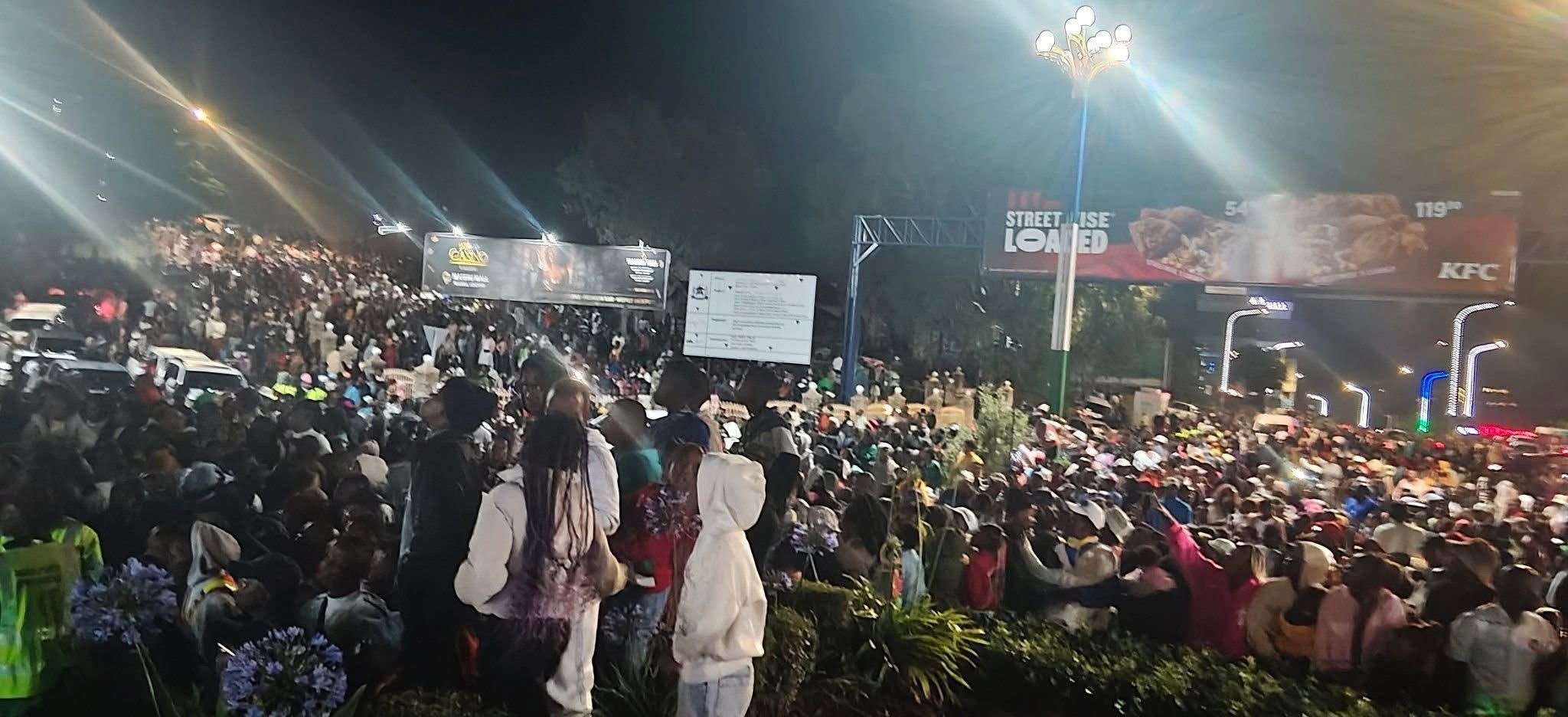
There are years when a country worries about prices. Other years, about jobs. And then there are years when the anxiety shifts deeper, when citizens stop arguing about outcomes and begin questioning the system itself.
For Lesotho, 2025 appears to have been one of those years.
A series of reader polls conducted by Lesotho Tribune in late December, across X, lesothotribune.co.ls and Facebook, do not read like a protest. They read more like a diagnosis. The sample size is small, yes, but it is internally consistentand it points in one direction. What worried Basotho most was not hunger, inflation, or even unemployment. It was corruption by government.
A hierarchy of fear
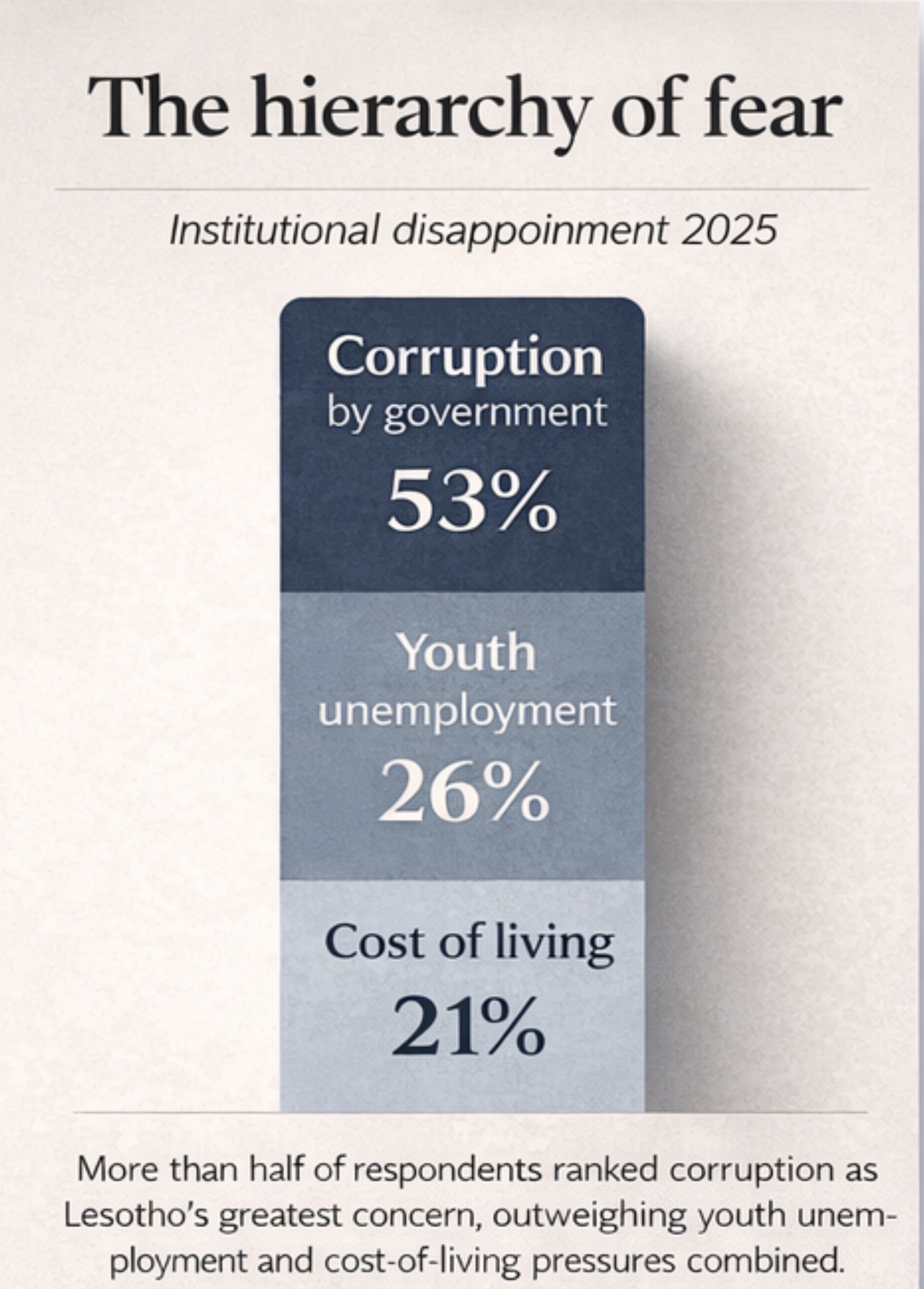
Figure 1 captures the hierarchy starkly. Asked what worried them most about Lesotho’s future, 53 percent of respondents chose corruption, compared with 26 percent who chose youth unemployment and 21 percent who pointed to the cost of living.
This is not a marginal lead. It is a commanding one.
From a data-analysis standpoint, such a gap is telling. When one variable so clearly dominates others, it usually means respondents are not thinking in isolated categories. They are ranking causes, not symptoms.
“Basotho are no longer just counting prices. They are questioning the system that produces them.”
In effect, the public appears to be saying this: we can survive high prices, and we can endure job scarcity for a while, but a state that cannot be trusted eventually collapses under its own weight.
When corruption becomes the lens
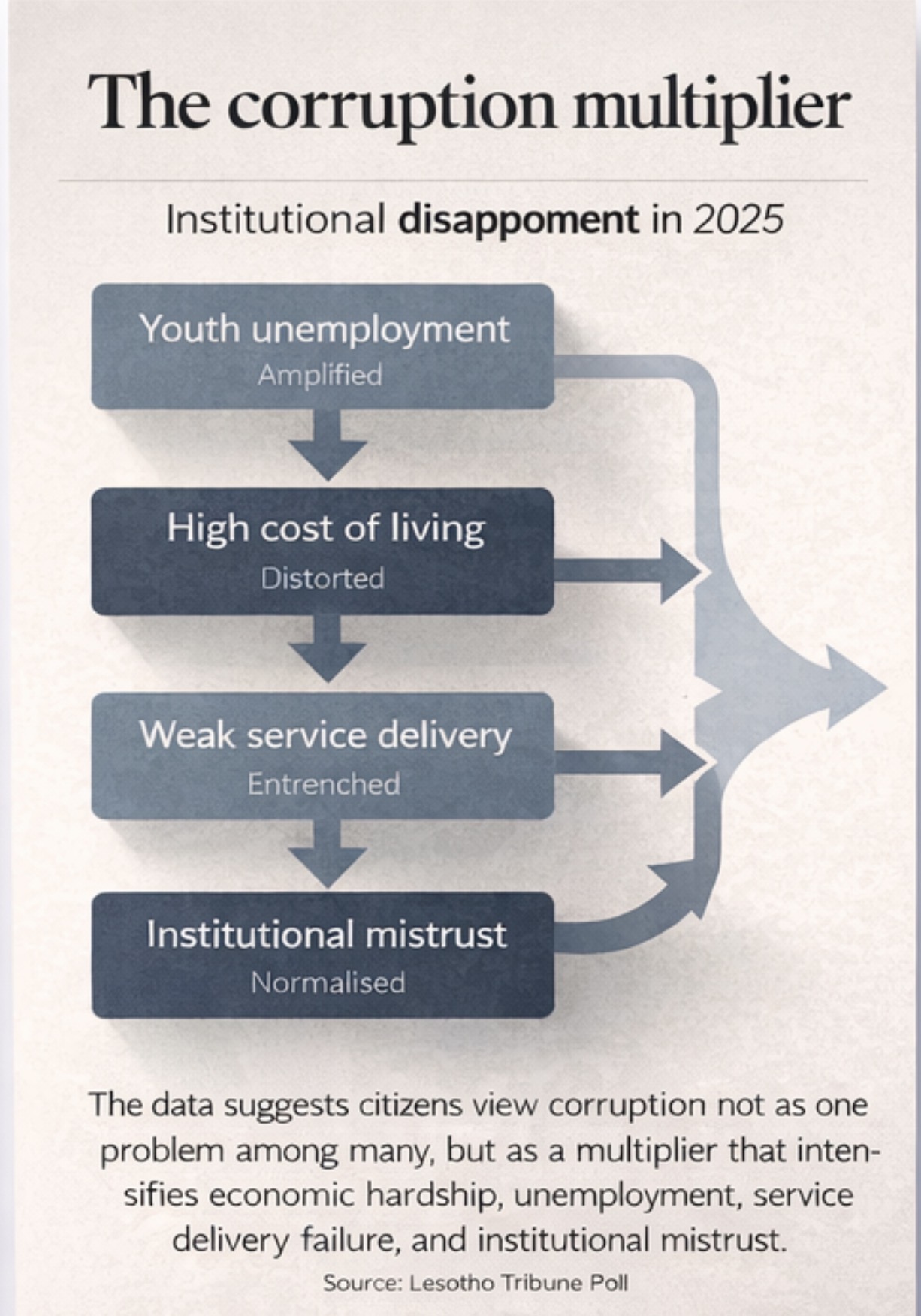
This interpretation is reinforced by Figure 2, which conceptualises corruption as an upstream risk. In systems analysis, upstream variables are those that shape everything downstream. If they fail, no amount of downstream intervention fully compensates.
Viewed this way, corruption is not competing with youth unemployment or the cost of living. It is framing them.
Inflation becomes more painful when public procurement is distorted. Youth unemployment becomes permanent when opportunity is mediated by patronage. Even well-funded programmes fail when institutions lack credibility.
Data callout:
53% of respondents ranked corruption above all other concerns about Lesotho’s future.
Source: Lesotho Tribune poll, December 2025
The data suggests that many Basotho now see corruption as the silent tax that inflates every other problem.
Disappointment has an address
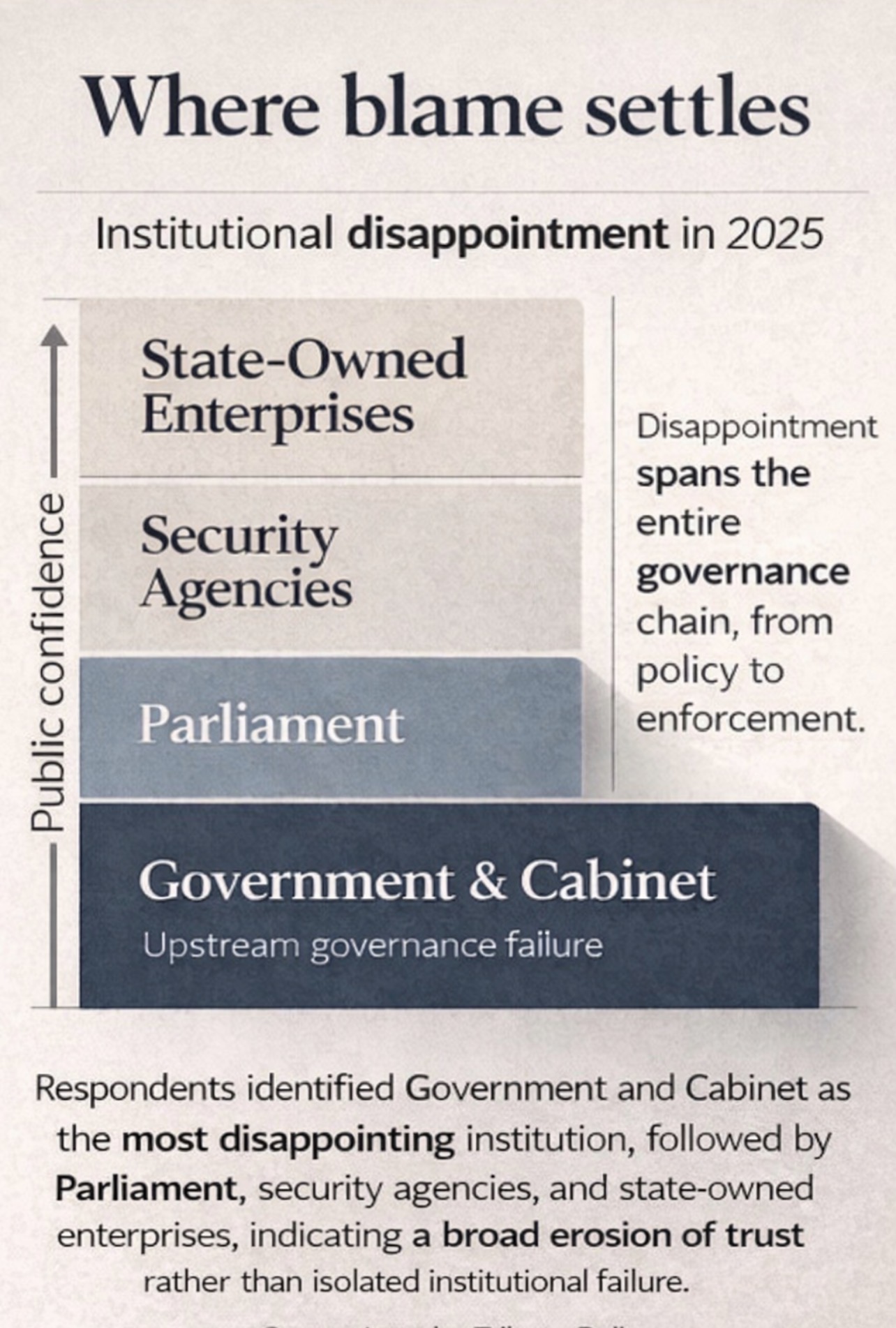
If Figure 1 tells us what people fear, Figure 3 tells us where they think responsibility lies.
In a separate poll asking which institution disappointed them most in 2025, Government and Cabinettopped the list. Parliament followed. Then security agencies. Then state-owned enterprises.
This ordering is analytically important. It spans the entire governance chain: policy formulation, oversight, enforcement, and execution.
“When disappointment spreads across all institutions, it stops being a personnel issue and becomes a structural one.”
From a governance perspective, this pattern signals a collapse of horizontal accountability. Citizens do not believe one institution is effectively restraining another. Instead, they see a closed circuit of power, weak oversight, and limited consequences.
The quiet downgrade of Parliament
Parliament’s position in Figure 2 deserves special attention. In theory, it is the institution meant to absorb public frustration and translate it into accountability. In practice, respondents appear to view it as part of the problem rather than a counterweight to it.
This is significant because once legislative oversight loses credibility, public trust rarely migrates elsewhere. It simply dissipates.
Security agencies and state-owned enterprises trailing Parliament suggests a public perception that enforcement and delivery failures are downstream of political failure, not independent of it.
Youth unemployment: the crisis everyone expects
Youth unemployment ranking second in Figure 1 may seem unsurprising, but its placement below corruption is revealing. At 26 percent, it remains a serious concern, but it no longer defines the national mood.
Economists sometimes refer to this as problem normalisation. When a crisis persists long enough without resolution, it ceases to shock. It becomes expected.
Youth unemployment accounted for 26% of responses, suggesting concern remains high, but not decisive.
The danger here is not complacency. It is resignation. When citizens no longer believe institutions are capable of solving a problem, they stop ranking it as urgent.
Why the cost of living ranked lowest
Perhaps the most counterintuitive finding in Figure 1 is the cost of living coming last. In a year marked by rising prices and household stress, this seems odd.
But again, Figure 3 offers the explanation. Cost-of-living pressures are being interpreted as consequences rather than causes. They are visible, painful, and immediate, but they are also seen as politically mediated.
If corruption persists, respondents appear to believe, no price relief will last.
Small sample size, strong signal
It is worth repeating that these are not nationally representative surveys. The sample sizes are modest. But data journalism is not only about scale. It is about coherence.
Across platforms, across questions, and across institutional targets, the signal is consistent. Corruption dominates concern. Institutions disappoint broadly. Economic anxieties are reframed through governance failure.
“This is not protest data. It is diagnostic data.”
What the data is really saying
Read together, Figures 1, 2, and 3 tell a story of a country no longer debating policy choices, but questioning institutional legitimacy.
Basotho are not simply asking for better outcomes. They are asking whether the system producing those outcomes can still be trusted.
That is a more dangerous question than any budget deficit or unemployment rate.
As Lesotho enters a new year, the data leaves little ambiguity. The country’s greatest challenge is no longer economic capacity, but credibility. And until that is restored, every other reform risks being swallowed by the same upstream failure.
Source: Lesotho Tribune reader polls, December 2025