



MASERU- The prosecution in the high-profile murder case involving nine members of the Lesotho Defence Force (LDF), including retired army commander Lieutenant General Tlali Kamoli, has told the High Court that the team sent to arrest Maaparankoe Mahao had a motive to kill him.
The accused are charged with the murder of Mahao, who was shot dead on June 25, 2015, at Ha Lekete in Mokema. They are also facing other charges linked to the same incident, including attempted murder and malicious damage to property. The case is being heard before Justice Charles Hungwe.
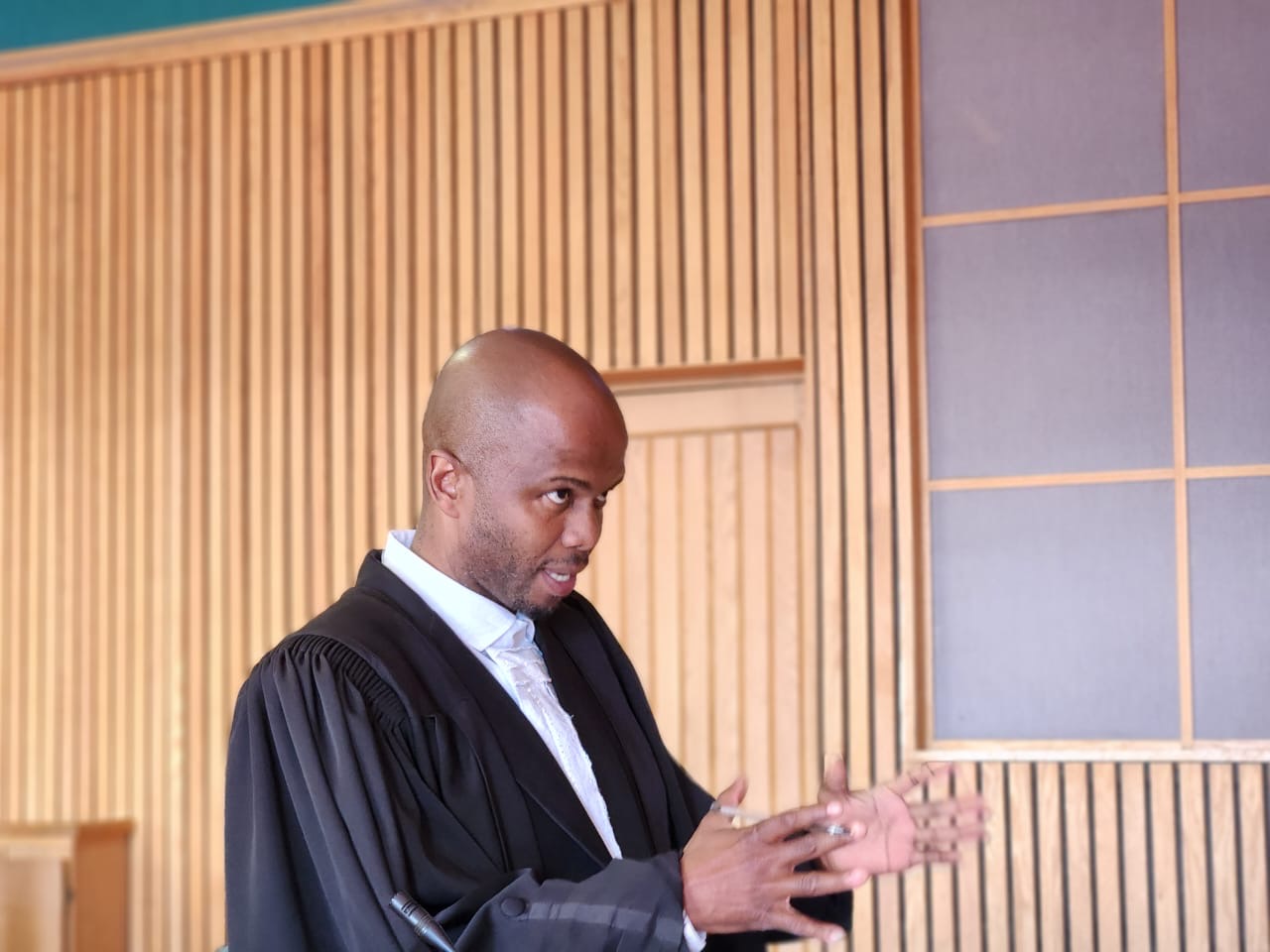
This week the court heard dramatic exchanges during the cross-examination of one of the accused, Captain Litekanyo Nyakane. The prosecution, led by Advocate Lehlohonolo Phooko, put it to Nyakane that the operation to arrest Mahao was very different from the arrests of other soldiers who were suspected of mutiny.
Advocate Phooko told the court that the team sent to Mahao’s home was made up mostly of junior officers. He argued that this was against military practice, military writings, and even the LDF Act. According to the prosecution, it is unusual and improper for junior soldiers to be sent to arrest a very senior officer, especially one of Mahao’s rank, without the presence of senior commanders.
The prosecution suggested that this unusual arrangement was not accidental. Advocate Phooko said the way the operation was planned showed that the teams were not simply going to arrest Mahao, but that there was a motive to shoot and kill him.
Another major issue raised in court was the use of vehicles with blue number plates. The prosecutor reminded Nyakane of his earlier testimony, where he said blue plates are normally used by very senior officers, usually those with the rank of brigadier and above.
Advocate Phooko told the court that it was inappropriate and suspicious for the arresting team to use such number plates. He argued that the team used the plates to disguise who they really were. According to the prosecution, this was done to hide their identities and make it difficult to trace responsibility for what happened.
“The use of these number plates was part of a plan,” the prosecutor suggested. “It was meant to conceal the identity of the team and support what later happened.”
However, Nyakane rejected these claims. He told the court that there was nothing wrong with junior officers arresting a senior officer, as long as they were properly authorised. He maintained that the team had legal orders to carry out the arrest and that rank did not prevent them from doing so.
He also denied that there was anything wrong with the way the operation was conducted. According to him, the mission was lawful, and the soldiers were simply doing what they had been instructed to do.
“I see nothing wrong with the operation,” Nyakane said in response to the prosecution’s questions. “We were authorised, and we carried out our duty.”
The court then heard another serious allegation from the prosecution, that most of the soldiers who were part of the arrest team were later promoted after Mahao’s death. Advocate Phooko suggested that these promotions were a “thank you” for a job well done.
He told the court that this raised serious questions about whether the killing was planned and whether the soldiers were rewarded for it afterward.
But once again, Nyakane strongly denied this. He said the promotions had nothing to do with Mahao’s death. He explained that promotions in the army follow procedures and are not given as rewards for unlawful acts.
He further pointed out that if the promotions were meant as compensation or reward, they would have had to be approved by the then army commander, Major General Khoantle Motšomotšo, who was in charge of the mutiny suppression operation.
“If anyone was to promote soldiers for that operation, it would have been the commander who gave the orders,” Nyakane told the court. “The promotions were not linked to the death of Mahao.”
Mahao, who was a former army commander, was shot during an operation that the army said was aimed at arresting soldiers suspected of planning a mutiny. The prosecution, however, maintains that Mahao was not resisting arrest and that he was unlawfully killed.
The accused in this matter include several serving and former LDF members. Apart from the main charge of murder, they are also accused of attempted murder and malicious damage to property, arising from the same events of June 25, 2015.
As the trial continues, the court is expected to hear more evidence about how the operation was planned, who gave the orders, and what exactly happened on the day Mahao was killed.
Justice Charles Hungwe is presiding over the case, which is still at the stage of hearing testimony and cross-examination. The proceedings are expected to continue, with the prosecution aiming to show that Mahao’s death was not an accident or a lawful shooting, but a deliberate act carried out by a team that, according to them, had a clear motive.
The court will later decide whether the evidence proves that the accused are guilty of the charges they are facing.