Mohahlaula Airlines
Wednesday, July 22, 2026
Home Blog Page 14

Sprinter Mojela Koneshe denied final spot following controversial red card

Sprinter Mojela Koneshe denied final spot following controversial red card | Lesotho Tribune
Sport
lesothotribune.co.ls
© 2026 Bohlokoa Media Company
“`
Sport  ·  Athletics
Lesotho’s rising sprint prospect was disqualified from the semi-final of the CAA African Senior Athletics Championship in Accra after officials ruled he had started before the rest of the field, a decision that has since drawn widespread scrutiny.

Lesotho’s promising short-distance runner, Mojela Koneshe, has found himself at the centre of controversy after being disqualified from the semi-finals of the CAA African Senior Athletics Championship in Accra, Ghana.

The young sprinter, who has been enjoying an impressive season, was shown a red card after officials claimed he started the race before the other athletes. The decision immediately ended his semi-final race and sparked widespread debate among athletics fans.

Season at a glance
8 April 2026 Hezekiel Sepeng International Meet, Potchefstroom  ·  Men’s 100m  ·  3rd place  ·  10.20 sec
12 May 2026 CAA African Senior Athletics Championship, Accra  ·  Heat  ·  1st place  ·  10.54 sec
12 May 2026 CAA Semi-final  ·  Disqualified (red card)  ·  Appeal lodged and granted
Re-run Failed to advance to final following emotional toll of disqualification

Koneshe has been one of the country’s standout sprinters in recent months. On 8 April, he competed at the Hezekiel Sepeng International Meet in Potchefstroom, South Africa, where he secured a podium finish in the men’s 100m first final. He crossed the line in third place with a time of 10.20 seconds, continuing to establish himself as one of Lesotho’s rising sprint talents.

On 12 May, Koneshe again represented Lesotho at the CAA African Senior Athletics Championship in Accra. The sprinter flew the country’s flag high after finishing first in his heat with a time of 10.54 seconds, a performance that comfortably booked his place in the semi-finals.

“Slow-motion footage circulating among fans appeared to suggest that the alleged false start may not have occurred.”

Lesotho Tribune  ·  Sport

However, his campaign took a dramatic turn during the semi-final race. Officials immediately stopped the event after accusing Koneshe of starting before the rest of the field. Despite the ruling, slow-motion footage circulating among fans appeared to suggest that the alleged false start may not have occurred.

The incident quickly divided opinion among athletics supporters. Some fans argued that officials unfairly targeted Koneshe because he posed a serious threat to win the race, while others believed the disqualification was the correct decision according to competition rules.

Following the controversial call, Koneshe and his team lodged an appeal in an effort to overturn the decision. The appeal was successful enough for him to be granted another opportunity to race. However, the setback appeared to have already taken a toll on the athlete.

With the pressure, stress, and emotional impact of the incident affecting his focus, Koneshe was unable to recover mentally for the re-run and failed to secure victory, effectively ending his hopes of reaching the final of the championship.

Despite the disappointing outcome, Koneshe’s performances throughout the season continue to highlight his growing potential on the continental stage. His strong showings in both South Africa and Ghana have demonstrated that Lesotho possesses sprinting talent capable of competing against some of the finest athletes on the continent.

“`

Morning Digest — 16 May 2026

Good morning. Here is your Lesotho Tribune news briefing for Saturday, 16 May 2026.

Africa

New outbreak of Ebola kills 65 in eastern DR Congo

An Ebola outbreak in eastern Democratic Republic of Congo has claimed 65 lives with 246 cases reported, marking a significant health emergency for the region. The disease has spread beyond the DRC, with one case now confirmed in Uganda, raising concerns across East Africa.

READ FULL STORY

Former Nigerian minister sentenced to 75 years in rare corruption verdict

Former Nigerian Power Minister Saleh Mamman has been sentenced to 75 years in prison following a rare corruption conviction. Authorities are currently searching for Mamman, whose whereabouts remain unknown following the verdict.

READ FULL STORY

'They shot my neighbour in the head' – the lakeside city traumatised by war

The DR Congo city of Uvira is reeling after rebel fighters and Rwandan troops allegedly committed widespread atrocities following their December capture of the strategic lakeside location. Residents report horrific violence, including extrajudicial killings that have traumatised the community.

READ FULL STORY

African fans face World Cup issues despite visa bond U-turn

While the Trump administration has waived a $15,000 visa bond requirement for World Cup fans from five countries, African supporters continue to face significant barriers accessing the tournament. The partial policy reversal does not address broader visa challenges affecting African fans.

READ FULL STORY

Israel launches deadly air strikes on Gaza City apartment building

Israeli air strikes have killed at least seven Palestinians in Gaza City after hitting a residential apartment building and a vehicle in the latest escalation. The strikes add to mounting civilian casualties in the ongoing Gaza conflict.

READ FULL STORY

UK artist defends ‘Drawings Against Genocide’ after show cancelled

UK artist Matthew Collings has defended his cancelled exhibition "Drawings Against Genocide" after it was accused of being anti-Semitic. Collings maintains the exhibition has been misrepresented and denies the inflammatory characterisation of his work.

READ FULL STORY

Gaza aid convoy in Libya prepares to head to Gaza

The "Soumoud 2" humanitarian convoy is preparing to depart Libya carrying vital aid supplies destined for the besieged Gaza Strip. The land-based aid mission represents a critical effort to deliver humanitarian relief to civilians facing severe shortages.

READ FULL STORY

Iran war live: Lebanon, Israel extend truce; Tehran ready for more US talks

Lebanon and Israel have extended their ceasefire agreement as Iran signals willingness to engage in further talks with the United States over regional tensions. Lebanese health authorities report 2,951 deaths and 8,988 wounded from Israeli attacks since early March.

READ FULL STORY

Stay informed. Stay ahead. — The Lesotho Tribune Team

Court of Appeal Revives Corruption Case Against Prominent RFP Figure

Breaking: Ts’olo to Face Corruption Charges — Lesotho Tribune
Breaking Court of Appeal overturns High Court dismissal in Ts’olo corruption case
Lesotho Tribune
Information Liberates
“`

The Court of Appeal has ordered that fraud and corruption charges against Mafeteng businessman Temeki Ts’olo — relating to the alleged sale of national assets to Frazer’s Solar — be reheard before a different High Court judge.

Key Facts
  • Temeki Ts’olo of Mafeteng faces charges of corruption and fraud over alleged dealings with Frazer’s Solar involving national assets.
  • High Court Judge Ts’eliso Mokoko had dismissed the case, citing the prosecution’s apparent lack of interest in pursuing it.
  • The Court of Appeal today overturned that ruling and ordered the matter to return to court before a different judge.

Temeki Ts’olo of Mafeteng will once again stand before the High Court of Lesotho to answer charges of corruption and fraudulent dealings, after the Court of Appeal today overturned a lower court ruling that had removed the case from the roll.

The charges against Ts’olo centre on the alleged sale of Lesotho’s national assets to Frazer’s Solar — a transaction that prosecutors contend was unlawful and conducted to the detriment of the state.

The matter had been before the High Court, where Judge Ts’eliso Mokoko dismissed it on the grounds that the prosecution appeared to have lost interest in seeing it through. That decision, which effectively brought the proceedings to a halt, was today reversed by the Court of Appeal in a ruling delivered as the current session drew to a close.

The Court of Appeal ordered that the matter be returned to court before a different judge.
Court of Appeal — 15 May 2026

The appellate court’s decision to refer the matter to a different judge signals a determination that the case should proceed on its merits, free from any perception of prior bias or prosecutorial fatigue. It is a significant development in what has been a closely watched case touching on the integrity of Lesotho’s management of state-owned assets.

Ts’olo has not yet responded publicly to today’s ruling. The Lesotho Tribune will carry further coverage as the matter is formally reconstituted before the High Court.


“`

Morning Digest — 15 May 2026

Good morning. Here is your Lesotho Tribune news briefing for Friday, 15 May 2026.

Africa

Former Nigerian minister sentenced to 75 years in rare corruption verdict

Former Nigerian Power Minister Saleh Mamman has been sentenced to 75 years in a rare corruption conviction, though authorities have yet to locate him. The verdict marks a significant moment in Nigeria's anti-corruption efforts.

READ FULL STORY

'They shot my neighbour in the head' – the lakeside city traumatised by war

The DR Congo city of Uvira remains traumatised after rebel fighters and Rwandan troops captured it in December, with residents reporting horrific atrocities including extrajudicial killings. The humanitarian crisis has left communities devastated and seeking accountability.

READ FULL STORY

African fans face World Cup issues despite visa bond U-turn

While the Trump administration has waived a $15,000 visa bond requirement for World Cup fans from five countries, African supporters continue to face significant barriers in attending the tournament. The partial relief falls short of resolving broader accessibility challenges for African fans.

READ FULL STORY

After Trump’s pledge to ‘open up’ China, low expectations for summit deal

The United States and China are expected to extend their trade truce at an upcoming summit, though analysts predict only modest breakthroughs in their strained relationship. Trump's pledges to 'open up' China have set low expectations for substantive progress.

READ FULL STORY

What happens to those who say no to fighting wars?

Al Jazeera examines the rights and consequences for individuals who conscientiously object to military service and refuse to participate in armed conflict. The report explores what protections and challenges exist for conscientious objectors in the modern world.

READ FULL STORY

Israel-Lebanon talks held in Washington as expiration of ceasefire nears

Israel and Lebanon held the first day of two-day peace talks in Washington as their ceasefire agreement nears expiration. The negotiations are critical to preventing renewed hostilities between the neighbouring countries.

READ FULL STORY

Stay informed. Stay ahead. — The Lesotho Tribune Team

Paid, signed off, not done: how LNDC’s Hlotse property ate public money across three contractors and two years

Paid, signed off, not done — Lesotho Tribune Investigation
Lesotho Tribune
lesothotribune.co.ls  ·  Maseru
Investigation Series
Part One of Three
Governance & Public Expenditure
Part One  ·  The building that kept needing fixing

LNDC paid SPT Construction M545,238 for a comprehensive renovation of its Hlotse Residential Outestate. A Certificate of Practical Completion was signed. Less than two years later, the corporation’s own task team found nine major items from the paid scope of work had never been delivered.

This is the first part of a three-part investigation into maintenance expenditure at the LNDC Hlotse Residential Outestate in Leribe. Parts Two and Three examine a second contractor whose payment was reduced without clear explanation, and the procurement process that brought in a third round of service providers in 2022.

“`

Maseru — In July 2020, an official of the Lesotho National Development Corporation signed a Certificate of Practical Completion confirming that renovation work at its Hlotse Residential Outestate had been carried out to the satisfaction of the corporation. The contractor, SPT Construction (Pty) Ltd, had submitted an invoice for M545,238 inclusive of VAT. The paperwork was in order. The approvals were obtained. The money was processed.

Less than two years later, an LNDC task team dispatched to assess the same property in preparation for its use as a regional office found a building that could not host a meeting. The team had to find an alternative venue.

Their internal report, dated February 2022 and reviewed by the Lesotho Tribune, lists nine major items from a prior contractor’s scope of work — each marked, in the corporation’s own words, as “Not done.”

Documents reveal  ·  Work paid for, never delivered
Line item (from paid scope) Amount paid
Change all plumbing work including manholes and conservancy tankM18,500
Replace external tiles, rustic pattern brown 350×350mmM45,500
Roof covering — seal joints, replace damaged timberM7,000
Electrical work — all internal and external faults, circuit breakers, lightingM20,800
Carpentry and joinery — replace hardwood doors including framesM17,500
Repair built-in wardrobe and apply varnish paint (side of gate)M750
Brickwork — repair kitchen opening, install aluminium sliding with frosted glassM4,500
Construct veranda with translucent roof covering and brick support piersM19,100
Rainwater disposal — 100×125mm eaves gutters and bracketsM4,200
Total undelivered (from LNDC internal report)M137,350

Source: Final Hlotse Office Readiness Report, February 2022, LNDC Corporate Services Unit. All items listed with status “Not done.”

“The basic analysis done by the team based on the scope of work for the previous contractor revealed that a lot of items listed on the scope were not done, which is of great concern.”

LNDC task team site visit notes, 10 February 2022

That observation appears in the task team’s own site visit notes, written by LNDC representatives who attended the inspection. It is not an allegation from outside. It is the corporation’s internal assessment of its own procurement record.

SPT Construction’s Invoice No. 53, presented under Purchase Order 2543 and dated 1 June 2020, covers 38 line items ranging from internal paintwork and ceiling replacement to plumbing, roof work, floor tiling, electrical repairs, glazing, carpentry, brickwork, and landscaping. The total, inclusive of VAT at 15 percent, is recorded as M545,238. The payment processing approval, signed by the PMO, PM, and GM-PDM, was authorised on 15 July 2020. The Certificate of Practical Completion was signed by the maintenance clerk identified as Ntlamelle, the leasing officer, and SPT Construction’s representative on 22 July 2020.

Yet the February 2022 task team — led by the GM for Corporate Services and comprising officials from across the corporation’s units — found the same structural deficiencies that the 2020 renovation was contracted to address. Exterior plastering with cracks. Rotten and patched rafters stained with black varnish. A sliding door improperly installed, letting in air. A leaking reception ceiling. A major roof leak in the manager’s office. Old and outdated electrical switches that could not be replaced. Uneven wall plastering. External steel cable tubing, described in the report as “an old way of electrifying the building.”

The task team did not mince its language. It noted that the office “was below standard” and recommended an immediate visit by the corporation’s executive committee, led by the CEO, so that leadership could “appreciate the work needed to be done on the building.”

A further anomaly sits within the SPT Construction file itself. Weeks after the Certificate of Practical Completion was signed, the corporation processed a second, separate payment to the same contractor. Under Purchase Order 2576, Invoice No. 54, SPT Construction submitted a claim for roof paint at the Hlotse Residential Outestate, dated 12 July 2020. The work described — scraping old paint, applying liquid cleaner, primer coat, and high-quality roof paint in three coats — attracted a total of M33,200.

Invoice anomaly  ·  SPT Construction Invoice No. 54  ·  Three figures, one transaction
Invoice version 1
M33,200
No VAT line shown
Invoice version 2
M38,180
Includes VAT of M4,980
Audit slip processed
M36,520
Matches neither version

The Lesotho Tribune has reviewed both invoice versions. Same invoice number, same date, same contractor — three different totals. LNDC has not responded to questions regarding the discrepancy.

The Lesotho Tribune has submitted questions to LNDC regarding the discrepancy between the two invoice versions, the basis on which the amount processed differs from both, and what oversight mechanism, if any, was applied to verify that the 38 items in Invoice 53 had in fact been completed before the Certificate of Practical Completion was signed.

The corporation’s maintenance clerk, Ntlamelle, whose signature appears on multiple completion certificates and payment processing documents across the contracts reviewed by this investigation, is central to the paper trail. The Tribune has asked LNDC whether the clerk was the sole verifier of completed works, and whether an independent inspection was conducted before any payments were released.

What the documents establish, without ambiguity, is that LNDC’s own officials visited the property in February 2022 and found it in a condition inconsistent with the completion certificates signed in mid-2020. The corporation’s internal records do not account for this gap.

The questions raised by Part One are straightforward. If the work was completed to the satisfaction of the corporation in July 2020, why did the same structural deficiencies persist in February 2022? If the work was not completed, who authorised the Certificate of Practical Completion and on what basis? And what happened to the more than M137,000 worth of line items that the corporation’s own task team subsequently found had never been done?

“The service providers’ findings have shown that if the LNDC continues to refurbish the office without attending to the identified structural deficiencies, then the items like the office furniture, materials and equipment will continue to be damaged as a cost to the corporation.”

ChurchBoy Creations assessment report, submitted to LNDC, February 2022

That warning was written not by a journalist or an auditor but by one of the interior design firms invited to assess the property for yet another round of renovation work. By that point, the building had already absorbed the better part of M600,000 in maintenance expenditure. A second contractor would soon absorb more.

The Lesotho Tribune has written to LNDC seeking comment on the findings set out in this article. The corporation had not responded at the time of publication.

“`

Coming in Part Two

A second contractor enters. The purchase order total climbs to M402,690. The amount paid is recorded as M230,707. No public explanation was given for the difference. The completion certificate is signed on the same day as the invoice.

Majority rule is not a licence to govern without conscience

Lesotho Tribune — Editorial preview
Lesotho Tribune
Maseru  ·  Independent News for Lesotho & Southern Africa
Opinion  ·  Editorial
Constitutional accountability

When governing parties command large parliamentary majorities, a dangerous comfort takes hold — the belief that numbers confer not merely the power to legislate, but the right to legislate anything. Recent events in Lesotho and South Africa have exposed that comfort for what it is: a constitutional fraud dressed in democratic clothing.

“`

There is a dangerous comfort that settles over political parties when they command large parliamentary majorities. It is the comfort of believing that numbers confer not merely the power to legislate, but the right to legislate anything. That the ballot box, having spoken, silences all other voices, including the constitution itself. Recent events in both Lesotho and South Africa have exposed this comfort for what it is: a constitutional fraud dressed in democratic clothing.

The framers of modern constitutions understood, with hard-won clarity, that majorities could be just as tyrannical as kings. James Madison warned in the Federalist Papers that the greatest danger to republican government was not the despot in a palace but the faction with a majority, unchecked and unbridled. It was this understanding that gave birth to constitutional supremacy: the principle that what a parliament may do is bounded not by how many members voted for it, but by what the foundational law permits.

Two governments, separated by a border and a decade, have recently tested that principle and been found wanting.

“The greatest danger to republican government was not the despot in a palace but the faction with a majority, unchecked and unbridled.”

James Madison  ·  Federalist Papers

The Constitutional Court of Lesotho has ruled that the National Assembly failed its constitutional duty by neglecting to pass legislation preventing conflicts of interest for members of parliament and senators in relation to government contracts. The court has ordered that the necessary legislation must now be drafted and passed, marking a significant judicial intervention against self-dealing by lawmakers. The legal action was brought by advocate and party leader Teboho Mojapelo, who argued that parliamentary inaction on the matter was unconstitutional.

Read clearly, this is a damning finding. A parliamentary majority — one dominated by the governing Revolution for Prosperity — sat in possession of a constitutional obligation and declined to honour it. The court did not need to strike down a bad law. There was no law to strike down. The delinquency here is not the abuse of legislative power but the deliberate abandonment of it: a majority choosing inaction because action would have constrained its own members’ ability to benefit from state contracts.

Former Chief Justice of the Constitutional Court of South Africa Albie Sachs wrote that constitutionalism requires power to be exercised not merely through lawful form but with lawful purpose. In Maseru, there was neither. The form of legislative duty was ignored. The purpose — the protection of public resources from those entrusted to govern them — was abandoned entirely. It took a private citizen and a court order to compel what a parliamentary majority owed the country as a matter of basic constitutional obligation.

South Africa’s Constitutional Court delivered a judgment in the Phala Phala matter that should have been a moment of reckoning for the African National Congress. The court’s findings confirmed what many constitutional scholars had long argued: that the executive is not above the document that created it.

The ANC’s response was to lean on its parliamentary majority. The party whipped its members to protect the President from parliamentary accountability proceedings, not because the law demanded it, but because the numbers permitted it. This is the precise abuse that legal theorist Ronald Dworkin identified when he distinguished between “policy” — advancing collective goals — and “principle” — upholding rights and legal integrity regardless of political cost. The ANC chose policy over principle. It chose the majority over the constitution.

The late Chief Justice Pius Langa wrote in Doctors for Life International v Speaker of the National Assembly that constitutional democracy demands not merely formal compliance with procedure but substantive respect for constitutional values. The ANC’s parliamentary manoeuvre in the Phala Phala matter satisfied the former and desecrated the latter.

“Parliamentary majorities are entitled to govern but not entitled to govern without constraint.”

Lord Johan Steyn

The Constitutional Court of South Africa, in Economic Freedom Fighters v Speaker of the National Assembly, held through Chief Justice Mogoeng Mogoeng that no provision of the constitution may be used to undermine constitutional accountability. A parliamentary majority that uses procedure to frustrate rather than enable accountability is acting unconstitutionally regardless of the numbers behind it.

In Lesotho, the Court of Appeal has affirmed on multiple occasions that parliamentary sovereignty is subordinate to constitutional sovereignty. The legislature derives its authority from the constitution. It cannot, therefore, use that authority to hollow out the document from which the authority flows. This is not a radical legal position. It is the elementary grammar of constitutional government.

The RFP and the ANC occupy different political traditions and govern different countries. What they share is a willingness to use democratic process as a weapon against democratic accountability. Both have behaved, in the instances under examination, as constitutional delinquents. That is not a term applied lightly. It is the term the Constitutional Court itself applied to President Zuma in Democratic Alliance v President of the Republic of South Africa and Others, and it means precisely what it says: a failure to honour the obligations that constitutional office demands.

The RFP is a young party that entered government on a mandate for change. It has squandered that mandate with extraordinary speed by allowing a constitutional obligation to gather dust until a private citizen was forced to drag parliament to court to perform its basic duty. The ANC is an old party that defeated apartheid and wrote one of the world’s most admired constitutions. It has allowed that achievement to curdle into the instrument of its own protection.

The Tribune’s position

Courts can correct specific constitutional violations. They cannot correct a political culture. That correction belongs to citizens.

The harshest sanction available in a constitutional democracy is not a court order. It is the withdrawal of democratic trust. Both the RFP and the ANC have earned that withdrawal. The electorate, which remains the ultimate constitutional authority, should administer it without hesitation.

Majority rule is the mechanism of democracy. It is not its purpose. The purpose is the protection of all citizens, including and especially those who did not vote for the majority. When a governing party forgets that distinction, it has not merely made a political error. It has committed a constitutional one.

The correction belongs to the people.

“`

Victory Day at 81: the war, Nuremberg, and the duty to remember

Victory Day at 81 · Lesotho Tribune
Lesotho · Southern Africa · World Lesotho Tribune
lesothotribune.co.ls
9 May 2026

Opinion · Contributed

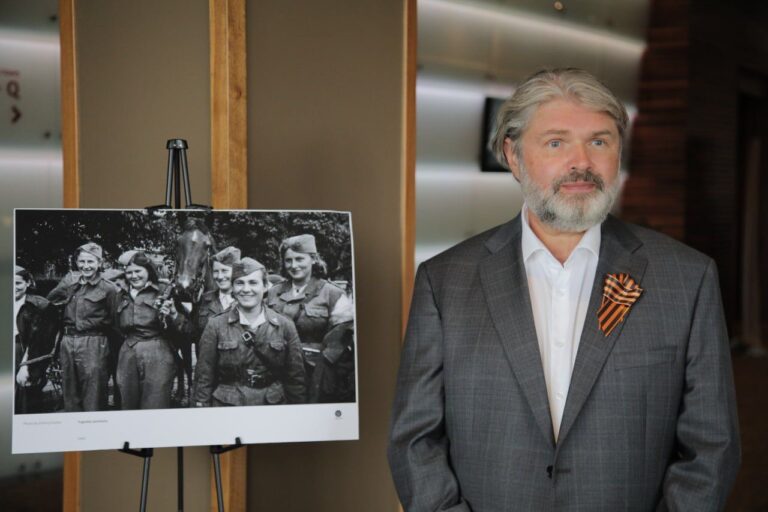
Eighty-one years after the defeat of Nazi Germany, Russia’s Ambassador to South Africa reflects on Victory Day, the legacy of the Nuremberg trials, and the enduring responsibility to preserve historical truth.

“`

Victory Day, 9 May, carries deep meaning for millions of Russians. This year marks 81 years since the defeat of Nazi Germany in the Great Patriotic War of 1941–1945, a victory that came at an immense human cost and shaped the modern world.

For us, this is not distant history. Nearly 27 million Soviet citizens lost their lives, one in every seven. Almost every family was affected. Mine is no exception. My grandfather, though not a frontline soldier, was among the designers of the T-34 tank, one of the most effective combat vehicles of the war. Its mass production played a decisive role on the battlefield.

The battles and operations of the Great Patriotic War were central to the defeat of Nazi Germany: nearly 90% of Wehrmacht losses occurred in the western parts of my country, and it was the Red Army that captured Berlin. Yet Victory Day is about more than military success. It is about endurance, unity, and the sacrifice of ordinary people.

If Victory Day marked the military defeat of Nazism, the Nuremberg International Military Tribunal gave that victory its everlasting legal and moral dimension. In 2026, we mark 80 years since the conclusion of the Nuremberg trials. For the first time, Nazi leaders were held accountable before an international court for crimes against humanity. The Tribunal condemned not only individuals, but also the ideology of Nazism itself.

The principles established at Nuremberg laid the foundation for modern international humanitarian and criminal law and continue to shape the global legal order.

H.E. Roman Ambarov

Its legacy has endured and lives on. The principles established at Nuremberg laid the foundation for modern international humanitarian and criminal law and continue to shape the global legal order.

This year also marked a new moment of remembrance in Russia. On 19 April 2026, my country for the first time observed the Day of Remembrance of the Victims of the Genocide of the Soviet People, established by federal law in December 2025. The date refers to a 1943 decree that initiated the prosecution of Nazi crimes.

The term “genocide of the Soviet people” reflects the documented intent behind Nazi policies in the East. The war against the Soviet Union was conceived not only as a military campaign, but as an elaborate project of destruction and colonisation. Large parts of the population were to be eliminated to make way for others.

These policies formed part of a broader vision known as Generalplan Ost, which envisaged the large-scale resettlement of conquered territories. In total, about 13.7 million civilians were killed, while millions more died from hunger and related causes. Today, these crimes are being examined in courts across Russia, and efforts continue to secure their recognition at the international level.

More than eight decades later, the lessons of that period remain relevant. The legacy of Victory Day and Nuremberg is not only about the past, it is about the principles that shape our present.

Preserving historical truth is a shared responsibility. It requires care, honesty, and respect for those who suffered. Above all, it is a strong commitment and profound devotion to future generations, to ensure that the tragedies of the 20th century are neither forgotten nor repeated.

“`

Ministry of Health and WHO train journalists to stand with science

Reporting Health Right · Lesotho Tribune
Lesotho Tribune
Maseru · lesothotribune.co.ls
Health & Science
Media & Public Health · Maseru

The Ministry of Health and the World Health Organisation joined forces to train journalists in reporting factual, science-based health stories, warning that misinformation spreads faster than disease itself.

“`

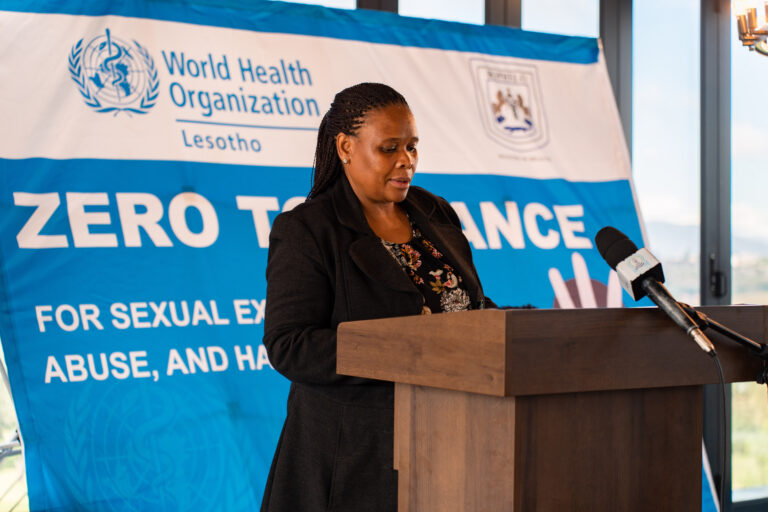
— The Ministry of Health and the World Health Organisation (WHO) joined forces on Monday to train journalists in reporting factual health stories in Maseru. The one-day workshop taught reporters how to share health news that is true, clear, and based on science.

The training was called “Reporting Health Right: Standing with Science.” Reporters from across media platforms, including radio, television, newspapers and online news sites, came to learn.

Acting Principal Secretary for Health, Mats’oanelo Monyobi, said World Health Day is a time to remind everyone to stand with science. This means trusting facts and working together to protect the health of people, animals, plants, and the planet.

Monyobi said good communication is just as important as a doctor’s skill. “The world is changing fast,” she said. “Health issues can be hard to understand and journalists must learn to explain them in a simple, honest way.”

She added that no health success happens alone. Scientists, doctors and nurses must work as a team, and the media is part of that team. Monyobi urged reporters to help people see why trust, teamwork and shared knowledge save lives.

“Facts do not speak for themselves. Facts need you to tell their story.”

Dr. Innocent Nuwagira · WHO Country Representative

WHO country representative Dr. Innocent Nuwagira gave a strong message to the journalists and called them “frontline health workers.” He said a good report can save lives, while a bad report carrying wrong information can cause real harm.

He asked reporters to exercise great care when writing about serious health topics, citing the effectiveness of HIV medicine in babies and new methods of testing for cervical cancer as examples where accuracy is critical.

Dr. Nuwagira warned that false information is dangerous. Lies about vaccines and cancer spread faster than the diseases themselves, and such misinformation can frighten people and stop them from seeking treatment. His advice was clear: always check facts with experts, explain risks calmly, and stand firm for the truth even when it is not popular.

Director of Health Services, Dr. Llang Maama, also addressed the training. She said no country can fight large health problems alone. Diseases, climate change and sickness from animals do not stop at borders.

“We must all work together,” Dr. Maama said. “Governments and health groups must use science and real data to make decisions.” She called for more medicine and health plans grounded in research and trusted facts.

Dr. Maama spoke about the concept of “One Health,” the principle that human health, animal health and the health of the environment are all connected. If animals get sick, people can get sick too. If the planet is harmed, our health suffers. She said scientists across disciplines must work together to solve these problems.

One reporter at the workshop reflected on the responsibility the training had clarified. “We learned that we have a big duty. People trust what we write. If we get it wrong, someone might not get the help they need. If we get it right, we can help save a life.”

The Ministry of Health and WHO said they will conduct further trainings of this kind. The aim is to close the gap between scientists and the public, and to ensure that everyone in Lesotho receives health news they can trust.

“`
Independent business & current affairs journalism · Lesotho Subscribe — M85/month
| Independent business & current affairs journalism · Lesotho