
Mohahlaula Airlines
Wednesday, July 22, 2026
Home Blog Page 18

Africa’s newest oil frontier faces the test its neighbours failed

More than oil: Namibia’s energy ambitions carry the weight of an ESG test · Lesotho Tribune
ESG Lens  ·  NIEC 2026  ·  Windhoek

As the 8th Namibia International Energy Conference closes in Windhoek, the Lesotho Tribune examines whether Africa’s newest oil frontier can deliver on promises of governance accountability, social inclusion and a credible dual energy identity.

“`

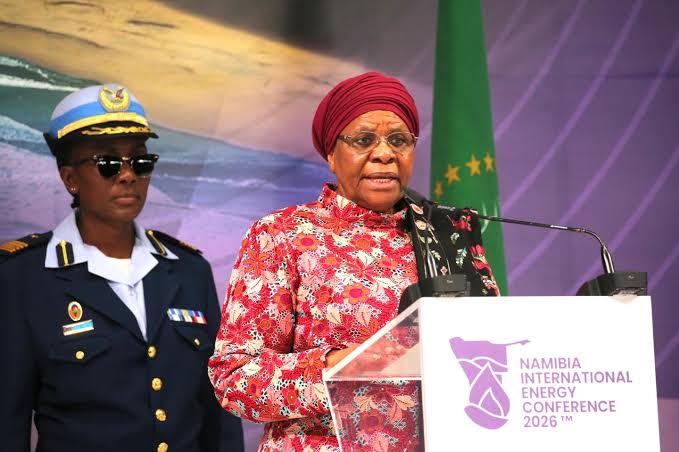
The mood at Droombos Estate this week was unmistakably one of arrival. Three days of high-level panels, bilateral deal-making and keynote addresses from the highest offices of the Namibian state closed what organisers described as a defining moment in the country’s energy journey.

The 8th Namibia International Energy Conference, held from 14 to 16 April, was not a gathering of prospectors hunting for possibility. It was the convening of a country that believes it already knows what it has found, and is now negotiating the terms on which it intends to extract it.

2029 Target year for first oil
2,500+ Delegates from 46 countries
6 Major operators in the Orange Basin

Major operators including TotalEnergies, Shell, Galp Energia, Rhino Resources, Chevron and Azule Energy are active across the Orange Basin. TotalEnergies is moving its Venus deepwater project toward a final investment decision expected by mid-2026. Rhino Resources is preparing to drill the Capricornus well in the coming months. Chevron confirmed it will drill the Nabba-1X exploration well by late 2026.

But it is precisely this moment of confidence that demands scrutiny. When resources are still theoretical, ESG commitments are easy to make and cheap to maintain. When billions of dollars in infrastructure are in motion and petroleum amendment bills are being rushed through parliament, the ESG architecture of an emerging producer faces its real test. NIEC 2026 offered substantial material across all three pillars of that test.

I  ·  Environment

The dual identity problem

Namibia arrived at NIEC 2026 carrying two energy identities simultaneously, and the conference made no effort to hide the tension between them. On one hand, the country is an emerging deepwater oil producer with a pipeline of offshore projects that will generate significant hydrocarbon revenues for decades. On the other, Namibia has positioned itself as a clean energy pioneer, with green hydrogen, solar and renewable integration forming a stated pillar of its national energy strategy.

“The ESG question is whether these two tracks are genuinely integrated or whether they represent sequential aspirations rather than parallel ones.”

ESG Lens · Lesotho Tribune

The global evidence on dual energy strategies in emerging producers is not encouraging. Countries that discover significant offshore oil reserves tend to channel institutional attention and political capital into hydrocarbon development, with clean energy ambitions drifting into long-term planning documents. Namibia’s green hydrogen agenda, which has attracted interest from European off-takers and relies on the country’s exceptional solar and wind resources, is credible in principle. Whether it receives the same regulatory urgency as the Petroleum Amendment Bill announced this week is a different question.

The Orange Basin is a deepwater environment of extraordinary sensitivity. TotalEnergies’ Venus field, Galp’s Mopane development, and the broader cluster of exploration blocks sit in a marine ecosystem whose vulnerabilities are not yet fully characterised. NIEC 2026 produced detailed discussion of production timelines and investment decisions. Public discussion of environmental impact assessment standards, emissions accounting frameworks and decommissioning liability was, by contrast, notably thinner.

II  ·  Social

The women at the top and the workers at the bottom

If there is a dimension of NIEC 2026’s ESG story that deserves genuine recognition, it is the visibility of women at the apex of Namibia’s energy governance. President Netumbo Nandi-Ndaitwah, who opened the conference, is driving the petroleum reforms that will shape the sector’s regulatory environment for a generation. The Upstream Petroleum Unit is led by Kornelia Shilunga, whose stated priorities include transparent governance and broad-based empowerment, reinforced by strict asset declaration requirements for senior officials managing offshore resources.

The African Energy Chamber was explicit about the significance of this leadership configuration, arguing that Namibia’s oil boom is redefining what leadership looks like in African energy. Corporate voices reinforced the point: bp’s Exploration Manager for New Ventures framed diversity not as a social obligation but as a commercial imperative, arguing that building teams is about integrating diverse perspectives into core commercial decisions.

This is meaningful. But leadership visibility and structural transformation are not the same thing. The question NIEC 2026 did not fully answer is whether the women leading Namibia’s energy sector at its most senior levels are accompanied by equivalent progress at the workforce and community levels.

Local content, in its truest ESG meaning, is not only about who sits on panels in Windhoek. It is about who gets the technical training, who secures the service contracts, who benefits from infrastructure investment, and how communities adjacent to offshore operations are consulted and compensated. The next two to three years will reveal whether Namibia’s social commitments are structurally embedded or aspirationally stated.

III  ·  Governance

Reform or rubber stamp?

The most significant development of NIEC 2026 from a governance standpoint was President Nandi-Ndaitwah’s announcement of the Petroleum (Exploration and Production) Amendment Bill. The stated purposes are the right ones: streamlining regulatory decision-making, improving sector coordination, strengthening investor confidence, and aligning Namibia’s hydrocarbons strategy with Vision 2030 and the Sixth National Development Plan.

The ESG caution is not with the intent of the bill but with the conditions under which it is being introduced. Legislative reform in the petroleum sector that is accelerated by investment pressure rather than deliberative process creates a structural risk that the academic literature on resource governance has documented repeatedly. When urgency to attract capital drives the pace of legal reform, the provisions most likely to be sacrificed are those that protect communities, require transparency, and establish accountability mechanisms for revenue distribution.

“Stability achieved by weakening accountability is not durable. It creates the conditions for the resource curse that has hollowed out other African producers.”

ESG Lens · Lesotho Tribune

The African Energy Chamber’s executive chairman, NJ Ayuk, has been consistent in his message across NIEC editions: regulatory and fiscal stability are inseparable from investment attraction. His warning, that Africa has seen countries make discoveries but fail to produce due to instability, is well-taken. But the ESG corollary is equally important.

ESG Verdict

NIEC 2026 confirmed that Namibia has built an ESG narrative around its energy development that is coherent, institutionally supported and visible at the highest level of government. The conference itself reflects this: a Namibian-owned, woman-founded platform that has grown from 120 participants at its launch to over 2,500 delegates from 46 countries.

But narratives are not outcomes. The ESG architecture on display, the local content policy, the Future Energy Leaders Programme, the UPU’s governance commitments, the renewable energy ambitions, is impressive as a structure. Its integrity will be determined by what happens in the production phase, when the pressure to deliver barrels on schedule meets the pressure to deliver benefits to Namibians.

Namibia is not there yet. First oil is still three years away. The amendment bill has not been tabled. What NIEC 2026 showed is that the country knows what it wants its energy story to be. The harder and more important work of making that story true has not yet begun.

For observers across southern Africa, including in Lesotho, the Namibia story carries more than regional interest. It is a live experiment in whether an African country can use a major resource discovery to catalyse inclusive industrial development rather than replicate the enclave extraction model that has failed so many of its neighbours. The SADC region has seen enough oil and gas windfalls converted into elite enrichment and deferred development to approach this question with scepticism.

The Lesotho Tribune’s ESG Lens column examines environmental, social and governance dimensions of major economic developments across the region. Information Liberates.

“`
Alliance Insurance refused to pay. A Lesotho judge forced their hand.

Lesotho Tribune · High Court rules against insurer over delayed claim
Lesotho Tribune
lesothotribune.co.ls
Maseru · 17 April 2026
“`
Law & Courts

A Lesotho judge has found that Alliance Insurance Company Ltd had no legal basis to withhold M470,000 from a beneficiary while police investigations into the death remained open.

Lesotho’s High Court has ruled against an insurance company that refused to pay out a death claim while waiting for police investigations to be completed, in a judgment that sets a clear precedent for how insurers must handle disputed claims in the country.

In the case of Karabo Ralebakeng vs Alliance Insurance Company Ltd, Judge A.R. Mathaba ordered the insurer to pay M470,000 to the plaintiff, who is the beneficiary of his late brother’s insurance policies.

Karabo Ralebakeng took the matter to court after Alliance Insurance Company Ltd delayed payment following the death of his brother, Linna Ralebakeng, in October 2018. The deceased had taken out several insurance policies, including four with the defendant.

After the claim was submitted, the insurer refused to process it immediately. Instead, it said it would wait for police investigations to be completed and for a suspect to be identified, arguing that the case raised “red flags.” The court found, however, that this position was not permitted under the terms of the insurance contract.

Judge Mathaba held that while an insurer has the right to verify a claim, it must do so within a reasonable time and cannot delay payment indefinitely while waiting for police investigations to conclude.

“The insurer must make its own assessment. The company has no control over how long police investigations may take.”

Judge A.R. Mathaba  ·  High Court of Lesotho

The court also rejected the insurer’s argument that the deceased had failed to disclose other insurance policies held with different companies. Judge Mathaba held that this information was not material to assessing the risk and therefore did not affect the validity of the claim.

“The existence of other policies covering the same risk was not material.”

Judgment  ·  Ralebakeng vs Alliance Insurance Company Ltd

In the final order, the court directed Alliance Insurance Company Ltd to pay M470,000 for the insurance claim, M1,000 for airtime costs as provided under the policy, interest at 10.5 per cent per year, and full legal costs.

The plaintiff was represented by Advocate M. Ntaote. Advocate K. Letuka appeared for the defendant.

The judgment makes clear that insurers in Lesotho cannot delay claims without proper legal grounds, and cannot rely on external investigations, including police inquiries, that may take an unknown or indefinite length of time to conclude. Legal observers say the ruling is significant for policyholders and beneficiaries across the country who have faced similar delays from insurance providers.

“`

NUL council member threatened with death over Vice-Chancellor recruitment role

NUL council member receives death threats over Vice-Chancellor recruitment — Lesotho Tribune
Education  ·  Higher Education

Prof Vinodh Jaichand, a South African-based academic serving on the Joint Committee of Council and Senate, has received anonymous threats warning him to withdraw or face harm.

“`

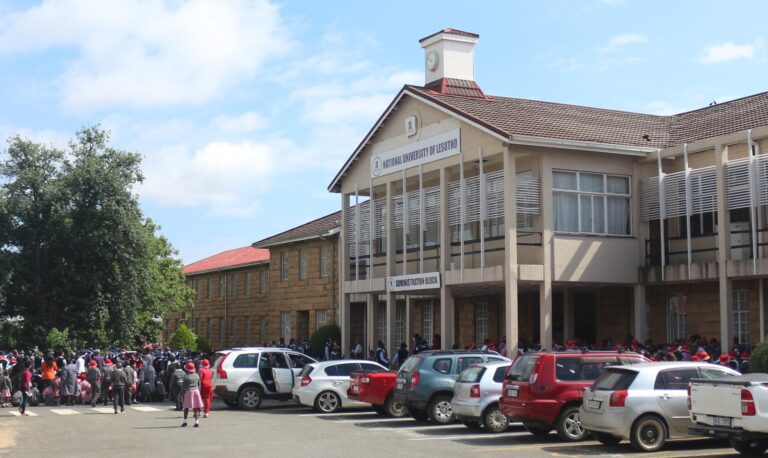
The National University of Lesotho’s governing council has gone public with a chilling disclosure: a member of the committee tasked with recruiting the institution’s next Vice-Chancellor has received anonymous death threats, prompting police reports in South Africa and a formal directive from the NUL Council for management to open a criminal case in Lesotho.

Prof Vinodh Jaichand, who is based in South Africa and sits on the Joint Committee of Council and Senate (JCCS), was warned by unknown individuals that if he did not withdraw from the recruitment process, his reputation would be destroyed and he could be killed. Prof Jaichand has since reported the matter to South African police and notified both his family and legal counsel.

Context  ·  What is the JCCS?

The Joint Committee of Council and Senate was established by the 15th Council of NUL specifically to conduct the recruitment of a new Vice-Chancellor. It draws members from both the governing Council and the academic Senate, operating as a cross-institutional body with oversight over the appointment process.

The threats, described by the Council as “dastardly,” were issued amid what is understood to be a highly contested search for a new Vice-Chancellor at the Roma-based university. The targeting of one of the JCCS’s members raises immediate questions about who stands to gain from disrupting or influencing the outcome of the process.

In a public statement issued on Friday, 17 April 2026, the NUL Council said it was “perturbed” and condemned the threats in the strongest terms. The statement stressed that Council members and committee members are unpaid volunteers who contribute their expertise in service of the institution and must not be made to fear for their safety or their lives.

A threat to one member of Council and its committees is a threat to all members.

The Council has directed NUL management to open a case with the Lesotho Mounted Police Service for investigation.

The identity of those behind the threats is not yet publicly known. It is also unclear whether law enforcement agencies in Lesotho and South Africa are coordinating their inquiries.

NUL has not announced any suspension of the Vice-Chancellor recruitment process. Prof Jaichand’s continued participation in the JCCS was not addressed in the statement.

“`

The poorest member of its own club

0
Lesotho: the poorest member of its own club — Lesotho Tribune
Lesotho Tribune
Maseru, Kingdom of Lesotho
Saturday, 19 April 2026  ·  M22.00
Economics & Development

Analysis  /  SACU GDP data 2020–2026

Six years of IMF data show Lesotho has not closed a single dollar of the gap separating it from every other nation in the Southern African Customs Union. The question is no longer whether there is a problem. It is whether anyone in power intends to solve it.

“`

There is a chart doing the rounds in policy circles that ought to provoke national outrage. It does not. That, perhaps, is the most damning thing about it.

The chart, drawn from International Monetary Fund data, plots the GDP per capita of Lesotho and its four partners inside the Southern African Customs Union — Botswana, Eswatini, Namibia, and South Africa — across six years from 2020 to 2026. The lines move in different directions, at different speeds, with different textures of crisis and recovery. Only one line barely moves at all. It belongs to Lesotho.

In 2020, Lesotho’s GDP per capita stood at $928.28. By 2026, the IMF projects it will reach $1,024.10. That is a nominal increase of $95.82 across six years, or roughly sixteen dollars per person per year. Meanwhile Botswana, the union’s wealthiest member, will end the same period at $7,379.00 per person. South Africa, despite its well-documented structural crises, sits at $6,834.50. Even Eswatini and Namibia, the two smaller economies most comparable in size and geography to Lesotho, are tracking at $4,610.14 and $5,182.21 respectively.

The standard defences, when they are offered at all, tend to reach for structural explanations. Lesotho is landlocked. Lesotho is small. Lesotho is mountainous. Lesotho has no mineral wealth comparable to Botswana’s diamonds. These things are true, and none of them explain the stagnation visible in this chart.

Eswatini is also landlocked. Namibia’s coastline did not conjure its GDP by magic; it was built through deliberate policy choices around tourism, fisheries, and institutional stability. Botswana’s diamond revenues were consequential, but Botswana also made extraordinary decisions about how to manage those revenues rather than squander them. The structural conditions of small, landlocked economies explain a gap. They do not explain a gap that has remained essentially fixed for six consecutive years.

What the chart actually shows, stripped of diplomatic softening, is a country that has failed to leverage its position inside one of the world’s most functional regional trade blocs. SACU is not a punishing arrangement for Lesotho. It guarantees the Kingdom a share of the common revenue pool, provides preferential access to the South African market, and shields domestic producers from the full exposure of global competition. Other members have used these conditions as a floor from which to build. Lesotho has treated them, functionally, as a ceiling.

The manufacturing sector, which for a brief period in the early 2000s appeared to offer a genuine pathway through the African Growth and Opportunity Act-driven garment boom, has never been diversified beyond its dependency on a single trade preference and a single buyer country. When AGOA conditions tighten, as they periodically do, Lesotho’s export earnings contract with them, because nothing else was built alongside the factories. Two decades on, that vulnerability remains essentially unchanged.

Agriculture is perhaps more instructive still. Lesotho sits in some of the most fertile highland terrain on the subcontinent. The Maluti Mountains produce water that powers South Africa’s industrial heartland through the Lesotho Highlands Water Project. They could also produce food — high-altitude produce, specialty crops, premium livestock. Instead, the country imports the majority of its food from South Africa, spending hard-won revenue on goods it has the land and climate to produce domestically.

Figure 1  ·  IMF Data

SACU GDP per capita, 2020–2026

All five member states — constant US dollars, IMF World Economic Outlook projections

Figure 1. SACU GDP per capita trend, 2020–2026. Source: IMF World Economic Outlook. Lesotho (gold, bottom) has remained near $1,000 throughout the period while all four peers recorded between $3,900 and $7,700.

Botswana

7.2x

wealthier per capita
than Lesotho (2026)

Namibia

5.1x

wealthier per capita
than Lesotho (2026)

Lesotho

$96

total per capita gain
over six years, 2020–2026

“Lesotho is not poor because it is landlocked. It is stagnant because its institutions have consistently chosen short-term extraction over long-term investment.”

Lesotho Tribune — Editorial position

The rural economy that sustains the majority of Lesotho’s population has been structurally neglected across successive governments of different parties and different ideological textures, all of which found other uses for the national budget.

The LHWP generates revenue. But revenue, by itself, does not transform an economy. It must be directed, with discipline and accountability, toward productive investment. There is no serious evidence that this has happened at the scale the data demands.

The political class’s preferred response to this kind of analysis is to point at projects. A new road. A hospital under construction. A tourism initiative. The figures in this chart are not moved by projects. They are moved by systems — by the consistent functioning of institutions that attract investment, protect property rights, deliver education that builds human capital, and connect producers to markets.

Lesotho has, with notable exceptions, struggled to build those systems or, having built them, to protect them from the recurrent instability that has defined its post-independence politics.

None of this is inevitable. The trajectory shown in this chart is a policy outcome, not a geographical sentence. The same conditions that produced $1,024 per person in Lesotho produced $4,610 in Eswatini. That difference was made by choices.

The question the chart forces is not a comfortable one for anyone in a position of authority in this country. If six years of IMF data show no meaningful convergence with peers who share your trade agreements, your regional infrastructure, and your developmental challenges, at what point does the explanation shift from circumstance to governance?

That conversation is overdue. This chart is a good place to start having it.

Editorial  /  Economics & Development Data: IMF World Economic Outlook, 2020–2026  ·  lesothotribune.co.ls
“`

The 4th Edition of People’s Cup Returns with High Stakes

Football · People’s Cup

By Litšitso Letsunyane

The Bocheletsane football pitch in Mants’onyane is set for another thrilling showdown as the fourth edition of the People’s Cup heads to Thaba-Tseka on Saturday, 25 April.

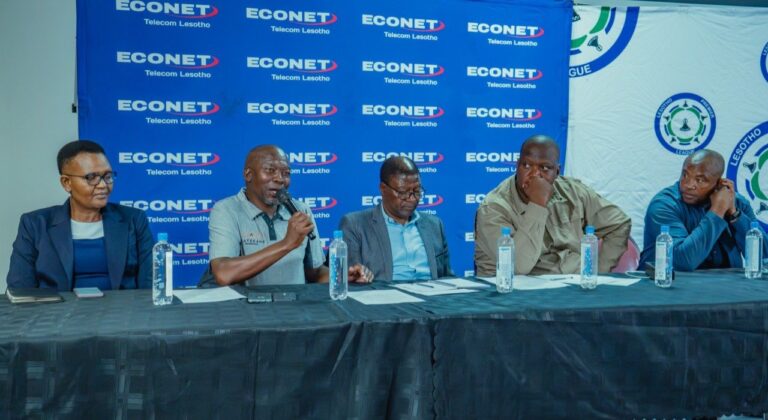
Backed by a M1.1 million cash sponsorship from Econet Telecom Lesotho (ETL), in partnership with the Premier League Management Committee (PLMC) and the Sam Matekane Foundation (SMF), the one-day tournament promises high-intensity football, significant financial rewards, and a strong display of supporter influence.

Unlike traditional football competitions, the People’s Cup places power directly in the hands of supporters. The four teams competing this year earned their spots through public voting, a format that underscores the deep connection between clubs and their fan bases.

When final results were announced on Friday, 17 April, it was Lioli Football Club, the reigning league champions, who led the way with 162,122 votes. Close behind were Matlama FC with 156,036 votes, while defending People’s Cup champions Bantu FC secured 150,231 votes. Lijabatho FC completed the lineup with 139,118 votes.

Kick-off Fixture Round
09:00 Lioli FC vs Lijabatho FC Semi-final
11:00 Bantu FC vs Matlama FC Semi-final
15:00 Final Final

All four sides will contest a fast-paced knockout format where there is no room for error. With only two matches standing between each team and the trophy, squad depth and tactical discipline will be decisive.

Beyond pride, the financial stakes are substantial. The tournament winners will walk away with M400,000, while the runners-up will earn M200,000. The two losing semi-finalists will each collect M100,000.

“The People’s Cup places power directly in the hands of supporters. The four competing teams earned their spots through public voting.”

Individual brilliance will also be rewarded. M5,000 is set aside for the Player of the Tournament, M4,000 for the Top Goal Scorer, and M2,000 for the Best Goalkeeper. Each Man of the Match award carries M1,500, while the Best Referee will take home M1,000.

Award Prize
Tournament winners M400,000
Runners-up M200,000
Semi-finalists (each) M100,000
Player of the Tournament M5,000
Top Goal Scorer M4,000
Best Goalkeeper M2,000
Man of the Match (each) M1,500
Best Referee M1,000

The People’s Cup also stands out for its innovative commercial structure. Revenue generated through the voting process will be split, with 45% going to the participating clubs, 45% to Econet Telecom Lesotho, and 10% covering administrative costs.

Supporters have more to play for beyond the spectacle. Ten lucky fans who spend at least M100 during the voting process will win access to 30 Premier League matches in the upcoming season, courtesy of Econet Telecom Lesotho.

With the four top clubs, their passionate supporters, and meaningful financial incentives all converging in Thaba-Tseka, the People’s Cup is rapidly cementing itself as a key fixture on the national football calendar. The only question left is who will claim the 2026 title.

Lesotho Tribune · Sport

Washington seals the strait, and Iran wins the war

0

Washington’s decision to blockade the Strait of Hormuz does not neutralise Iran’s leverage over the world’s oil supply. It transfers responsibility for the consequences from Tehran to the United States, handing the Islamic Republic a strategic victory it could not have won on the battlefield.

Confirmed

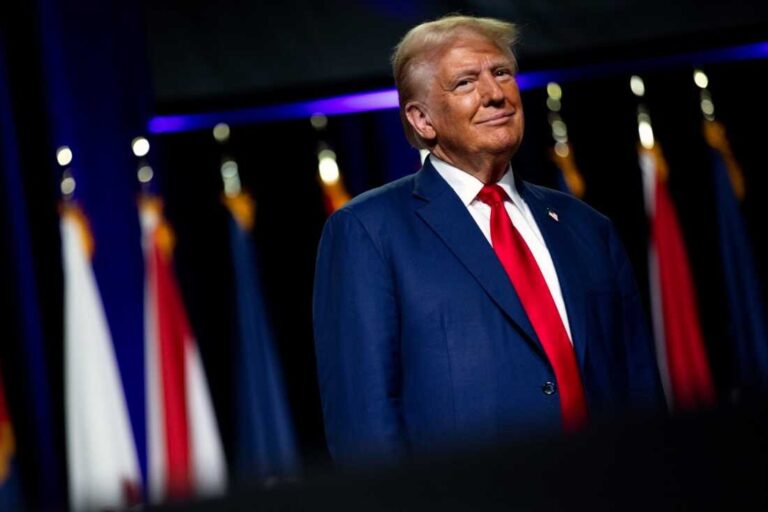
President Donald Trump posted on Truth Social on the morning of Sunday, 12 April 2026: “Effective immediately, the United States Navy, the Finest in the World, will begin the process of BLOCKADING any and all Ships trying to enter, or leave, the Strait of Hormuz.” The announcement came hours after 21-hour peace talks in Islamabad, Pakistan collapsed, with the United States and Iran failing to reach agreement principally over Iran’s refusal to abandon its nuclear programme. The blockade declaration is confirmed across multiple major news agencies including Reuters, AP, NBC News, CBS News and the BBC.

Explainer

What is a naval blockade, and what does the law say?

“`

In plain terms, a naval blockade is when one country uses its warships to seal off a stretch of water, a port, or a coastline so that no ships, from any nation, can pass through without permission. Think of it as putting a wall of warships across a road and turning away every truck, regardless of who owns it or where it is going. The blockading country decides who gets through, when, and on what terms.

In this case, President Trump has ordered the US Navy to position itself at the entrance and exit of the Strait of Hormuz, the narrow waterway through which roughly one-fifth of the world’s oil travels every day, and to stop all ships from entering or leaving. That includes tankers carrying oil to Japan, India, China, Europe and Africa, as well as cargo ships bringing goods into the Persian Gulf states.

What international law says

The legality of naval blockades is governed primarily by customary international law, codified in documents including the 1909 Declaration of London, the 1994 San Remo Manual on International Law Applicable to Armed Conflicts at Sea, and the United Nations Convention on the Law of the Sea (UNCLOS). For a blockade to be considered lawful under these frameworks, several conditions must be met:

Formal declaration. A blockade must be officially declared, specifying its geographic extent, start date, and the time allowed for neutral vessels to depart the zone. Trump’s Truth Social post, while emphatic, is unusual as a formal instrument of international maritime law, but a presidential declaration carries legal weight under US military authority.

Effectiveness. International law does not recognise a “paper blockade.” The blockading force must have the naval capability to actually enforce it. The US Navy, the world’s largest, satisfies this requirement.

Non-discrimination. A lawful blockade must apply equally to all nations. A blockading power cannot let some countries’ ships through while barring others. Trump has explicitly stated the blockade will be “all or nothing,” which aligns with this principle, though it puts Washington on a collision course with China, India and Pakistan, whose ships have been transiting under deals with Tehran.

Proportionality and humanitarian exceptions. The San Remo Manual requires that blockades not be used to starve civilian populations, and that humanitarian aid shipments be permitted through. A full blockade of Hormuz will almost certainly require the US to navigate these obligations as food and medicine shipments to Gulf states and beyond are affected.

The act of war question. Perhaps most critically, a naval blockade is, under classical international law, historically considered an act of war. Multiple analysts have warned that Iran may interpret the US counter-blockade as precisely that: a justification for renewed military strikes. This is not a technical legal argument. It is a live escalation risk.

The Strait itself: a note on sovereignty

The Strait of Hormuz is classified as an international strait under UNCLOS, which guarantees all nations the right of “transit passage,” meaning ships and aircraft have the right to pass through continuously and without obstruction. Both Iran and the United States are implicated here: Iran’s toll regime already violates this principle, and a counter-blockade by the US does the same. In effect, both parties are now in breach of the very legal framework the US claims to be defending.

“`
~21% of world oil supply transits Hormuz daily
33km narrowest width of the strait at its chokepoint
$100+ per barrel, oil price already reached during the war

Trump’s Hormuz Gambit: A Strategic Own Goal of Historic Proportions

This morning, President Donald Trump confirmed what many feared: that American frustration with Iran’s chokehold on global energy flows would eventually produce a response more dangerous than the problem it seeks to solve. Having announced a US Navy blockade of the Strait of Hormuz hours after peace talks in Islamabad collapsed, Washington has not neutralised Iran’s leverage. It has assumed ownership of all the suffering that flows from the strait’s closure.

The Lesotho Tribune understands the frustration. Iran has, since the beginning of the US-Israeli military campaign in late February, effectively held the global economy hostage through a combination of mine-laying, transit restrictions, and an extortionate toll regime that charges ships up to two million dollars for passage through what is unambiguously an international waterway. Trump is correct to call it extortion. What he has failed to calculate is that the antidote to extortion is not to make the situation worse for everyone.

A counter-blockade does not remove Iran’s leverage. It simply transfers responsibility for the suffering its closure causes from Tehran to Washington.

Playing directly into Tehran’s strategy

Iran’s strategic objective throughout this conflict has never been to win a conventional military exchange with the United States, an exchange it knows it cannot win. Its objective has been to maximise economic pain on Washington and its allies, exhaust American political will, and frame the US as the primary aggressor in the eyes of the global south. The Hormuz stranglehold has been its most effective instrument toward that goal.

A US counter-blockade doubles that instrument and hands it back to Tehran gift-wrapped. Every barrel of oil that fails to reach a refinery, every cargo ship turned away, every fuel price spike in a developing nation: these are now American-administered outcomes. Iran’s state media need not even construct a narrative. The facts will speak for themselves in the fuel queues of Nairobi, the cooking gas shortages of Dhaka, and the heating bills of Warsaw.

Iranian officials have already responded with barely concealed satisfaction. Ali Nikzad, deputy speaker of Iran’s parliament, stated that in the 40 days of war, the US had “learned that the victorious side is determined by the will of nations and superiority on the battlefield, not by rhetoric on social media.” That is precisely the posture of a party that believes its adversary has just made a catastrophic miscalculation.

The consequences for Africa and for Lesotho

For countries like Lesotho, which imports all of its petroleum, is landlocked, and sits at the end of a long and fragile regional supply chain, the consequences of prolonged Hormuz disruption are not abstract geopolitical events happening in a distant sea. Oil prices have already climbed past one hundred dollars per barrel since the war began. A full bilateral blockade, with the US Navy interdicting every vessel that previously transited under Iranian-issued clearances, will push prices substantially higher.

Fuel prices in Maseru will rise. Transport costs will rise. The cost of every imported good will rise. For households already spending a disproportionate share of income on food and transport, this is not an international story. It is a domestic one.

Across sub-Saharan Africa, the picture repeats in dozens of capitals. Food-import-dependent nations face escalating famine risk as freight costs absorb the shock. Humanitarian logistics, which depend on diesel, become slower and more expensive precisely when they are needed most. The African Union’s capacity to respond is strained at the moment of greatest demand. The continent will pay an enormous price for a confrontation it had no hand in creating.

Europe’s energy crisis deepens

European nations, many of which spent the better part of three years diversifying away from Russian energy after 2022, now face a second consecutive energy emergency, this time with no obvious alternative source to turn to. Gulf LNG and crude oil that Europe has come to depend on transits Hormuz. A prolonged blockade will force European governments into emergency rationing decisions, accelerate inflation, and revive the political instability that high energy costs have historically produced. The political beneficiaries of that instability are not, as a general rule, pro-American.

The domestic political miscalculation

There is a bitter irony in Trump’s calculations. He has throughout this conflict framed himself as the president who ends wars rather than starts them. The Islamabad talks were his attempt to validate that framing. They failed. But the response, an open-ended naval blockade with no clear exit condition beyond Iranian capitulation on nuclear weapons, is not a war-ending posture. It is an escalation ladder with no visible top rung.

American consumers are already absorbing the costs of elevated oil prices, tariff-driven inflation, and a market that has whipsawed throughout the campaign. A blockade that demonstrably worsens all three will not be forgiven by voters who were told the pain was temporary and purposeful. Midterm elections are approaching. The political map for the Republican Party, which has already faced questions about the administration’s economic stewardship, becomes considerably more difficult if American families are paying record fuel prices because their government sealed the world’s primary oil corridor.

Beyond the midterms, a president presiding over a global economic meltdown, a naval confrontation with China and India over interdicted ships, and a re-escalating war in the Middle East faces a very particular kind of political reckoning, one that has historically produced not just electoral defeat but institutional consequences.

Iran has handed Washington a loaded weapon and watched as Washington pointed it at itself. The tragedy is that the rest of the world will absorb the recoil.

Our view

The Lesotho Tribune’s position is unambiguous. Iran’s toll regime and its near-closure of the Strait of Hormuz constitute a violation of international maritime law and a form of economic coercion against the entire world. We do not defend it. But a counter-blockade that shuts down one-fifth of the global oil supply does not neutralise that coercion. It creates a second, larger one, and attributes it to Washington rather than Tehran.

The United States will have handed its adversary a propaganda victory of historic proportions, ignited precisely the global economic meltdown it claimed to be preventing, alienated the allies and neutral parties whose support it needs, and produced domestic political conditions that no administration survives intact. Iran, watching from across the water with the patience of a nation that has absorbed decades of sanctions, could not have scripted a better outcome.

This is not strength. It is the most expensive own goal in modern geopolitical history, and the world, from Maseru to Mumbai, will pay the price for it.


— The Editors, Lesotho Tribune  |  12 April 2026

RFP MP claims coalition allies were ordered to sink health MoU

RFP MP claims coalition allies were ordered to sink health MoU — Lesotho Tribune
“`

A senior Member of Parliament from the Revolution for Prosperity (RFP) has alleged that lawmakers within the ruling coalition were quietly instructed to vote against a health Memorandum of Understanding (MoU) between the Government of Lesotho and the United States, in what the MP described as a calculated move to limit the growing influence of a coalition partner.

The MP, who spoke on condition of anonymity citing fear of political repercussions, said the alleged instruction had nothing to do with policy substance. The motive, the lawmaker claimed, was power.

At the centre of the allegation is the Minister of Health, who also leads the Movement for Economic Change (MEC), a partner in the governing coalition. According to the MP, elements within the ruling alliance feared that passage of the MoU would consolidate political and institutional leverage in the hands of the MEC, upsetting the internal balance of the coalition.

A majority that failed to act

The allegation might have been dismissed as routine political noise were it not for what happened in Parliament.

When the MoU was first tabled, it failed to pass. That outcome, on its own, is remarkable. The government commands a working parliamentary majority. Agreements tabled by the executive are not ordinarily defeated by the government’s own benches. That the MoU fell at its first attempt triggered immediate questions that no minister has yet answered on the record.

The unnamed lawmaker’s account offers one answer: the failure was not accidental. It was engineered.

The opposition breaks the deadlock

The turning point came from an unexpected quarter.

During the second attempt to pass the MoU, Machesetsa Mofomobe, leader of the Basotho National Party (BNP), rose in the chamber and issued a sharp rebuke to the government benches. He accused them of political selfishness and negligence in handling a matter with direct consequences for ordinary Basotho.

His intervention appears to have shifted the dynamics in the chamber. Shortly thereafter, the MoU passed.

A government agreement fails on the government’s own watch, then survives only after the opposition publicly shames the ruling coalition into acting.

The sequence is difficult to explain in any ordinary legislative logic: a government agreement fails on the government’s own watch, then survives only after the opposition publicly shames the ruling coalition into acting.

More than a health deal

The MoU has been presented as a potential lifeline for Lesotho’s chronically underfunded and understaffed health system. It carries the prospect of American engagement on funding, capacity building and systemic reform in a sector that has long struggled to meet basic public need.

That such an agreement could be held hostage to factional maneuvering within the ruling coalition would represent a serious indictment of the current government’s internal governance.

If the MP’s account is accurate, it would mean that a deal with measurable national benefit was temporarily sacrificed on the altar of coalition arithmetic.

A pattern with a question

Coalition tensions in Lesotho’s Parliament are not new. But the specific dynamics of this episode mark it as different in character.

Governments with working majorities do not lose votes on their own proposals unless internal discipline has broken down, dissent is widespread, or obstruction is intentional. The initial failure of the MoU points to at least one of these conditions. The MP’s allegation points specifically to the third.

No response from the RFP caucus

The Lesotho Tribune put the allegation directly to the RFP caucus chairperson, asking whether any instruction had been issued to members to vote against the MoU. No response was received by the time of publication.

The silence is notable. The allegation goes to the heart of how the ruling party manages its lawmakers and whether coalition management is being conducted at the expense of national policy. A denial, or any alternative explanation for the MoU’s initial failure, would have been the straightforward response. None came.

The Lesotho Tribune has also approached the office of the Prime Minister and the office of the Minister of Health for comment. No response had been received at the time of publication.

The Lesotho Tribune approached the RFP caucus chairperson, the office of the Prime Minister, and the office of the Minister of Health for comment prior to publication. None had responded at the time this article was published.
“`

A nation of contradictions or a moment of reckoning?

0
Opinion · Editorial

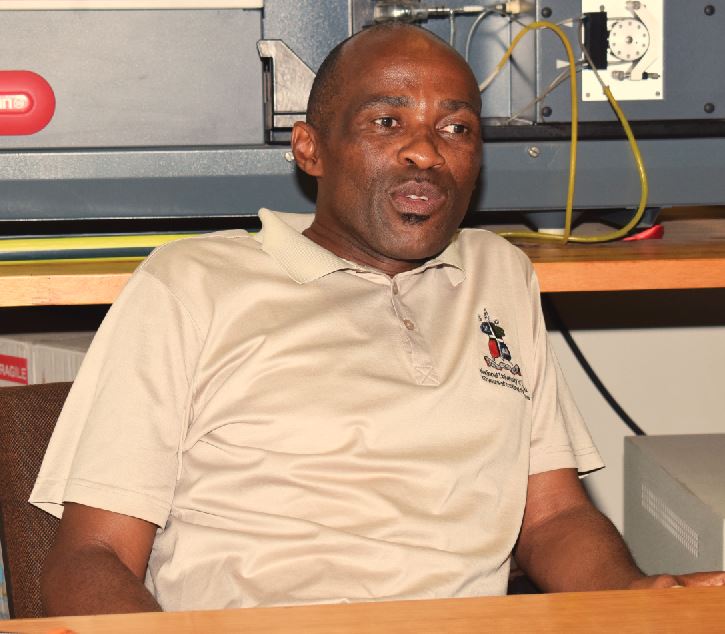
Professor Mosotho George has been elected to the Executive Board of Commonwealth Chemistry, placing a Mosotho scientist at the centre of global scientific governance. He is also facing a DCEO prosecution. The Tribune examines what both facts tell us about this country.

Lesotho has always had a complicated relationship with excellence. We celebrate it loudly when it breaks through. We suffocate it quietly when it threatens to inconvenience us.

The election of Professor Mosotho George to the Executive Board of Commonwealth Chemistry is, on the face of it, a moment of genuine national pride. It places a Mosotho scientist at the centre of global scientific governance, a body that shapes research priorities, international collaboration, and scientific diplomacy across dozens of countries. This is not a ceremonial appointment. It is influence, earned and consequential.

And yet it lands in Lesotho trailing a prosecution.

Because this is the same professor currently facing corruption and fraud charges brought by the Directorate on Corruption and Economic Offences. The allegations are that he used his position within NUL’s innovation structures to secure funding for a company in which he allegedly held undisclosed interests, involving approximately M129,000 in public-backed resources.

We are required, at this point, to note that he remains innocent until proven otherwise. We are also required, by the same commitment to honesty, to note who is doing the charging.

The DCEO is not a neutral instrument of justice. It has not been for some time.

This is an institution whose record on selective prosecution is, at this point, extensively documented. It has a pattern of targeting individuals whose prominence makes the charge sheet newsworthy, while demonstrating conspicuous restraint when the accused are politically protected. It operates in an environment where the line between law enforcement and political utility has been, on too many occasions, difficult to locate.

We are not saying Professor George is innocent. That is for the courts to determine. We are saying that a charge sheet originating from the DCEO does not carry the evidentiary weight that a charge sheet ought to carry. It carries, instead, a question: who benefits from this prosecution, and why now?

When an institution with a credibility deficit charges a man at the precise moment of his most significant professional elevation, the timing is not automatically suspicious. But it is not automatically innocent either. Editorial

That is not a question this editorial can answer definitively. It is, however, a question that responsible journalism requires us to ask.

Set the prosecution aside for a moment, or rather, hold it at arm’s length, which is where it belongs until the courts do their work.

Professor George’s election to the Commonwealth Chemistry Executive Board matters in concrete terms for this country. It generates scientific visibility in spaces where Lesotho is largely absent. It opens access to funding networks, research partnerships, and international policy conversations that a country of this size and resource base rarely enters. For a nation still too dependent on remittances and textile exports, scientific leadership is not an indulgence. It is strategy, and it is rare.

NUL, in particular, should be paying close attention. This appointment validates the calibre of talent the university can produce and creates potential pipelines for student exposure and institutional partnership. In a functioning system, this would be an unambiguous cause for institutional pride.

The tragedy is that Lesotho’s reflexive response to any public figure under prosecution is not nuance. It is either defensive celebration or wholesale condemnation, and neither serves the country.

The deeper problem this moment exposes is not Professor George’s alleged conduct. It is the institutional ecosystem in which both the appointment and the prosecution are simultaneously possible, and where neither outcome, acquittal or conviction, will produce meaningful institutional reform on its own.

Lesotho needs a DCEO that can be trusted, not because it charges prominent people, but because it charges the right people for the right reasons with the right evidence. It needs universities that can celebrate international recognition without anxiously scanning the footnotes for caveats. It needs a public culture that can hold two thoughts at once: this person may have done something wrong, and this person has also done something exceptional.

That is not a contradiction. That is called a human being operating in a broken system. And the broken system is the story, not the man caught inside it.

Independent business & current affairs journalism · Lesotho Subscribe — M85/month
| Independent business & current affairs journalism · Lesotho