Mohahlaula Airlines
Wednesday, July 22, 2026
Home Blog Page 17

The electric ascent: can Lesotho’s MaZero project really dethrone fossil fuels?

0
The electric ascent: can Lesotho’s MaZero project really dethrone fossil fuels? | Lesotho Tribune
Lesotho Tribune
Energy & Environment
lesothotribune.co.ls
Energy & Environment · Transport

A bold solar-powered blueprint aims to steer Lesotho away from the exhaust fumes of the past. But geography, cost and infrastructure gaps raise a pressing question: is this a realistic roadmap, or a high-altitude pipe dream?

“`

Elsewhere in this publication we run a story on Lesotho’s dream to decarbonise its transport sector through the MaZero project, a bold, solar-powered blueprint designed to steer Lesotho away from the exhaust fumes of the past and into a decarbonised future.

But as the project sets its sights on a fossil-fuel-free horizon, a heavy question hangs over it: is this a realistic roadmap or a high-altitude pipe dream?

The project was launched by the National University of Lesotho’s Energy Research Centre (NUL-ERC) in 2024 and was not just about importing fancy cars but about sovereignty. By leveraging Lesotho’s most abundant resource, sunshine, the initiative aimed to power electric vehicles (EVs) through localised solar charging and battery-swapping stations.

For a nation that is among the largest emitters of greenhouse gases through transport, the motivation was clear.

“We are creating a circular economy. Why import expensive petrol when we can harvest our own energy from the sky?”

While the vision of the project is electric, the reality on the ground faces a significant range anxiety.

2024 Year NUL-ERC launched
the MaZero project
20–40% Faster battery drain on
Lesotho’s highland roads
2035 Target year for significant
EV transition milestones

To reach its goals by at least 2035, the project and government must navigate three major roadblocks.

Lesotho’s geography is a literal uphill battle. EVs thrive on flat city streets, but the country’s steep passes and rugged rural tracks drain batteries 20 to 40 percent faster than average. For someone in the highlands, a car that needs a plug every few hours is a tough sell compared to a rugged diesel 4×4.

EV charging is currently largely confined to certain pilot sites. To sustain a national fleet, the country needs a massive rollout of charging points. With less than half of the country connected to the national grid, and even fewer in rural areas, the MaZero project’s focus on off-grid solar hubs is a necessity, not just a preference.

Even with the government’s recent move to slash VAT and customs duties on EVs, the upfront cost remains prohibitive for the average Mosotho. Without aggressive financing schemes or a robust market for second-hand EVs, the green lane may remain reserved only for the wealthy.

The most important factor to consider is economic empowerment. Currently, Lesotho is at the mercy of volatile global oil prices and import costs. By fuelling vehicles with home-grown solar energy, the project promises to keep more money within the borders. The focus on solar-based battery-swapping stations creates a massive opening for local SMEs.

Small business owners in rural hubs can become energy vendors, managing solar kiosks that serve everything from electric delivery bikes to communal taxis. For the logistics and taxi industries, the long-term savings on maintenance, as EVs have significantly fewer moving parts than petrol cars, could mean the difference between a struggling business and a thriving one.

Will the roar of internal combustion engines be silenced by 2035? Experts suggest a middle ground.

While a 100 percent phase-out of fossil fuels in a decade may be an Olympian task, MaZero is successfully building the technical foundation. By focusing first on urban commuter corridors in Maseru and transitioning into public transport, Lesotho can significantly dent its carbon footprint.

But is the project already training a new generation of green mechanics to ensure that when the EVs do arrive, the skills to fix them stay within the borders?

This project is more than a transport trial; it is a test of Lesotho’s resilience. Sustaining the initiative will not require a miracle; it will require consistent policy, massive investment in solar infrastructure and a focus on “Made for Lesotho” EV solutions that can handle the cold and the climbs.

A decade from now, Lesotho may not see the total disappearance of the petrol engine, but thanks to MaZero, the country is finally beginning its descent toward a cleaner, quieter and more self-reliant future.

As Lesotho waits to move away from fossil fuels, one question endures: can it really do it, and how much is there to gain?

“`
Lesotho Tribune · Energy & Environment lesothotribune.co.ls

Petroleum Fund urges media to improve reporting on fuel pricing and supply

Petroleum Fund urges media to improve reporting on fuel pricing and supply — Lesotho Tribune
Lesotho Tribune
lesothotribune.co.ls
Maseru · Lesotho
Business & Economy
Petroleum Governance

As global crude markets grow increasingly volatile, Lesotho’s Petroleum Fund calls on journalists to deepen their understanding of pricing mechanisms and supply chains, warning that misinformation undermines public confidence.

Venue Media Forum, Maseru
Speaker Adv Makananelo Kome, Interim CEO
Context Brent crude price volatility
Focus Media capacity & petroleum governance

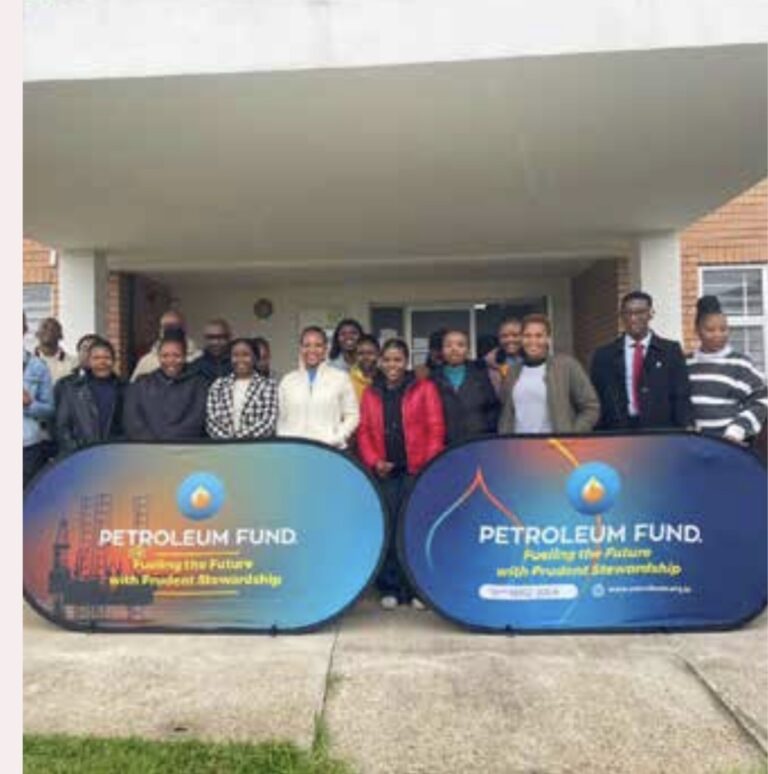
The Petroleum Fund has called on the media to strengthen accurate and responsible reporting on petroleum-related issues as global oil price fluctuations continue to impact Lesotho’s economy.

Speaking at a media forum held in Maseru on Friday, the Fund’s Interim Chief Executive Officer, Advocate Makananelo Kome, emphasised the critical role journalists play in shaping public understanding of the petroleum sector. The forum aimed to enhance collaboration between the media and the Fund while building capacity around petroleum governance, pricing and supply systems.

“The petroleum sector remains central to Lesotho’s economy and daily life. It affects transport, the cost of living and overall economic stability.”

Adv Makananelo Kome  ·  Interim CEO, Petroleum Fund

The engagement comes at a time when global oil markets are experiencing renewed volatility. Ongoing geopolitical conflicts in key oil-producing regions have disrupted supply chains, contributing to rising and unpredictable crude oil prices, including benchmarks such as Brent crude.

These external pressures have a direct ripple effect on small, import-dependent economies like Lesotho.

Factors determining petroleum pricing in Lesotho
International crude oil prices
Exchange rate movements
Transportation and logistics costs
Domestic taxes and levies

Adv Kome highlighted that petroleum pricing in Lesotho is not arbitrary but determined through structured mechanisms influenced by several factors, including international oil prices, exchange rate movements, transportation and logistics costs as well as domestic taxes and levies.

“Petroleum pricing and supply systems are complex. Without proper understanding, misinformation can easily spread, which may undermine public confidence and economic stability,” she cautioned.

The Petroleum Fund also outlined the importance of understanding the full supply chain, from importation to distribution at fuel pumps, noting that each stage presents unique challenges that require accurate interpretation and reporting.

This media forum is part of the Fund’s broader commitment to transparency, accountability and public engagement. By equipping journalists with technical knowledge, the institution hopes to bridge the gap between complex petroleum data and public communication.

“We value the media as key partners in ensuring that the public is well-informed. With this role comes the responsibility to report fairly, accurately, and with context.”

Adv Makananelo Kome

The initiative is expected to improve the quality of petroleum reporting in the country, foster a better-informed public and strengthen trust between the media, the Petroleum Fund and citizens.

The CEO emphasised the power of informed dialogue, noting that collaboration between institutions and the media is essential in building public trust, especially during times of economic uncertainty driven by global oil market instability.

The Petroleum Fund reaffirmed its commitment to ongoing engagement and its role in supporting national development through transparency and effective communication.

© 2026 Lesotho Tribune  ·  lesothotribune.co.ls  ·  All rights reserved

High Court reserves judgment in Lesotho electricity tariff challenge

High Court reserves judgment in Lesotho electricity tariff challenge — Lesotho Tribune
Lesotho Tribune Courts & Justice
High Court · Maseru

Justice Polo Banyane will rule on 12 June 2026 on whether the Lesotho Electricity and Water Authority’s 2024 tariff increase was lawful, following a challenge by civic group SECTION 2 on behalf of consumers.

By Tholoana Lesenya Maseru
Case at a glance
Court
High Court of Lesotho
Judge
Justice Polo Banyane
Applicant
Advocates for the Supremacy of the Constitution (SECTION 2)
Respondent
Lesotho Electricity and Water Authority (LEWA)
Filed
28 March 2024 (transferred from Commercial Court)
Judgment
Expected 12 June 2026
“`

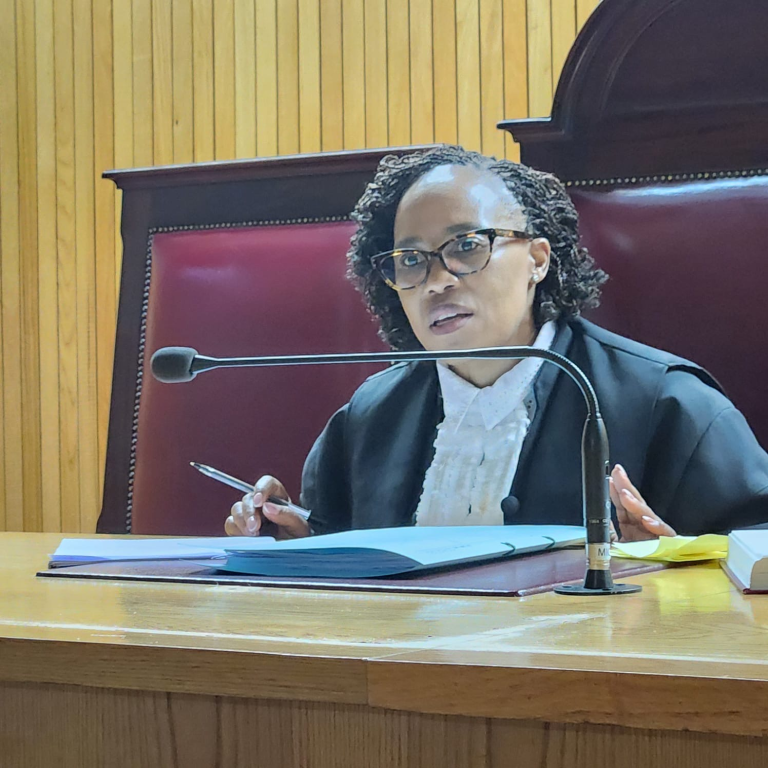
The High Court has reserved judgment in a case challenging the legality of Lesotho’s 2024 electricity tariff increase, with a ruling expected on 12 June 2026. The matter was heard before Justice Polo Banyane, who will deliver the court’s final position after considering submissions from both sides.

The case was brought by Advocates for the Supremacy of the Constitution, known as SECTION 2, a civic organisation acting in the public interest. The group is challenging a tariff hike approved by the Lesotho Electricity and Water Authority (LEWA) in March 2024, arguing that the increase was both unlawful and procedurally flawed.

Advocate Fusi Sehapi, appearing for SECTION 2, told the court that the decision to raise electricity tariffs was irrational and disproportionately harsh given the economic pressures already facing ordinary Basotho. He submitted that LEWA relied on outdated financial statements when approving the increase, meaning the decision did not reflect the authority’s true financial position at the time.

Sehapi also raised concerns about public participation. He argued that SECTION 2 represents the interests of consumers and should have been consulted before such a consequential decision was made. The failure to involve stakeholders, he said, undermined both the transparency and the fairness of the process.

“The tariffs are still in effect and continue to impact consumers. The matter is still very much alive.”

Advocate Fusi Sehapi, for SECTION 2

The court questioned whether the matter had become moot, given that the contested tariffs apply to the 2024/2025 and 2025/2026 financial years. Sehapi rejected that suggestion, insisting the tariffs remain in force and continue to impose costs on consumers. He urged the court to set aside the increase and, should judgment go in the applicant’s favour, to order that the public be reimbursed for the additional amounts paid under the unlawful rates.

LEWA defended its conduct through Advocate Kabelo Letuka, who told the court that the tariff increase was carried out in full compliance with the law. Letuka rejected the claim that the authority relied on outdated financial data, arguing that the allegation is unsupported by either the facts or applicable legal provisions.

He maintained that the applicant had failed to produce sufficient evidence to demonstrate any procedural irregularity, and that the decision to increase tariffs was grounded in proper financial and regulatory considerations.

The case has a complex procedural history. It was first filed on 28 March 2024 in the Commercial Court, which later declined jurisdiction and transferred the matter to the High Court. That transfer caused delays but placed the dispute before a court with the appropriate authority to adjudicate constitutional and administrative questions.

The outcome carries wide implications. Electricity tariffs affect virtually every household and business in Lesotho, and a ruling on their legality could shape how the country’s regulatory bodies exercise their powers in future. The case has also focused public attention on questions of accountability and whether institutions such as LEWA are required to consult those most directly affected by their decisions.

Should the court find in LEWA’s favour, the judgment would affirm the authority’s regulatory mandate and bring the dispute to a close. A ruling for SECTION 2 would raise the prospect of consumer reimbursements and could set a precedent for how tariff-setting processes are conducted and challenged in Lesotho. Justice Banyane is expected to deliver her ruling on 12 June 2026.

“`
Lesotho Tribune · lesothotribune.co.ls Courts & Justice · 2026

The world’s game, priced for the few

The world’s game, priced for the few: How FIFA’s 2026 World Cup ticket crisis shuts out Africa | Lesotho Tribune
Lesotho Tribune Saturday, 25 April 2026  ·  lesothotribune.co.ls
Sport  ·  Analysis
“`
FIFA World Cup 2026  ·  Ticketing
Resale tickets for the 2026 World Cup final have reached $2.3 million on FIFA’s own marketplace. For the average Mosotho worker, even the cheapest official group-stage seat represents more than a month’s wages. Litšitso Letsunyane examines what the crisis in ticketing reveals about who football’s governing body truly serves.

Four tickets for the 2026 FIFA World Cup final at MetLife Stadium in New Jersey are currently listed on FIFA’s own official resale marketplace for $2,299,998.85 each. That is not a misprint. A single seat at football’s most prestigious match, sold through the governing body’s sanctioned platform, is being offered for a price that exceeds the annual gross domestic product of a small village in Lesotho. Welcome, apparently, to the beautiful game.

The statistic is extreme and, for now, largely symbolic. No rational person expects those seats to sell at that price. But the number is not the anomaly that FIFA would like fans to believe it is. It sits at the top of a pricing structure that, at every level, places the 2026 World Cup beyond the reach of supporters from low- and middle-income countries, including most of Southern Africa.

With the tournament fifty days away, ticket pricing has become the dominant controversy of the pre-competition period, drawing criticism from fan groups, governments, and footballing associations across multiple continents. The anger has a clear arithmetic foundation: the numbers simply do not add up for the majority of the world’s football-following population.

The numbers at a glance  ·  April 2026
$2.3m
Highest resale asking price for a single World Cup final ticket on FIFA’s official marketplace
$11,000
Cheapest standard resale ticket for the final; official face value tops $10,990
M4,500
Average gross monthly salary in Lesotho (approx. $281), per ILO estimates

The cheapest standard ticket for the final, on the official resale platform, is listed at just under $11,000. FIFA’s own direct ticketing site released final seats at $10,990. For context: the average gross monthly salary in Lesotho sits at around M4,500, or approximately $281. Attending the final would cost a Mosotho wage-earner the equivalent of more than three years of salary, before flights, accommodation, or any other expense is factored in.

Group-stage tickets tell a slightly less extreme but equally revealing story. FIFA has promoted a $60 “entry tier” category as evidence of accessibility, but this tier is severely limited and effectively unavailable to most fans in general sales phases. The realistic entry point for group-stage tickets is the Category 3 band, priced at $140 to $200 per match on the official platform. On top of that face value, FIFA adds a service fee of approximately 15 per cent. A single group-stage ticket, in the most affordable realistic category, comes to around $160 to $230 after fees.

For a Mosotho on the minimum wage of M2,000 per month, that is between one and a half and two months’ wages for one seat at one match. The flight from Maseru to any of the sixteen host cities in the United States, Canada, or Mexico would add several multiples of that figure.

Cheapest realistic group-stage ticket (Cat. 3, ~$160 after fees) as a share of average monthly wage
Lesotho M4,500 / mo avg.  ·  ~57% of monthly wage
South Africa R23,000 / mo avg.  ·  ~13% of monthly wage
Nigeria ₦380,000 / mo avg.  ·  ~38% of monthly wage
United States $5,700 / mo avg.  ·  ~3% of monthly wage
United Kingdom £2,900 / mo avg.  ·  ~7% of monthly wage
Sources: ILO / Bureau of Statistics Lesotho estimates 2023–2026; FIFA ticketing platform April 2026. Category 3 face value $140 + 15% service fee. Exchange rates April 2026. South African rand pegged 1:1 to Lesotho loti.

The South African comparison is instructive. With an average monthly wage of around R23,000, a South African fan would spend roughly 13 per cent of one month’s income on a single group-stage ticket. The relative burden on a Mosotho worker is more than four times greater. For a fan in Nigeria, where the average monthly wage converts to a figure that places the ticket at roughly 38 per cent of monthly income, the picture is similarly stark.

Against this backdrop, FIFA president Gianni Infantino’s public defence of the pricing structure has done little to reduce the temperature of the debate. Speaking at a business summit in New York last week, Infantino argued that the World Cup is his organisation’s sole revenue-generating event and that all proceeds are reinvested across its 211 member associations.

“There is a category for the most passionate fans starting at sixty dollars, even for the final. If you want a box for the final, it costs tens of thousands of dollars. So there’s something for every budget.”

Gianni Infantino, FIFA president  ·  April 2026

The claim that $60 seats are available “even for the final” is technically accurate but analytically misleading. That entry tier, introduced in December after an immediate public backlash to the initial prices, is allocated to a small number of seats at a limited selection of venues. It has not been meaningfully available during general sale phases. When Football Supporters Europe filed a legal complaint against FIFA in March, it noted that the original North American bid had promised tickets from as little as $21. The $60 floor was a concession extracted by controversy, not an act of goodwill.

FIFA’s own data simultaneously undermines and complicates Infantino’s accessibility argument. Despite claiming a record 150 million ticket requests were received during the December sales window, the governing body has since run five separate sales phases, with the fifth opened just this week. An unplanned fifth tranche of tickets, with 50 days to the opening match, is not the profile of a tournament selling out through overwhelming demand. An Athletic report this week indicated that ticket sales for the United States’ opening match against Paraguay, one of the most commercially attractive fixtures in the tournament, remained substantially below capacity at the time of writing.


The dynamic pricing model FIFA has applied to this tournament has attracted particular criticism from analysts. Unlike surge pricing, which spikes immediately in response to demand peaks, dynamic pricing under the FIFA model adjusts over time based on sustained demand signals. In practice this has meant prices increased between sales phases regardless of whether individual matches were selling out. A Category 1 seat that cost $400 during the October 2025 pre-sale window reportedly rose to $520 or more after the draw confirmed fixtures, a 30 per cent increase that reflected the draw result rather than any change in the underlying cost of staging the event.

The resale market, operating on FIFA’s own official platform, adds a further layer of opacity. Because the tournament is hosted in the United States, no statutory cap exists on resale prices, and FIFA’s marketplace charges facilitation fees aligned with, in its own words, “industry standards across North American sports and entertainment sectors.” The governing body profits, to a degree, from secondary market transactions at prices that bear no relationship to the financial reality of the majority of its member associations’ populations.

For supporters in Lesotho, the conversation about attending the World Cup in person has long been theoretical. The country has not qualified for a senior men’s World Cup. The national team’s journey in the 2026 qualifying campaign ended, as it has ended before, in the group stage. But the question of whether any Mosotho, travelling to support a different African nation or simply to witness the tournament, could afford to attend, is not theoretical. It is a direct measurement of what FIFA’s pricing philosophy means in practice.

The answer, by any reasonable reading of the data, is that the overwhelming majority could not. At the minimum wage, a single group-stage ticket represents two months of earnings before the cost of travel is considered. At the average wage, the burden is still more than half a month’s income for one match. For a family of four, the arithmetic moves from unlikely to impossible.


There is a structural argument worth making here that goes beyond the 2026 tournament. FIFA distributes development funding to its 211 member associations, including the Lesotho Football Association. The organisation’s non-profit status, which Infantino invokes repeatedly, is genuine in the technical sense: surpluses are redistributed rather than returned to shareholders. The question is not whether FIFA reinvests, but what the ratio is between what it extracts from the moment of the match and what filters back to the associations whose supporters cannot attend.

A supporter in New Jersey paying $500 for a group-stage seat is, in a narrow accounting sense, contributing to football development in Lesotho. A supporter in Maseru who cannot afford the ticket is not contributing to the moment that generates that revenue. The World Cup, in this configuration, is an event staged in wealthy markets, priced for wealthy consumers, with a portion of the proceeds returned to the associations whose populations were priced out of the experience in the first place.

Infantino characterised North America as “a very special market” in his defence of the pricing approach. The characterisation is accurate. It is also, for supporters from Lesotho, Southern Africa, and most of the African continent, the core of the problem. The world’s game has, for this edition, been priced to fit one market’s standards. The rest of the world watches on television.

“`

NUL Council suspendsPro-Vice-Chancellor,cancels VC’s leave

NUL Council suspends Pro-Vice-Chancellor pending investigation | Lesotho Tribune
Lesotho Tribune Saturday, 25 April 2026  ·  lesothotribune.co.ls
News  ·  Higher Education
“`
National University of Lesotho  ·  Governance
The National University of Lesotho Council has suspended its Pro-Vice-Chancellor pending investigations, while simultaneously reversing the Vice-Chancellor’s approved leave — a pair of decisions that signal deepening tensions within the university’s senior leadership.

The National University of Lesotho Council resolved at its 5th Special Meeting of the 15th Council, held on 22 April 2026, to place Prof. Kananelo E. Mosito on suspension and exclusion from work as Pro-Vice-Chancellor, pending investigations. The decision, communicated to staff through Circular REF/ADM-1.75-2026/06 and stamped by the Registrar on 25 April, was adopted on the recommendation of the Chairman of Council.

According to the circular, the suspension arises from allegations that Prof. Mosito, as a member of the university executive management and an ex-officio Council member, is “bent on rendering the university ungovernable in the pursuit of personal interests which conflict with the best interests of the university that he should be protecting.”

Council circular  ·  Decisions confirmed
REF/ADM-1.75-2026/06  ·  5th Special Meeting, 15th Council  ·  22 April 2026
C.P. 2026/13 Pro-Vice-Chancellor suspended. Council adopted the recommendation of the Chairman to place Prof. Kananelo E. Mosito on suspension and exclusion from work as Pro-Vice-Chancellor, pending investigations into alleged conduct rendering the university ungovernable.
C.P. 2026/14 Vice-Chancellor’s leave reversed. Council reversed approval of the Vice-Chancellor’s annual and terminal leave of fifty-one (51) days on grounds of exigency of work, and resolved that the Vice-Chancellor be compensated financially for leave days earned.

The circular does not specify the nature of the personal interests alleged, the investigations to be conducted, or the authority tasked with conducting them. No timeline for the suspension or the investigative process is stated in the document.

In a second resolution at the same meeting, Council considered a recommendation from the Chairman to reverse the approval of the Vice-Chancellor’s annual and terminal leave of fifty-one days, citing exigency of work. Council approved the reversal and further resolved that the Vice-Chancellor be compensated financially for the leave days earned rather than taken.

“Bent on rendering the university ungovernable in the pursuit of personal interests which conflict with the best interests of the university.”

NUL Council circular  ·  on Prof. Mosito  ·  April 2026

The two decisions, taken at a special rather than ordinary Council meeting, point to an institution managing acute internal pressure at its most senior levels. The suspension of a Pro-Vice-Chancellor on grounds of alleged ungovernability, and the simultaneous cancellation of the Vice-Chancellor’s leave, suggest the Council is moving to consolidate executive control ahead of what may be a more formal governance process.


NUL has not issued a public statement beyond the internal staff circular. The Tribune has sought comment from the university’s communications office and will update this report when a response is received.

Source: This story is based on a copy of NUL Circular REF/ADM-1.75-2026/06, stamped by the Registrar on 25 April 2026, summarising decisions of the 5th Special Meeting of the 15th Council held on 22 April 2026.
“`

WHAT THE COMMUNITIES IN MOKHOTLONG GAVE – AND WHAT THE CELEBRATION WILL NOT SAY

0

Opinion  ·  Infrastructure & Rights

As two heads of state gathered to inaugurate the Senqu Bridge on 22 April 2026, the communities of Mokhotlong were still waiting. Waiting for relocation promised before construction began. Waiting for homes cracked by blasting to be properly repaired. Waiting for the human rights standards that justified building the bridge to be applied, with equal rigour, to their lives.


Advocate Mosa Letsie

Lesotho Tribune  ·  Opinion

On the 22nd April 2026, King Letsie III of the Kingdom of Lesotho, Prime Minister Ntsokoane Matekane, and President Cyril Ramaphosa of South Africa met in Mokhotlong to co-launch the opening of the Senqu Bridge, an 825-metre extradosed cable-stayed structure rising 90 metres above the valley floor, constructed at an estimated cost of R2.4 billion, and widely celebrated as the largest and most technically ambitious bridge ever built in Lesotho.

The ceremony was framed, as such occasions invariably are, in the language of partnership and shared prosperity, a bilateral achievement said to affirm the enduring strategic relationship between two neighbouring states and to signal a new chapter in the long, complicated story of the Lesotho Highlands Water Project (LHWP). The speeches invoked economic development, regional integration, and water security. The photographs recorded completion. And the official narrative, carefully composed, institutionally endorsed, and politically convenient, presented this moment as evidence that the project is working exactly as it was designed to work.

What that narrative did not say is that somewhere within earshot of the ceremony, in the community of Sekokong, families are living in houses whose walls have been cracked by the same construction blasting that made the bridge possible. These are families who were promised relocation before construction began, who raised that promise repeatedly with the implementing authority, and who remain, as the bridge was inaugurated, exactly where they have always been, in homes that are no longer structurally safe, waiting for a commitment that has still not been honoured.

That gap between what was promised and what was delivered, between the precision with which the project executed its engineering ambitions and the imprecision with which it met its obligations to the communities it displaced, is not an incidental failure at the margins of an otherwise successful enterprise. It is the central human story of Phase II of the LHWP, and it is the story that the celebrations of the 22nd April were not designed to tell.

This piece attempts to tell it.

First, let us be clear

Before proceeding, it is necessary to address a mischaracterisation that official responses to community grievances have consistently deployed: that criticism of this project’s human costs is, at its core, opposition to development itself. It is not. The conflation of these two positions is intellectually dishonest, and this moment of public celebration makes it urgent to name and refuse.

The communities living in the path of the Polihali Dam and the Senqu Bridge are not anti-development. They understand that Lesotho’s water is its most significant strategic resource. They understand that the bilateral relationship with South Africa carries real fiscal consequences for this country. They understand that infrastructure of this scale involves costs that must be weighed against national benefit. Many have explicitly stated, in a formal complaint to the Independent Recourse Mechanism of the African Development Bank, that they support the objectives of Phase II and are not seeking to obstruct the project’s completion.

What they do oppose, with persistence and courage that deserves far more recognition than it has received, is the imposition of costs that are disproportionately and systematically borne by those with the least power to resist them. The benefits flow elsewhere, to the national fiscus and to the industrial economy of a wealthier neighbouring state. What they demand is not the end of development, but its integrity. That it keeps its promises. That it recognises communities as rights-holders, not administrative inconveniences. That it accounts honestly for what it takes and returns something genuinely proportionate.


“That is not obstruction. That is the minimum threshold of justice that any development project invoking the language of human dignity is obligated to meet.”

The distance between that threshold and the current reality in Mokhotlong is the precise measure of what remains undone.

A treaty, a project, and the people it did not consult

The Senqu Bridge does not exist in isolation. It is a component of Phase II of the LHWP, a binational infrastructure initiative whose legal foundations are anchored in the LHWP Treaty of 1986. And let us be clear: that treaty was not concluded between two democratically accountable governments negotiating in good faith on behalf of informed and consenting citizens. This is a historical fact that is rarely foregrounded in celebratory accounts of the project, but it carries real weight for any serious assessment of its legitimacy.

On one side was the apartheid government of South Africa, founded on the systematic dispossession of Black people and the denial of their political agency. On the other, a military government in Lesotho that owed its people nothing in the way of consultation, transparency, or democratic accountability. The communities of Mokhotlong, who now live with the consequences of that agreement, were not at the negotiating table. They were not asked. Their land, their water, and their way of life were committed to this project before the idea of their consent carried any political weight in either state.

The 2011 Phase II Agreement was concluded in a different era, with both governments at least formally democratic. It committed them to the construction of the Polihali Dam, a 38-kilometre transfer tunnel, and the associated road and bridge works, including the Senqu Bridge celebrated this week. The agreement also presented an opportunity to do things differently, to retrofit the project with the standards of participatory governance and rights-based planning that the democratic transition had made obligatory.

On paper, that shift is visible. Compensation policies were developed. Community liaison structures were established. Environmental and social impact assessments were conducted. Resettlement frameworks were written. The institutional architecture of accountability was, in formal terms, far more sophisticated than anything contemplated in 1986. But the real question was always this: would that architecture be realised in practice, or would it remain, like so many promises made to affected communities, impressive in design but deficient in execution?

The evidence from Mokhotlong answers that question plainly. Frameworks were written but promises were not kept. The distance between the formal commitments of the Phase II architecture and the lived reality of affected communities is not a minor implementation gap. It is a structural failure. It reflects the same deeper question that has haunted this project since 1986: who was it ultimately designed to serve, and whose interests was its institutional machinery built to protect? The language of partnership has changed. The distribution of sacrifice and benefit has not.

What the communities gave

Long before the first cable was strung across the Senqu valley, and long before the first blasting charge was detonated in the highlands of Mokhotlong, the communities living in the project area had already begun to give. Not through any act of willing generosity, but through the slow, accumulating logic of a project that treated their land, resources, and way of life as raw material to be extracted and transferred, at scale, to serve interests located elsewhere.

They gave land. Not in the abstract sense of territory measured in hectares and priced per square metre, but in the deeply particular sense of lived space. These were fields cultivated across generations; riverbanks whose seasonal rhythms were known intimately; hillsides read like texts by those who had grown up on them, whose knowledge and identity were organised around their features and demands.

Communities gave grazing pastures that were not merely economic assets but the foundation of a herding culture, one in which landscape is bound up with identity, inheritance, and social organisation as much as with livestock production. They gave forests that sustained daily life: sources of firewood, medicinal plants, wild vegetables, clay for pottery, and grasses for thatching. They gave too the ecological knowledge accumulated across generations of careful use, resources whose value cannot be captured by market terms, because they were never primarily economic.

Communities also gave their dead. More than 570 graves have already been relocated from project-affected areas, with further relocations planned as the Polihali reservoir approaches operational capacity. In the context of Basotho spiritual and cultural life, where the relationship between the living and the ancestral dead is not symbolic but constitutive of social and moral existence, the forced relocation of burial sites is not a logistical matter. It is a rupture in the fabric of community life, a form of loss that no compensation policy has been designed to address, because it falls outside the categories such policies recognise.

Approximately 5,000 hectares of land will ultimately be submerged beneath the Polihali reservoir. This figure is routinely cited in project communications as evidence of scale and ambition. But it should not be understood as a measurement of territory. It is a description of lived space, accumulated history, and embedded human meaning that will be permanently removed from the communities that have inhabited it.

The scale of what was given

570+

Graves relocated from project-affected areas

5,000 ha

To be submerged beneath the Polihali reservoir

R2.4bn

Bridge cost, while resettlement promises remain unmet

Sekokong: houses cracking while the bridge rose

In Sekokong, the human cost of this transformation is not theoretical, speculative, or confined to the register of cultural loss that official processes find it easiest to acknowledge and hardest to compensate. It is physical, immediate, and written into the material fabric of homes that have been structurally compromised by the same construction activities that produced the bridge now being celebrated as a symbol of regional progress.

Construction of the Senqu Bridge required extensive blasting operations in the surrounding landscape. This work proceeded while commitments to communities living closest to the site remained substantially unfulfilled, in direct contravention of the project’s own safeguards, which require relocation before high-risk construction begins. The blasting caused serious structural damage to homes in affected communities. Walls cracked. Foundations weakened. In some cases, houses became uninhabitable, with families unable to repair or abandon them.

When the damage was reported, the response was inadequate. Repairs were superficial and cosmetic. They concealed visible damage but did not address the underlying structural harm. Families were left living in deteriorating homes they could no longer trust to protect them.


“A project with the resources to spend R2.4 billion on one of the most sophisticated bridge designs in southern Africa was, at the same time, unable or unwilling to prevent the structural deterioration of the ordinary homes of the people living in its shadow.”

The bridge received the full force of the project’s institutional attention, financial investment, and technical ambition. The homes beside it received cosmetic repairs and unfulfilled promises.

What the bridge replaced and what it cannot replace

The record must also show that the Senqu Bridge was not built as an addition to the existing infrastructure of the Mokhotlong highlands. It was built as a replacement for infrastructure that the project itself is in the process of destroying. The bridge replaces an existing crossing that will be permanently submerged once the Polihali Dam is filled to operational capacity, a crossing whose loss is a direct and foreseeable consequence of the project’s own design, not an act of God or an accident of geography that the project is generously moving to mitigate.

What the project presents as a contribution to Lesotho’s infrastructure landscape is, more precisely, a partial remedy for an infrastructure deficit that the project has itself created. The framing of this compensatory engineering as a gift, rather than as the partial discharge of an obligation, reflects the same asymmetry of power and narrative that has characterised the project’s relationship with affected communities throughout its implementation.

The substitution, moreover, is incomplete in ways that the bridge, however impressive its engineering, cannot address. It will ensure continued access to Mokhotlong, Sani Pass, and surrounding highland communities once existing crossings disappear beneath the reservoir. That is an important function. But it does nothing to restore the valley that will be swallowed. It does not return lost fields to farming communities. It does not rebuild ecological systems degraded by construction. Nor does it repair the social fabric of communities held in suspension for over a decade, told to stop improving their homes, to stop planting their fields, and to defer ordinary investments in their own future because relocation was always imminent.

Communities state plainly, and on record, that they were materially better off before the project arrived. What was promised as development has, in lived experience, deepened poverty and vulnerability rather than improved conditions.

The water that moved and the water that did not

There is an irony embedded in the material conditions of life in the communities most directly affected by the LHWP. The project’s entire rationale rests on the movement of water, the transfer of hundreds of millions of cubic metres per year from the Orange-Senqu River system to the water-stressed industrial economy of Gauteng. That transfer is contractually guaranteed, precisely measured, and protected by an international treaty whose terms both governments have consistently prioritised.

Yet the communities who live alongside the very infrastructure that makes this transfer possible do not experience that same reliability. In documented instances, access to clean water has deteriorated as a direct consequence of the project. Streams once used for domestic purposes have been polluted by blasting debris and construction runoff. Traditional water sources have been cut off by new roads and project fencing, altering patterns of access without providing adequate alternatives.

Women and girls, who bear the primary responsibility for domestic water collection in these communities, now walk longer distances to more distant and less reliable sources, in conditions of greater physical exposure and personal risk, to secure the most basic requirement of household survival.


“A project whose entire purpose is the export of water from Lesotho’s highlands has made water materially harder to access for the highland communities who live at its source.”

The women who were never counted

Any serious understanding of how harm is distributed in this project must confront its gendered dimensions directly. The evidence from the project area is clear: the costs have not been shared equally. They have fallen most heavily on women, and most acutely on those already in vulnerable positions, elderly women, widowed women, women with disabilities, and young girls navigating social environments made more dangerous by the project.

The “head of household” model used in compensation frameworks reflects the patriarchal structure of customary land tenure in Lesotho’s highlands, where women are positioned as dependants rather than independent rights-holders. In practice, it has excluded many women from receiving direct compensation for land and assets they have managed and depended on for years. Compensation is directed to male relatives, who may or may not share it. Women who have farmed the same fields for decades, who have built and sustained their households, are left with nothing in their own name, and no independent basis from which to rebuild.

In communities where large, male-dominated construction workforces have disrupted social life and intensified economic vulnerability, young girls have faced exploitation, including sexual exploitation, with serious and lasting consequences. Phase I of the project, completed two decades earlier, produced clear evidence of these same patterns. Phase II was designed with that knowledge available. And yet, the gender-responsive measures needed to interrupt these patterns were not meaningfully developed, implemented, or enforced. That is not a failure of knowledge. It is a failure of political and institutional will.

So when we ask who has really paid the price for the R2.4 billion Senqu Bridge, we must look directly at the rural women and girls of Mokhotlong. They have paid the most. They have received the least. And yet, as heads of state gathered to inaugurate a structure of immense cost and prestige, their sacrifice was not part of the story that was told.

What genuine partnership looks like

The Senqu Bridge is, by any objective engineering standard, a remarkable achievement. It is a structure of genuine technical ambition, built in conditions of considerable difficulty. It will provide lasting value for the connectivity of the Mokhotlong highlands and will stand as evidence of what the bilateral partnership between Lesotho and South Africa can produce when its institutional resources are fully mobilised behind a well-defined objective.

The LHWP also generates real benefits. It produces royalties that contribute meaningfully to the Lesotho fiscus, generates hydroelectric power that reduces the country’s dependence on expensive imported energy, and sustains an economic relationship with South Africa that, whatever its asymmetries, carries tangible value for a country whose geography and limited resource base make regional integration a necessity rather than a choice. None of this is in dispute. And none of this is what the communities of Mokhotlong are asking to undo.

What is in dispute, and validly so, is whether the value this project generates is being produced in a manner consistent with the rights of the communities who make it possible through their sacrifice. Partnership, in any usage that takes human rights seriously, is not measured in agreements signed in diplomatic settings. It is not measured in engineering achievements or aggregate economic gains. It is measured in the daily lived experiences of the people most affected by it. In whether the promises made to them are kept. In whether costs they bear are acknowledged and fairly compensated. In whether their voices are heard and their grievances are met with remedies that work.

By that measure, what exists in Mokhotlong is not yet a partnership.

Development done right would look like this

Meaningful consultation before commitments are enshrined in international treaties negotiated without community participation.

Resettlement promises kept before construction begins, not after the bridge is ready for its ceremony.

Women recognised as independent rights-holders whose entitlement to compensation is grounded in their own agency, not in the gender hierarchies of customary law.

Guaranteed access to clean water for communities living at the source of the water being exported.

Environmental degradation treated as a breach requiring remedy, not as a temporary inconvenience to be quietly absorbed by the communities who live with it.

Because as the ribbon was cut on the 22nd April, the communities of Mokhotlong were still waiting. Waiting for compensation that was promised and has not come. Waiting for water they can reach without risking harm. Waiting for resettlement that was announced over a decade ago and remains incomplete. Waiting, above all, for the recognition that they are not the backdrop against which development is performed for the cameras, but its intended purpose and its most essential test.

The R2.4 billion bridge stands solid, precisely engineered, and ready to be celebrated by governments that can point to it as evidence that the partnership is working. But the gap it represents, between what was promised and what was delivered, between the precision of its engineering and the imprecision of its obligations to the communities it displaced, is not a gap that engineering can close, however ambitious, however expensive, and however beautifully the bridge rises above the valley.


“That gap is closed by justice. By compensation paid in full. By relocation conducted with dignity. By women recognised as rights-holders. By complaints answered with remedy. By communities treated as partners in their own development rather than as a cost of someone else’s.”

The communities of Mokhotlong are not asking for the bridge to come down. They are asking for the same standards that justified building it, the human rights standards, the safeguard standards, and the basic standards of dignity and proportionality that both governments formally endorse, and that the international development banks financing this project are legally obligated to enforce, to be applied with the same rigour, the same ambition, and the same institutional commitment to their lives as have been applied to the structure celebrated on the 22nd April.

That is not anti-development. That is what development owes.

Until that debt is honoured, until the communities of Mokhotlong can stand beside their leaders on a bridge and say, with honest conviction, that what was taken from them was proportionate to what they received in return, what was celebrated on the 22nd April was not partnership. It was completion. And completion, for the communities who paid the price, is not the same thing as enough.

About the author

Advocate Mosa Letsie writes in a personal capacity. Views expressed are the author’s own and do not represent the position of the Lesotho Tribune or its editorial.This article has been edited to correct an error that there were two heads of states in attendance, we apologise for that oversight

They are supposed to fight corruption. Instead they are becoming the threat.

0

Politics · Lesotho

A constitutional advocacy group has issued a sweeping indictment of institutional failure across Lesotho’s anti-corruption, correctional, and security services, warning that the country is moving towards a system in which power is exercised without restraint or accountability.

By Seipati Matobo · Maseru

A constitutional advocacy group, Section 2, has issued a stark and wide-ranging statement warning that Lesotho is experiencing a dangerous erosion of the rule of law, driven by what it describes as interconnected institutional failures across key state bodies.

In a statement titled “On the Collapse of the Rule of Law and the Rise of Unaccountable State Power in Lesotho,” the group argues that recent developments involving the Directorate on Corruption and Economic Offences (DCEO), the Lesotho Correctional Service (LCS), and the National Security Service (NSS) are not isolated incidents but part of a growing and systemic breakdown.

Section 2 says the pattern is no longer dismissible. It is escalating. And it is dangerous.

At the centre of the group’s concerns are allegations reported by The Post newspaper, in which the DCEO is said to have subjected Advocate Veronica Matlatsi to improper interrogation methods. According to the report, she was questioned in her nightwear and under duress, outside the presence of a Commissioner of Oaths.

Section 2 is careful to note that these remain allegations. But it argues that if true, the conduct would not merely be irregular. It would be fundamentally incompatible with the rule of law and the administration of justice in Lesotho.

More troubling, the group says, is the silence that followed. More than ten days after the publication of the allegations, there has been no public clarification, denial, or reassurance from the DCEO or any relevant authority. Section 2 argues that this silence undermines institutional legitimacy and fuels public speculation at a time when trust in state institutions is already fragile.

The statement goes further, warning that institutions tasked with fighting corruption must themselves remain beyond reproach, both in fact and in perception. Any compromise risks weakening the very foundation of accountability they are meant to uphold.

The concerns extend beyond the DCEO. Section 2 highlights findings from a report released by Advocate Tlotliso Polaki on 14 April 2026, which paints what it calls a “staggering reality” within the Lesotho Correctional Service.

The report reveals that three years after recommendations were made in 2023, not a single one has been fully implemented. Only 12 percent of those recommendations have seen partial progress. An overwhelming 88 percent remain entirely unimplemented.

The conditions described are severe: overcrowding, inadequate resources, poor inmate welfare, and the demoralisation of staff are all cited as persistent failures. Section 2 warns that these conditions raise serious concerns about Lesotho’s compliance with international human rights standards, and that continued neglect within the correctional system does not only harm inmates. It undermines the integrity of the justice system as a whole.

Parallel to these developments is what Section 2 describes as a constitutional confrontation involving the National Security Service. The Director General of the NSS, Lieutenant General Tumeleng Letsepe, is said to have failed to comply with a binding judgment of the Court of Appeal.

According to the statement, this failure, combined with prolonged silence, amounts to an open challenge to the authority of both the judiciary and the Constitution itself. Section 2 notes that it issued a public statement on 11 March 2026 condemning this conduct. More than a month later, there has been no clarification, no retraction, and no compliance.

This is how democracies begin to unravel. Not through dramatic rupture, but through quiet, sustained patterns of impunity.

Taken together, Section 2 argues, these cases reveal a deeply unsettling reality. Institutions entrusted with upholding the law are increasingly operating outside it. The group points to three core failures: the DCEO is alleged to have manipulated evidence to sustain prosecutions; the LCS continues to function under conditions of systemic neglect; and the NSS has demonstrated open contempt for court orders without consequence.

This, the group warns, signals the emergence of a culture in which law enforcement agencies become a law unto themselves.

What appears most alarming, according to Section 2, is not only the conduct itself but the absence of accountability that follows. There has been no public explanation from the DCEO, no decisive action on the failures identified in the Ombudsman’s report, and no enforcement of the Court of Appeal judgment against the NSS.

This pattern of inaction, Section 2 argues, sends a dangerous signal. It suggests that there are no consequences for overreach, defiance, or abuse. It implies that constitutional obligations are optional. And it reinforces the perception that institutions meant to check power are either unwilling or unable to act.

Section 2 frames the current moment not as the end of a crisis, but as the beginning of a deeper one. It outlines a trajectory in which court orders are ignored, oversight bodies are disregarded, prosecutions are allegedly manipulated, and the Executive remains silent. The result, it says, is a steady descent into a system where power is exercised without restraint and without accountability.

In such a system, rights may continue to exist on paper. But institutions no longer serve the law. They serve power.

Despite the severity of its warnings, Section 2 also sets out a clear constitutional position. It affirms that the Constitution remains supreme and binding on all persons and authorities; that the authority of the courts must be respected and enforced; that law enforcement agencies must themselves be subject to the law; and that accountability is foundational to democracy, not optional.

The group calls for immediate and concrete action across five fronts: an independent and transparent investigation into the conduct of the DCEO; a time-bound and publicly disclosed plan to implement the Ombudsman’s findings on the LCS; immediate enforcement of the Court of Appeal judgment against the NSS Director General, including his removal from office for continued defiance; full and public accountability from the Executive on all three issues; and the strengthening of oversight and accountability mechanisms to ensure no institution operates above the law.

Section 2 concludes with a warning that Lesotho stands at a critical juncture. The question, it says, is no longer whether institutions are failing. That is now evident. The real question is whether there remains the political will to correct course.

If the current trajectory continues, the group cautions, the rule of law will not simply erode. It will give way entirely. And Section 2 makes one final point clear: it will not be a spectator to that outcome.

The stone that lost its shine: how lab-grown diamonds and China’s quiet retreat are hollowing out the economies of Lesotho and Botswana

Business & Economy


A Bloomberg investigation has confirmed what market analysts had long feared: the global natural diamond industry is enduring its deepest crisis in modern history. For two small, landlocked Southern African nations whose fortunes are hewn from kimberlite rock, the consequences stretch far beyond the trading floors of Antwerp and Surat.


There is a particular cruelty in the timing. Just as Lesotho and Botswana had built their modern states on the promise of diamonds — sovereign wealth, public hospitals, paved roads carved into highland rock — the very gemstone underpinning those promises has entered the longest and most structurally threatening downturn in its recorded commercial history. Bloomberg reported in March that the global diamond industry is in its deepest crisis in modern times, battered by a convergence of forces: the relentless rise of laboratory-grown stones, the collapse of Chinese luxury demand, an uncertain American consumer market, and record gold prices siphoning discretionary spending away from gems.

The figures are stark and largely without precedent. Natural diamond prices have fallen more than 40 per cent from their pandemic peak. In India, where nine in every ten of the world’s diamonds are cut and polished, export demand has fallen to a two-decade low. The Surat Diamond Bourse, a $350-million complex built to house thousands of traders, has only 250 of its 4,700 offices operational since opening in 2023. De Beers, the industry’s dominant force for over a century, lost nearly $1.5 million a day last year. Parent company Anglo American has written down the business three times in as many years, slashing its book value from $9.1 billion to $2.3 billion.

40%+ Fall in natural diamond prices from pandemic peak
$1.5m De Beers daily losses in 2025
74% Decline in lab-grown diamond prices since 2020

At the centre of this collapse sits a technological disruptor that would have seemed fanciful a generation ago. Laboratory-grown diamonds, produced in plasma reactors within a matter of hours rather than crystallised across billions of years of geological time, are now chemically, visually and structurally indistinguishable from their mined counterparts. They are sold at steep discounts, and they are winning. By the midpoint of 2025, such stones featured in nearly half of all engagement rings sold in the United States. Synthetic diamonds now account for roughly 45 per cent of the bridal jewellery market globally.

The price trajectory reveals the structural nature of the shift. Across more than 2,000 American retail outlets, the average price of a one-carat natural diamond fell from $6,819 in May 2022 to $4,997 by December 2024. Over the same period, a comparable laboratory-grown stone dropped from $3,410 to $892. The lab-grown diamond has not merely competed with the natural stone — it has redefined what ordinary consumers believe a diamond to be worth.

“Natural diamonds cannot win in a situation where it’s all about the cheapest price.” — Paul Zimnisky, independent market analyst

Yet the laboratory revolution is only part of the diagnosis. The other wound is geopolitical and cultural, and its origins lie in Beijing.

For more than a decade, China’s expanding middle class served as the engine of global diamond growth. Chinese consumers, celebrating engagements, weddings and the conspicuous milestones of new prosperity, helped sustain price premiums that mining-dependent economies in Africa relied upon to balance their budgets. That engine has stalled. Bloomberg’s March investigation identified collapsing Chinese demand as one of the principal drivers of the current crisis, alongside laboratory-grown competition and American tariff pressures.

The shift in Chinese luxury sentiment is both economic and cultural. A 2025 consumer sentiment study found that Chinese luxury buyers are now delaying purchases and prioritising savings for health, education and retirement. Half of respondents identified repeated price increases as a deterrent to buying luxury goods. Real estate instability and youth unemployment have shaken confidence in ways that persist well beyond any single quarter. The high-net-worth traditionalist still exists in China, and demand for large, rare natural stones at the apex of the market retains some resilience. But the broad middle tier of the Chinese market, upon which the diamond industry had constructed its growth narrative, has retreated.

More damaging still, China’s younger urban consumers have been the most enthusiastic adopters of laboratory-grown diamonds. Domestic brands have repackaged synthetic stones as “new luxury,” running campaigns that deliberately sidestep the De Beers-era romance of geological rarity. Where the previous generation of Chinese buyers sought the provenance and scarcity that a mined stone promised, a significant portion of the current generation prefers the ethics, accessibility and technological modernity that a laboratory-grown gem represents.

For Botswana, the consequences have been swift and severe. Diamonds contribute roughly 25 per cent of the country’s gross domestic product and nearly 75 per cent of its foreign exchange earnings. The country that once stood as Africa’s most celebrated development success story is now confronting what its own finance ministry describes as a multi-year recession. GDP contracted by 3 per cent in 2024 and by a further 0.9 per cent in 2025. Debswana, the 50/50 joint venture between the government and De Beers, cut production to 15.1 million carats in 2025, a 40 per cent reduction from its 2023 output. By the close of 2025, Botswana’s national diamond stockpile had risen to 12 million carats, nearly double the allowable inventory level of 6.5 million carats.

The fiscal damage has been extraordinary. The government’s budget deficit reached an estimated 11 per cent of GDP in 2025, the widest in sub-Saharan Africa. Foreign exchange reserves fell 27 per cent in a single year. Moody’s and S&P have downgraded Botswana’s sovereign credit rating, citing the deteriorating fiscal position and structural over-reliance on a single commodity. In August 2025, President Duma Boko declared a national public health emergency as clinics reported critical shortages of medicines. Debswana announced the retrenchment of 1,000 workers, representing nearly 20 per cent of its staff, in a country where unemployment already exceeded 27 per cent.

−3% Botswana GDP contraction in 2024
11% Fiscal deficit as share of GDP — widest in sub-Saharan Africa
1,000 Debswana jobs cut in 2025

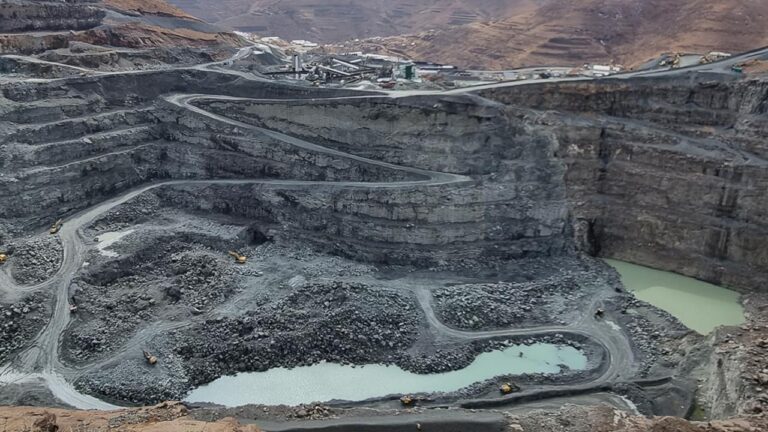
Lesotho’s exposure is no less acute, though its economy is smaller and its mines fewer. The kingdom’s diamond sector spans four main operations — Letšeng, Kao, Mothae and Liqhobong — all producing stones of exceptional size and quality from kimberlite pipes buried deep in the highlands. Letšeng is widely regarded as the highest-value diamond mine in the world by average dollar per carat. That premium positioning was supposed to insulate Lesotho from the worst of the commodity cycle. That insulation has proved thinner than anticipated.

Liqhobong, once a productive mid-tier operation financed partly by Absa South Africa, has been closed. Kao Mine, situated in the mountains of Botha Bothe district and one of the world’s leading producers of large and coloured diamonds, came within weeks of shutting down in October 2025 after its operator, Storm Mountain Diamonds, declared it needed R250 million in emergency capital to remain operational. The mine employs over 750 workers and injects roughly R1 billion annually into the local economy, 80 per cent of which flows directly to Basotho businesses and workers. If the mine were to enter care and maintenance, that economic contribution would fall below R100 million. Prices per carat fetched by Kao’s diamonds fell from between $340 and $400 to between $190 and $230 — a collapse of nearly half in just a few years.

Minister of Natural Resources Mohlomi Moleko confirmed that every mining company operating in the kingdom was struggling to move product. Sales had declined particularly sharply in Belgium, a traditional trading hub for rough stones from the region. He warned that some operations may be forced to suspend activity entirely. One mine had already begun transitioning to care and maintenance.

“We are hoping that we will continue with operations, but it is no secret that the mining industry countrywide has been experiencing market challenges wherein diamond prices are very low and that has put a lot of pressure on the mines in the country.”

The crisis carries particular weight in Lesotho because the mines are located in the highlands communities most removed from urban economic activity. In the Botha Bothe district, workers at Kao are largely drawn from nearby villages with few alternative livelihoods. A mine closure does not merely mean unemployment. It means the disappearance of the formal economy from entire mountain communities.

Storm Mountain Diamonds has framed part of its difficulty as a dispute with the Lesotho Revenue Authority over outstanding VAT refunds dating from April 2025. The company says it has sought relief within the existing legislative framework and has been met with silence. The government must balance its role as a 25 per cent shareholder in the mine against its obligations as a revenue collector — a structural tension inherent in resource-dependent states where the government is simultaneously regulator, partner and fiscal beneficiary of the same enterprise.

The broader industry is searching, with varying degrees of urgency, for a response. De Beers has reversed its earlier experiment with laboratory-grown jewellery under the Lightbox brand and refocused its entire marketing budget on promoting the differentiated value of natural stones: geological rarity, irreproducibility, provenance, and the romance of origin. There are tentative signs supporting this. De Beers raised prices for stones above five carats by more than five per cent at its February 2026 sight, as supplies in certain size categories tightened.

For Botswana, the government’s renegotiated 25-year partnership with De Beers, finalised in February 2025, represents an attempt to retain a greater share of the value chain even as total volumes decline. Under the revised terms, the state-owned Okavango Diamond Company will increase its allocation of rough production from 25 per cent to 50 per cent over the next decade. A new Diamonds for Development Fund, seeded with an initial one billion pula from De Beers, will finance diversification projects in agriculture, renewable energy and tourism.

For Lesotho, the path is narrower and the margin for policy error smaller. The kingdom has no equivalent sovereign wealth fund to draw upon, no commodity substitute of comparable scale waiting in the ground. Letšeng continues to produce rare, trophy-quality stones for which the global appetite among the very wealthiest collectors remains intact. That segment of the market — large coloured stones and extraordinary whites above 20 carats — is the one corner of the natural diamond trade demonstrably insulated from laboratory competition. Lesotho’s strategic interest lies in ensuring that its premium mines survive this downturn with infrastructure intact and marketing relationships preserved, so that they are positioned to benefit when broader market sentiment stabilises.

The diamond, as a cultural artefact and as an economic commodity, is not disappearing. What is disappearing is the unquestioned assumption that a mined stone and a laboratory stone inhabit the same market. They do not, and the divergence is now permanent. For Lesotho and Botswana, the task is to understand precisely which part of the remaining natural diamond market their stones can credibly occupy, and to govern accordingly. The era of passively collecting royalties from an industry that managed its own scarcity is over. What replaces it will require considerably more sophistication from both governments and miners.

Tshiamiso Trust move to scrap key medical certificates could shut thousands of Basotho miners out of compensation

0

Labour · Southern Africa

A campaign organisation representing former mineworkers has declared a proposed amendment to the Tshiamiso Trust deed unlawful, warning it would cut thousands of elderly and gravely ill Basotho miners and their widows off from the only compensation they were ever promised.

By Seipati Matobo · Maseru

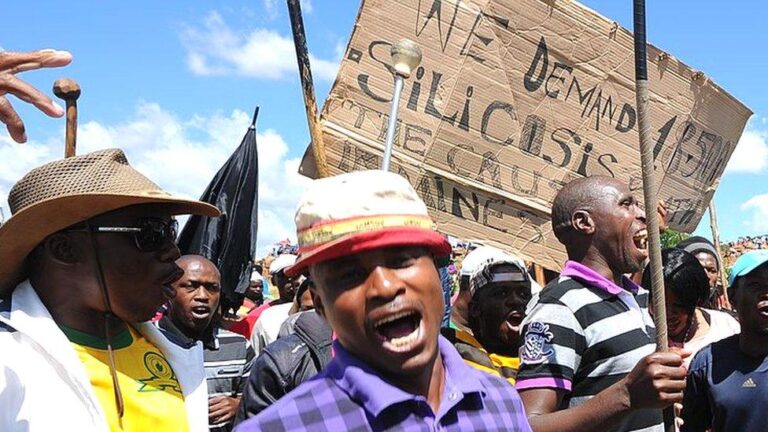
Thousands of former gold mineworkers face being stripped of their right to compensation under a proposed change to the Tshiamiso Trust, the legal settlement established by South Africa’s gold mining industry to pay out workers who contracted silicosis or tuberculosis underground.

The trustees of the Trust have quietly resolved to adopt Amendment No. 9 to the Trust Deed, which would remove the legal standing of Occupational Diseases in Mines and Works Act certificates, known as ODMWA certificates, as valid grounds for a compensation claim. The amendment requires approval from the Master of the South Gauteng High Court to take effect.

Justice for Miners (JFM), the campaign organisation representing the miners and their dependants, this week declared the proposed change unlawful, immoral, and a betrayal of the very purpose for which the Trust was created. It has written to Ms Beatrice Desiree van Wyk, Master of the South Gauteng High Court in Johannesburg, requesting that she reject the amendment and call the trustees to account.

“How can an MBOD certificate be good enough to end a man’s livelihood, to send him home to die, but not good enough to pay him what he is owed? This is not an administrative adjustment. It is a profound injustice dressed up as a procedural change.” — Bishop Jo Seoka, Chairperson, Justice for Miners

ODMWA certificates are statutory documents issued by the Medical Bureau for Occupational Diseases, a South African government body. They formally certify the presence of silicosis or tuberculosis in a miner. For decades, an ODMWA certificate was legally sufficient to have a miner declared unfit for work and retrenched, often returned to his home country with a disease in his lungs and no income. Under Amendment No. 9, that same certificate would no longer be sufficient to secure the compensation he was owed.

Many of the affected miners are Basotho citizens who migrated to work on South Africa’s gold mines and returned home with occupational diseases and little else. Their beneficiaries are among the most vulnerable people in Southern Africa, men who gave their lungs, and in many cases their lives, to an industry that generated enormous wealth while destroying their health.

For living claimants, the amendment would not merely change a procedure. It would construct a wall. Where an ODMWA certificate once served as sufficient, lawful proof of disease and entitlement, the change would force every living claimant to submit to a new Benefit Medical Examination, requiring them to travel, often over long distances, to designated examination centres.

For men who are elderly, seriously ill, and in many cases living in remote villages in Lesotho, Botswana, Malawi, Eswatini, Zimbabwe or Mozambique, this severely compromises their access to compensation. JFM further warns that Benefit Medical Examinations conducted under the Trust’s own framework have repeatedly produced findings that result in lower awards than what ODMWA certificates already certify, effectively reclassifying miners downward and paying them less than they are legally owed.

The ODMWA certificate was never a loophole. It was the floor. Amendment No. 9 removes that floor entirely.

The situation is, if anything, more catastrophic for the dependants of miners who have already died. A dead man cannot undergo a Benefit Medical Examination. He cannot present himself at a clinic or answer a call centre’s questions. The ODMWA certificate issued in his name is, in many cases, the only credible evidence that survives him: evidence that he was examined, certified, and found to have a qualifying disease. It is the document on which his widow’s entire claim depends.

Remove that certificate from the equation, and widows and dependants are left to reconstruct a medical history from scratch. They are expected to produce death certificates, mine medical records, and employment histories that are near impossible to find, particularly given the poor record keeping by mines and hospitals over decades. Death certificates alone are routinely rejected by the Trust if they do not conform to its specific requirements.

JFM’s legal position is that Amendment No. 9 is unlawful on its face. Section 20.2 of the Trust Deed explicitly prohibits any amendment that adversely affects the rights of eligible claimants, which is precisely what the proposed change does. The organisation has requested that the Master exercise her supervisory jurisdiction under the Trust Property Control Act 57 of 1988 to reject the amendment and, if appropriate, investigate potential maladministration of the Trust.

In parallel, JFM has formally appealed to the Ministers of Health, Mining, and compensation authorities in South Africa, Lesotho, Botswana, Mozambique, Malawi, and Eswatini to write to the Master of the High Court requesting rejection of the amendment. The organisation argues that a substantial proportion of the Trust’s beneficiaries are citizens of these countries, and that their governments have both a moral obligation and a direct interest in ensuring they receive the compensation they are owed.

JFM has requested in-person meetings with government officials in each of these countries to present its case and coordinate a joint intervention before the Master makes any decision on the amendment.

“The Tshiamiso Trust was established to make right a profound historical injustice. The men who built South Africa’s gold mining industry with their bodies deserve the compensation they were promised, not new bureaucratic obstacles designed to frustrate their claims.” — Bishop Jo Seoka

The Tshiamiso Trust was established following a class action settlement in the South African courts, agreed to by the major gold mining companies, to compensate workers who developed silicosis or tuberculosis as a direct result of underground work. Justice for Miners Campaign NPC represents mineworkers and their dependants who are beneficiaries of the Trust.

Lesotho Premier League Man of the Match prize too small, readers say — but half argue the real issue is respect

Sentiment Tracker — Lesotho Tribune
Maseru  ·  lesothotribune.co.ls  ·  Wednesday, 16 April 2026
Sport  ·  Sentiment Tracker

A recent award to a Lesotho Premier League player has reignited a long-running debate about whether sponsor-driven prizes reflect the true value of elite football performance, or whether they have become a reputational liability for the clubs and leagues that endorse them.

The latest Man of the Match award in the Lesotho Premier League has done what such awards occasionally do: it has made people angrier than the match itself. A sponsor-gifted prize, modest by almost any measure of professional football’s commercial scale, was handed to a standout performer this week and promptly set off a debate that has spread well beyond the stadium.

“`

The question at the centre of it is not new. Should a prize tied to a player’s peak performance in the world’s most watched football league be proportional to the league’s wealth and the player’s contribution? Or is the act of giving sufficient in itself, regardless of scale?

“`
Tribune Readers  ·  Live Sentiment
A recent Lesotho Premier League Man of the Match award has sparked debate. Some argue the prize is small for top-flight football, while the sponsor says the gift is voluntary and should not be questioned. Where do you stand?
19 votes recorded  ·  16 April 2026
“`
The prize is too small, players deserve better Leading
52% 10 votes
The issue is bigger than money, it’s about respect for players
25% 4 votes
A gift is a gift, sponsors owe no one more
20% 4 votes
Sponsors should align rewards with league standards
10% 2 votes
“`

Among Tribune readers, a majority lean towards the view that the prize undersells the player’s effort. The largest share of respondents, 52 percent, said the prize is too small and that players deserve better recognition for a standout performance in one of the most competitive leagues in the world.

“`

A quarter of respondents took the broader view, arguing that the issue runs deeper than money. For them, the discomfort with small prizes is a question of institutional respect, whether the league and its commercial partners treat players as ambassadors of the sport or simply as recipients of whatever gesture a sponsor chooses to make.

For a quarter of our readers, the issue is not the size of the prize. It is what a small prize says about how the sport values its best performers.

One in five readers took the opposing position, arguing that a voluntary gift carries no obligation of scale. On this view, sponsors are under no contractual or moral duty to match the financial profile of the league, and criticism of their generosity is misplaced.

The smallest share of opinion, one in ten readers, called for a structural solution: that sponsors operating at Lesotho Premier League level should be expected to align their rewards with the league’s commercial standing, setting a floor rather than leaving the value of recognition to individual discretion.

The debate reflects a wider tension in professional football between its commercial scale and the informal, often symbolic, culture of recognition that persists within it. As the Lesotho Premier League continues to generate revenues that dwarf most national economies, questions about what its awards, prizes, and gestures should communicate are unlikely to go away.

“`
Independent business & current affairs journalism · Lesotho Subscribe — M85/month
| Independent business & current affairs journalism · Lesotho