



Maseru
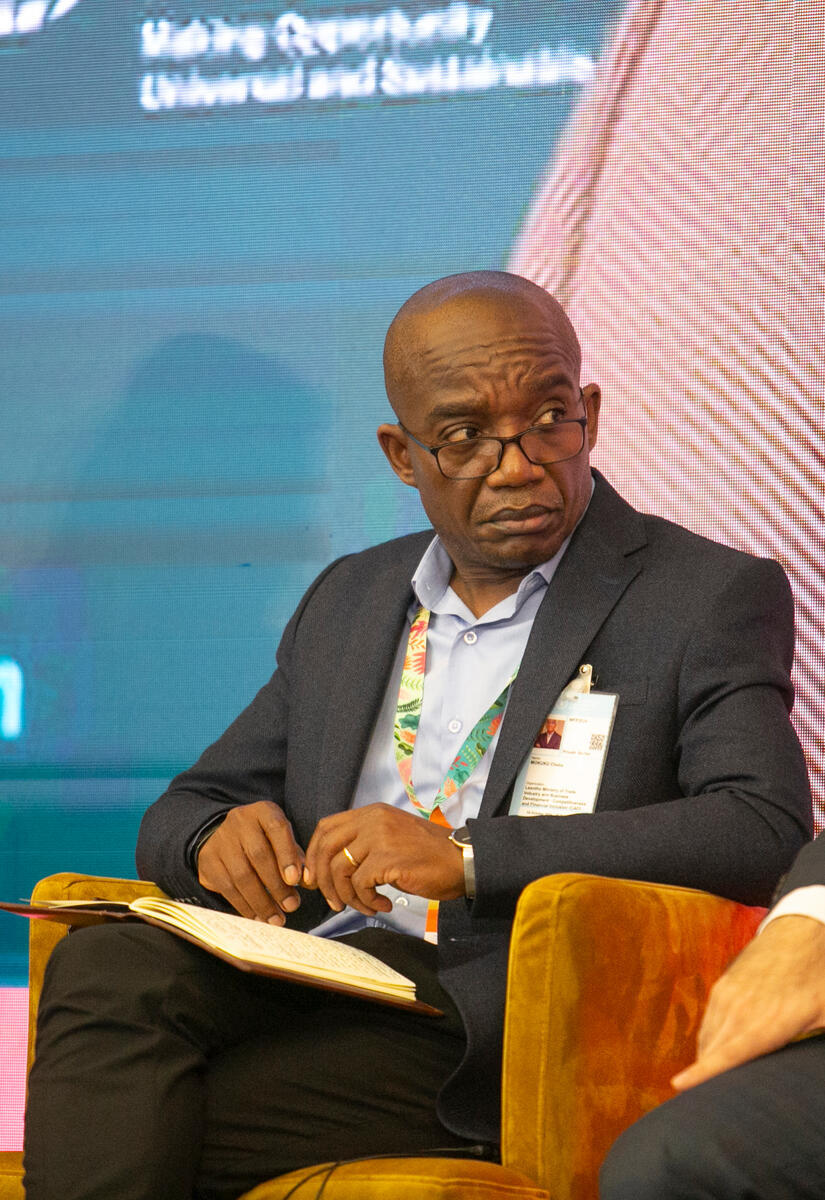
Under the vigilant management of Chaba Mokuku, the Competitiveness and Financial Inclusion (CAFI) Project has garnered praise not only for its project delivery but also for its financial management, a distinction highlighted by its consistent clean audit reports.
Launched in 2022, CAFI) still remains one of the few projects in the country responsibly managed while carrying out its task of entrepreneurial growth. This initiative of the government of Lesotho and the World Bank has marked a new chapter of success with this impeccable reputation and tangible impact on the country’s economic landscape.
Following a media workshop held by the Ministry of Trade, Industry and Business Development (MTIBD) in Maseru this week, the project is being celebrated not just for this milestone in its financial affairs but also for its developments and achievements.
The project was conceptualised during the COVID-19 pandemic to create a supportive environment for Basotho entrepreneurs to increase access to business support services and financial products for Micro, Small and Medium Enterprises (MSMEs), with a focus on women and youth but not leaving behind men.
This week’s workshop, therefore, provided a platform to reflect on the project’s achievements and underscored its role in Lesotho’s development.
’Mamoriti Phangoa, the Entrepreneurship Hub and Seed Financing Facility Manager of the project said as a public owned but privately managed project, the Hub which was launched in June 2023 to support women and youth through incubation, mentorship and access to finance in the manner to drive inclusive growth has incubated 150 enterprises in key sectors like manufacturing, ICT, tourism and textiles, creating 1 250 permanent and temporary jobs for Basotho.
These entrepreneurs, Phangoa noted, received customised assistance including business development, financial management and market access training, thanks to the dedicated business mentors who always pour out their dedication in the programme to ensure fruitful results.
According to the Horticulture Value Chain Manager NthakoSupu, CAFI also supports the growth of commercial horticulture farming, helping to build a thriving fruit industry in Lesotho including providing training and establishing a horticulture incubation hub and training centre.
It was noted that the project, in partnerships with various ministries, has been working to improve government-to-business systems for processes such as business registration and trade facilitation. On a lighter note, the project has successfully incubated the current online single window for business facilitation, migrating from the prototype of registering businesses to eRegistration, ensuring that Basotho, wherever they are in the country, can access business registration facilities without physically visiting the MTIB facilities.
In its early stages, this single window for trade facilitation had only connected the ministry’s One-stop Business Facilitation Centre (OBFC) for business licensing and the Revenue Services Lesotho for tax clearance certificates.
Lehlohonolo Mpholle, the project’s M&E Specialist, said they currently incorporate four more departments in their G2B Digital Services, connecting the department of livestock, marketing, agri-business and the dairy board.
The wish, according to Mpholle, is to connect six more agencies, including tourism, health, traffic and others, to bring the total number of connected agencies to 10 in just the year 2025.
To ensure the smooth running of these added services to the one-stop shop, the project in partnership has trained about 240 staff members to equip them with the necessary skills to use the new registration models; the single one-time processing, real-time processing and digital CPLs with QR codes.
It was also noted that the Minister of Trade, Mokhethi Shelilehad expressed his satisfaction with the growth and achievements he witnessed after conducting a site visit to some of the youth-owned businesses supported by CAFI.
As a financing mechanism, navigating a field filled with risks and business uncertainties, the project has taken extensive measures to integrate disaster risk financing activities to strengthen the financial resilience of MSMEs against any shocks that may arise in the journey. Up to this far, there had only been a total of 21 claims and all of them were responsibly resolved, no matter what was escalated to the ministry. This is evidence that CAFI strives to prove to be a very responsible project, vigilant and caring to Basotho.
The CAFI project’s transparency and responsible use of funds have set a high standard, demonstrating effective governance in development projects. With its conclusion nearing in a few years, the project continues to build a legacy of sustainable economic growth and opportunity for Lesotho’s entrepreneurs.