



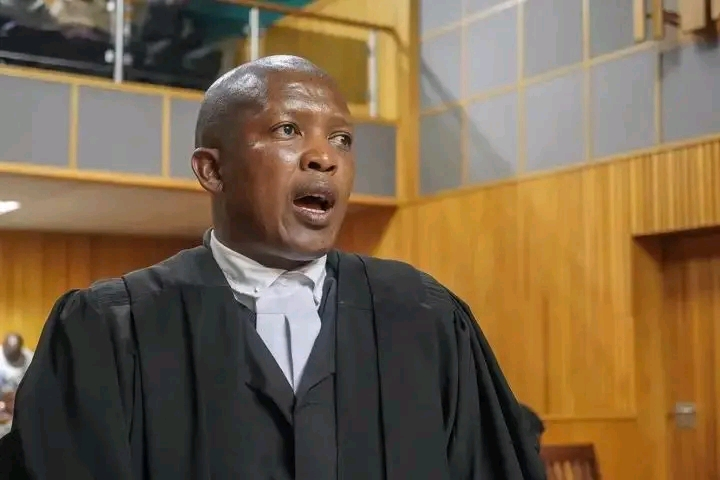
MASERU-Tensions flared in the High Court this week during the ongoing murder trial of former Lesotho Defence Force (LDF) Commander Lieutenant General Tlali Kamoli and eight other soldiers, as defence lawyers objected to testimony delivered by the widow of the late Lieutenant General Maaparankoe Mahao.
Advocate Letuka Molati, one of the defence lawyers, told the court that the testimony given by ‘Mamphanya Mahao amounted to “evidence of character”, a category of evidence he argued is inadmissible under the Law of Evidence. Mrs. Mahao had been called to the witness stand by the prosecution to provide insight into her late husband’s experiences within the army prior to his death.
According to Advocate Molati, her statements about alleged mistreatment of her husband by Kamoli and the hostility he reportedly faced from within the military were irrelevant to the core legal issue, whether or not the accused were involved in his murder. “This is character evidence, which is not allowed,” Molati told the court, adding that once Mrs. Mahao’s testimony concludes, he would formally request that her evidence be expunged from the record before cross-examination begins.
The objection arose after Mrs. Mahao shared deeply personal details about her husband’s military journey. She told the court that her late husband often confided in her about challenges he faced in the army, including persistent hatred from Kamoli. She recalled how Mahao once said that “some army members did not like him joining the LDF,” arguing that “there was no place for academics in the military.”
She also testified that her husband had described Kamoli as “a bully,” and mentioned an incident where, during a military parade, Kamoli allegedly told Mahao that he would not last in the army and would soon have to return to Speedy Complex, a statement implying that his time in the military was limited and unwelcome. While the defence dismissed the testimony as prejudicial and irrelevant, the prosecution disagreed.
Advocate Lehlohonolo Phooko, for the Crown, defended the admissibility of Mrs. Mahao’s statements, asserting that the testimony was not being used to establish character but to provide circumstantial context around the strained relationship between the deceased and some of the accused. “This is not hearsay,” Phooko emphasized. “It is circumstantial evidence relevant to what transpired. The truthfulness of the statements is not the issue, the relevance lies in the inference that can be drawn from the circumstances.”
He further argued that Mrs. Mahao’s testimony helped to establish a backdrop to the fatal operation, reinforcing the claim that the accused, all army members, had motive and intent, particularly given the alleged animosity harboured toward Mahao. The court has yet to make a formal ruling on whether the contested testimony will be retained in the official record. However, the development adds another layer of complexity to a case that has captivated national attention for nearly a decade.
As the trial continues, the emotional weight of testimony from Mahao’s family members is expected to play a key role in shaping public perception, and possibly, the eventual outcome of the case.