



Lesotho’s ideal microclimate, the high altitude, the good soil and abundant water put its farmers at a comparative advantage insofar as deciduous agricultural products are concerned.
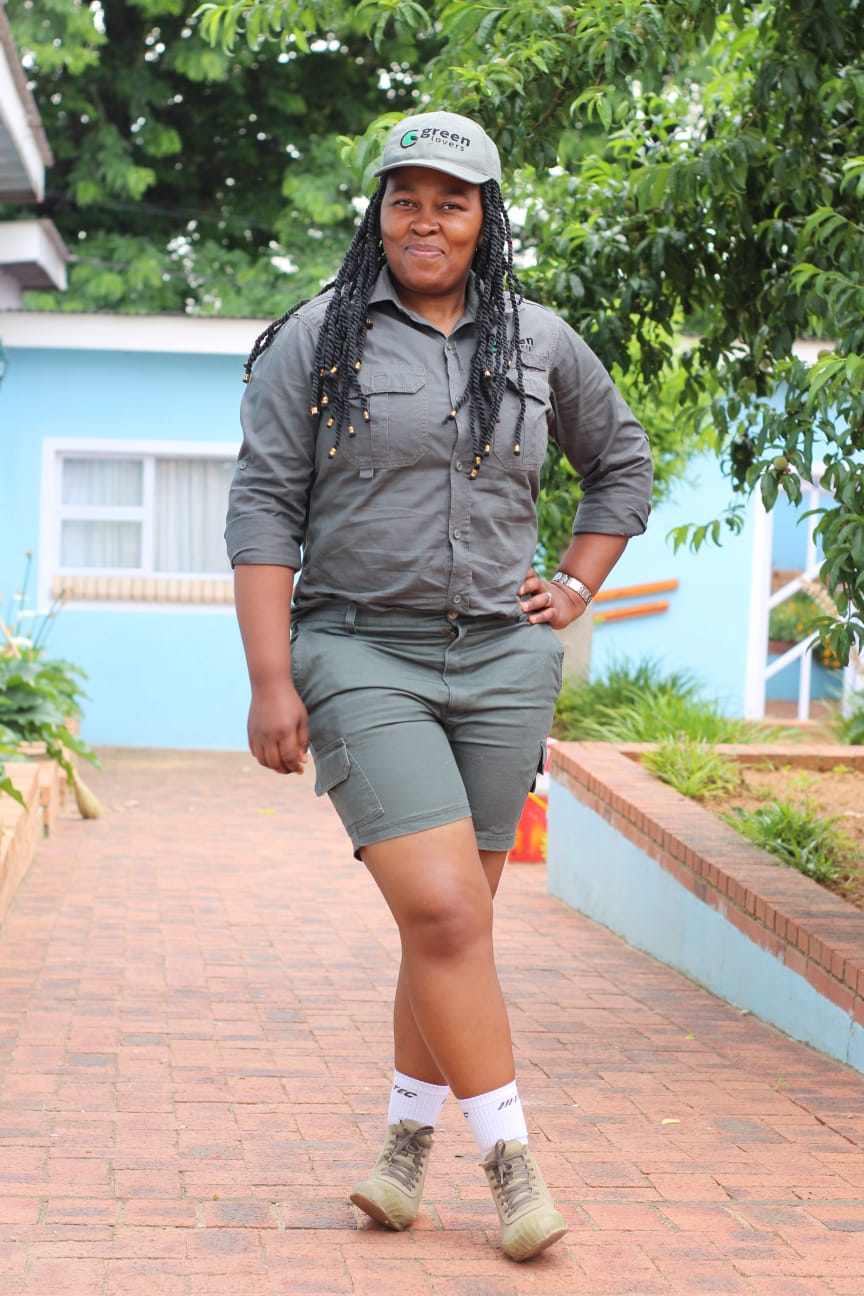
Amidst the efforts that the government of Lesotho in partnership with the Ministry of Agriculture and Food Security has put in place to expand and nurture, not just for fruit production sake but for farming in general, Green Lovers (PTY) Ltd, a farming business that specialises in growing vegetables for commercial purposes to supply businesses and individuals, has been said to be one of the leading and thriving agricultural businesses in Lesotho.
Lesotho Tribune reached out to the founder of the company, Malerato Lehano, to hear about how she got to where she is currently with her business, highlighting the challenges and successes in the struggling economy and the horrible climate challenges.

LT: Please tell us about Green Lovers (PTY) Ltd and you.
GL: I am a Limkokwing University of Creative Technology graduate and hold a Degree in Entrepreneurship. I founded Green Lovers (PTY) Ltd in 2019 and legally registered it under the Companies Act of 2011 as a private company in May 2020.
I got into the farming business after realising the hunger and poverty that were prevailing in the country, yet we have land. I was also eager to create a job for myself and for others.
At Green Lovers, we wish to grow vegetables in a perfect way to turn employees’ skills and knowledge into extra income. By the end of December 2026, we aim to serve the whole north region of Lesotho with our produce and expand our production by purchasing more land for production.
Moreover, we aim to play a major role in fighting food insecurity. People certainly need sustainable food.
We also aim to become the regional leading Agriculture Farm as well as a major player in the Agriculture sector and to produce on a very large scale to reach all levels and/ categories of people at a lower price.
I wish to see the Green Lovers branch in all the districts of Lesotho, still growing crops as well as processing our own products to minimise wastage, then selling them at affordable prices.
LT: As a farming business that produces for commercial purposes, how has business been in 2025?
GL: Business has been fairly well, except that in business, there are always ups and downs in different seasons, in that sometimes we may harvest more, and at other times we may go very low in comparison to our projections.
For instance, in January 2025, business was very good. We harvested more than our demand so much that we had to donate some of our produce to the needy freely and those who loved them. However, some products were spoiled since we didn’t have processing machinery to preserve our produce for longevity and availability; vegetable dehydrators and refrigerators to freeze our mixed vegetables as well as canning skills.
LT: How many local markets do you supply and how many international franchises? What marketing strategies do you use?
GL: We supply 15 local markets. So far we are still supplying one franchise. However, we had two more customers who asked us to supply them, but we declined the offer due to a lack of delivery transport from Leribe, Hlotse to Maseru.
We visit different businesses to market our business, what we are about, and what we wish to sell to them, and take it from there.
We also attend market show exhibitions and market days because every chance we get, we use it to sell ourselves. We organise buyer and seller meetings.
LT: What sets you apart from other farming businesses? What strategies do you use to grow your vegetables in a “perfect” way?
GL: Our products are unique, organic and of good quality with guaranteed long shelf-life. We practice the spraying programme. We implemented a systematic feedback system from our customers, plus we offer free deliveries to local markets within a radius of 10km.
LT: Please tell us about your milestones, achievements and challenges.
GL: At first, Green Lovers was growing its crops in an open space, as a result, our harvesting was very depressing, not promising at all, although my passion was and is still burning me.

And so during heavy rains, snow and hail, we faced a huge problem.
In addition to not having enough water to irrigate our crops, we also did not have a storeroom to keep our equipment or packaging rooms to take in our harvest before classifying them according to their sizes.
We worked as a husband and wife for about a year because we did not have any other options (getting extra labourers) due to lack of funds- capital- because we had just bought land with the little we had saved over the years.
We now have three permanent employees, and from time to time, we employ temporary staff of five to eight people during sowing and harvesting seasons.
LT: I believe climate change is one of the biggest challenges. How are you tackling this? What preparation measures have you put in place to safeguard business in case the situation doesn’t subside in the future?
GL: Like I mentioned earlier, our work has improved. Climate change does not bother us anymore. During dry seasons, we continue with our business as if nothing had happened because we now have a borehole. In adverse climates, when people can’t produce, for us this is not much of a challenge. We sow throughout the year; it’s a nonstop farming with us lately.
Green Lovers is currently using 3479m2 of land for its farming purposes. For the company, harvesting outcomes differ according to seasons: summer seasons are better than winter seasons.
The company’s projections say that when 3,000 cabbage heads had been sown, sold at M10.00 per head, there is a high chance of M35,350 returns in sales if harvesting were a 100 percent success.
Likewise, if 4,000 pepper heads had been sown, sold at M3.00 per pepper, successful harvesting promises 100 percent returns in sales. Therefore, summer means more sowing and successful harvesting for the company.
LT: What advice do you have for farmers?
GL: Farming requires passion. Do not let illusions of the high projections of the large sums of money calculated in farming make you believe you can achieve all that and it will be easy. It is not. To succeed in the business, you only need passion because sometimes, as a result of climate change, you’ll find that you harvest close to nothing after spending all your money or incurring debt, a situation that may discourage you.
One thing farmers need to know is that money made from sales cannot all go towards savings or spending outside the business; a huge amount of this money is supposed to go towards improving their business to grow. It is all up to you to take your business to the heights only you wish to see it at.
Self-employed farmers like us need to put in the work to win the race. They should also take advantage of markets or exhibitions, which will help them grow as farmers, and the projections will be visible in their businesses.