


Maseru
A new study by the Institute for Human Rights and Development in Africa (IHRDA) has revealed critical gaps in the integration of children’s rights into National Action Plans (NAPs) on Business and Human Rights (BHRs) across the African continent, assessing the extent to which African nations are addressing the unique vulnerabilities of children within their business and human rights frameworks.
Despite children comprising nearly half of Africa’s population, studies found that their rights are often overlooked in business and human rights frameworks, reflecting a systemic exclusion.
It has been said that the intersection of business and children’s welfare is a pressing issue, with economic expansion driven by extractive industries and global trade significantly impacting children’s lives.
However, only five African countries, including Kenya and Uganda, have developed NAPs on Business and Human Rights, with minimal provisions specifically addressing child protection.
It was also revealed that Africa faces significant hurdles, including widespread child labour estimated at 92 million children, a dominant informal economy, risks in agriculture and mining, corruption, illicit financial flows (US$80 billion annually) and weak enforcement of existing laws.
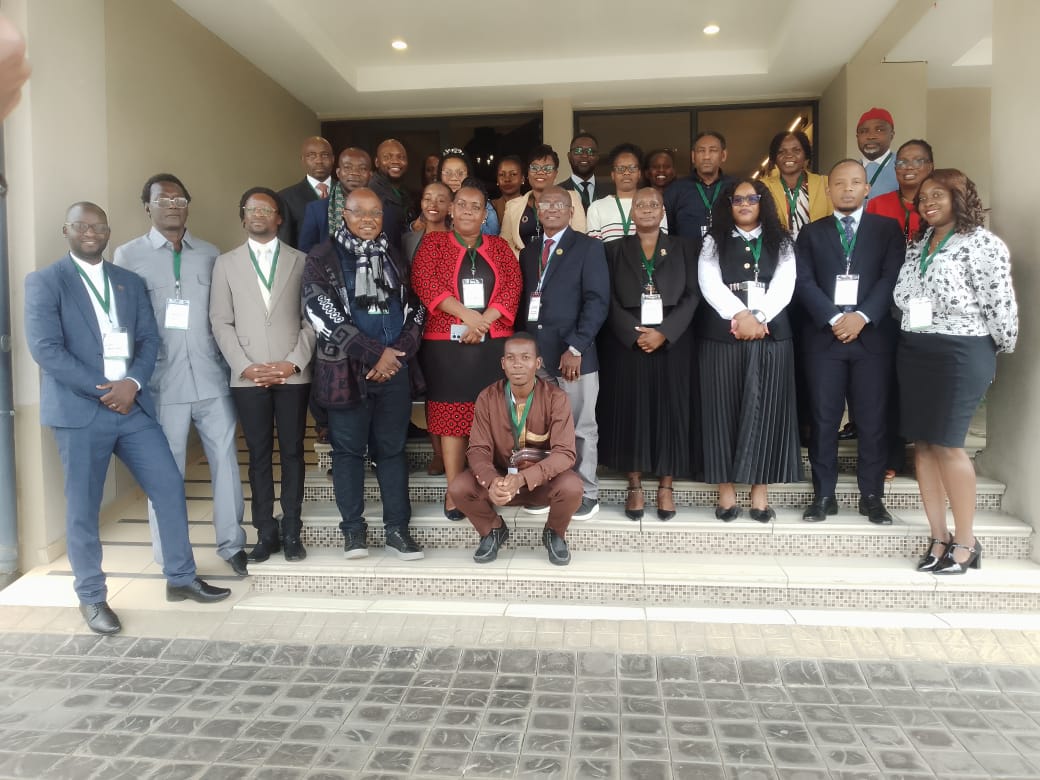
Speaking at a two-day meeting on human rights held in Maseru this week, Dr Musa Kika, the Executive Director of IHRDA, said it has become a common occurrence in Africa for children’s consumer rights to be violated, revealing that Africa registers some of the highest statistics in child labour.
“In Africa, we have an undeveloped normative framework of protecting children in the context of businesses. And this is a broader problem because we do not have a binding normative framework around business and human rights,” Kika said.
What is available to respond to the problem, Kika said, is a UN guiding principle and the guidelines of BHR.
“But its implementations remain a big problem. We do have national legislation across our 55 African states,” he said, highlighting gaps in labour and environmental regulations and consumer protection as some of the domains where implementation processes remain a big problem.
The meeting therefore served as the first step towards changing the situation by looking at how children’s rights can be protected.
Honourable Joseph Sunday Sinnah, an Expert Member from the Group on Business and Children’s Rights, commended IHRDA on this effort which he said not only shows intention but also prioritises inclusion.
“Across the continent, business operations shape children’s lives in countless ways, from labour markets, land use decisions to digital platforms, environmental practices and supply chains. Yet, too often, children are either mentioned only in passing or omitted entirely from the frameworks that regulate business conduct.”
He said the study, therefore, paints a clear picture of the extent to which national action plans on businesses and human rights integrate children’s rights and where the gaps are.
The study’s findings resonate with the committee’s study on children’s rights and business adopted in 1973, which, among other things, examined the treatment of children’s rights within national action plans.
It was concluded that AU member states need national action plans with clear expectations, measurable commitments, detailed implementation pathways, periodic reviews and adequate funding for without such investments, even the most promising commitments will remain unfulfilled
Human rights institutions, child protection agencies and the courts also need to be equipped with resources to enforce standards that shield children from business operations.
It can therefore be concluded that the meeting was not just an opportunity to discuss findings but an opportunity to strengthen collaboration, discuss challenges that remain, examine state obligations, corporate responsibilities, track progress and design practical solutions.
In addition to the recommendations, it was said that countries need to align their laws with international standards, criminalising all forms of child exploitation and explicitly integrating child rights into the NAP on Business and Human Rights and lastly implement mandatory child-protection codes of conduct for high-risk industries such as tourism, agriculture, transport and mining.
Businesses, on the other hand, were advised to adopt Child-Rights Policies, aligning them with the UN Guiding Principles, Children’s Rights and Business Principles, and ILO standards. They also need to ensure human rights due diligence and oversight of third-party recruiters and incorporate child protection through no-child-labour clauses.
Amidst all presented challenges, businesses have immense potential to advance children’s well-being, yet, far too often, their activities expose children to exploitation, hazardous labour, environmental degradation, displacement and digital harms.
African States Urged to Strengthen Child Protection Laws in Business Practices


RELATED ARTICLES