



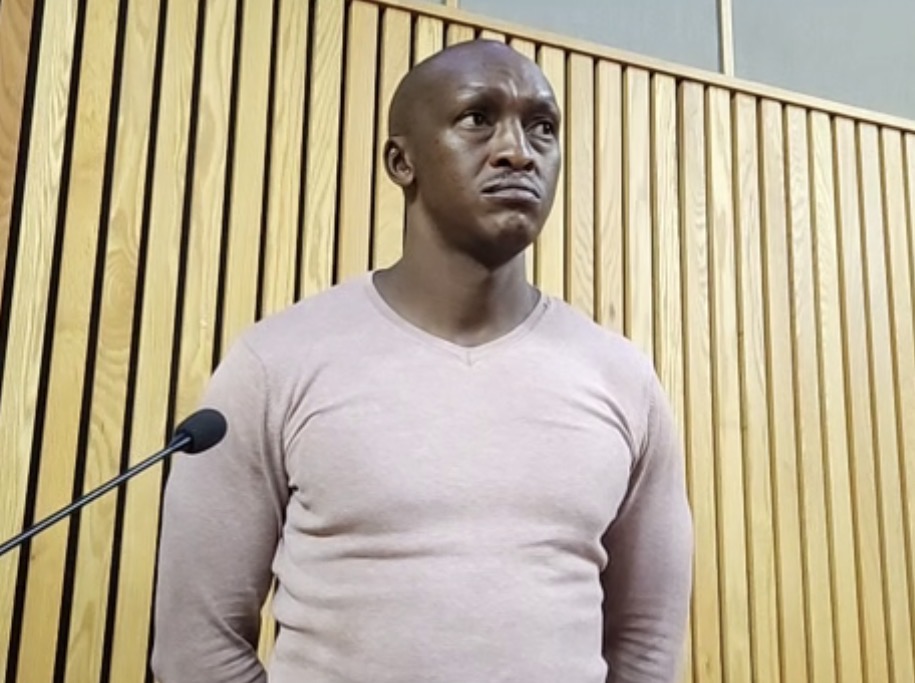
MASERU- A soldier testifying in the Mahao murder trial has told the High Court that an army informant once admitted to him that he was part of a secret plan to carry out a mutiny in 2015, which included plots to kill senior army officers.
Corporal Molise Molieleng, who is appearing as the second defence witness, made the revelations while giving evidence before Justice Charles Hungwe. Molieleng is a member of the Lesotho Defence Force Special Forces Unit and was also a personal bodyguard to Brigadier Mokaloba.
He told the court that an informant, who is also a member of the army and whose identity he asked the court to keep secret for safety reasons, approached him with disturbing information. According to Molieleng, the informant said he was part of a conspiracy within the army to commit mutiny.
Molieleng testified that the informant told him there was a plan to assassinate Brigadier Mokaloba, Captain Hashatsi, and other members of the top army command. He said the informant explained that the first target was Brigadier Mokaloba.
“The informant told me that there was a plan to ambush Brigadier Mokaloba’s vehicle near the military hospital,” Molieleng said. “He said this would happen as the Brigadier was driving to his house inside Makoanyane Barracks.”
The witness explained that the informant went into detail about how the attack was supposed to be carried out. He told the court that the informant said two separate teams had been organised for the mission.
According to Molieleng, the first team was supposed to open fire on Brigadier Mokaloba’s vehicle near the military hospital. If that team failed to kill him, a second group would be waiting in a nearby village to “finish the job.”
Molieleng told the court that he took the information very seriously because of his close working relationship with Brigadier Mokaloba and the seriousness of the alleged plot.
He said that after hearing the story, he tried to find Lieutenant Hlehlisi and Captain Hashatsi so that he could share the information with them. While searching for them, he met three of his colleagues. He then arranged for the informant to repeat the same story in their presence.
“The informant explained everything again in front of my colleagues,” Molieleng said. “He told them about the plan, the targets, and how the ambush was supposed to be carried out.”
He testified that after hearing this, the four soldiers, he and the three colleagues decided that the information was too serious to keep to themselves. They agreed that it had to be reported to their superiors immediately.
However, the informant refused to go with them. Molieleng told the court that the informant begged to be excused, saying that if he was seen in their company, the people behind the conspiracy might suspect him and kill him.
“He said his life would be in danger if he was seen with us,” Molieleng explained. “He feared the conspirators would kill him if they thought he had exposed them.”
The four soldiers then went to Captain Hashatsi’s house because they could not reach him by phone. When they arrived, they informed him of what they had been told.
Molieleng said Captain Hashatsi immediately contacted his superiors. Shortly afterward, Major Lekhooa and Captain Sechele arrived to hear the information for themselves.
The witness testified that when they explained the alleged plot, Major Lekhooa did not seem fully convinced. Because of this, Molieleng said he was instructed to go and fetch the informant so that he could personally confirm the story.
“I was asked to bring the informant so that he could repeat what he had told us,” Molieleng said. “Major Lekhooa wanted to hear it directly from him.”
Molieleng did not, at that stage, explain to the court what happened next regarding the informant, but his testimony formed part of the defence’s effort to show that there were serious mutiny threats within the army at the time.
The evidence comes in the long-running trial in which nine members of the Lesotho Defence Force, including retired army commander Lieutenant General Tlali Kamoli, are charged with the murder of Maaparankoe Mahao.
Mahao, who was also a former army commander, was shot and killed on June 25, 2015, at Ha Lekete in Mokema. The accused are alleged to have carried out the killing during an operation that the army said was aimed at arresting suspected mutineers.
Apart from murder, the accused are also facing other serious charges linked to the same events, including attempted murder, theft, and unlawful damage to property.
Molieleng’s testimony is part of the defence case, which is attempting to paint a picture of an army under threat from internal plots and conspiracies at the time of Mahao’s death.
The trial continues before Justice Charles Hungwe, who is expected to hear more witnesses as both the defence and prosecution seek to support their versions of what led to the fatal events of June 2015.