



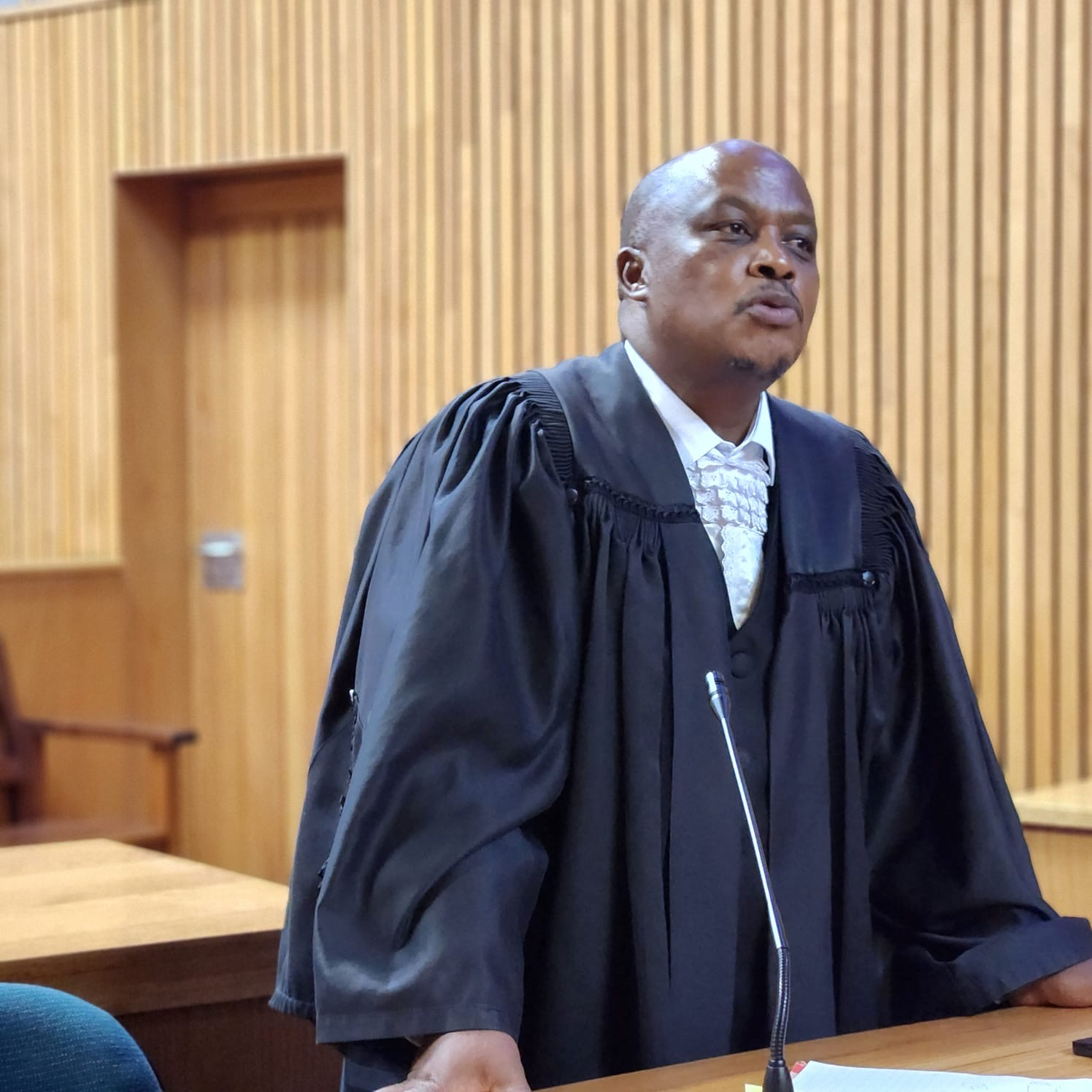
Courts · Maseru
A retired military officer told the High Court that Lieutenant General Maaparankoe Mahao was still alive and conscious when he reached Makoanyane Military Hospital, repeatedly asking for help as medical staff fought to save him.
Retired Major ‘Mamatela Hokinyana has told the High Court that the late Lieutenant General Maaparankoe Mahao was still alive when he arrived at Makoanyane Military Hospital after being shot on 25 June 2015.
Giving evidence as a defence witness in the long-running murder trial involving retired army commander Lieutenant General Tlali Kamoli and several co-accused, Major Hokinyana described a wounded man who was conscious, struggling to breathe and repeatedly asking for help.
Her testimony offered a detailed account of the efforts made by medical personnel to save Mahao’s life after he was brought to the military hospital following the shooting at Ha Lekete in Mokema.
Major Hokinyana said she was at the hospital when she went in search of paramedics and noticed a white vehicle parked in the ambulance area. As she approached, the vehicle’s window opened, allowing her to see Mahao inside. She immediately asked what was happening and noticed he appeared to be in distress.
“He was breathing with difficulty.”
She testified that moments later Mahao forcefully opened the vehicle door and stepped out. Despite his condition, he appeared determined to stand on his own. He leaned against the vehicle and she moved to support him. Concerned, she asked what was wrong.
His response was simple but urgent. “He asked for help,” she testified.
The witness described how one of Mahao’s arms appeared to be injured and was showing signs of involuntary movement. She attempted to support him around the waist as he struggled to maintain his balance. Mahao resisted assistance and briefly pulled away. “He eventually went free, but I managed to hold him again,” she told the court. As his condition worsened, he again pleaded for assistance.
Major Hokinyana said she reassured him that help had arrived and that medical personnel were attending to him. Soon afterwards, the Director Medical Services and Private Sechele arrived with a trolley. Working together, they placed Mahao on the trolley and rushed him into the emergency treatment room.
Inside the emergency unit
Doctors and paramedics immediately began efforts to save his life. Major Hokinyana told the court the medical team worked urgently to stabilise the wounded soldier, but the seriousness of his injuries quickly became apparent. One difficulty, she said, was locating a vein through which treatment could be administered.
“The efforts by paramedics to locate a vein failed,” she testified. Despite the challenges, the team continued working on him.
Major Hokinyana joined other personnel in trying to identify the extent of Mahao’s injuries. She explained that they carefully cut away a jersey he was wearing to expose the wounds, a process carried out cautiously to avoid causing further injury. Once the injuries were visible, the team attempted to stop the bleeding. The wounds on his chest and arm were dressed while efforts to revive him continued. The doctors worked tirelessly but were ultimately unable to save him.
At approximately 15:54, the medical team ceased resuscitation efforts. Major Hokinyana said the doctors and the Director Medical Services who had been attending to Mahao officially pronounced him dead. She recalled looking at Mahao and noticing that his eyes remained open but were no longer blinking.
“I then closed them,” she told the court.
Even after his death was confirmed, medical personnel continued examining his injuries. Major Hokinyana testified that they turned the body and discovered an open exit wound in the centre of his back, along the spine. She said blood was still flowing from the wound. Medical staff then applied gauze and adhesive bandages in an effort to contain the bleeding and prepare the body.
The witness also addressed what happened to some of the blood-soaked materials used during treatment, a matter that has featured prominently during proceedings. She told the court that linen heavily stained with blood was removed from the treatment area. Some items were placed in plastic bags while others were soaked in water to wash away the blood. The deceased’s clothing was also cleaned.
Major Hokinyana insisted these actions were not intended to interfere with future investigations. The primary concern, she explained, was maintaining hygiene within the hospital environment. She firmly denied that the washing of the items was done to conceal evidence or frustrate police inquiries.
“The aim was not to defeat police investigations but to ensure hygiene.”
Retired Lieutenant General Tlali Kamoli and several other accused are facing charges arising from the death of Mahao, who was shot at Ha Lekete in Mokema on 25 June 2015. The accused are alleged to have intentionally shot and killed the former army commander. In addition to murder, they face counts of attempted murder, theft and unlawful damage to property.
The prosecution maintains that Mahao’s death resulted from a deliberate operation, while the defence has sought to challenge aspects of the state’s case through witness testimony and evidence presented before the court. For more than a decade, the circumstances surrounding the death have remained a subject of national debate, drawing significant public interest and international attention.
Major Hokinyana’s evidence presented a picture of a man who was still alive on arrival at the hospital, conscious enough to communicate and repeatedly ask for assistance as medical personnel fought unsuccessfully to save him. The trial continues before Justice Charles Hungwe.
By Tholoana Lesenya · Lesotho Tribune