



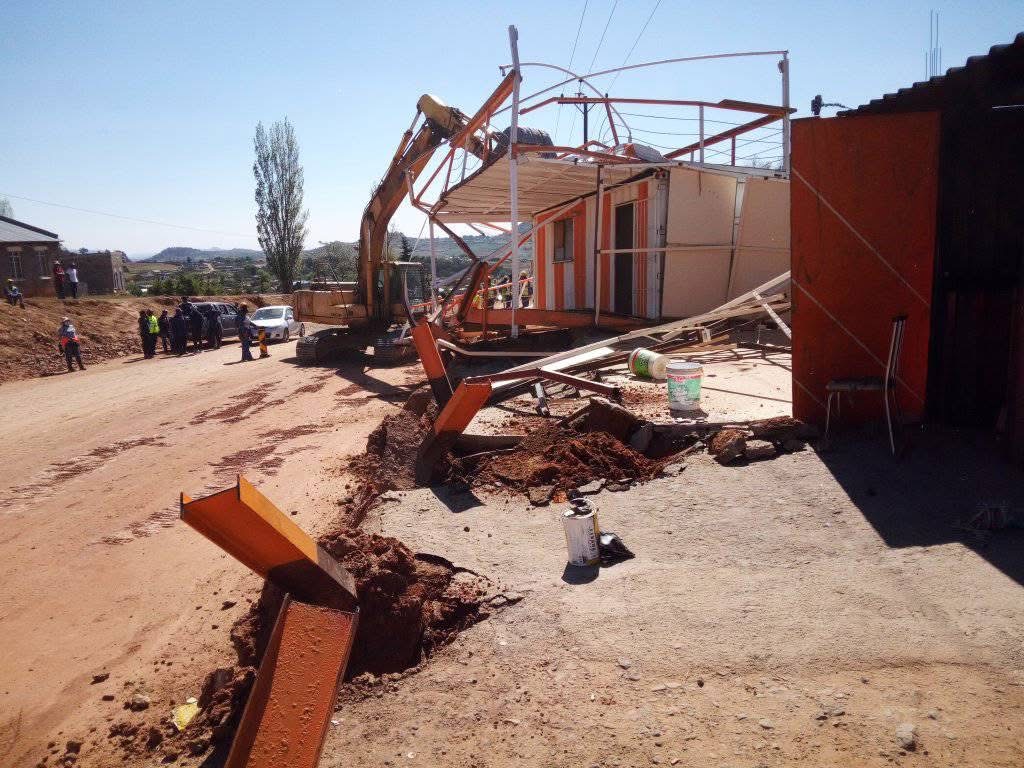
Roma – In the early hours of Friday morning, government bulldozers tore through shacks and stalls of street vendors along the A5 road near the National University of Lesotho (NUL), leaving behind a trail of destruction and despair. The Roads Directorate, backed by police, moved in around 3am to demolish structures stretching from Ha-Sekauti to the Roma Police Station junction.
Officials say the action was necessary because vendors had illegally occupied the road reserve, turning it into what government described as an “eyesore.” Police officers stood guard during the demolitions, ensuring that the operation proceeded without interruption.
Vendors Fight Back in Court
The Roma Street Vendors Association had been locked in a legal fight with the state over their removal. Through their lawyer, Advocate Thembu Lesupi, they had taken the Maseru District Administrator (DA), Mr. Lethobane, to court after he allegedly reneged on promises to relocate them to an alternative trading site.
On September 16, Justice Maseru ruled against the vendors, relying on a South African precedent where roadside traders were moved to allow road development. But the association immediately filed an appeal, arguing that the judgement was unjust because their livelihoods depended on the stalls.
Advocate Lesupi said the forceful removal was unlawful since the case was still before the Court of Appeal. He accused authorities of acting in bad faith, noting that the Registrar of the Appeal Court had yet to provide clarity from senior judges.
Broken Promises and Broken Lives
Vendors were particularly angered because the DA’s office had, only hours before, renewed assurances that relocation would happen before any destruction. Instead, excavators rolled in under cover of darkness.
Some stalls that had been dismantled and placed in nearby yards were also destroyed. “They did not just clear the road reserve, they targeted everything,” one vendor told Lesotho Tribune.
Human Cost of the Demolition
For many, the demolitions were more than the loss of structures, it was the collapse of livelihoods. Mr. Shampene Mehlala, one of the hardest hit, said:
• He had employed over 10 workers.
• He made roughly M10,000 per day in sales.
• He had invested more than M100,000 into his business.
“We were only told last evening to remove our businesses, but by the time we woke up, the excavators were already here,” he said, visibly shaken.
What Next for Roma?
The destruction has sparked outrage in the community, with calls for accountability and questions over whether the state acted with disregard for due process. For vendors, the battle is far from over. Their appeal is still pending, but with their stalls in ruins, their economic survival now hangs in the balance.