



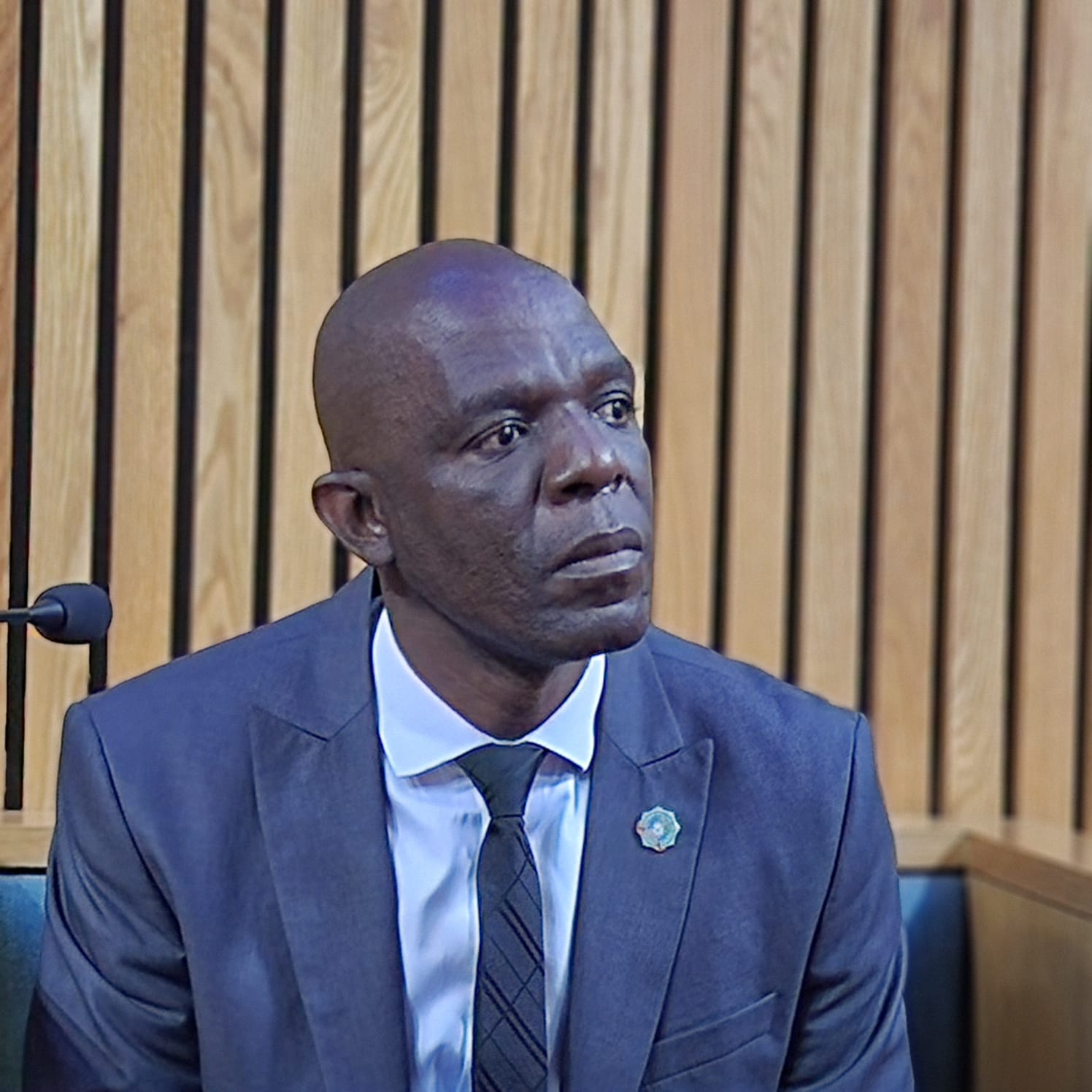
Lesotho’s High Court has heard testimony in the ongoing bombing trial of former army commander Tlali Kamoli and his co-accused, as a firearm believed to be linked to the 2014 Maseru explosions was introduced as a court exhibit.
The case, Rex vs Kamoli and 4 Others, centres on a series of explosions that struck Maseru in 2014 during a period of acute political unrest and instability in the country.
Deputy Commissioner of Police Sera Makharilele took the stand this week, giving detailed evidence on how police responded to the blasts on the day they occurred. He told the court that officers were alerted to multiple explosions at two locations in Maseru, Moshoeshoe 2 and Ha-Abia.
Makharilele testified that upon arrival at the scenes, police found evidence of the explosions and began gathering information while ensuring public safety. He told the court that investigations led them to identify Nyakane and Seitlheko as having taken part in the bombing at Moshoeshoe 2, while the late Hashatsi and Heqoa were said to have been involved in the bombing at Ha-Abia.
As part of his testimony, the court was shown a firearm introduced as an exhibit. The weapon drew visible attention in the courtroom and was presented as part of the physical evidence collected during investigations into the bombings.
Investigators have previously indicated that materials linked to explosive devices were recovered and analysed as part of the process of establishing what type of weapons or devices were used. The introduction of the firearm added another dimension to the proceedings.
“Physical evidence, especially weapons, often has a strong impact in court. It allows the judge to directly assess items said to be connected to the alleged crimes.”
Legal observers · Rex vs Kamoli and 4 Others
The defence is expected to scrutinise how the weapon was obtained, handled, and linked to the accused. In criminal trials, exhibits such as firearms are often central to proceedings, as they can either strengthen the prosecution’s argument or raise questions if their connection to the accused remains unclear.
Kamoli and his co-accused have maintained their innocence throughout the proceedings. The defence has consistently denied any involvement in the bombings and is expected to challenge both the credibility of witnesses and the reliability of the evidence presented.
The trial forms part of wider efforts to address serious crimes linked to Lesotho’s past instability, particularly within the security sector. The 2014 bombings remain one of the most consequential incidents from that period.
The outcome of the case is expected to have lasting implications for accountability in Lesotho’s security institutions, and the trial continues to draw significant public attention.