


South Africa’s highest court of appeal has thrown out a €50 million enforcement order against Lesotho while leaving the kingdom with no legal route to escape the underlying arbitration award — exposing a solar energy deal that a Lesotho court has already declared unconstitutional, void, and the product of a minister acting on a frolic of his own.
The Supreme Court of Appeal, in a split judgment handed down in Bloemfontein on 22 May 2026, ruled in Kingdom of Lesotho v Frazer Solar GmbH and Others (Case 438/2024) that an enforcement order made in the Kingdom’s absence by the Gauteng High Court in April 2021 must be rescinded. But the same bench refused to set aside the underlying arbitral award, finding that Lesotho had missed the three-month window to challenge it and had no constitutional remedy to reopen that window.
The result is a legal paradox that leaves both parties in limbo: Lesotho cannot be forced to pay under the South African enforcement order, but the €50 million arbitration award against it remains alive and enforceable in any other jurisdiction that is party to the New York Convention on the Recognition and Enforcement of Foreign Arbitral Awards.
“The agreement was concluded without an open tendering process… compliance with the procurement process is paramount for efficiency, transparency and overall value for money.” — Mokgohloa and Smith JJA
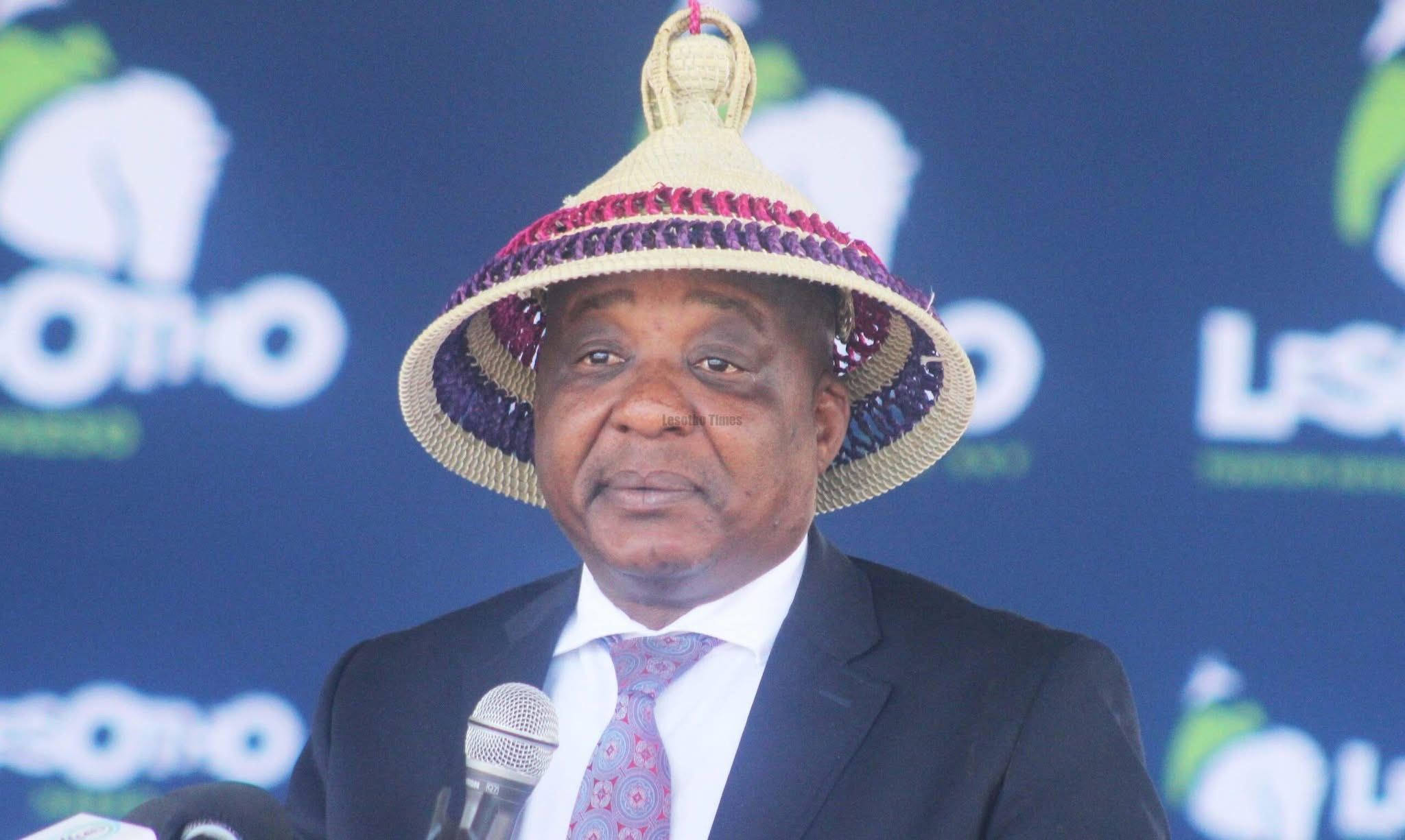
The case traces back to September 2018, when Minister Temeki Tšolo, then serving in the Office of the Prime Minister, signed a supply agreement with German renewable energy company Frazer Solar GmbH for a project valued at up to €100 million. The deal was struck without Cabinet approval, without the sign-off of the Minister of Finance, without open tender, and in breach of Lesotho’s Public Financial Management and Accountability Act.
Frazer Solar subsequently initiated arbitration in Johannesburg after the project stalled. An arbitral award of approximately €50 million was issued in its favour in January 2020. When Lesotho failed to appear at enforcement proceedings, the Gauteng High Court made the award an order of court in April 2021. It was only when writs of execution were issued, attaching Lesotho’s assets in South Africa and other jurisdictions, that the kingdom moved to fight back.
A minister acting alone — and a kingdom that looked away
The majority judgment by Justices Mokgohloa and Smith, with whom Justices Koen and Steyn concurred, accepted Lesotho’s explanation that notices of the enforcement proceedings were intercepted and concealed by government officials. The Directorate on Corruption and Economic Offences had confirmed in a preliminary report that “there is a clear case of corruption and fraud perpetrated against the Government by some Government officials working in collaboration with other individuals from abroad.”
Minister Tšolo was subsequently charged with fraud and corruption and a commission of enquiry was established. In November 2022, the Lesotho High Court found he had no authority to sign the supply agreement, declared it unconstitutional and void ab initio, and set it aside.
The SCA majority found Lesotho had established a credible defence: the supply agreement had been concluded in breach of procurement regulations; clause 9 of the agreement gave Frazer Solar the unilateral right to determine pricing and quantities with no approval process for the kingdom; and the Minister of Finance had neither approved the borrowing nor signed the loan documentation as required by law.
On those grounds, the enforcement order was rescinded. Lesotho will now have the opportunity to oppose enforcement on the merits — including by arguing that the agreement was void and that the arbitration clause contained within it cannot survive.
The time bar: a door that cannot be reopened
The harder blow came on the separate question of whether the arbitral award itself could be set aside under article 34 of the UNCITRAL Model Law on International Commercial Arbitration, as domesticated by South Africa’s International Arbitration Act 15 of 2017.
That provision requires any application to set aside an award to be brought within three months of receipt. Lesotho missed that window by years. The majority found that the three-month limit is absolute, peremptory, and admits no general power of condonation. South Africa’s legislature had deliberately chosen to allow only one narrow exception — for awards obtained through fraud or corruption — and had rejected broader extension powers precisely to maintain uniformity with international arbitration practice.
Lesotho’s argument that the three-month bar was an unconstitutional limitation on the right of access to courts was dismissed. The majority held that parties who choose international arbitration voluntarily accept its strictures, that the grounds for challenging an award are exhausted at the point of delivery, and that a three-month window is generous. Importing an open-ended discretion, the court found, would undermine South Africa’s attractiveness as a seat for international arbitration.
In a dissenting third judgment, SCA President Molemela, with whom Justice Makgoka concurred, would have gone further. She found that the fraud tainting the underlying agreement also vitiated the arbitration clause itself — applying the principle that “fraud unravels everything” — and that the three-month period, properly interpreted in light of article 34(5) of the IA Act, did not run in circumstances where the concealment of documents had prevented Lesotho from knowing the facts constituting fraud or corruption in time.
President Molemela would have set aside both the enforcement order and the arbitral award.
The second judgment: Lesotho should have fought earlier
Acting Justice Modiba, writing alone in the second judgment, dissented on the rescission. She found Lesotho had been in wilful default throughout: the enforcement notices had been properly served on the Ministry of Foreign Affairs under the Foreign States Immunities Act, senior officials including the then Prime Minister had personally received CaseLines invitations, and the failure to respond was a product of institutional dysfunction rather than concealment. In her view, the kingdom was not entitled to relitigate what it had elected not to contest in time.
The effect of the three judgments — with Mokgohloa, Smith, Koen, and Steyn in the majority on rescission; all seven judges dismissing the bid to set aside the award; and Molemela and Makgoka dissenting on the award question — is a 4-3 split on the most consequential issue: whether a fraud-tainted arbitration clause can survive the invalidity of the contract in which it was embedded.
What comes next
The practical effect of Thursday’s ruling is that the 2021 enforcement order is cancelled. Lesotho must now oppose a fresh enforcement application before the Gauteng High Court on the grounds set out in article 36 of the Model Law — including the incapacity of Minister Tšolo to bind the kingdom and the alleged invalidity of the arbitration agreement.
The SCA explicitly declined to rule on the weight to be given to the Lesotho High Court’s 2022 judgment, which declared the supply agreement void, leaving that question to the court hearing the renewed enforcement application. Frazer Solar, which has never delivered any products or services to Lesotho under the agreement, retains its award and the right to pursue enforcement in other jurisdictions.
The case has drawn attention across Southern Africa to the risks facing sovereign governments that allow ministers to sign agreements without Cabinet authority, and to the severe procedural consequences of failing to engage with international arbitration processes even when internal documents appear to have been concealed.
For Lesotho, the litigation is far from over. For the people of the kingdom, the bill — if enforcement ultimately succeeds — runs to tens of billions of maloti.
The full judgment is available at [2026] ZASCA 75.