


Lesotho’s only “remaining”, credible civil society organisation, Section 2, has formally called on the Government of Lesotho to immediately publish the full text of the recently signed five-year bilateral health cooperation Memorandum of Understanding between Lesotho and the United States, warning that aspects of the agreement may raise serious constitutional and sovereignty concerns.
In a statement dated 3 February 2026, the group, formally known as the Advocates for the Supremacy of the Constitution, said it had closely monitored developments surrounding the agreement since its confirmation by the United States Department of State in December last year.
The agreement was publicly acknowledged on 10 December 2025 by U.S. Principal Deputy Spokesperson Thomas “Tommy” Pigott, who stated that the United States had signed five-year health cooperation memoranda with Uganda and Lesotho to advance the America First Global Health Strategy and strengthen resilient health systems in both countries.
According to the statement, the total value of Lesotho’s agreement is US$364 million. Of that amount, the United States intends to provide up to US$232 million over five years, focusing on HIV and AIDS response, workforce strengthening, data systems improvement, and enhanced disease surveillance. Lesotho has reportedly committed to co-investing US$132 million into its domestic HIV and AIDS programme.
Section 2 said it had deliberately refrained from public comment until now, citing the need to access the final signed text of the agreement. However, it said investigative reporting by Newsday had since published what is described as a draft version of the MoU, triggering significant public concern.
Among the issues raised are reported provisions relating to 25-year specimen and data-sharing arrangements, potentially extending to 2050, unilateral audit and termination powers in favour of the United States, and requirements for Lesotho to align certain domestic regulatory decisions with approvals by the U.S. Food and Drug Administration. Critics, the organisation noted, argue that such provisions could create long-term dependency while undermining regulatory autonomy.
Constitutional Questions
Section 2 further questioned whether the agreement complies with the Tenth Amendment to the Constitution of Lesotho, Act No. 2 of 2025, which came into force in August 2025 and introduced Section 153A.
That provision was enacted to strengthen oversight of international agreements. It requires parliamentary approval for binding international agreements and mandates Cabinet authorisation even for non-binding instruments prior to signature.
The organisation is demanding clarity on whether full Cabinet approval was secured before the MoU was signed, and whether Parliament was afforded the opportunity to debate and approve the agreement if its substance renders it binding in effect.
“The people of Lesotho deserve the real facts,” the statement reads, urging government to make public the final signed text, all related Cabinet resolutions, and documentation demonstrating compliance with Section 153A.
Minister Under Pressure
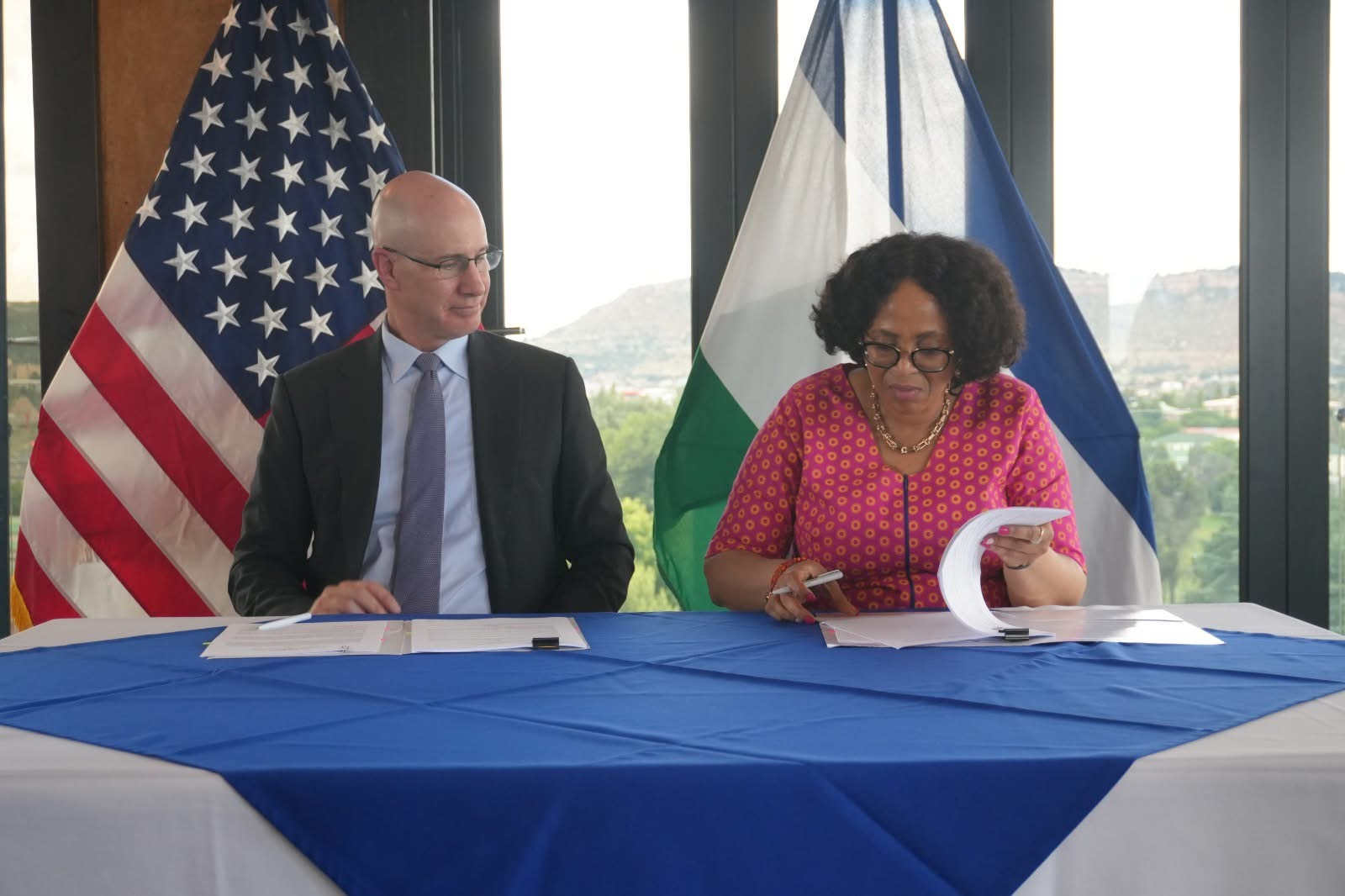
Section 2 specifically called on the Minister of Finance and Development Planning, Dr Retšelisitsoe Matlanyane, who signed the MoU on behalf of Lesotho, to provide a comprehensive public explanation.
Among the questions posed are how an agreement framed by the United States as advancing “America First” can simultaneously safeguard Lesotho’s sovereignty, data privacy, genetic resources, regulatory independence, and long-term national interests.
The organisation also questioned what protections exist if the agreement grants the United States sweeping enforcement powers, including potential unilateral aid withdrawal, without reciprocal leverage for Lesotho.
International Partnership and Sovereignty
While acknowledging that Lesotho welcomes genuine partnerships aimed at strengthening its health system, Section 2 cautioned that any arrangement involving long-term transfers of sensitive biological and health data, subordination of regulatory authority, or structural asymmetry would be subjected to intense scrutiny by citizens, Parliament, civil society and, if necessary, the courts.
The organisation appealed to both governments to prioritise transparency, constitutional compliance and mutual respect.
As of publication, the Government of Lesotho had not issued a detailed public response to the specific concerns raised regarding the MoU’s constitutional status or its reported provisions.
The unfolding debate is likely to intensify pressure on government to release the full agreement and clarify the legal framework under which it was concluded.