


The High Court heard tense and unsettling testimony from Sergeant Tjekane Sebolai, one of the soldiers accused of murdering 23-year-old Lisebo Tang on May 9, 2014, near the home of former army commander Lieutenant General TlaliKamoli.
Under sharp cross-examination, Sebolai insisted that ignoring military procedures and challenges can create deadly risks, claims he used to justify the shooting that left Tang dead and her companion, Tšepo Jane, seriously injured.
Sebolai, who is on trial alongside his co-accused Private SeloneRatšiu, took the stand as a defence witness, defending his actions on the night of the killing, repeatedly telling the court that the soldiers were operating under strict orders and responding to what they believed was an imminent threat.
Asked about military rules of engagement, Sebolai told the court that failure of a suspected enemy to respond to a challenge signalled danger.
“A challenge is not just a formality,” he said. “When a threat refuses to comply, it puts everyone in danger. When an enemy shows signs of danger, it has to be eliminated.”
He added that on the night in question, he and Ratšiu acted according to the instructions they had been given earlier that evening. The order, he said, was direct and uncompromising; capture the suspected enemy and if the enemy tries to flee or resist, eliminate them.
The court had previously heard that on that night, the accused soldiers were stationed on night guard duty at the residence of Lt Gen Kamoli.
According to Sebolai, this was a high-tension period marked by fears of attacks and rumours of plots against senior army officials.
During his testimony, he reaffirmed that these fears shaped their decisions that night. He said he and his co-accused believed the occupants of a white double-cab vehicle that approached the Commander’s home were potential assailants.
“It was the exact kind of vehicle we had been warned about,” he said.
“We were told it was linked to bomb attacks. We were told it might return. We were told to watch out for it.”
Tang and Jane were travelling in a white double-cab when the soldiers opened fire. Jane survived with injuries while Tang died on the scene, leaving the vehicle in a very bad shape.
Under questioning, Sebolai maintained that the two occupants did not respond to a military challenge, an instruction shouted at suspects to stop, identify themselves or surrender.
“When they did not respond, we understood that they were refusing the challenge,” he said.
“We then tried to capture them as we had been ordered. When they fled, we eliminated the danger.”
He insisted that their actions followed the exact order given to them earlier, capture first, eliminate if the suspect runs or refuses.
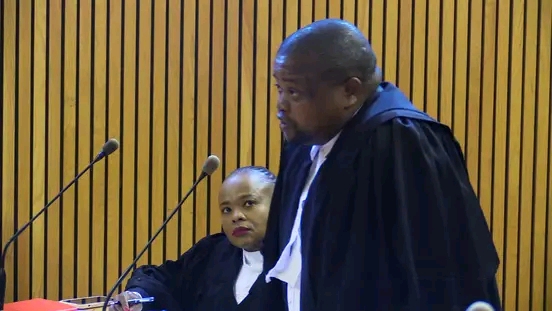
But Advocate Motene Rafoneke, representing the prosecution, directly challenged Sebolai’s version of events.
He put it to the soldier that the so-called “enemy” in the white double-cab had shown no signs of aggression and posed no real danger to the soldiers.
Rafoneke suggested that the soldiers had acted recklessly, misjudging innocent civilians as enemies and using excessive, unjustified force.
Sebolai disagreed, arguing that the soldiers reacted based on the information they had been given and the behaviour they observed.
“To us, at that moment, they were an enemy,” he said.
“They were not complying. They fled. At that point, it became dangerous.”
The testimony has raised difficult questions about the army’s operational rules at the time and whether these rules blurred the line between legitimate defence and unlawful aggression.
The judge will have to consider whether the soldiers’ strict reliance on orders absolves them or implicates them further.
Tang’s killing sparked public outrage in 2014 and has remained one of the most controversial cases linked to the Lesotho Defence Force. The trial has already heard conflicting accounts of the soldiers’ instructions, the atmosphere within the army, and the events leading up to the shooting.
Soldier tells court failure to obey military commands is dangerous


RELATED ARTICLES