


A state witness in the High Court treason trial has testified that armed soldiers interrogated police officers about criminal investigations, senior government officials and the police armoury during the military operation at Police Headquarters on the night of 29 August 2014.
BY THOLOANA LESENYA
Sergeant Mokete Litulo, a state witness in the ongoing treason trial involving several high-profile political and military figures, painted a vivid picture of the tense atmosphere that unfolded during the military operation that remains one of the most debated events in Lesotho’s recent history.
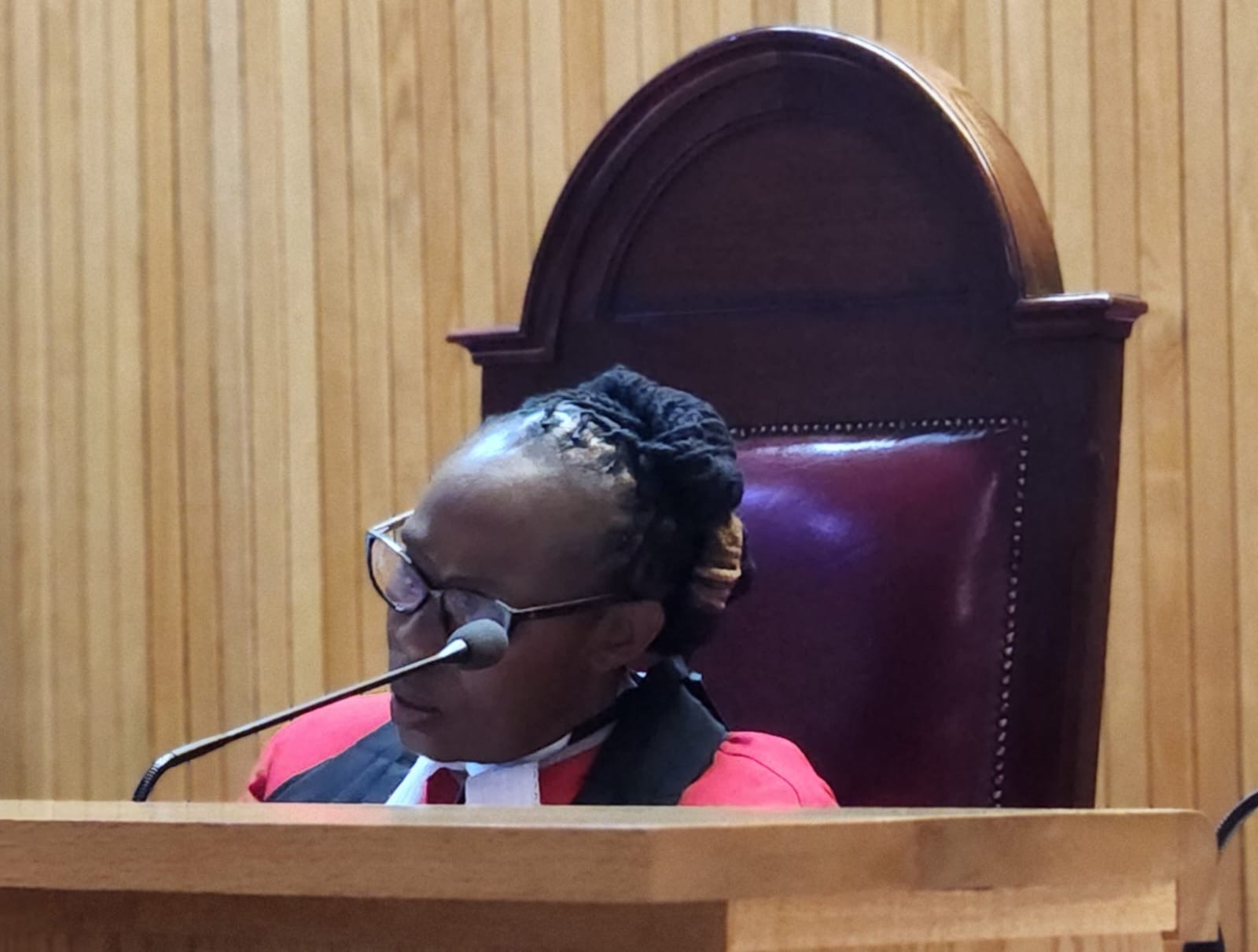
Giving evidence before Justice ‘Maliepollo Makhetha, Litulo said he was among police officers stationed at Police Headquarters in Maseru when members of the Lesotho Defence Force allegedly stormed the premises during the night of 29 August and the early hours of 30 August 2014.
According to the witness, police officers who were gathered near a guardroom during the operation were subjected to a series of questions by armed soldiers. He testified that the soldiers appeared particularly interested in matters relating to criminal investigations and senior political figures.
Among the questions posed, he said, was who headed the Criminal Investigation Department (CID) and who was responsible for investigating high-ranking officials. The witness told the court that one of the names specifically mentioned during the questioning was that of Mothetjoa Metsing, who is one of the accused in the current trial.
Litulo said the soldiers also wanted to know who was in possession of the keys to the police armoury. The questioning then shifted to broader political issues dominating national discourse at the time.
The witness said the soldiers asked whether police officers were aware that then Commissioner of Police Khothatso Tšooana, whom they allegedly referred to as a “recruit,” intended to burn down the country. He further testified that the soldiers questioned them about a letter reportedly written by Tšooana and the then Prime Minister seeking the dismissal of former army commander Lieutenant General Tlali Kamoli.
The witness told the court that the soldiers also accused Tšooana of violating the Constitution by allegedly sending people to the offices of the Director of Public Prosecutions and the Attorney General with the intention of removing those office holders.
“They were ordered to place the deceased’s body inside the boot of a vehicle. The boot was too small. They were forced to position the body in a seated posture and bend the knees in order to make it fit.”
Throughout the encounter, Litulo said the soldiers maintained control of the situation while carrying weapons. He described them as dressed in military uniform and armed. According to his testimony, some of the soldiers attempted to conceal their identities. While some wore hats pulled down over their faces, others used scarves to cover parts of their faces, making identification difficult.
The witness also recounted one of the most disturbing moments of that night. He told the court that at one stage, he and another police officer were instructed to move the body of the late Sub-Inspector Mokheseng Ramahloko, who had been shot during the operation. Litulo described the task as emotionally traumatic. They were ordered to place the body inside the boot of a vehicle, but the boot was too small to accommodate it in a normal position. As a result, he said, they were forced to position the body in a seated posture and bend the knees to make it fit inside the vehicle.
Ramahloko’s death remains one of the central issues in the case and is among the charges facing the accused persons.
Litulo further testified that after several hours, police officers who had been detained during the operation were eventually released and allowed to return home. However, their release came with strict warnings. According to the witness, the soldiers instructed them not to switch off their mobile phones and warned that they would be contacted whenever required and were expected to remain reachable at all times.
The witness said the warning was accompanied by threats. According to his testimony, the soldiers allegedly warned that failure to answer calls or make themselves available when needed could result in their deaths. Litulo also told the court that the soldiers allegedly threatened to bomb the main building of Police Headquarters.
The accused include former Deputy Prime Minister and LCD leader Mothetjoa Metsing, MEC leader and current Minister of Agriculture Selibe Mochoboroane, former Lesotho Defence Force Commander Lieutenant General Tlali Kamoli, Litekanyo Nyakane, Motloheloa Ntsane and Leutsoa Motsieloa. All have pleaded not guilty to charges including treason, murder, attempted murder, aggravated assault and conduct creating a risk of injury or death.
Among the charges facing all accused persons are the murder of Sub-Inspector Ramahloko and the attempted murder of Letsekang Mothibeli. Additional charges of treason, attempted murder of Police Constable Moeketsi and the alleged assault of Sub-Inspector Joel are directed specifically at Kamoli, Nyakane, Metsing and Mochoboroane. The prosecution alleges that the accused acted in pursuit of a shared and common purpose together with the late Tefo Hashatsi, Bulane Sechele, Tumo Lekhooa and other persons whose identities remain unknown to prosecutors.
The defence team comprises Advocates Motiea Teele KC, Letuka Molati, Lepeli Molapo, Kabelo Letuka and Napo Mafaesa. The prosecution is represented by Advocates Motene Rafoneke and Rethabile Setlojoane.
As the trial continues, the court is expected to hear further testimony from witnesses whose accounts may shed more light on the events that unfolded during one of the most turbulent chapters in Lesotho’s political and security history.