


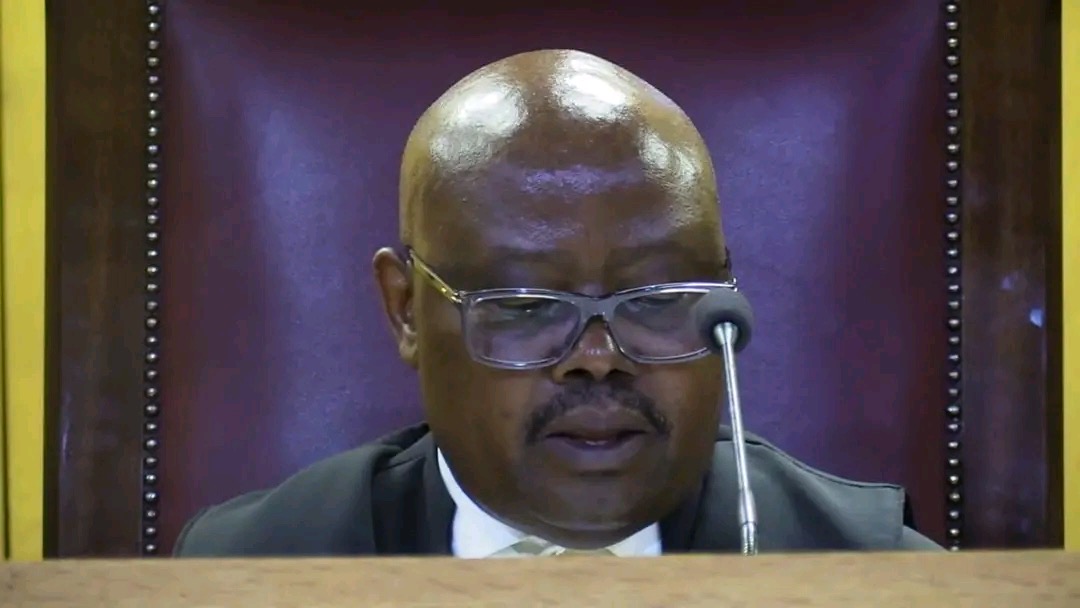
Sergeant Tjekane Sebolai and Private Selone Ratšiu are charged with murder, attempted murder and malicious damage to property following the fatal shooting of Lisebo Tang near the former army commander’s residence on May 09, 2014.
Two soldiers accused of murdering Lisebo Tang near the home of former army commander Lieutenant General Tlali Kamoli in 2014 are expected to learn their fate on Monday when the High Court delivers judgment in the long-running case.
Sergeant Tjekane Sebolai and Private Selone Ratšiu are charged with murder, attempted murder and malicious damage to property following the fatal shooting that occurred on May 09, 2014.
The court heard that the two accused were on night duty at Kamoli’s residence when they allegedly opened fire on a white 4×4 vehicle carrying Tang and Tšepo Jane. Tang died during the shooting while Jane survived with injuries.
Evidence before the court revealed that the soldiers believed the vehicle matched the description of one mentioned in a military “Red Alert”. The alert reportedly warned of a white 4×4 vehicle allegedly moving around dropping bombs and further warned that police were planning to arrest the then army commander.
According to evidence led in court, the accused considered the vehicle a threat because of the way it moved around the commander’s residence and nearby area.
“The evidence clearly shows that both accused participated in the commission of the offences.”
Advocate Motene Rafoneke · ProsecutorThe court also heard that the soldiers were operating under instructions to “capture the enemy, and if it resists or flees, eliminate it”.
The defence argued that Tang and Jane failed to obey warnings to stop, get out of the vehicle and identify themselves before the shooting began.
In closing arguments, lawyer for the accused Advocate Sello Tšabeha told the court that the proper charge should be culpable homicide rather than murder. He argued that the soldiers acted negligently and had no intention to kill.
Tšabeha said the accused exercised caution by firing single “double tap” shots instead of automatic fire. He further argued that the intention was to disable the vehicle and that the shooting stopped once the vehicle came to a halt.
The vehicle was left with 42 bullet holes. The two accused admitted firing a combined total of 24 bullets — 10 by one accused and 14 by the other — using AK47 rifles.
Prosecutor Advocate Rafoneke cited the weapon type and volume of fire as evidence of direct intention to kill.
However, prosecutor Advocate Motene Rafoneke argued that the accused acted with direct intention to kill. He pointed to the use of AK47 rifles and the number of bullets fired as evidence of that intention. He also dismissed claims of self-defence, arguing that there was no imminent danger to justify the shooting.
The two soldiers were initially charged alongside Private Kopano Matsoso, who was acquitted in 2020 after the court found there was no evidence linking him to the crimes.
The matter restarted in 2023 before Chief Justice Sakoane Sakoane after the resignation of former presiding judge Justice Kabelo Lebotse in 2020.
“`