
Mohahlaula Airlines
Wednesday, July 22, 2026
Home Blog Page 25

Bahrain Oil Company Declares Force Majeure After Attack on Energy Infrastructure

MASERU — Bahrain’s state-owned oil company has declared force majeure after damage to its energy infrastructure disrupted operations, raising concerns about the stability of global oil supplies amid the rapidly escalating conflict in the Middle East.

The declaration was made by Bapco Energies, the national energy company of Bahrain, following reported attacks that affected parts of the country’s oil facilities.

A force majeure declaration is a legal step companies take when extraordinary events such as war, natural disasters, or attacks prevent them from fulfilling contractual obligations. In simple terms, it allows the company to temporarily stop delivering oil or fuel shipments because the situation is beyond its control.

Energy analysts say such declarations are rare and usually signal serious disruption.

What Happened

The disruption comes as tensions in the Middle East intensify following a widening conflict involving IranIsrael, and the United States.

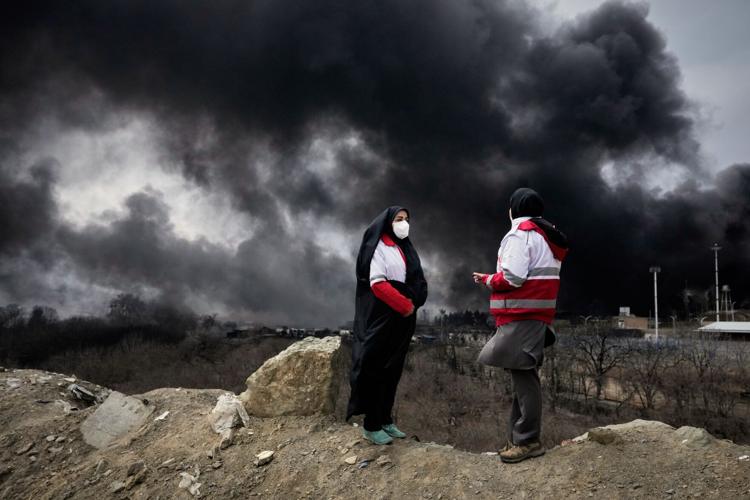
Reports indicate that parts of Bahrain’s energy infrastructure were damaged during the recent escalation, forcing the national oil company to suspend certain operations while assessing the extent of the damage.

Although Bahrain is not one of the world’s largest oil producers, its refining and energy facilities play an important role in regional fuel supply.

Why This Matters for Global Oil Markets

The announcement has already raised concerns in international energy markets because the Middle East remains the most important oil-producing region in the world.

A large portion of global oil shipments pass through the Strait of Hormuz, the narrow waterway connecting the Persian Gulf to international shipping routes.

If instability spreads further in the region, it could disrupt the flow of oil from several major producers.

Even the risk of disruption can push prices higher because oil markets react quickly to geopolitical events.

Possible Impact on Prices

Traders and energy analysts say the declaration could add further pressure on oil prices, which have already been rising as the conflict intensifies.

When supply becomes uncertain, buyers rush to secure alternative sources of oil. This often drives prices up in global markets.

Higher oil prices can have widespread effects on the global economy, including:

• Rising fuel prices

• Higher transport costs

• Increased food prices due to expensive logistics

• Pressure on national budgets, especially in countries that import fuel

Growing Risk to Energy Infrastructure

Experts say the Bahrain incident highlights a growing trend in modern conflicts: attacks on critical infrastructure such as oil facilities, pipelines, ports and desalination plants.

Such targets are considered strategic because disrupting them can affect not only the countries involved in the conflict but also the wider global economy.

For now, markets are closely watching developments in the Gulf region.

If the conflict expands or more energy infrastructure is damaged, analysts warn the world could face a significant energy shock in the coming weeks.

Related story https://lesothotribune.co.ls/ukraines-diplomatic-impunity-in-pretoria/

BNP Leader Raises Alarm Over Use of Government Platforms for Prime Minister’s Private Activities

0

MASERU – Basotho National Party (BNP) leader and Member of Parliament, Hon. Machesetsa Mofomobe, has written to Prime Minister Samuel Matekane expressing concern over what he describes as the use of official government platforms to promote private activities linked to the Prime Minister.

In a formal letter addressed to the Prime Minister, Mofomobe argues that the practice risks blurring the important line between official state functions and personal matters involving holders of public office.  

The issue arises from recent communications reportedly issued through official government channels, including announcements from the Office of the Prime Minister and listings on the Parliamentary Order Paper in the Senate, which referenced events connected to the Prime Minister’s birthday celebrations and the handover of a church allegedly built with his personal resources.  

According to Mofomobe, such actions could set a troubling precedent in the management of public institutions.

He notes that since Lesotho’s independence, the country has maintained a long-standing constitutional tradition in which only the birthday of the Head of State is treated as a national occasion. The birthday of the Prime Minister, he argues, has historically remained a private matter.

“This practice reflects an important constitutional principle that distinguishes official state functions from personal activities of holders of public office,” Mofomobe states in his correspondence.  

The BNP leader further warned that using official communication channels and parliamentary processes to publicize private activities could raise questions about the appropriate use of state resources.

“As custodians of public trust, we have a collective responsibility to ensure that state platforms are not used in a manner that could be perceived as advancing private interests,” he wrote.  

Mofomobe has therefore requested that the Office of the Prime Minister discontinue the use of government communication platforms for the promotion or announcement of activities that are not official state business.

In his letter, the opposition leader indicated that the matter may escalate if the practice continues. He cautioned that he may seek judicial intervention in order to obtain legal clarity on the boundaries between official government functions and private activities by public officials.

“Should this practice persist, I will be compelled… to consider pursuing appropriate legal remedies to seek judicial clarity on the matter,” he wrote.  

The correspondence frames the issue as one of constitutional oversight and governance rather than political confrontation. Mofomobe said the concerns were raised in the interest of protecting the integrity of public institutions and ensuring that state resources are used strictly for official purposes.

The development is likely to ignite debate within political and governance circles about the proper separation between public office and personal activities of national leaders. Questions about the use of official platforms, particularly parliamentary processes and state communication channels, often sit at the heart of broader discussions about transparency, accountability, and the ethical use of public resources.

For now, attention will turn to whether the Prime Minister’s office addresses the concerns raised and whether the matter develops into a broader constitutional question before the courts.

Read the letter below

Pseudo-Revolutionaries Stopped From Self-Dealing

MASERU – In a judgment that cuts straight to the heart of political power and accountability in Lesotho, the High Court has ruled that Parliament cannot simply vote away a constitutional obligation designed to stop politicians from profiting from government contracts, declaring that lawmakers acted unconstitutionally when they rejected a bill meant to regulate conflicts of interest among Members of Parliament.

The ruling, delivered on 5 March 2026, orders the National Assembly to enact legislation regulating conflicts of interest within twelve months, bringing to an abrupt halt what the court effectively described as Parliament’s attempt to sidestep the Constitution.  

The constitutional challenge was brought by Honourable Teboho Mojapela, together with the Basotho Covenant Movement (BCM) and the Popular Front for Democracy (PFD). They sought judicial intervention after the National Assembly rejected the Conflict of Interest Bill, 2024, a private member’s bill that sought to bar politicians with financial interests in government contracts from serving in Parliament.

The respondents in the case included the Speaker of the National Assembly, the Leader of the House, the Prime Minister, the Minister of Law and Constitutional Affairs, and the Attorney General.  

In a strongly worded decision, the three-judge bench made it clear that while Parliament has the power to debate and vote on legislation, it cannot use the mechanism of voting to defeat obligations imposed by the Constitution itself.

“The Constitution is the supreme law of the land,” the court emphasized, adding that all branches of government are bound by it.  

The Bill That Sparked the Constitutional Battle

The dispute traces its origins to November 2024, when Dr Tšepo Lipholo, a member of the National Assembly, introduced a private member’s bill known as the Conflict of Interest Bill, 2024.

The bill sought to implement provisions contained in Section 59(1)(e) of the Constitution of Lesotho, which deals with disqualification from membership of Parliament where an individual holds interests in government contracts.

Its purpose was straightforward: to prevent situations where politicians participate in government decisions while simultaneously benefiting from state contracts.

After the bill was properly introduced, seconded and debated in Parliament, it was defeated by a majority vote of Members of Parliament present in the chamber.

That decision triggered the constitutional challenge which ultimately reached the High Court.

Parliament’s Defence

During the proceedings, Parliament argued that the courts should not interfere in the internal workings of the legislature.

The Speaker of the National Assembly maintained that parliamentary decisions taken in accordance with standing orders are protected under the constitutional doctrine of separation of powers, which requires the judiciary, legislature and executive to operate independently.

According to Parliament’s argument, once a bill has been debated and voted upon in the National Assembly, the matter should be considered closed.

However, the court rejected this interpretation.

Court: Parliament Cannot Defeat the Constitution

The judges held that although Parliament has the authority to vote on legislative matters, it cannot use that power to defeat the Constitution.

Allowing Parliament to vote down legislation that the Constitution requires it to enact would effectively permit lawmakers to nullify constitutional obligations by simple majority vote.

Such a situation, the court warned, would undermine the supremacy of the Constitution.

The court therefore concluded that the National Assembly’s decision to reject the Conflict of Interest Bill amounted to non-compliance with a constitutional mandate.

The Meaning of “May”

A key issue before the court was the interpretation of the word “may” in Section 59(1)(e) of the Constitution.

Parliament argued that the word suggests discretion, meaning lawmakers could decide whether or not to enact legislation dealing with conflicts of interest.

But the court ruled that within the context of the Constitution, the word must be interpreted as creating a duty rather than a choice.

Without such legislation, the constitutional safeguard designed to prevent politicians with financial interests in government contracts from serving in Parliament would remain meaningless.

Guarding Against Abuse of Power

The court also addressed the broader rationale behind the constitutional provision.

Individuals who hold commercial interests in government contracts while occupying political office face strong incentives to influence public policy for personal gain.

The Constitution therefore anticipates a legal framework to prevent such conflicts and protect the integrity of the state.

In its reasoning, the court noted that individuals with commercial interests in government could potentially use their positions to secure or protect contracts with the state, a situation that undermines public trust in democratic institutions.

A Direct Order to Parliament

Having found Parliament’s conduct unconstitutional, the High Court issued a mandamus ordercompelling the National Assembly to enact conflict-of-interest legislation within one year.

While Parliament remains free to determine the specific content of the law, it cannot refuse to enact legislation altogether, the judges ruled.

A Defining Constitutional Moment

The judgment is likely to become one of the most consequential constitutional rulings in recent years.

It reinforces the principle that constitutional obligations cannot be ignored by political majoritiesand that the courts remain the ultimate guardians of the Constitution.

For years, governance experts and civil society organisations have raised concerns about potential conflicts of interest within Lesotho’s political system.

The High Court’s decision now forces Parliament to confront that issue directly.

Whether lawmakers comply with the ruling or attempt to resist it could determine the next chapter in Lesotho’s evolving constitutional democracy.

For now, however, one message from the judiciary is unmistakable: Parliament cannot vote its way out of the Constitution.

Ukraine’s Diplomatic Impunity in Pretoria

Diplomacy depends on restraint. Rituals exist to preserve a minimum level of civility between states even during periods of conflict. Condolence books belong to that tradition. They acknowledge death and recognise the dignity of a grieving nation. Governments that hold serious disagreements still observe this practice because international relations requires discipline.

The Embassy of the Islamic Republic of Iran in South Africa recently informed foreign missions that a book of condolences had been opened following the killing of Ayatollah Ali Khamenei and senior Iranian officials during the recent United States and Israeli strikes on Iran.

Ukraine’s ambassador to South Africa, Dr Olexander Scherba, responded publicly with a letter refusing to sign the condolence book. He accused Iran’s leadership of responsibility for Ukrainian civilian deaths because Iranian-manufactured Shahed drones have been used by Russia during the war in Ukraine. He concluded that he would not express condolences for someone whose death he does not mourn.

The refusal alone already represents an unusual diplomatic act. The public tone of the letter transformed the episode into something more serious. The ambassador placed the death of a national leader inside a moral indictment directed at another state.

The Iranian Embassy responded publicly on X to clarify the situation. The embassy explained that a note verbale had been sent to the Department of International Relations and Cooperation and copied to the diplomatic corps rather than a personal invitation directed at the Ukrainian mission. It also reminded diplomats that their role is not to incite hostility between peoples.

To explain its broader position on the Russia–Ukraine conflict, the embassy quoted the thirteenth-century Persian poet Sa’di:

Human beings are members of a whole,
In the creation of one essence and soul.
If one member is afflicted with pain,
Other members uneasy will remain.
If you have no sympathy for human pain,
The name of humans you cannot retain.

The verse forms part of Sa’di’s Bani Adam, a work deeply embedded in Persian intellectual tradition. The poem is also inscribed in gold weave on the great Persian carpet displayed at the United Nations headquarters in New York, gifted by Iran to the organisation. The inscription stands as a reminder, within the very architecture of global diplomacy, that humanity shares a single moral condition.

The Russian Embassy in South Africa responded in far sharper language. In a statement posted publicly it wrote:

“We thought we had seen everything from the Ukrainian ambassador, but this goes even further. Mocking the deaths of hundreds of Iranians while claiming to be a person of faith can only come from someone with no conscience and no soul.

Can such people truly care about their own citizens? We doubt it.”

The controversy that followed reveals something larger than a dispute between diplomats.

Iran currently faces sustained military strikes across several cities. Iranian authorities report attacks on residential neighbourhoods, hospitals, schools and emergency facilities. Civilian casualties have been reported across multiple provinces as the conflict expands. Yet the loss of civilian life in Iran receives limited attention in much Western media coverage of the conflict.

Under such circumstances a refusal to acknowledge a condolence gesture directed at a nation experiencing loss raises serious questions about diplomatic conduct.

In earlier periods of diplomatic practice, conduct of this nature could easily have triggered recall or resignation. Ambassadors have historically been required to step down for statements far less provocative than publicly refusing condolences following the death of a head of state. Yet in the present case Dr Olexander Scherba appears able to operate with considerable freedom inside South Africa’s public sphere.

The incident also exposes a deeper problem within South Africa’s media environment.

Dr Scherba has become a regular presence across several South African platforms. Newsroom Afrika frequently hosts him to discuss the Ukraine war. The Mail & Guardian publishes his commentary. These appearances often contain harsh denunciations of Russia and its partners.

Russian and Iranian diplomats, rarely if ever, appear on these platforms.

Public discourse therefore unfolds through a narrow interpretive frame.

South Africa’s official foreign policy moves in another direction. Pretoria has consistently emphasised negotiation and dialogue in global conflicts while maintaining relations with Russia, Iran and China through BRICS and other diplomatic frameworks.

Yet the domestic information environment often mirrors the geopolitical narratives of the Atlantic alliance.

This contradiction creates a serious problem. When a foreign ambassador can repeatedly condemn states that South Africa treats as diplomatic partners while those states receive no opportunity to respond within the same media ecosystem, the public sphere becomes structurally imbalanced.

The episode surrounding the condolence book illustrates the consequences.

One diplomatic mission responded with an appeal to shared humanity through the words of Sa’di. Another mission condemned the mockery of civilian deaths. The Ukrainian ambassador chose to transform a moment of mourning into a geopolitical accusation delivered publicly to a foreign audience.

That decision raises an unavoidable question.

How does a foreign diplomat feel sufficiently empowered to speak with such impunity inside South Africa’s public sphere?

The answer lies partly within the permissive media environment that elevates one narrative while marginalising others. It also reflects a deeper uncertainty about South Africa’s own geopolitical posture under the Government of National Unity.

South Africa once cultivated a reputation as a mediator capable of speaking across geopolitical divides. That credibility depended on intellectual independence and balanced engagement.

War produces grief across borders. Families mourn their dead regardless of political allegiance. Diplomacy exists to ensure that this reality remains visible even during the fiercest conflicts.

When diplomats abandon restraint and convert death into rhetorical ammunition, the damage extends beyond a single letter. It erodes the fragile norms that allow states in conflict to speak to one another at all.

⸻———————————

First published by Independent Online (IOL) on 6 March 2026. Republished by Lesotho Tribune with attribution to the original author and publisher.

“They Chose Silence”: Couple Accused of Killing 8-Year-Old Await High Court Verdict

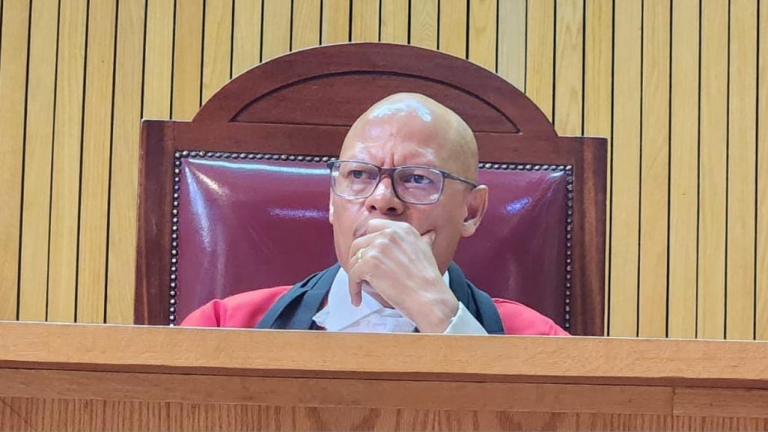
MASERU – The High Court is expected to deliver a closely watched judgment next week in a case that has gripped the nation following the tragic death of eight-year-old Liteboho Sekokotoana in Ha Leqele last year.

Justice Tšeliso Mokoko will hand down the ruling on Thursday in the trial of Motšeleli Maoeng and John Lefoka, who stand accused of murdering the young child.

The two accused were in a romantic relationship at the time of the incident. Maoeng had been working as a domestic worker at the Sekokotoana family home.

The charges stem from an incident that allegedly occurred on April 7, 2025, at the family residence in Ha Leqele, Maseru.

In addition to the murder charge, the pair are also accused of attempting to kill Liteboho’s older brother, Lereko Sekokotoana, who was 15 years old at the time. They further face a charge of theft for allegedly stealing property belonging to the Sekokotoana family.

The High Court heard testimony from several witnesses during the trial before the prosecution formally closed its case earlier this week.

One of the key witnesses was forensic pathologist Dr. Lefatle Phakoana, who presented medical evidence on the cause of Liteboho’s death.

Dr. Phakoana told the court that the child died from suffocation. According to his findings, the medical cause of death was asphyxia caused by smothering.

His testimony formed a crucial part of the state’s case as prosecutors sought to establish how the child died and whether the death resulted from a deliberate act.

After the prosecution concluded its case, both accused exercised their constitutional right to remain silent. They chose not to testify in their defence and did not call any witnesses.

The defence therefore closed its case without presenting evidence from the accused themselves.

The trial then moved to final arguments, where both sides addressed the court on how the evidence should be interpreted.

Prosecutor Advocate Thato Lepheana argued that the evidence presented by the state was strong enough to secure a conviction.

She told the court that the prosecution had proven its case beyond reasonable doubt and that the accused had failed to challenge critical parts of the evidence presented by state witnesses.

According to her submissions, the accused did not put their version of events to witnesses during cross-examination, leaving much of the prosecution’s evidence uncontested.

Advocate Lepheana also rejected any attempt to rely on intoxication as a defence.

“The accused intentionally and negligently got intoxicated and then committed the offences they are charged with. They therefore cannot raise the defence of intoxication,” she told the court.

She further argued that the evidence suggests the accused were aware of their actions and understood the consequences at the time.

Voluntary intoxication, she said, should not excuse criminal responsibility.

The prosecution therefore urged the court to convict both accused on all charges.

However, the defence argued that the evidence does not support a conviction for murder.

Advocate Pelele Ntori, representing Maoeng, submitted that the court should instead consider convicting the accused of lesser offences.

He suggested that the appropriate verdict would be culpable homicide, assault and theft, rather than murder, attempted murder and theft.

Advocate Ntori emphasised that the burden of proof lies entirely with the prosecution and that the accused are not legally required to testify.

“The accused are not obliged to give an explanation,” he told the court while addressing their decision to remain silent.

He also argued that intoxication played a role in the incident and affected the judgment of the accused.

According to him, their mental state at the time meant they did not have a direct intention to kill the child.

However, Ntori acknowledged that the accused acted together during the incident.

He told the court that the defence accepts the legal concept of dolus eventualis, meaning the accused may have foreseen the possibility that their actions could result in death but proceeded anyway.

Advocate Nketsi Makhera, who represents Lefoka, echoed a similar argument.

He told the court that the accused did not plan to kill the child and that the evidence suggests their primary intention was to steal from the house.

If the accused foresaw the possibility of death occurring, he argued, it would fall under dolus eventualis rather than direct intent to kill.

Makhera also reminded the court that the accused have a constitutional right to remain silent.

“Silence does not mean admission of guilt,” he said.

Earlier in the trial, the court admitted several witness statements into the record.

These included statements from Liteboho’s parents, Lillo Sekokotoana and ‘Malithakong Molupe, who described the events surrounding the tragic incident.

The court also heard testimony from a neighbour, Mothibenyane Letsosa, who provided information related to the events of that day.

Another key witness was the deceased child’s brother, Lereko Sekokotoana.

Lereko, who was 15 years old at the time, is also the alleged victim of the attempted murder charge faced by the accused. His testimony helped the court piece together what happened inside the house on the day of the incident.

With all evidence and arguments now concluded, the matter has reached its final stage.

Justice Mokoko will now consider the evidence, legal arguments and applicable law before delivering judgment.

The court will determine whether the prosecution has proven the charges of murder, attempted murder and theft beyond reasonable doubt, or whether the accused should instead be convicted of lesser offences as proposed by the defence.

The judgment, scheduled for next Thursday, is expected to mark a critical moment in a case that has deeply affected the Sekokotoana family and drawn widespread public attention across the country.

Iran, Persia and the Strategic Wisdom We Once Had

An editorial inspired by reflections shared by Joang Molapo

In moments of global crisis, the temptation is always to reduce complex history into simple loyalties. Countries are sorted into sides. Narratives become slogans. Those who disagree are dismissed as sympathisers of one camp or another.

Yet sometimes a quiet reflection from an experienced observer forces us to pause and think a little deeper.

Former minister Joang Molapo recently shared a personal story recalling how his father, Lesotho’s first ambassador to the Middle East, was posted to Tehran in 1974. At the time, the decision might have puzzled some. Why would a small African kingdom establish an embassy in Iran rather than in Saudi Arabia, the largest oil producer in the world?

The answer, as Molapo recounts, lay in something that has become rare in modern politics: strategic thinking.

His father and an Iranian deputy foreign minister explained to a curious young boy that Iran was not simply another oil state. It was something far older and far deeper. Iran was Persia.

The civilisation we now call Iran predates Christianity by centuries. Long before the rise of Europe’s modern states, the Persian empires had already built complex systems of governance, law and trade. Under dynasties such as the Achaemenids, Persia governed a vast multicultural empire stretching from the Mediterranean to the Indus Valley. It pioneered administrative systems, road networks and diplomatic practices that historians still study today.

Even the idea of respecting local cultures within a wider empire was practiced by the Persians thousands of years ago. When Cyrus the Great conquered Babylon in 539 BC, he famously allowed displaced peoples to return to their homelands and practice their religions freely. Some historians even refer to the Cyrus Cylinder as one of the earliest expressions of human rights.

This long civilisational memory matters. Nations that carry thousands of years of history do not easily disappear from the geopolitical stage.

Geography reinforces this reality. Iran sits at one of the most strategically significant crossroads in the world. It links the energy-rich Persian Gulf with Central Asia, the Caucasus and Russia. It borders multiple regions that have shaped global trade routes and political rivalries for centuries. Add to that a population far larger than most of its neighbours, and the result is a country that inevitably commands regional influence.

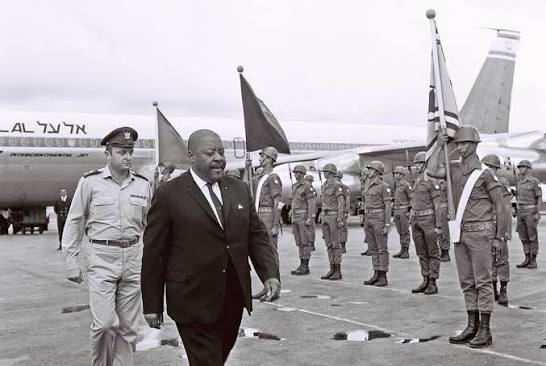
These were the realities that leaders such as Leabua Jonathan appear to have understood decades ago. Posting an embassy in Tehran was not simply a diplomatic choice. It reflected a recognition that Iran was, and would remain, a central actor in global geopolitics.

History proved that judgement correct.

The Iranian Revolution dramatically altered Iran’s political orientation. The fall of the Shah and the rise of a new Islamic republic reshaped alliances across the Middle East. But the revolution did not erase Iran’s geography, its population, or its long civilisational continuity.

For the United States, the revolution meant the sudden loss of a key regional ally. Since then, Washington has spent more than four decades attempting to contain Iranian influence through sanctions and diplomatic isolation. The assumption was that economic pressure might eventually force political change.

Yet Iran endured. Sanctions strained its economy, but they did not eliminate its regional relevance.

During the administration of Barack Obama, the world briefly witnessed a different approach. The Joint Comprehensive Plan of Action sought to bring Iran back into structured engagement with the global economy in exchange for restrictions on its nuclear programme. It was an attempt to influence behaviour through integration rather than confrontation.

When the agreement was later abandoned under Donald Trump, the strategy shifted back toward pressure and coercion.

Whether that shift will ultimately produce stability remains uncertain. What history consistently teaches, however, is that great civilisations do not simply vanish because they are sanctioned or isolated.

Iran is not merely a government or a regime. It is the modern expression of Persia, a civilisation that has existed for millennia. Culture, geography and history combine to ensure that it will continue to shape regional dynamics regardless of who governs in Tehran.

Perhaps the deeper lesson for Basotho lies closer to home.

Molapo’s reflection reminds us that our own leaders once engaged the world with a sense of strategic awareness. Decisions were sometimes made with an eye on long historical currents rather than immediate political convenience.

In today’s political environment, that kind of thinking often feels absent. Too frequently we reduce international affairs to partisan talking points or ideological loyalties.

But the world is more complicated than that.

Understanding history. Recognising geography. Appreciating civilisational depth. These are the tools of serious statecraft.

Lesotho may be small, but thoughtful diplomacy and strategic awareness once allowed its leaders to read the global chessboard with surprising clarity.

Molapo’s story is therefore not simply about Iran. It is a reminder that strategic thinking is possible, even from a small mountain kingdom, when leaders take the time to understand the deeper forces that shape the world.

The American Philanthropist that Donated Over 7000 Bicycles to Lesotho

0

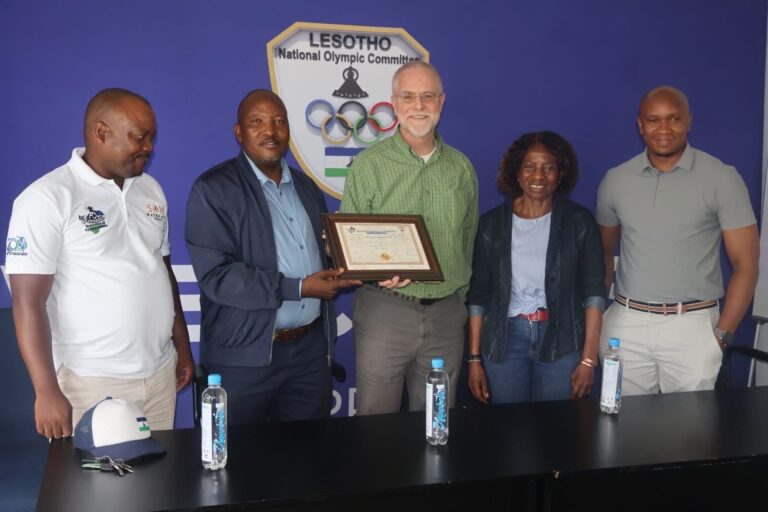
The Lesotho National Olympic Committee (LNOC) President Letsatsi Ntsibolane on Thursday, March 5, welcomed American philanthropist David Gorman to Lesotho during his visit as a guest of the Federation of Cycling Lesotho.

Gorman has become widely known in the Mountain Kingdom for his longstanding commitment to promoting access to bicycles in our country. Over the past decade, the American has facilitated the donation of more than 7,000 bicycles to communities across Lesotho, primarily targeting children and vulnerable groups.

His connection with Lesotho dates back to 1989 when he first arrived in the country as a volunteer with the Peace Corps. During that time, he was stationed in Seforong, Quthing, Lesotho, where he spent three years living and working in local communities.

Two decades after completing his service, Gorman returned to support the country in a different way. In 2012, he established ‘Bikes for Lesotho’, an initiative dedicated to collecting secondhand bicycles in the United States and distributing them to children across Lesotho, particularly orphans. The project has since grown significantly, with Gorman having shipped a total of 15 containers filled with donated second hand bicycles to the country.

As a passionate cyclist himself, Gorman recalls that while living in Lesotho he rarely saw children riding bicycles. That observation planted the seed for what would later become a life long mission.

Upon returning to the United States, he began mobilizing communities to donate used bicycles which could be refurbished and sent to Lesotho. For Gorman, bicycles represent far more than simple transportation.

“The joy of riding a bike should be available to everyone, especially children,” he said. “From that joy comes confidence, health, and even mechanical skills. But it all begins with that first feeling of freedom on two wheels.”

Through his efforts and partnerships with organisations such as Working Bikes, thousands of bicycles have been distributed not only in Lesotho but in several other countries around the world.

While the main focus of the current bicycle deliveries remains talent identification and empowering schools, Gorman ultimately hopes the initiative can evolve beyond charity. His long term vision is to contribute to sustainable cycling development in Lesotho by helping create an ecosystem that includes local bike shops, cycling clubs, and competitive races capable of sustaining themselves.

During his current visit, Gorman is also  participated in the annual Moshoeshoe’s Walk, which began on Wednesday, March 4. Through his continued dedication, Gorman’s work is helping introduce thousands of Basotho children to cycling while laying the groundwork for the sport’s future growth in the country.

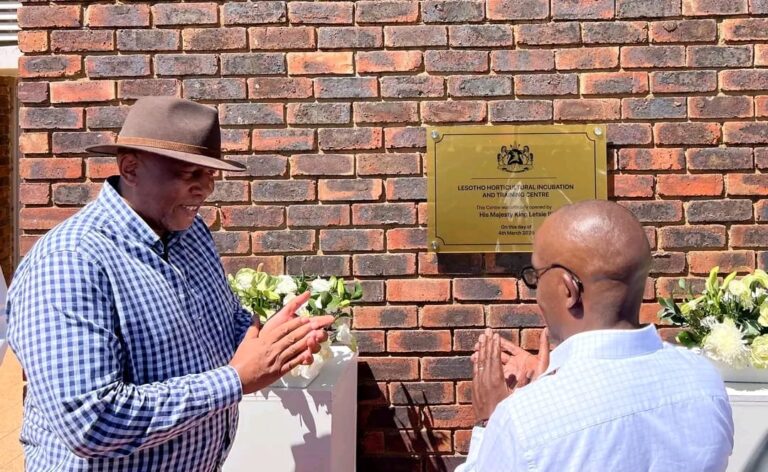
The King inaugurates the Horticultural Incubation Centre

MAHOBONG, LERIBE

Lesotho took a definitive step toward food independence. 

This week, His Majesty King Letsie III appeared not only as the Head of State in Mahobong but also in his international capacity as the FAO Special Goodwill Ambassador for Nutrition, to officially inaugurate the Lesotho Horticultural Incubation and Training Centre. 

For the King, the rows of deciduous fruit trees and the state-of-the-art packhouse represent more than just agriculture. They are a frontline defence. 
“Our vision must align,” the King noted, emphasising that the fight against hunger and poverty is a national priority that mirrors global goals. 
His tour of the orchards and sorting facilities signalled a royal endorsement of a transition from subsistence farming to a sophisticated, commercialised “Agri-business” model.
The atmosphere of the celebrations of the centre was sharpened by a sobering reality check from Daniel Chakela, Vice President of  LENAVU and a representative for Lesotho farmers. 
Chakela linked the quiet fields of Mahobong to the volatile landscape of global geopolitics and international power struggles. 
In a fiery address, he warned that relying on long, fragile supply chains from distant nations leaves Lesotho vulnerable to shocks beyond its control. 
“A country that relies on imports will perish if it does not produce on its own,” Chakela cautioned. He issued a direct plea to the Ministry of Trade, Industry and Business, saying “training is not enough as Basotho produce must be guaranteed space on the shelves of the nation’s major retail giants.” 
For Chakela, the centre is the engine but secure market access is the fuel that ensures national resilience.
This engine, he said, is powered by the Competitiveness and Financial Inclusion (CAFI) project, backed by the World Bank and a specific $950,000 grant from the IBSA Fund (India, Brazil, and South Africa). 
CAFI Project Manager, Chaba Mokuku revealed that the incubation is not just a future promise but a current reality, adding that over 200 small businesses, largely owned by youth and women, have already been successfully incubated through the project.
By transforming farming into a high-value professional career, the centre provides a direct answer to the nation’s high youth unemployment rate. 
The goal of the project remains simple: to create a business-enabling environment that simplifies the path for a young entrepreneur to move from planting a seedling to becoming a national supplier, ensuring that the next generation of  Basotho sees the land not just as a means of survival, but as a source of wealth.

LEN Continues to make headlines in Lesotho: A Promise of an HIV Free-Generation

MASERU

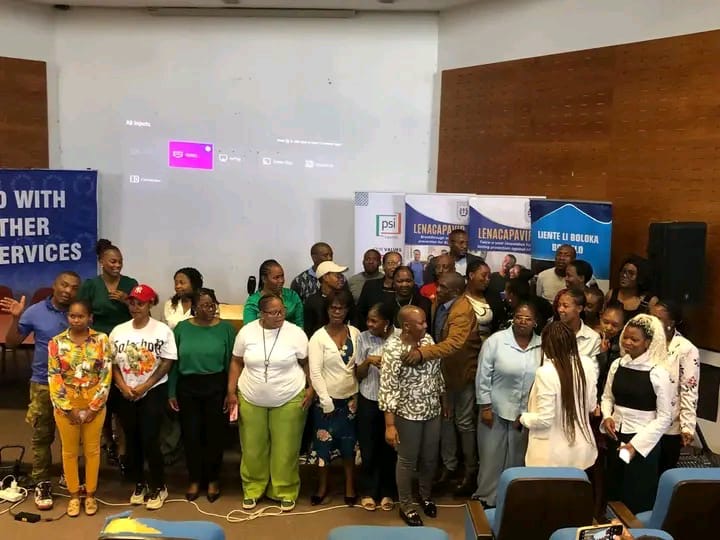
The Ministry of Health has introduced a new HIV prevention option, Lenacapavir (LEN), as part of its comprehensive strategy to combat HIV. The introduction of Lenacapavir was announced at a Media awareness Workshop held in Maseru, where journalists were briefed on the importance and details of the new medicine.

HIV and AIDS Communication Expert and Health Promotion Head, Baroane Phenethi, said Lenacapavir is a promising long-acting option that has the potential to change how individuals access and adhere to HIV prevention services. “Lenacapavir has a unique mechanism of action and an extended dosing schedule, which reduces the need for frequent health facility visits,” he explained.

Phenethi highlighted the critical role the media plays in making the public understand health innovations. 

“Scientific progress alone is not enough without truthful and responsible reporting,” he said, warning that misinformation can undermine trust, fuel stigma, and slow progress in the fight against HIV. He urged journalists to report on Lenacapavir in a balanced, factual, and stigma-free manner.

Dr. Nthuseng Marake from the HIV and AIDS Programme described Lenacapavir as a highly effective, long-acting  Pre-Exposure Prophylaxis(PrEP) that prevents people from being infected with HIV. “Clinical trials have shown strong protection and good safety outcomes,” she said. She further explained that the dosing schedule includes an initiation phase with subcutaneous injections and oral tablets, followed by injections every 26 weeks.

The injection is administered in the abdominal area, and side effects are generally mild to moderate. Dr. Marake clarified that Lenacapavir is not a vaccine and does not cure HIV. “It is a long-acting prevention medicine that works while present in the body, and in some cases may also be used as part of treatment for people living with HIV,” she said.

The Ministry of Health is working to ensure accurate information about Lenacapavir gets to the public. The introduction of Lenacapavir is a significant step in Lesotho’s efforts to strengthen its HIV prevention strategy and promote public health.

Lenacapavir is expected to benefit people who struggle with daily pill regimens or who have difficulty accessing healthcare facilities regularly. The long-acting nature of the medicine is expected to improve adherence to HIV prevention services and reduce the risk of HIV transmission.

The Ministry of Health urges individuals who are at risk of HIV infection to consult with healthcare providers to learn more about Lenacapavir and determine if it is a suitable option for them.

Independent business & current affairs journalism · Lesotho Subscribe — M85/month
| Independent business & current affairs journalism · Lesotho