



MASERU – The High Court is expected to deliver a closely watched judgment next week in a case that has gripped the nation following the tragic death of eight-year-old Liteboho Sekokotoana in Ha Leqele last year.
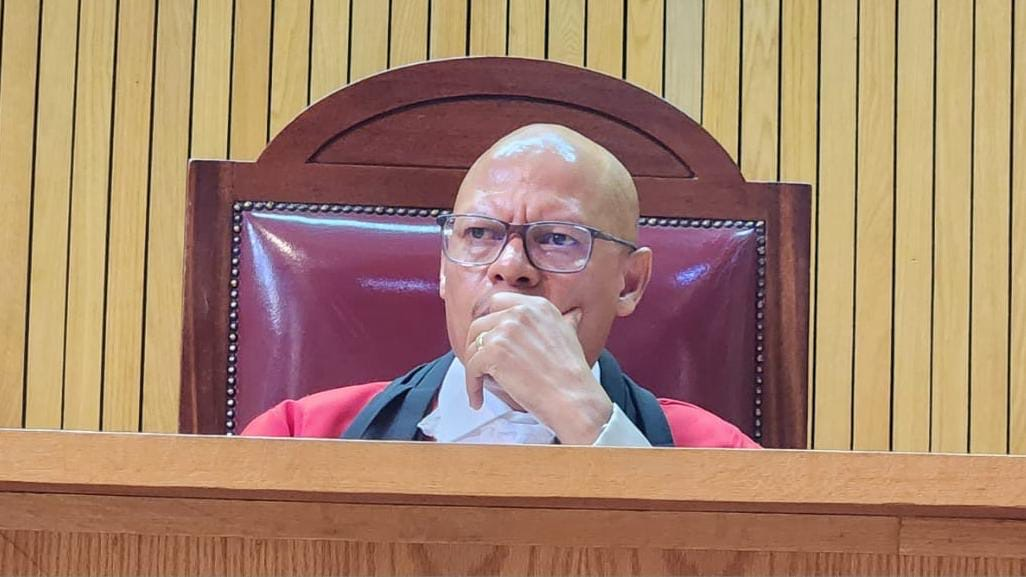
Justice Tšeliso Mokoko will hand down the ruling on Thursday in the trial of Motšeleli Maoeng and John Lefoka, who stand accused of murdering the young child.
The two accused were in a romantic relationship at the time of the incident. Maoeng had been working as a domestic worker at the Sekokotoana family home.
The charges stem from an incident that allegedly occurred on April 7, 2025, at the family residence in Ha Leqele, Maseru.
In addition to the murder charge, the pair are also accused of attempting to kill Liteboho’s older brother, Lereko Sekokotoana, who was 15 years old at the time. They further face a charge of theft for allegedly stealing property belonging to the Sekokotoana family.
The High Court heard testimony from several witnesses during the trial before the prosecution formally closed its case earlier this week.
One of the key witnesses was forensic pathologist Dr. Lefatle Phakoana, who presented medical evidence on the cause of Liteboho’s death.
Dr. Phakoana told the court that the child died from suffocation. According to his findings, the medical cause of death was asphyxia caused by smothering.
His testimony formed a crucial part of the state’s case as prosecutors sought to establish how the child died and whether the death resulted from a deliberate act.
After the prosecution concluded its case, both accused exercised their constitutional right to remain silent. They chose not to testify in their defence and did not call any witnesses.
The defence therefore closed its case without presenting evidence from the accused themselves.
The trial then moved to final arguments, where both sides addressed the court on how the evidence should be interpreted.
Prosecutor Advocate Thato Lepheana argued that the evidence presented by the state was strong enough to secure a conviction.
She told the court that the prosecution had proven its case beyond reasonable doubt and that the accused had failed to challenge critical parts of the evidence presented by state witnesses.
According to her submissions, the accused did not put their version of events to witnesses during cross-examination, leaving much of the prosecution’s evidence uncontested.
Advocate Lepheana also rejected any attempt to rely on intoxication as a defence.
“The accused intentionally and negligently got intoxicated and then committed the offences they are charged with. They therefore cannot raise the defence of intoxication,” she told the court.
She further argued that the evidence suggests the accused were aware of their actions and understood the consequences at the time.
Voluntary intoxication, she said, should not excuse criminal responsibility.
The prosecution therefore urged the court to convict both accused on all charges.
However, the defence argued that the evidence does not support a conviction for murder.
Advocate Pelele Ntori, representing Maoeng, submitted that the court should instead consider convicting the accused of lesser offences.
He suggested that the appropriate verdict would be culpable homicide, assault and theft, rather than murder, attempted murder and theft.
Advocate Ntori emphasised that the burden of proof lies entirely with the prosecution and that the accused are not legally required to testify.
“The accused are not obliged to give an explanation,” he told the court while addressing their decision to remain silent.
He also argued that intoxication played a role in the incident and affected the judgment of the accused.
According to him, their mental state at the time meant they did not have a direct intention to kill the child.
However, Ntori acknowledged that the accused acted together during the incident.
He told the court that the defence accepts the legal concept of dolus eventualis, meaning the accused may have foreseen the possibility that their actions could result in death but proceeded anyway.
Advocate Nketsi Makhera, who represents Lefoka, echoed a similar argument.
He told the court that the accused did not plan to kill the child and that the evidence suggests their primary intention was to steal from the house.
If the accused foresaw the possibility of death occurring, he argued, it would fall under dolus eventualis rather than direct intent to kill.
Makhera also reminded the court that the accused have a constitutional right to remain silent.
“Silence does not mean admission of guilt,” he said.
Earlier in the trial, the court admitted several witness statements into the record.
These included statements from Liteboho’s parents, Lillo Sekokotoana and ‘Malithakong Molupe, who described the events surrounding the tragic incident.
The court also heard testimony from a neighbour, Mothibenyane Letsosa, who provided information related to the events of that day.
Another key witness was the deceased child’s brother, Lereko Sekokotoana.
Lereko, who was 15 years old at the time, is also the alleged victim of the attempted murder charge faced by the accused. His testimony helped the court piece together what happened inside the house on the day of the incident.
With all evidence and arguments now concluded, the matter has reached its final stage.
Justice Mokoko will now consider the evidence, legal arguments and applicable law before delivering judgment.
The court will determine whether the prosecution has proven the charges of murder, attempted murder and theft beyond reasonable doubt, or whether the accused should instead be convicted of lesser offences as proposed by the defence.
The judgment, scheduled for next Thursday, is expected to mark a critical moment in a case that has deeply affected the Sekokotoana family and drawn widespread public attention across the country.