


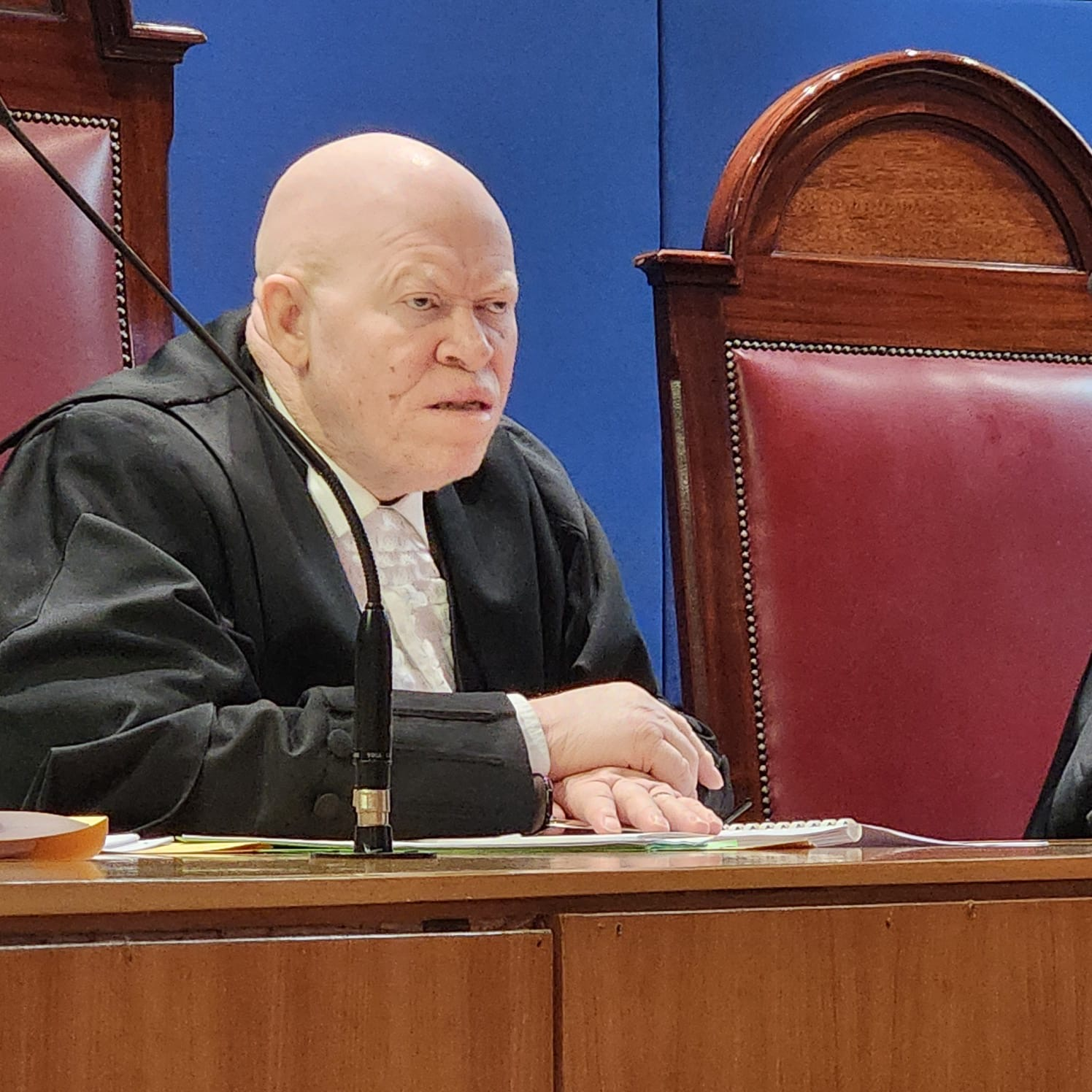
NUL argues that professional ties between its Pro-Vice Chancellor and the High Court bench create an unacceptable risk of perceived bias, and is pressing for all judges to stand aside before the case can proceed.
The legal battle between the National University of Lesotho (NUL) and its Pro-Vice Chancellor, Professor Kananelo Mosito, has taken a new twist, with the university insisting that all High Court judges should recuse themselves from the case.
This comes despite a recent ruling by Justice Molefi Makara confirming that the High Court does have jurisdiction to hear the matter. The court’s decision had initially appeared to clear the way for the substantive issues to be argued. However, NUL has maintained that the question of judicial impartiality remains unresolved and must be addressed before the case can proceed.
At the centre of the dispute is the university’s concern that the relationship between Professor Mosito and High Court judges could compromise the independence of the court, or at least create that impression in the eyes of the public.
Representing NUL, Advocate Mamello Makau argued that safeguarding public confidence in the judiciary is paramount. She submitted that the longstanding professional ties between Professor Mosito, in his capacity as President of the Court of Appeal, and judges of the High Court raise legitimate concerns about impartiality.
Makau told the court that even the appearance of bias is enough to justify recusal, stressing that justice must not only be done but must also be seen to be done. According to her, the overlap in judicial roles and the nature of professional interactions over the years could lead a reasonable observer to question whether High Court judges can decide the matter without influence.
“There is a real likelihood that any judge assigned to this case may be perceived as biased, given the institutional and personal connections involved.”
NUL’s concerns are also detailed in an affidavit filed by the Chairperson of the University Council, Dr Khabele Matlosa. In his statement, Matlosa expressed what he described as a “reasonable apprehension” that no High Court judge would be able to act with complete impartiality in a matter involving Professor Mosito.
He argued that, as President of the Court of Appeal, Professor Mosito occupies a position of authority within the judiciary that could indirectly affect how judges approach the case. According to Matlosa, judges may feel reluctant to rule against someone they regard as a senior colleague or functional superior.
“Naturally, none of them would want to be in the President’s bad books,” he stated, suggesting that this dynamic could influence decision-making, even if unintentionally.
Matlosa went further, raising concerns about Professor Mosito’s personal conduct. He alleged that the Pro-Vice Chancellor has a tendency to intimidate colleagues and disregard authority, claiming that such behaviour could extend to attempts to influence the court.
Based on these assertions, NUL argues that allowing High Court judges to preside over the matter would undermine confidence in the outcome, regardless of the actual merits of the case.
On the other side, Professor Mosito’s legal team has strongly rejected these claims. Advocate Dominic Metlae, representing Mosito, argued that the university’s fears are unfounded and speculative.
Metlae told the court that Professor Mosito does not exercise control over High Court judges and has no authority to direct or influence their decisions. He emphasised that the High Court and the Court of Appeal are separate institutions, each operating within its own framework.
“The President of the Court of Appeal does not command the jurisprudence of the High Court,” Metlae said, dismissing the suggestion that Mosito holds sway over judges hearing the case.
He also addressed the argument that High Court judges serve as ex officio members of the Court of Appeal, clarifying that this does not place them under the authority of its President. Instead, he pointed out, judges are appointed by the Chief Justice and are bound by their oath to act independently.
According to the defence, accepting NUL’s argument would set a troubling precedent, effectively disqualifying judges from hearing cases involving colleagues within the judicial system. Metlae maintained that professional familiarity does not equate to bias and should not be used as grounds for recusal without concrete evidence.
The issue of recusal arose after NUL filed an interlocutory application seeking to have all High Court judges step aside from the matter. This followed Professor Mosito’s decision to challenge the university’s governing council over its attempt to recruit a new Vice-Chancellor.
In his court papers, Mosito argues that the recruitment process is unlawful, claiming it was initiated before a vacancy had arisen. He contends that this violates Section 16 of the National University of Lesotho Order of 1992, which governs the appointment of a Vice-Chancellor.
Initially, there was a procedural dispute over whether the court should first determine the question of jurisdiction or address the recusal application. The court ruled that the issues are closely linked but decided that jurisdiction should be settled first.
With that question now resolved in favour of hearing the case, attention has shifted fully to the recusal application, a matter that could significantly affect how the case proceeds.
If the court agrees with NUL, it could mean that the matter is referred to a different panel or even judges from outside the High Court. Such a move would be unusual and could delay the resolution of the dispute.
If, however, the court dismisses the application, the case will proceed before the High Court as currently constituted, allowing the substantive issues regarding the Vice-Chancellor recruitment process to be heard.
The outcome of the recusal argument is likely to have broader implications beyond this particular case. It raises fundamental questions about judicial independence, the perception of fairness, and how courts should handle cases involving members of the judiciary.
As the legal battle continues, both sides remain firmly entrenched in their positions. For NUL, the focus is on ensuring that the process is beyond reproach. For Professor Mosito, the priority is to move forward with a case he believes challenges an unlawful decision.
The court’s ruling on recusal will determine the next step in a dispute that has already drawn significant attention within legal and academic circles, and which could shape how similar cases are handled in the future.
“`