
Mohahlaula Airlines
Thursday, July 23, 2026
Home Blog Page 34

Maseribane Likely To Be Appointed As Nutrition Advisor To Matekane

0

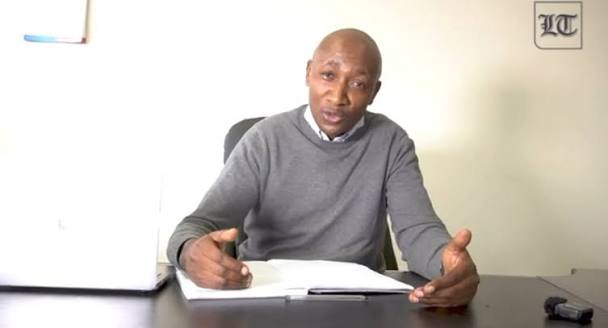
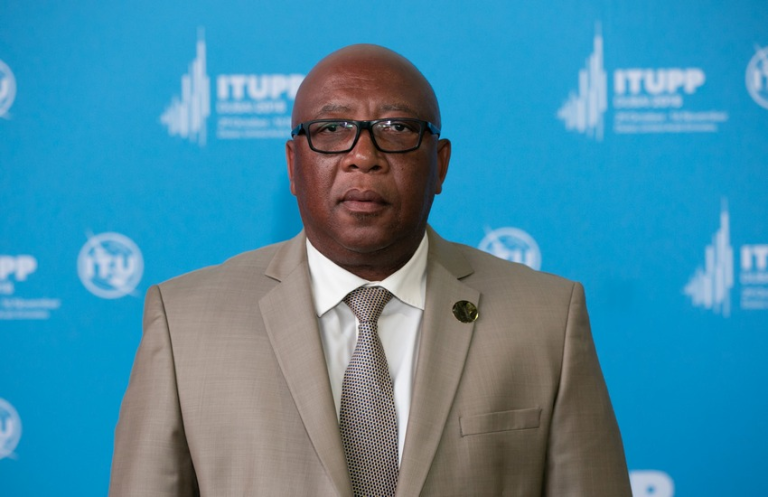
Sources with knowledge of discussions within government say Prime Minister Sam Matekane is considering appointing former Cabinet minister and former Ambassador to Italy, Thesele Maseribane, as his Nutrition Advisor, as the administration weighs options to elevate nutrition and food security as a national development priority.

Former Cabinet minister and former Ambassador to Italy Thesele Maseribane says he has not been formally approached by the Office of the Prime Minister regarding reports that he may be under consideration for a national nutrition advocacy role, adding that his awareness of the matter remains informal and media-driven.

Responding to questions from Lesotho Tribune, Maseribane said any such role would require formal engagement before he could respond substantively.

“I am not aware of such a role from the Office of the Prime Minister and I am not in a position to confirm such,” Maseribane said. “At this stage my awareness of the matter is largely informal, arising from media circles, and not even discussions through diplomatic or policy channels.”

The reports come amid wider debate within Matekane’s kitchen cabinet on whether the his administration intends to elevate nutrition as a national development priority, particularly in light of persistent stunting, food insecurity, and vulnerability in rural communities, and most importantly with his Majesty being UNICEF’s nutrition champion.

Rome posting and UN agency engagement

During his tour of duty in Rome, Maseribane was accredited to FAO, WFP, and IFAD, where Lesotho’s engagement focused on strengthening agricultural productivity, addressing hunger, and reducing vulnerability within the framework of the Sustainable Development Goals and the Country Development Programme.

He said this work included policy dialogue, technical cooperation, and programme support aimed at nutrition-sensitive agriculture, with particular emphasis on indigenous and organic production systems and resilience to climate and economic shocks.

Maseribane noted that Lesotho’s mission operated under severe human resource constraints, with only two diplomats and himself covering all three agencies, adding that formal reports submitted to government detail the outcomes achieved during that period.

Nutrition beyond health

Drawing on his international exposure, Maseribane argued that malnutrition and stunting should not be treated as health-sector issues alone, but as broader development challenges rooted in structural conditions.

“Malnutrition and stunting are not only health issues. They are structural development issues related to poverty, education, agriculture, social protection, governance, and the non-engagement of the private sector,” he said.

He warned that fragmented interventions and short-term programmes have limited impact, stressing the need for long-term, coordinated policy responses.

Executive experience and policy coordination

Maseribane said his previous experience as a Cabinet minister provided him with a practical understanding of government systems, policymaking, and the importance of alignment across ministries, Parliament, and the judiciary.

“The areas that matter most in any national advocacy role are those that depend on coordination across multiple sectors rather than operating in silos,” he said.

He added that policy alignment is more critical than stand-alone advocacy in improving nutrition outcomes.

What a national nutrition mandate would entail

While declining to confirm any appointment, Maseribane outlined what he believes the core mandate of such a role would be if established.

He said it should focus on elevating nutrition as a national development priority, mobilising political and technical support, and promoting policy coherence.

“The role would be to coordinate government, the private sector, development partners, and civil society to facilitate rapid rural development, leaving no one behind, and ensuring well-coordinated action,” he said.

He also stressed the need to contextualise global frameworks by grounding them in local realities, strengthening farmers’ access to markets and finance, and prioritising implementation, monitoring, and accountability over abstract commitments.

Supporting the King’s nutrition advocacy

Maseribane praised King Letsie III’s role as a nutrition champion, particularly during his engagement with FAO and across Africa.

“The key gaps are coordination across sectors, sustained political visibility for nutrition, and stronger links between policy design and implementation,” he said. “A dedicated role could help align efforts, strengthen accountability, and ensure nutrition remains central to development planning.”

He added that supporting His Majesty’s mandate on nutrition remains a priority and said he is currently working on indigenous nutrition and organic agriculture initiatives in the region.
Arrest Team Had Reason to Kill Mahao

MASERU- The prosecution in the high-profile murder case involving nine members of the Lesotho Defence Force (LDF), including retired army commander Lieutenant General Tlali Kamoli, has told the High Court that the team sent to arrest Maaparankoe Mahao had a motive to kill him.

The accused are charged with the murder of Mahao, who was shot dead on June 25, 2015, at Ha Lekete in Mokema. They are also facing other charges linked to the same incident, including attempted murder and malicious damage to property. The case is being heard before Justice Charles Hungwe.

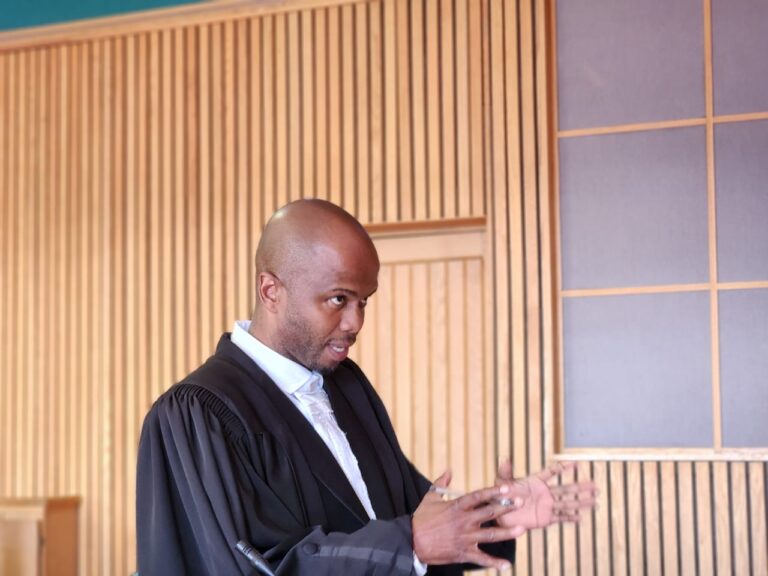
This week the court heard dramatic exchanges during the cross-examination of one of the accused, Captain Litekanyo Nyakane. The prosecution, led by Advocate Lehlohonolo Phooko, put it to Nyakane that the operation to arrest Mahao was very different from the arrests of other soldiers who were suspected of mutiny.

Advocate Phooko told the court that the team sent to Mahao’s home was made up mostly of junior officers. He argued that this was against military practice, military writings, and even the LDF Act. According to the prosecution, it is unusual and improper for junior soldiers to be sent to arrest a very senior officer, especially one of Mahao’s rank, without the presence of senior commanders.

The prosecution suggested that this unusual arrangement was not accidental. Advocate Phooko said the way the operation was planned showed that the teams were not simply going to arrest Mahao, but that there was a motive to shoot and kill him.

Another major issue raised in court was the use of vehicles with blue number plates. The prosecutor reminded Nyakane of his earlier testimony, where he said blue plates are normally used by very senior officers, usually those with the rank of brigadier and above.

Advocate Phooko told the court that it was inappropriate and suspicious for the arresting team to use such number plates. He argued that the team used the plates to disguise who they really were. According to the prosecution, this was done to hide their identities and make it difficult to trace responsibility for what happened.

“The use of these number plates was part of a plan,” the prosecutor suggested. “It was meant to conceal the identity of the team and support what later happened.”

However, Nyakane rejected these claims. He told the court that there was nothing wrong with junior officers arresting a senior officer, as long as they were properly authorised. He maintained that the team had legal orders to carry out the arrest and that rank did not prevent them from doing so.

He also denied that there was anything wrong with the way the operation was conducted. According to him, the mission was lawful, and the soldiers were simply doing what they had been instructed to do.

“I see nothing wrong with the operation,” Nyakane said in response to the prosecution’s questions. “We were authorised, and we carried out our duty.”

The court then heard another serious allegation from the prosecution, that most of the soldiers who were part of the arrest team were later promoted after Mahao’s death. Advocate Phooko suggested that these promotions were a “thank you” for a job well done.

He told the court that this raised serious questions about whether the killing was planned and whether the soldiers were rewarded for it afterward.

But once again, Nyakane strongly denied this. He said the promotions had nothing to do with Mahao’s death. He explained that promotions in the army follow procedures and are not given as rewards for unlawful acts.

He further pointed out that if the promotions were meant as compensation or reward, they would have had to be approved by the then army commander, Major General Khoantle Motšomotšo, who was in charge of the mutiny suppression operation.

“If anyone was to promote soldiers for that operation, it would have been the commander who gave the orders,” Nyakane told the court. “The promotions were not linked to the death of Mahao.”

Mahao, who was a former army commander, was shot during an operation that the army said was aimed at arresting soldiers suspected of planning a mutiny. The prosecution, however, maintains that Mahao was not resisting arrest and that he was unlawfully killed.

The accused in this matter include several serving and former LDF members. Apart from the main charge of murder, they are also accused of attempted murder and malicious damage to property, arising from the same events of June 25, 2015.

As the trial continues, the court is expected to hear more evidence about how the operation was planned, who gave the orders, and what exactly happened on the day Mahao was killed.

Justice Charles Hungwe is presiding over the case, which is still at the stage of hearing testimony and cross-examination. The proceedings are expected to continue, with the prosecution aiming to show that Mahao’s death was not an accident or a lawful shooting, but a deliberate act carried out by a team that, according to them, had a clear motive.

The court will later decide whether the evidence proves that the accused are guilty of the charges they are facing.

Matlama’s Molefe Thatho Forced to Retire Football Due to Medical Condition

Matlama Football Club defender and defensive midfielder Molefe ‘Linaoa’ Thatho has been forced to bring his playing career to an end following a serious medical condition that doctors say could be life-threatening if he continues with football.

The unfortunate situation stems from an incident that happened in Matlama’s match against Limkokwing FC, in one of the final fixtures before Christmas last year. During that encounter, Thatho collapsed on the field and briefly lost consciousness. He then received immediate medical attention and was rushed to the hospital, where a doctor confirmed that he had sustained a serious condition.

Medical examinations revealed that Thatho’s heart had been affected and was not functioning as it should. The attending doctor warned that continuing to play football could place the young man’s life at risk, advising that he be kept away from competitive action to avoid further damage. Thatho was effectively given a stark choice; give up football or draw closer to death.

Following the incident, Matlama Football Club confirmed that the player was placed in isolation as a precautionary measure. The club also arranged further medical assessments, taking Thatho to other doctors and specialists to seek confirmation of the initial diagnosis and recommendations. These consultations all pointed in the same direction, reinforcing the advice that Thatho should remain in isolation and avoid professional football.

After constant consultations with medical specialists, a final decision was reached. On Tuesday, 20 January, Molefe Thatho was officially forced to hang up his football jersey and boots at a young age. The decision followed further expert medical advice that confirmed the initial findings and concluded that continuing his playing career would pose serious risks to his health due to the heart condition.

Despite the gravity of the situation, Matlama moved swiftly to support their player. The club pledged to honour Thatho’s contract in full, ensuring that he continues to be paid even though the agreement has not yet expired. Furthermore, the club committed to providing any other assistance he may require during this difficult period.

Matlama officials stated that their response is driven by principle as much as compassion. The club said it wants to set an example, emphasising that Thatho is  one of their own, who suffered an accident while serving the team.

Rather than part ways with the player, Matlama Football Club has chosen a different path. The club has taken Thatho into its technical team, allowing him to continue serving Matlama in a new capacity. In this role, he will remain fully supported by the club as he transitions from playing to a different phase of his football career.

This move shows the team’s commitment to player welfare and loyalty, turning a tragic and potentially fatal setback into an opportunity for continued involvement within the club structure, while prioritising the health and the safety of the young, talented defender.

Roma Farmers Reeling as Lumpy Skin Disease Claims Cattle

0

Roma

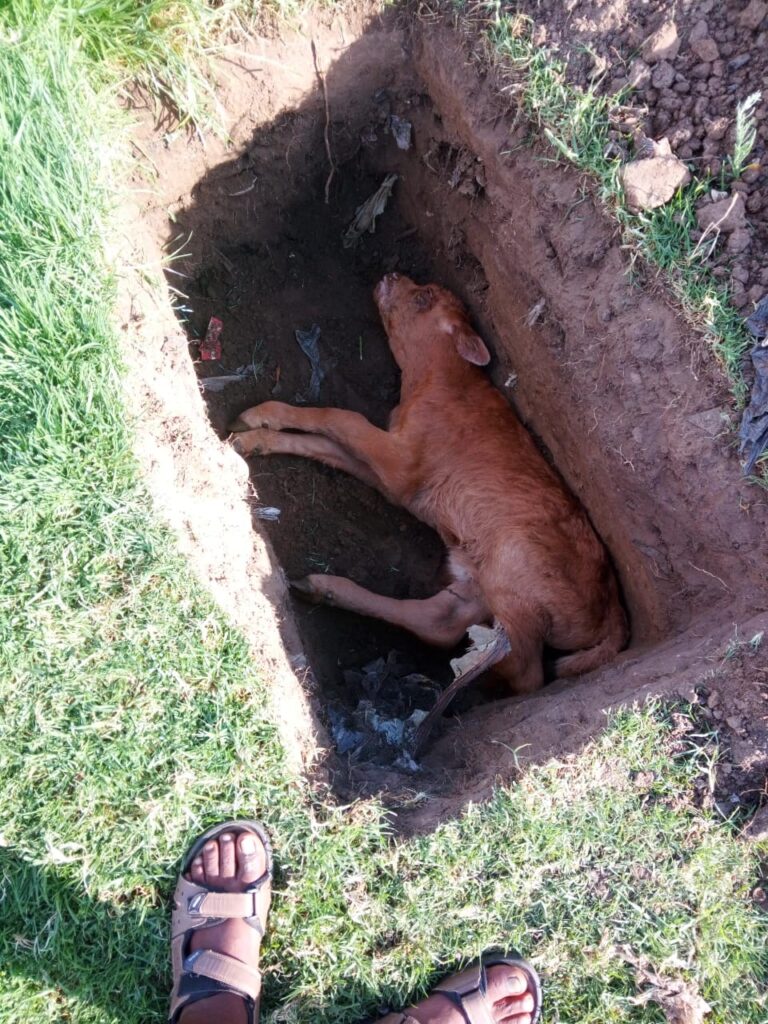
Roma farmers are facing mounting losses as lumpy skin disease spreads rapidly across the area, killing livestock and deepening anxiety among small-scale cattle owners. More than 30 cattle are reported to have died so far, with fears that the toll could rise as access to vaccines and treatment remains constrained.

One of the affected farmers, Malefane Raletsela from Ha Mafefooane, told this publication that he has already lost three cows, including calves. He said the disease has swept through kraals in the area, affecting not only his herd but those of neighbouring farmers as well.

“This disease has killed many of my cattle, and those of our neighbours,” Raletsela said. “We are watching animals die almost helplessly.”

Raletsela said he is aware of at least 15 other farmers in surrounding villages who have also lost cattle in recent weeks. For many households in Roma, cattle are not only a source of income but a form of savings and social security, making the losses particularly devastating.

Farmers have also expressed frustration over the cost of vaccination. According to Raletsela, farmers are being charged M200 per cow, about USD12.50, for the vaccine. He said the fee is beyond the reach of many livestock owners, especially those with larger herds.

“My understanding was that government would be considerate during this period,” he said. “The M200 they are charging is extremely steep. The majority of us simply cannot afford M200 per animal.”

Lumpy skin disease is a viral disease that affects cattle, causing fever, skin nodules, reduced milk production and, in severe cases, death. Outbreaks often spread quickly, particularly where vaccination coverage is low and animal movement is difficult to control.

The Ministry of Agriculture, Food Security and Nutrition has acknowledged challenges in responding to the outbreak. The ministry has reported a shortage of lumpy skin disease medication, which has hampered efforts to contain the spread.

Mr Lereko Masupha, the ministry’s Chief Information Officer, confirmed the shortage. He said medication that had previously been collected from unaffected districts and redistributed to areas experiencing outbreaks has now been depleted.

“The rate of infection is increasing,” Masupha said. “This has forced the ministry to prioritise affected districts while we wait for new supplies.”

Masupha said the ministry is in the process of procuring additional lumpy skin disease medication and vaccines. He assured farmers that distribution would begin immediately once the supplies become available.

“The Ministry is purchasing lumpy skin medication and will distribute it as soon as it is available,” he said.

In the meantime, farmers in Roma say they are left counting their losses and hoping for urgent intervention. Many are calling for subsidised or free vaccination during the outbreak, warning that without swift action, the disease could wipe out herds that families have built up over decades.

When Governments Treat Streetlights as Achievements, Something Has Gone Wrong

0

This is not an argument against infrastructure, stupid! Streetlights, water features, roads and public spaces matter and in many cases they are overdue. But when governments begin to treat such as achievements in themselves, rather than as tools meant to improve the economic position of households, something has gone wrong. Development is not proven by what can be photographed at night. It is proven by what changes, quietly and materially, in the lives of ordinary people.

There is a moment that every Mosotho recognises. You drive past a newly installed streetlight or pause near a water fountain that did not exist a year ago. It looks impressive. It photographs well. It signals movement. Someone somewhere will call it development.

But then you go home.

And at home, the questions begin to intrude. Has anything in my life actually changed.

This is the uncomfortable question we are not being asked to confront. Not by government. Not by opposition. Not even by ourselves.

Development, if it is to mean anything beyond concrete and cables, must eventually arrive at the level of the individual household. It must be felt in quieter, less visible ways. In the ability to save. In incomes that stretch beyond the end of the month. In households that can absorb a shock without collapsing. In young people who plan rather than merely survive.

Economists have a term for this, even if we do not use it in everyday language. Real development is not just aggregate growth or visible infrastructure. It is welfare improvement at the household level. It is when productivity rises and people retain more of the value they create. It is when livelihoods stabilise and economic anxiety recedes.

By that standard, we must ask honestly whether our recent “developments” have delivered anything meaningful.

A streetlight does not pay school fees. A fountain does not create disposable income. A paved circle with coloured lights does not turn informal work into secure employment. These things may improve aesthetics. They may even improve safety at the margins. But they do not change the economic position of a household.

This is where the conversation becomes uncomfortable, because it forces us to separate visibility from value.

Governments everywhere love projects that can be seen. They are measurable, ribbon friendly, and easy to defend in speeches. But households do not live in speeches. They live in balance sheets, even if they do not call them that. Income in. Expenses out. Debt accumulating quietly. Savings postponed indefinitely.

If development were real, more Mosotho households would be saving, not borrowing. They would be building buffers, not relying on overdrafts and mashonisa. They would be upgrading their skills, not waiting for the next public works programme. They would feel, in their daily decisions, that the economy is working with them rather than against them.

Ask yourself a simple question. Compared to five years ago, are you more financially secure. Not more hopeful. Not more impressed. More secure.

Can you handle an unexpected expense without panic. Can you go three months without income if things go wrong. Can your children realistically imagine a future that is not dependent on state employment or migration.

If the answer is no, then whatever development is being advertised is not reaching its intended destination.

This is not an argument against infrastructure. Roads, lights, and public spaces matter. But they are inputs, not outcomes. They are tools, not proof. When governments begin to treat them as achievements in themselves, something has gone wrong.

Real development is boring to photograph. It shows up in tax data, savings rates, employment stability, productivity, and household resilience. It shows up when people argue less about survival and more about opportunity. It shows up when politics loses some of its desperation because citizens are no longer economically cornered.

We should be worried that our political debate has been reduced to aesthetics. That we are being asked to clap for installations while households quietly deteriorate. That public money is being used to signal progress rather than to produce it.

Every Mosotho should pause and reflect, not angrily but honestly. Has my life materially improved. Am I better off in ways that matter. Or have I simply become more accustomed to looking at things that look like development.

Until development arrives in people’s pockets, their savings accounts, their job security and their sense of economic dignity, it remains decoration.

And decoration, no matter how brightly lit, does not change lives.

Council of State Moves at Last…Secret Meeting to Select IEC Commissioners?

0

Maseru

Lesotho Tribune has been reliably informed that the Council of State will convene on Wednesday, 21 January 2026, to select three commissioners for the Independent Electoral Commission (IEC), a move that could finally bring an end to months of constitutional uncertainty that has left the country without a lawfully constituted electoral body.

Confirming the impending sitting, Lesotho’s Attorney General, Advocate Rapelang Motsieloa, told Lesotho Tribune: “Let’s just say there will be a Council of State meeting next Wednesday.” When pressed for further details, he declined to elaborate, adding pointedly: “Please don’t ask me the agenda.”

According to information available to this publication, the Council of State will consider a shortlist of five candidates submitted by political parties in line with national regulations. The nominees are:

• Dr John Maphephe

• Dr Fako Likoti

• Mr Retselisitsoe Mohale

• Mrs Mamatlere Matete

• Dr Monyane Chelete

The Council of State is expected to select three of the five to serve as IEC commissioners, a step widely regarded as critical to restoring electoral legitimacy and stabilising governance processes ahead of future political milestones.

The anticipated sitting follows a decisive High Court ruling in December 2025 that removed the final legal obstacle preventing the Council of State from acting. On 5 December 2025, the High Court, sitting as a Constitutional Panel comprising Chief Justice Sakoane Sakoane, Justice Mathaba and Madam Justice Shale, dismissed in its entirety an application brought by Tumisang Mosotho and Tsikoane Peshoane. No order as to costs was made.

That application had effectively frozen the work of the Council of State and stalled the appointment of new IEC commissioners. Its dismissal cleared the way for the Council to resume its constitutional mandate.

However, the ruling also opened a more troubling legal question. The terms of office of the outgoing IEC commissioners expired on 1 December 2025, yet the Commission continued to perform official functions beyond that date. Legal analysts warn that this may have placed the IEC in an ultra vires position, with every decision taken since early December potentially vulnerable to legal challenge.

Such actions may include the regulation and management of political parties, procurement processes, deregistration matters and other statutory obligations. If challenged in court, experts caution that these decisions could be set aside, forcing a difficult institutional clean-up to restore the authority and credibility of the electoral body.

For several weeks, the Council of State cited the pending litigation as the basis for its inaction. With the court having found no merit in the application, that justification has now fallen away, increasing pressure on the Council to act without further delay.

The unfolding situation has taken place against a backdrop of mounting public and political tension around the IEC, which has faced criticism over delayed processes and internal governance challenges. The court’s dismissal has sharpened scrutiny on accountability, constitutional compliance and the risks posed by prolonged institutional drift.

The Registrar of the High Court, Makatiso Mapetja, formally issued the order confirming the dismissal, bringing legal clarity to a dispute that had paralysed one of the country’s most critical constitutional processes.

Following confirmation that the Council of State will sit on Wednesday, Lesotho Tribune spoke to BNP leader and Member of Parliament, Hon. Machesetsa Mofomobe, who had earlier led a constitutional push over the IEC vacuum.

“Our position was always about upholding the constitutional order and the rule of law,” Mofomobe said. “If they sit and appoint the commissioners, we will not go to court. BNP is against lawlessness and constitutional delinquents.”

All eyes now turn to the Council of State. Whether Wednesday’s sitting restores the IEC to constitutional footing or opens a new phase of legal and political contestation will shape not only the future of the Commission, but the credibility of Lesotho’s constitutional order itself.

Constitutionality of Mpopo Tsoele’s appointment under scrutiny

0

The recent appointment of Mpopo Tsoele as Principal Secretary for Local Government has sparked celebration and enthusiasm in certain circles. It is noteworthy that Tsoele is married to Minister Nthati Moorosi. While one would typically expect appointments to high-ranking public roles to foster confidence and optimism, this specific instance has left me quite worried. My concerns stem not only from Tsoele’s marital connection but also from how effortlessly the Basotho overlook principles when political loyalties are at stake. Once more, we must face the uncomfortable reality of our country’s inconsistent standards.

First, the appointment itself presents significant legal and constitutional issues. The Constitution of Lesotho was revised by removing section 97 and replacing it with a new provision that governs the appointment of Permanent Secretaries. The reformed section clearly stipulates that a Permanent Secretary must be appointed by the Public Service Commission through a transparent, meritocratic, fair, and competitive method, as specified in an Act of Parliament. This amendment was substantial, it aimed to professionalise the public service, limit favouritism, and restore public trust in government appointments.

In the case of Tsoele’s appointment, there is no evidence available to the public indicating that such a transparent and competitive process was undertaken. There was no public announcement, no shortlist created, no open interviews, and no clear communication from the Public Service Commission clarifying how the constitutional requirements were met. Whether or not Tsoele is qualified is irrelevant. The key issue is that the law seems to have been breached in both its spirit and application. When constitutional provisions are enforced selectively, they no longer act as safeguards and instead become mere decorative elements.

Moreover, the public’s reaction is even more concerning. The Basotho have demonstrated considerable inconsistency in their judgments of similar scenarios based on who holds power. During former Prime Minister Pakalitha Mosisili’sadministration, the appointments of Semano Sekatle and PontsoSekatle, a husband and wife, elicited public outrage. One served as a Minister, while the other was a Principal Secretary. The nation erupted in response. Protests erupted, media campaigns were launched, insults disseminated, and political pressure intensified. Mosisili was depicted as the personification of nepotism and misconduct while in office. The Sekatles faced humiliation, and their appointments were used as evidence of moral and political failure. They both eventually served as Ministers in Mosisili’s administration, with him seen as insensitive to the public’s concerns.

Ironically, over time, Semano became Minister while Pontsowas appointed Ambassador during Prime Minister MotsoahaeThabane’s government, and this was never challenged. Nevertheless, the criticism regarding their early appointments remains deeply rooted in our political memory, at least when it suits us. 

Now, looking at the present, we have Tšeliso ’Mokela acting as Managing Director of the Lesotho Electricity Company, a position appointed by Prime Minister Ntsokoane Matekane’sadministration. His wife, Teboho ’Malisebo ’Mokela, currently holds the powerful role of Government Secretary within the public service. Once again, we see a husband-and-wife pair occupying significant offices simultaneously. However, this time, there is a lack of opposition. In fact, we observe admiration. Applause is given. Justifications abound.

What has changed? Certainly not the governing principle. The only distinction is the political favouritism involved. When Basotho disapprove of a leader, they meticulously examine every action, amplify every error, and assume the worst possible intentions. Conversely, when they support a leader, they readily excuse behaviours they previously condemned with moral zeal. This represents a failure of accountability and partisanship disguised as patriotism.

This pattern highlights a more profound national issue. We profess to denounce nepotism, corruption, and misuse of power, but only when it is convenient for us. We reference the Constitution when it disadvantages our rivals and disregard it when it poses challenges for our allies. Such selective outrage undermines the rule of law and reduces public debate to a struggle of loyalties instead of principles and ideas.

Prime Minister Matekane is, without a doubt, a fortunate individual. He receives a level of goodwill and presumption of innocence that his predecessors did not benefit from. Actions that would have ignited widespread anger in prior administrations are now justified, normalized, or conveniently overlooked. However, luck and popularity cannot replace constitutional governance. A democratic society cannot thrive solely on admiration; it necessitates consistency, integrity, and respect for the rule of law.

If Basotho are genuinely committed to establishing a fair and accountable government, we must discard double standards. The Constitution should apply uniformly, irrespective of who holds the Prime Minister’s office. Nepotism must be uniformly condemned or not at all. Appointments need to be open and transparent, or we should acknowledge that our calls for reform are insincere.

Until we are willing to critique our favoured leaders with the same vigour we direct at those we oppose, we will continue to be ensnared in cycles of hypocrisy and no amount of enthusiasm about new appointments can alter that uncomfortable reality.

Why This DCEO–Naledi Funeral Planners Dispute Matters for ESG in Lesotho

At first glance, the letter exchanged between lawyers representing shareholders of Naledi Funeral Planners and the Directorate on Corruption and Economic Offences (DCEO) appears to be a narrow procedural dispute. It concerns the timing of interviews, a requested postponement and the threat of urgent court action. But viewed through an environmental, social and governance (ESG) lens, the document points to deeper structural questions about how institutions, companies and regulators interact in Lesotho.

ESG is often discussed in abstract terms, as something imposed by foreign investors or multinational standards. In reality, ESG lives in everyday governance decisions. It shows up in how investigations are conducted, how corporate meetings are protected, how conflicts of interest are managed and how power is exercised.

The letter reveals a governance tension at the centre of a private company operating in a socially sensitive sector. Naledi Funeral Planners is not just another commercial enterprise. Funeral services sit at the intersection of culture, dignity, community trust and economic necessity. Stability and legitimacy in such a business are social goods in their own right.

From a governance perspective, the issue raised is not resistance to investigation. The shareholders explicitly state their willingness to cooperate with the DCEO and even offer an alternative interview time on the same day. What they object to is the scheduling of interviews at the exact time of the company’s Annual General Meeting, a core governance mechanism through which shareholders exercise oversight, vote on resolutions and shape corporate direction.

In ESG terms, AGMs are not optional events. They are foundational to governance. Anything that materially disrupts shareholder participation, particularly where those shareholders hold a controlling stake, raises red flags about procedural fairness and institutional sensitivity to corporate governance norms.

The social dimension becomes sharper when the letter raises concerns about dual roles. The allegation that the company secretary of Naledi Funeral Planners is also an employee of the DCEO introduces a risk that goes beyond legality. ESG frameworks emphasise the management of perceived conflicts because perception shapes trust. Even where no improper conduct exists, overlapping institutional roles can undermine confidence in both regulatory processes and corporate outcomes.

Social trust is fragile in sectors tied to grief, death and communal obligation. Any suggestion that governance processes can be influenced indirectly by state power risks damaging not only the company but public confidence in regulatory neutrality.

The environmental pillar of ESG may seem distant here, but it is not absent. Funeral services intersect with land use, burial practices, transport, waste management and sustainability norms. Strong governance is the gateway through which environmental responsibility is enforced and monitored. Where governance is contested or weakened, environmental compliance is often one of the first casualties.

What this dispute illustrates is the need for ESG thinking to move from policy documents into operational decision-making. Regulators must pursue accountability without appearing to interfere with lawful corporate governance. Companies must protect shareholder rights while remaining transparent and cooperative with investigations. Institutions must recognise that timing, process and optics matter as much as formal authority.

The threat of urgent court intervention underscores the stakes. Litigation is not just a legal escalation; it is a signal that institutional trust has already frayed. ESG principles are meant to prevent exactly this kind of breakdown by embedding fairness, clarity and proportionality before disputes reach the courtroom.

This episode is a reminder that ESG is not about branding or compliance checklists. It is about how power is exercised, how decisions ripple through communities and how institutions earn legitimacy day by day.

In Lesotho, where public institutions and private companies are closely intertwined, ESG is not a luxury framework. It is a necessary lens for safeguarding trust, stability and long-term value in both the public and private sphere.

Read full letter on lesothotribune.co.lsimage0.jpeg

Independent business & current affairs journalism · Lesotho Subscribe — M85/month
| Independent business & current affairs journalism · Lesotho